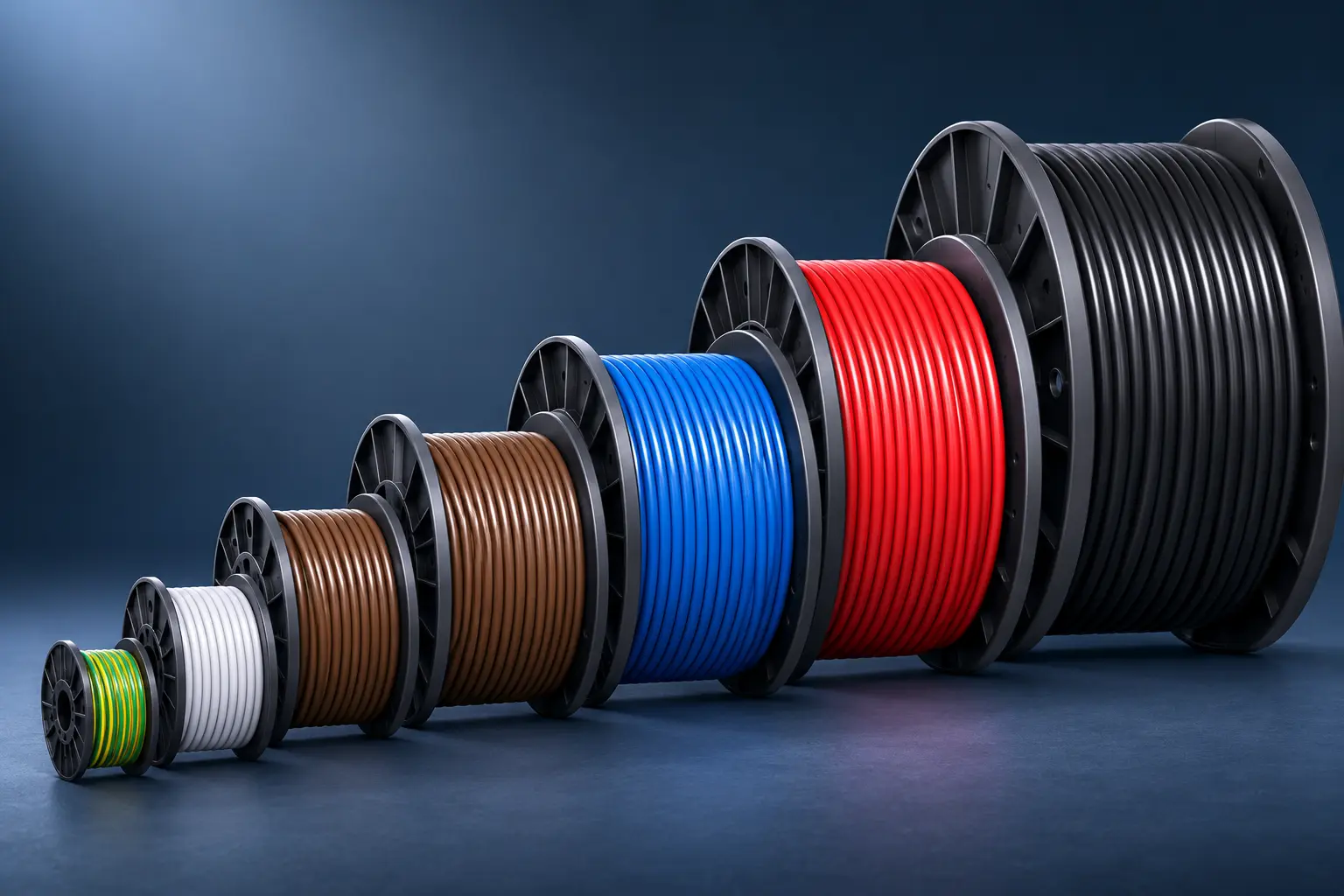
UL 3271 XLPE Motor Lead Wire for German OEM Sourcing
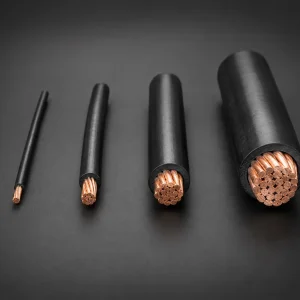
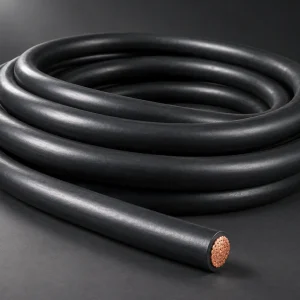
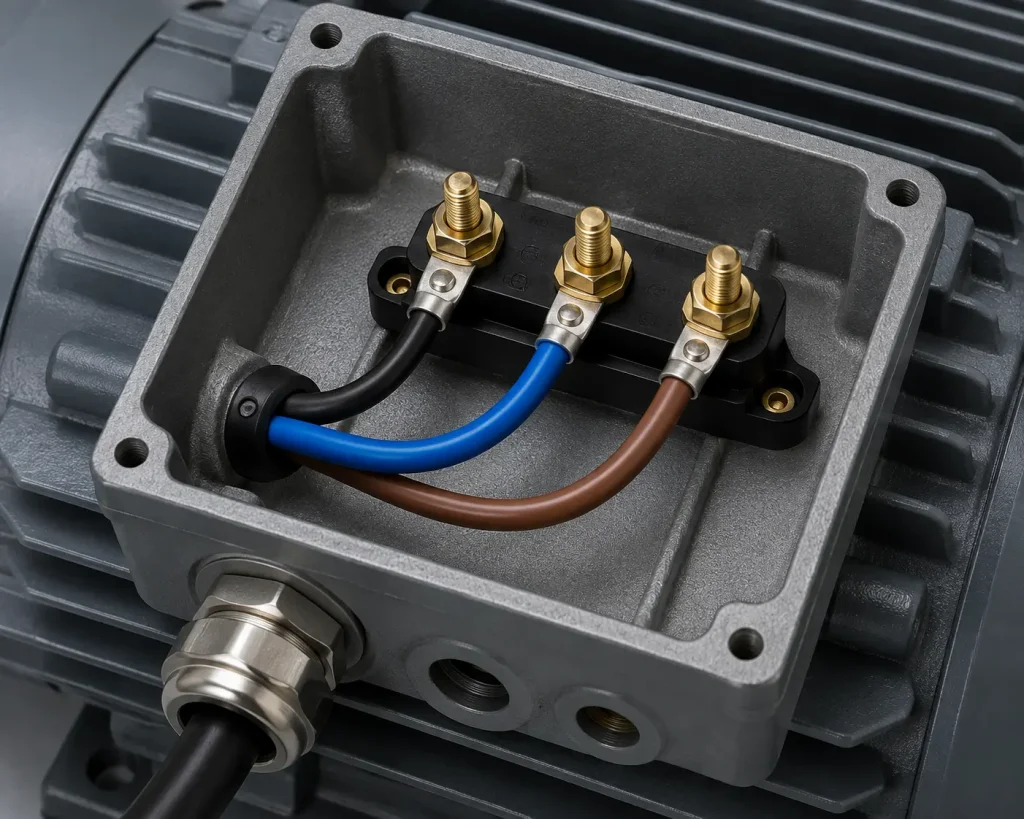
UL AWM Style 3271 is an extruded XLPE wire rated 125°C at 600 Vac and 750 Vdc, covering 30 AWG to 2000 kcmil in solid or stranded construction. The Style file states the use as motor leads or internal wiring of appliances, which makes it one of the few AWM Styles with motor lead scope written into the file itself. An optional extruded or non-extruded semi-conductive polymeric layer over the conductor is available as a construction option within the Style.
This page covers UL 3271 supply for German OEM procurement, including the factors that shape a quotation. Pricing for this Style is production-quoted rather than catalogue-listed — the sections below set out what drives it and what to send with an RFQ.
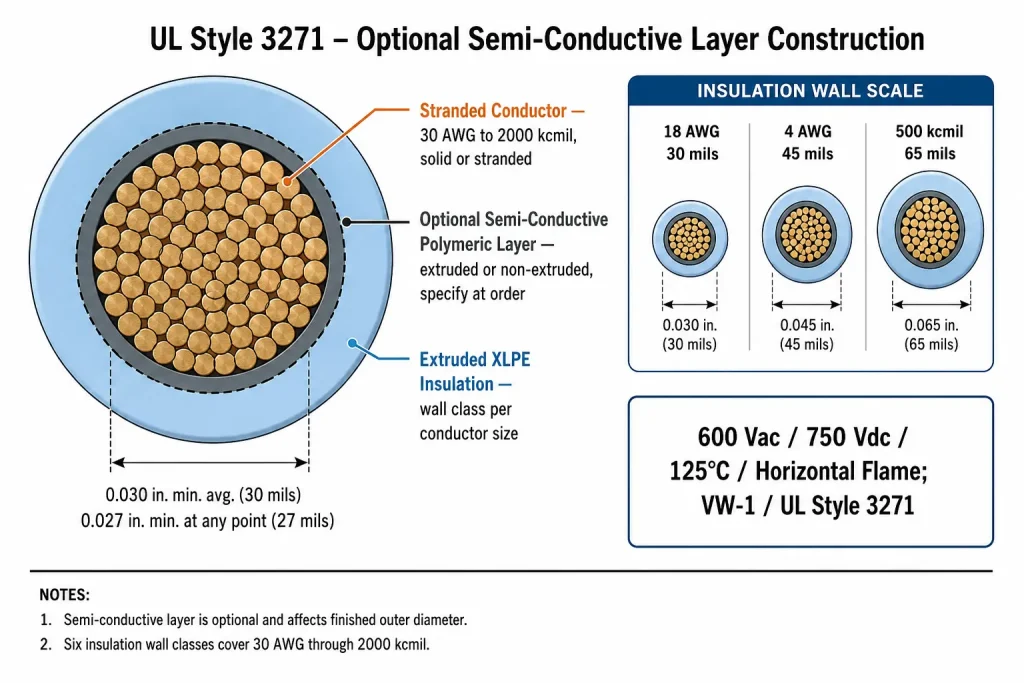
UL AWM Style 3271 — Specifications
| UL AWM Style | 3271 |
| UL Subject / Section | 758, Section 3 |
| Temperature rating | 125°C |
| Voltage rating | 600 Vac / 750 Vdc |
| Conductor range | 30 AWG – 2000 kcmil, solid or stranded |
| Insulation | Extruded XLPE (cross-linked polyethylene) |
| Optional construction | Extruded or non-extruded semi-conductive polymeric layer over the conductor |
| Flame rating | Horizontal flame; VW-1 vertical flame test available |
| Marking | Per UL Subject 758 marking requirements; confirmed for the qualified ordered construction |
| Use per UL Style file | Motor leads or internal wiring of appliances; tags may indicate 2,500 V peak — for electronic use only |
| RoHS / REACH | Documentation requirements confirmed during quotation |
Insulation Wall Thickness by Conductor Size
| Conductor size | Minimum average | Minimum at any point |
|---|---|---|
| 30–9 AWG | 30 mils (0.76 mm) | 27 mils (0.69 mm) |
| 8–2 AWG | 45 mils (1.14 mm) | 40 mils (1.02 mm) |
| 1–4/0 AWG | 55 mils (1.40 mm) | 50 mils (1.27 mm) |
| 213–500 kcmil | 65 mils (1.65 mm) | 58 mils (1.47 mm) |
| 501–1000 kcmil | 80 mils (2.03 mm) | 72 mils (1.83 mm) |
| 1001–2000 kcmil | 95 mils (2.41 mm) | 86 mils (2.18 mm) |
Optional Semi-Conductive Layer
UL Style 3271 permits an optional extruded or non-extruded semi-conductive polymeric layer applied over the conductor, between the conductor strands and the XLPE insulation. This is a stress-control construction option available within the Style — it is not a default feature and must be specified at the order stage.
The semi-conductive layer may be evaluated for inverter-fed motor lead applications where the design requires a semi-conductive conductor layer as part of the insulation system. Final suitability depends on the motor, the drive, the termination method, the drive waveform characteristics and the system requirements applying to the equipment — it is not established by the availability of the option alone.
Note that the layer affects the construction, the finished outer diameter and the production setup. A production run configured without it cannot be converted mid-run, so the decision should be made before the first production order rather than after.
UL 3271 Pricing Factors for German Buyers
UL 3271 is production-quoted rather than sold from a catalogue price list. The following factors shape the quotation, and understanding them makes RFQ comparison between suppliers more meaningful:
- Copper price. The conductor is normally one of the main cost variables, and its contribution scales with conductor cross-sectional area — the difference between a fine-gauge and a large kcmil construction is substantial. Copper is a globally traded commodity, so quotations reflect the market at the time of quoting.
- AWG and conductor construction. Conductor size affects both material content and production line output. Solid versus stranded construction, and the stranding class where stranded is specified, also affect the quotation.
- XLPE consumption. Compound consumption follows the insulation wall class for the ordered AWG. The wall thickness table above shows how this steps across six conductor size groups.
- Semi-conductive layer option. Where specified, this adds material and process content to the construction and is reflected in the quotation.
- Order quantity. Production setup is largely fixed per run, so quantity affects per-metre economics. Frame agreements with scheduled drawdowns are available as a commercial arrangement where annual consumption supports it.
- Colour, marking and packaging. Standard colours and standard marking are quoted without surcharge. Custom colour development, OEM-specific marking and non-standard packaging are quoted separately.
- Freight and Incoterm. The destination and Incoterm determine the freight component. Confirm these at RFQ stage so quotations are comparable.
Index-linked pricing referencing a copper market settlement is available as a commercial arrangement for frame agreements where both parties agree it. Final pricing is based on the confirmed RFQ.
Comparing UL 3271 Quotations
When comparing responses from different suppliers, normalise across these dimensions before comparing figures:
- Semi-conductive layer. Confirm whether each quotation includes or excludes it. A price difference between a quote with the layer and one without is a specification difference, not a competitive one.
- Wall thickness basis. UL Style 3271 specifies both a minimum average wall and a minimum at any point for each conductor size group. Confirm that quotations reference the minimum average figure for the applicable group.
- Conductor type. Bare versus plated conductor, and solid versus stranded, both affect price. Compare on the same basis.
- Incoterm and destination. CIF, FOB and EXW prices are not directly comparable. Normalise to the same Incoterm and destination, or account for the freight component embedded in each.
- Lead time. Stock fulfilment and production-to-order carry different value. Compare on the basis your production schedule actually requires.
- UL construction and marking. Confirm that the quoted product is an actual UL AWM Style 3271 construction, and that the marking and documentation required for your own equipment evaluation can be supplied for that construction.
UL Marking and Order Documentation
UL marking and Style-specific documentation depend on the qualified ordered construction. The applicable construction, the marking actually applied and the supporting documents must be confirmed before production. Only products bearing the applicable UL Mark should be treated as covered products.
Where RoHS, REACH or other documentation is required for your German import or equipment evaluation process, specify the requirement during quotation so availability can be confirmed for the ordered construction.
Requesting a Quotation
Send the following so a quotation can be prepared against a defined construction:
- AWG or kcmil size, and whether solid or stranded is required
- Requested conductor material and plating
- Whether the optional semi-conductive layer is required, and if so extruded or non-extruded
- Insulation colour
- Quantity, and annual consumption if a frame agreement is under consideration
- Reel length and packaging format
- Marking requirement
- Destination and requested Incoterm
- Required order and compliance documents
- Motor or equipment type and the internal routing condition
Minimum order quantity, sample availability, lead time, packaging and documentation are confirmed in the quotation.
Related UL AWM Styles
German buyers evaluating UL 3271 commonly also consider: UL AWM 3266 (125°C / 300 Vac, extruded XLPE, 32–10 AWG, 15 mils minimum average wall — lower-voltage XLPE with a narrower conductor range); UL AWM 1015 (80–105°C / 600 Vac or 750 Vdc, extruded PVC, 30 AWG–2000 kcmil — PVC alternative at the same voltage class and conductor range); UL AWM 3321 (150°C / 600 Vac or 750 Vdc, extruded XLPE, 30 AWG–4/0 AWG — higher-temperature XLPE for appliance internal wiring); and UL AWM 3071 (200°C / 600 Vac, extruded silicone rubber with fiberglass braid, 18–13 AWG — silicone rubber alternative where a 200°C class is required). Style selection follows the voltage, temperature, conductor range and construction required by the equipment design.