UL 10362 — PFA Properties Beyond Temperature Rating
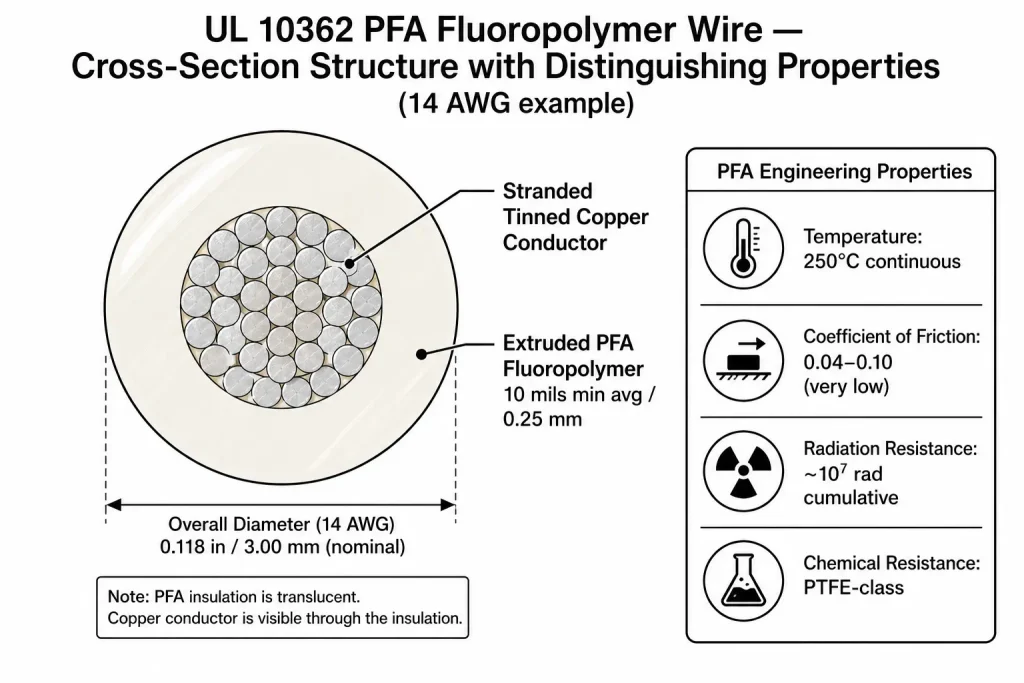
While UL 10362’s 250°C temperature rating receives most engineer attention, PFA fluoropolymer offers three engineering properties that differentiate it from other 250°C wire options like silicone rubber or mica wire. For German engineers searching UL 10362 250C PFA high temp wire Germany, these additional properties often drive the material selection decision beyond the basic temperature/voltage specification.
Three Distinguishing PFA Properties
Low Coefficient of Friction — PFA has one of the lowest coefficients of friction among insulation polymers (approximately 0.04-0.10 against steel surfaces). This matters for applications where wires must pull through conduit, cable trays, or chassis routing channels during installation. PFA-insulated wires pull easily with reduced installation friction, while higher-friction polymers (PVC, silicone) require more pulling force and risk insulation abrasion during installation.
Radiation Resistance — PFA shows excellent resistance to ionizing radiation (gamma, X-ray, neutron) up to approximately 10^7 rad cumulative exposure without significant property degradation. This is meaningful for nuclear facility wiring, medical X-ray equipment internal wiring, and radiation processing equipment (food irradiation, polymer cross-linking by electron beam).
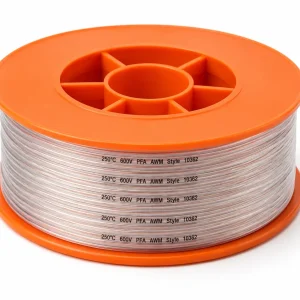
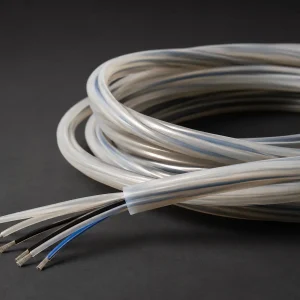
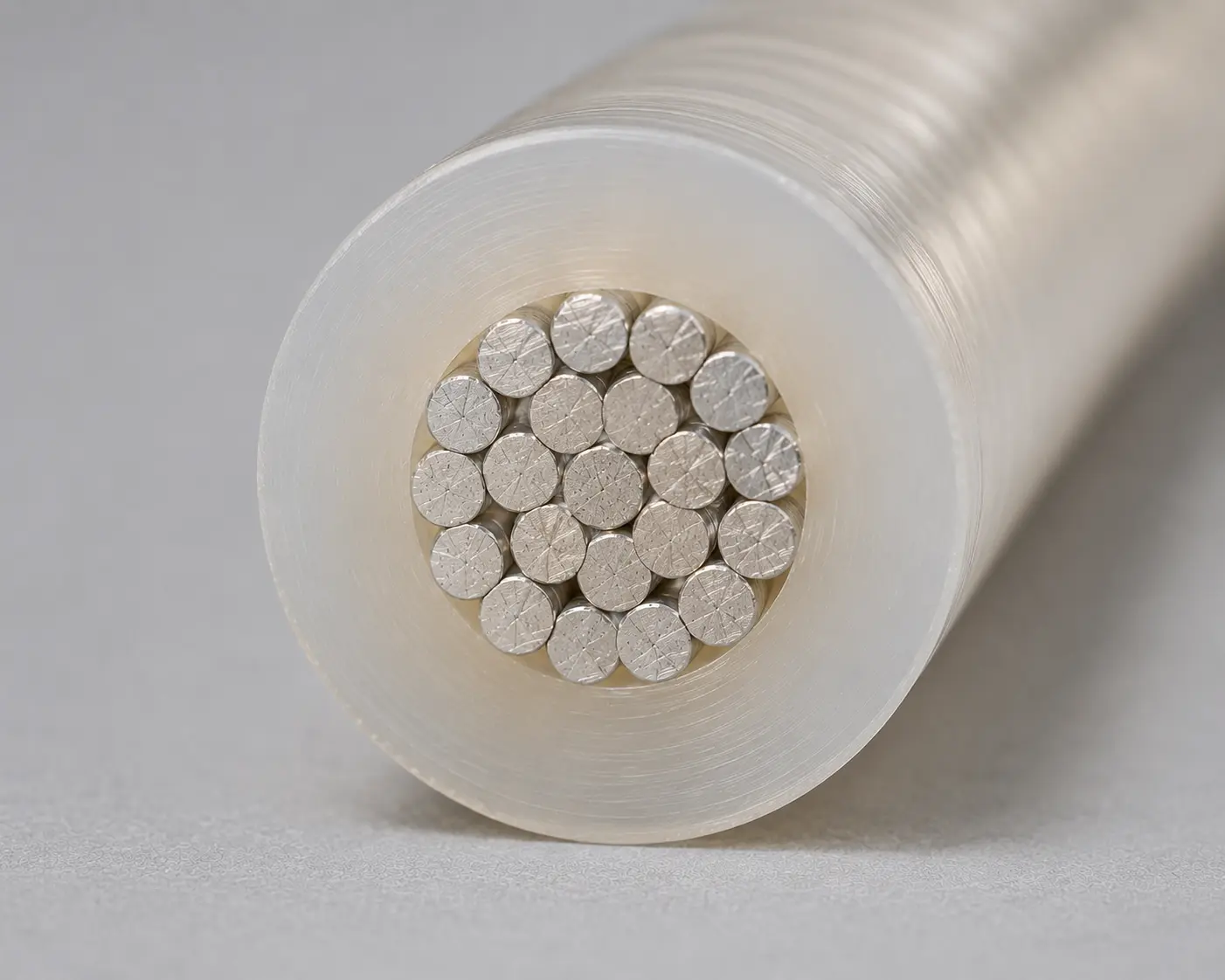
Optical Transparency — PFA’s semi-translucent appearance allows visual inspection of the underlying conductor through the insulation. This supports manufacturing QC processes where conductor condition needs verification without removing insulation, and aids field troubleshooting where conductor identification through the insulation is helpful.
UL 10362 in German Automotive and Automation Applications
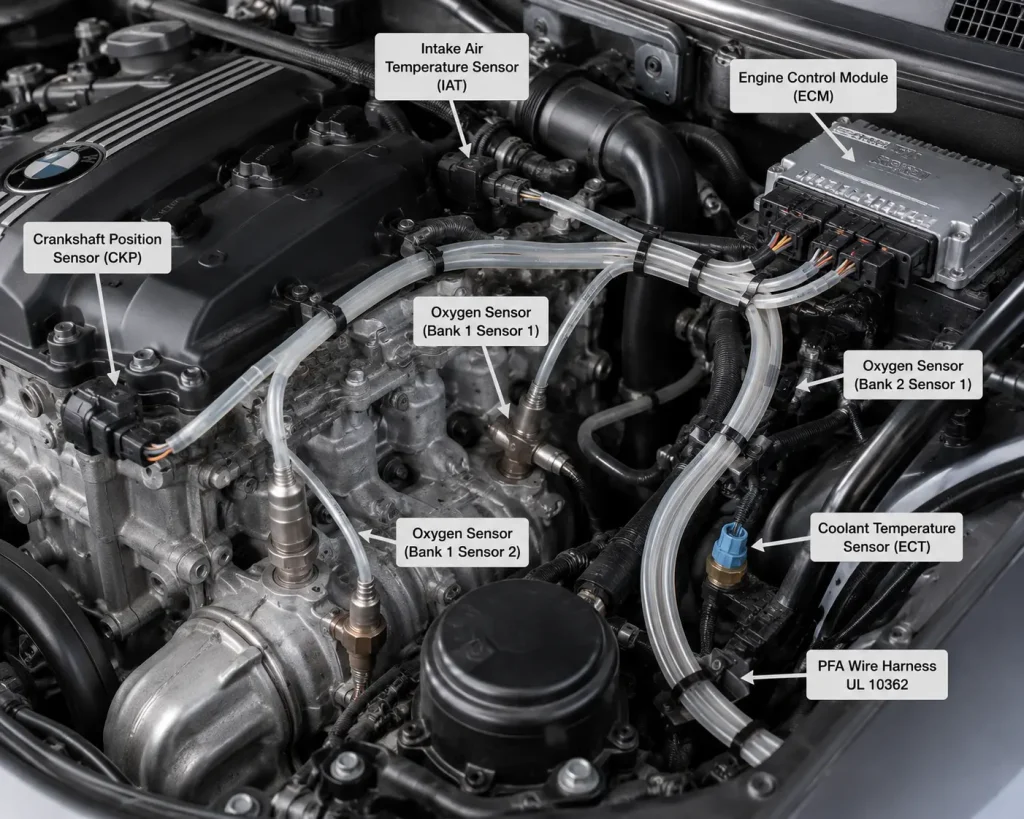
German Automotive Electronics Manufacturers producing engine bay sensor leads, transmission control modules, and battery management electronics for North American vehicle exports specify UL 10362 for internal wiring exposed to engine bay temperatures (120-200°C) and engine fluids. The 250°C rating provides margin above peak engine bay temperatures; the chemical resistance handles engine oil, transmission fluid, and brake fluid exposure scenarios.
German Industrial Automation Suppliers producing high-temperature process sensors, robotic arm internal wiring, and welding equipment control circuits use UL 10362 for applications combining elevated temperature with mechanical routing complexity. The low coefficient of friction supports installation through robotic arm cable carriers and harness pathways.
German Industrial Vacuum Equipment Manufacturers producing vacuum chambers, plasma processing equipment, and ion implantation systems use UL 10362 for chamber-internal wiring exposed to vacuum, elevated temperatures, and plasma byproducts. PFA’s chemical inertness handles plasma exposure that would degrade PVC or silicone wires.
UL 10362 Specifications
| Parameter | Value (per UL Subject 758) |
|---|---|
| UL Style | AWM 10362 |
| AWG Range | 30 AWG – 4/0 AWG |
| Voltage Rating | 600V AC |
| Temperature Rating | 250°C continuous |
| Insulation | Extruded PFA (Perfluoroalkoxy fluoropolymer) |
| Wall (30-10 AWG) | 10 mils min average |
| Wall (9-2 AWG) | 20 mils min average |
| Wall (1-4/0 AWG) | 30 mils min average |
| Coefficient of Friction | 0.04-0.10 against steel (very low) |
| Radiation Resistance | ~10^7 rad cumulative without significant degradation |
| Optical Property | Semi-translucent (supports visual conductor inspection) |
| Chemical Resistance | PTFE-class — resistant to most acids, bases, organic solvents, plasma |
| Flame Rating | Horizontal Flame per UL Subject 758 |
| Compliance | UL Subject 758 (AWM), RoHS, REACH |
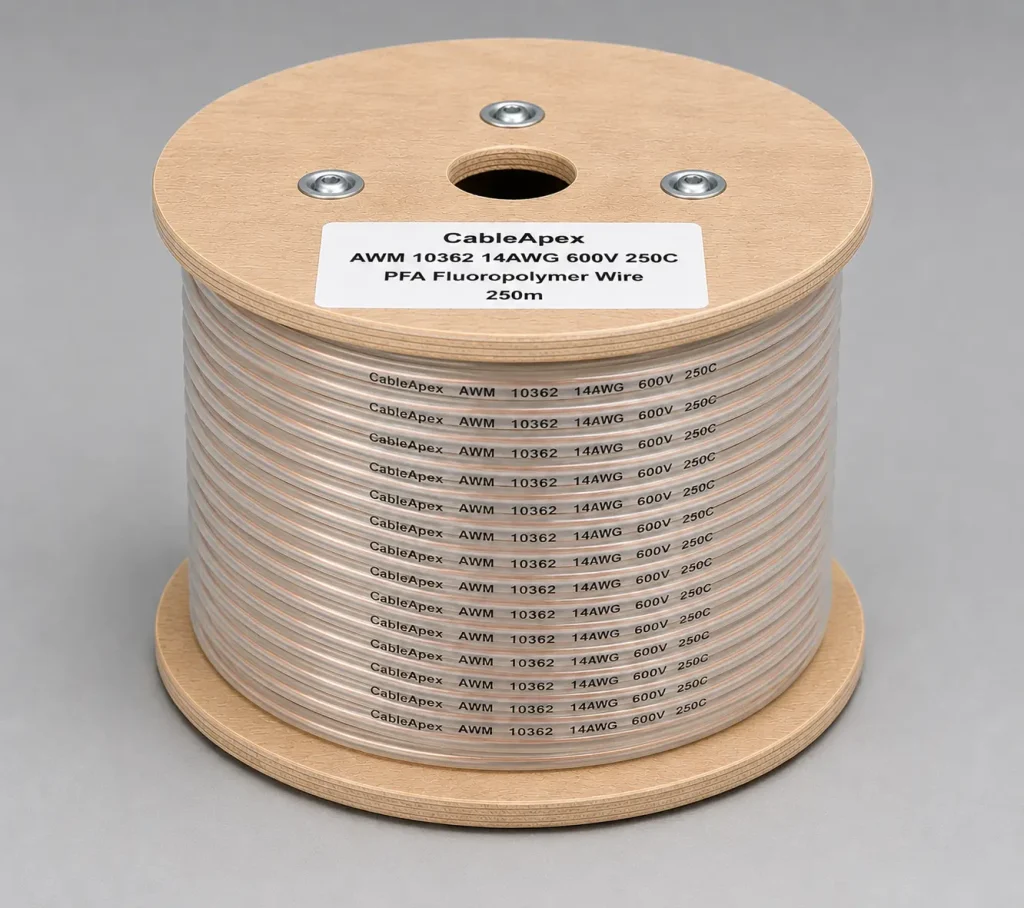
| Marking | CableApex · UL AWM 10362 · AWG · 600V · 250°C |
Engineering Notes from CableApex
- “Does the low coefficient of friction affect connector retention?” No. PFA’s low friction property applies to surface-to-surface contact during pulling/sliding, not to the wire-to-connector interface. Standard crimp connectors and IDC terminals retain PFA-insulated wires equivalently to PVC-insulated wires. The friction property only matters during installation routing, not during service.
- “Cost comparison: PFA vs alternatives at 250°C?” UL 10362 PFA typically costs 1.5-2x UL 1332 FEP (200°C alternative), 30-50% less than UL 1659 PTFE (alternative 250°C fluoropolymer), and 2-4x UL 3071 silicone rubber (200°C polymer alternative). The PFA premium over silicone reflects fluoropolymer raw material costs and the chemical/radiation resistance advantages.
- “Production lead time for PFA wire vs PVC wire?” PFA melt-extrusion is slower than PVC extrusion (lower line speed due to higher processing temperatures and more demanding material handling). Standard production runs of UL 10362 typically have 30-35 day CIF lead time vs 25-30 days for PVC wire. For first-time orders or non-standard configurations, allow additional buffer for production setup verification.
MOQ, Packaging & Shipping
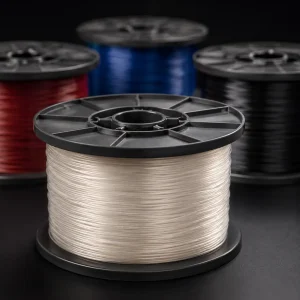
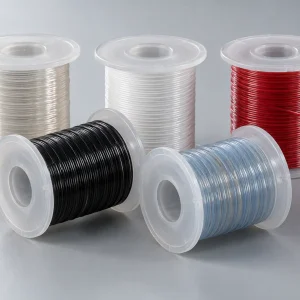
MOQ varies by AWG, color, and production schedule. PFA production scheduling requires 2-3 day setup. Standard packaging: spools or reels per customer specification. Export documentation: Commercial Invoice, Packing List, Certificate of Origin (CCPIT), Bill of Lading, UL Recognition reference letter, RoHS Declaration, REACH SVHC Declaration, MSDS. HS Code: 8544.49. CIF Hamburg or Rotterdam, transit time 25–30 days from Shanghai or Ningbo origin port.
Related Fluoropolymer UL Styles
UL 10362 buyers commonly cross-reference: UL 1332 (200°C / 300V FEP, 30-10 AWG — lower temperature/voltage FEP at lower cost), UL 1659 (250°C / 600V PTFE, 26-4/0 AWG — premium PTFE alternative for highest-performance), UL 3071 (200°C / 600V silicone rubber, 18-13 AWG — silicone alternative for 200°C class), and UL 5107 (200°C or 450°C / 600V mica, 26-550 kcmil — mineral insulation for above 250°C applications).