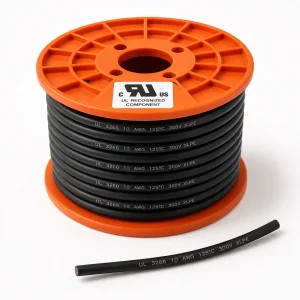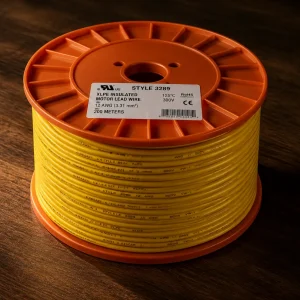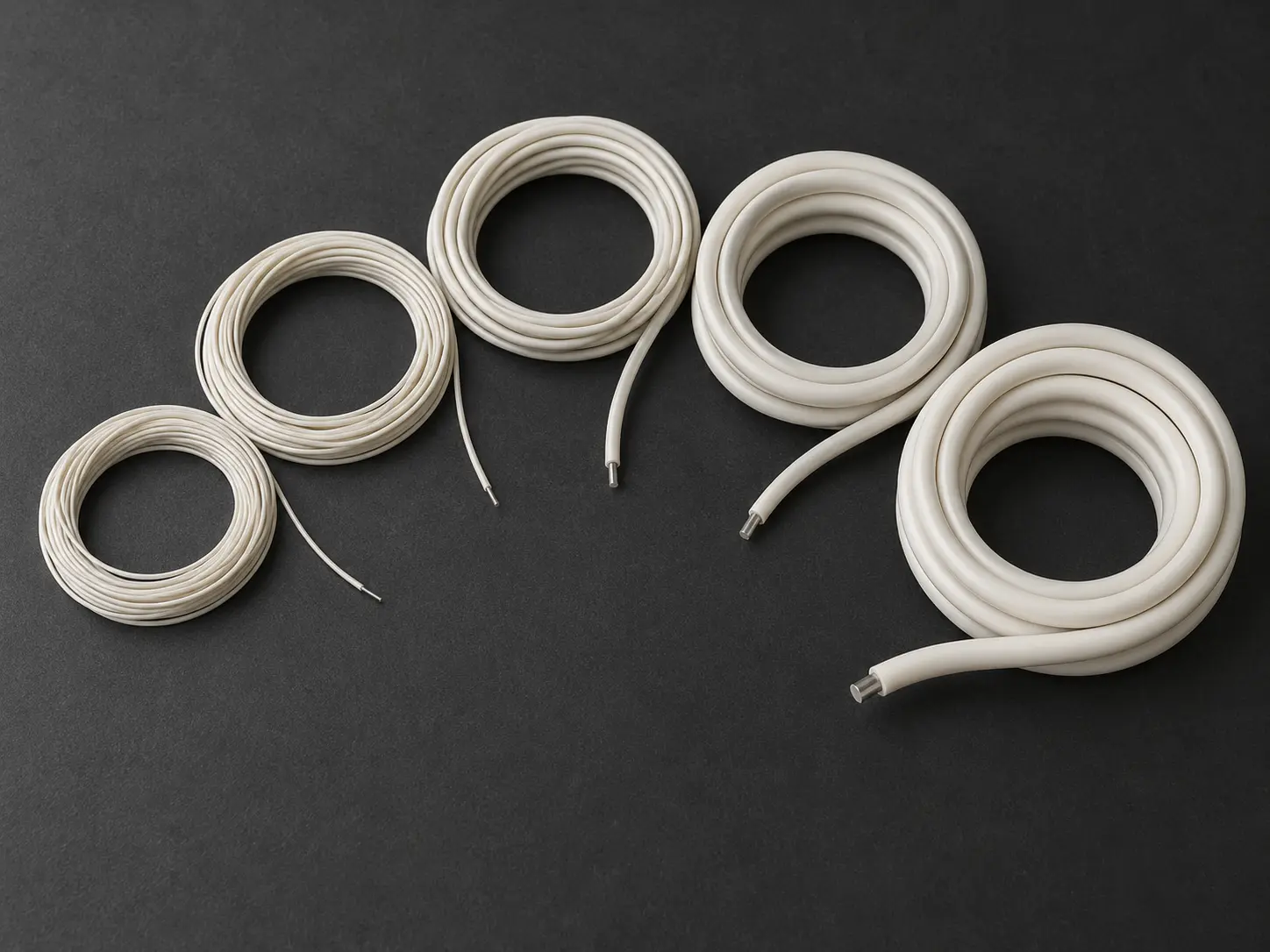
UL AWM Style 3266 — 125°C / 300 Vac XLPE Internal Wire
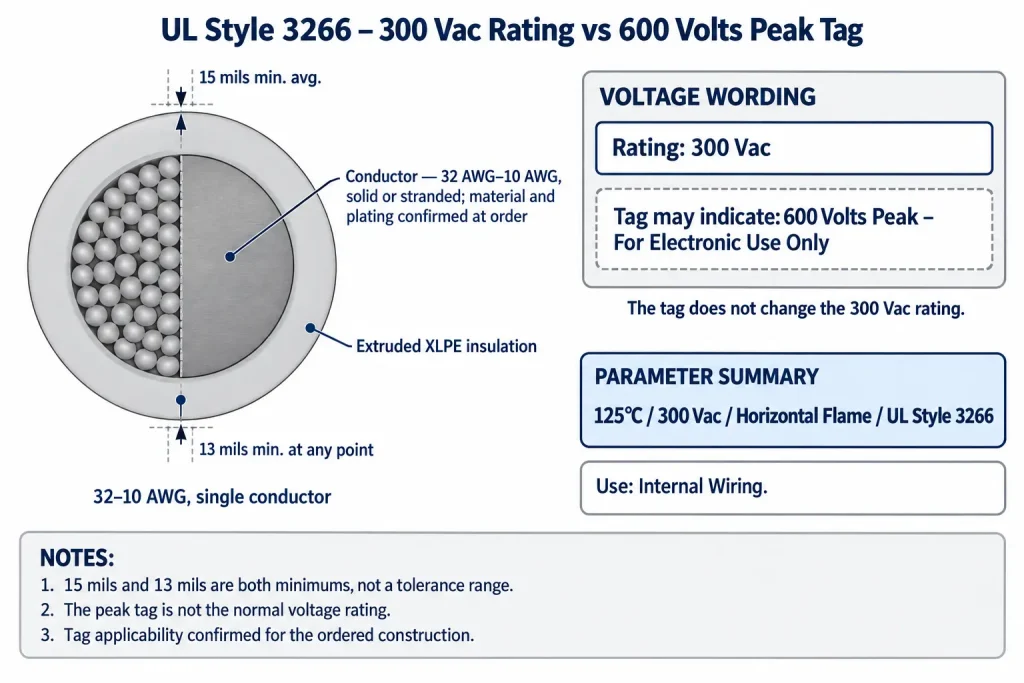
UL AWM Style 3266 is a single conductor with extruded insulation. Its rating field reads “125 deg C, 300 Vac, Horizontal flame.” The conductor range is 32 AWG to 10 AWG, solid or stranded, and the insulation is extruded XLPE with a minimum average thickness of 15 mils and a minimum thickness of 13 mils at any point. The marking field reads “General.” The Use field reads: “Internal Wiring. Tags may indicate the following: 600 Volts Peak – For Electronic Use Only.”
That last sentence is the subject of this page. Style 3266 has one normal voltage rating, 300 Vac, and a separate provision that allows tags to carry the wording 600 Volts Peak – For Electronic Use Only. Catalogues and RFQs often merge the two into a single “600V” figure, which misstates the Style. The sections below set out what each statement means, how they relate to each other, and how to specify the tag when a drawing calls for it. For the broader Style overview and the other constructions offered under it, see the UL 3266 XLPE Wire category.
Verified UL 3266 Technical Specifications
| Parameter | UL AWM Style 3266 record |
|---|---|
| Style | 3266 |
| Construction | Single conductor with extruded insulation |
| Temperature | 125°C |
| Normal voltage rating | 300 Vac |
| Flame | Horizontal flame |
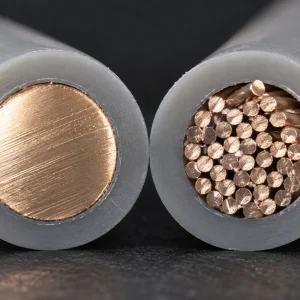
| AWG range | 32 AWG – 10 AWG |
| Conductor form | Solid or stranded |
| Insulation | Extruded XLPE |
| Minimum average insulation thickness | 15 mils (0.38 mm) |
| Minimum insulation thickness at any point | 13 mils (0.33 mm) |
| Marking | General |
| Use | Internal Wiring |
| Optional tag | Tags may indicate: 600 Volts Peak – For Electronic Use Only |
Four points in this table need clarification. First, the optional tag wording comes from the Use field of the Style record, not from the rating field; the rating field contains only 300 Vac. Second, the record states no DC rating, and none should be assumed. Third, the millimetre values are direct unit conversions of the mil values (1 mil = 0.0254 mm), not separate design dimensions. Fourth, the conductor entry defines size range and form only; conductor material, finish and strand construction are confirmed according to the ordered construction.
300 Vac Is the Normal UL 3266 Rating
The rating field of Style 3266 contains one voltage value: 300 Vac. This is the voltage rating of the Style, and it applies to every construction across 32–10 AWG whether or not the optional tag is used. The record states it as an AC value. No DC rating appears, and no combined figure such as “300/600V” or “600 Vac” appears anywhere in the Style.
The 300 Vac rating sits alongside the other two rating elements, 125°C and Horizontal flame. None of the three translates into a current, wattage or load figure, a service life or a thermal margin. 125°C is the rated temperature of the Style; the record does not describe it as a continuous-duty or long-term service figure, and no such wording is added here.
A drawing or purchase specification that describes UL 3266 as “600V wire”, “600 Vac”, “600V working voltage” or “300/600V” misstates the Style. That wording should be corrected to 300 Vac before quotation. If the drawing actually intends the peak tag provision, it should quote the tag wording in full, as described in the next section.
600 Volts Peak — For Electronic Use Only
The Use field of Style 3266 ends with the sentence: “Tags may indicate the following: 600 Volts Peak – For Electronic Use Only.” This is a tag provision. It permits the tag of a qualified construction to carry that wording. It is not a second voltage rating and does not replace 300 Vac.
The wording has three parts, and they stay together:
- 600 Volts — the value stated on the tag.
- Peak — the value is expressed as a peak value, a different kind of figure from the 300 Vac rating.
- For Electronic Use Only — the qualification that restricts the provision.
Removing any part changes the meaning. “600V” on its own reads as a normal rating. “600V peak” without “For Electronic Use Only” drops the restriction. Neither is a correct abbreviation of the Style record, so this page always gives the tag wording complete. No conversion between the peak value and the AC rating is offered, because the Style record does not provide one.
The tag provision does not change the Use. The Use remains Internal Wiring. The tag does not create a separate use category, does not turn Style 3266 into general 600V wiring, and does not extend the Style into power, feeder or field wiring.
The record says tags may indicate this wording. Not every construction or put-up automatically carries it. Where a buyer’s specification requires the tag, state that requirement in the RFQ; its applicability is then confirmed against the ordered qualified construction.
32–10 AWG Solid or Stranded
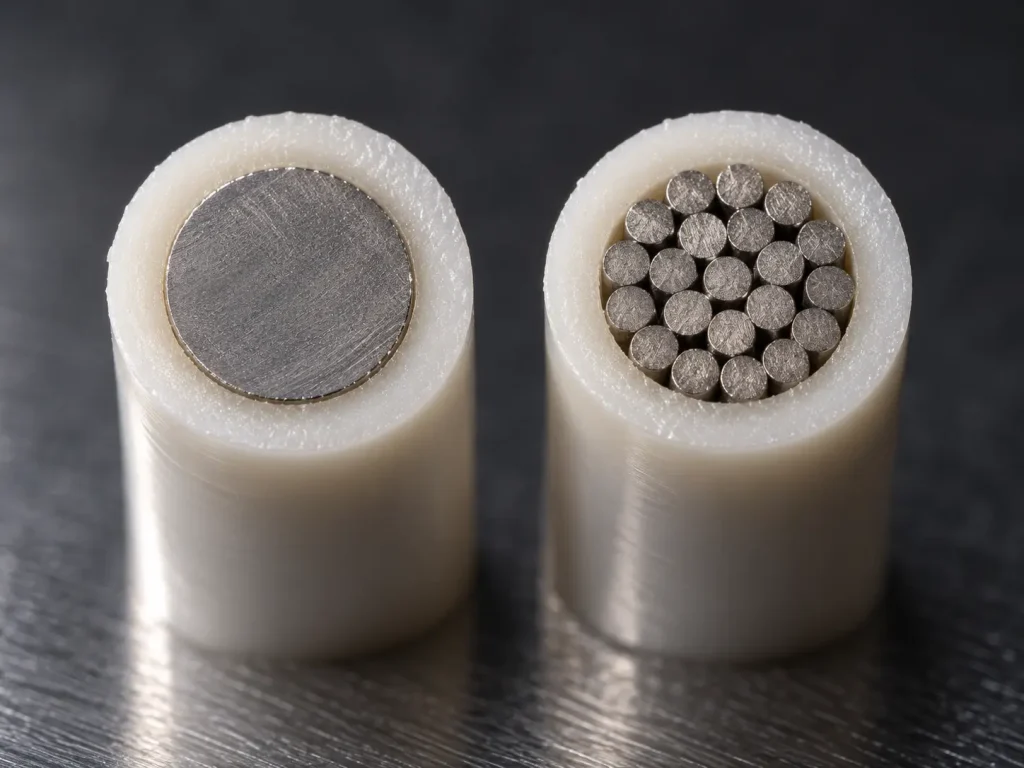
The conductor field reads “32 AWG – 10 AWG, solid or stranded.” This is the range the Style covers. It does not mean every size is produced routinely in both forms or held available; the availability of a particular size and form is confirmed per inquiry. 32 AWG and 10 AWG are the ends of the range, and neither is featured here. The 300 Vac rating, the insulation requirement and the tag provision apply equally across the whole range.
The conductor field does not define conductor material, finish or plating, strand count, strand diameter, lay length, conductor class or conductor resistance. The Style assigns no current rating to any size, and the tag provision does not add one. Where a drawing controls any of these conductor details, state them in the RFQ and confirm them for the ordered construction.
15 Mil / 13 Mil Extruded XLPE Insulation Requirement
The insulation is extruded XLPE, subject to two separate thickness requirements:
- 15 mils (0.38 mm) minimum average: the average of wall-thickness measurements around the insulation must not fall below 15 mils.
- 13 mils (0.33 mm) minimum at any point: the thinnest point anywhere in the wall must not fall below 13 mils.
A qualified construction must meet both. A wall averaging above 15 mils still fails if one spot measures below 13 mils, and a wall with no point below 13 mils still fails if its average is below 15 mils. The two figures are floors. They are not a tolerance band, and neither is a nominal or target wall. The actual wall of an ordered construction may exceed 15 mils, so the finished outside diameter cannot be derived from conductor size plus insulation thickness. Where a drawing controls the finished diameter, that requirement should be confirmed against the ordered construction.
The same insulation requirement applies across 32–10 AWG and does not change when the optional tag is used. The record identifies the material as XLPE and attributes no further performance properties to it, so this page does not assign mechanical, abrasion, flexibility or thermal-ageing characteristics to the insulation.
Internal Wiring Use Boundary
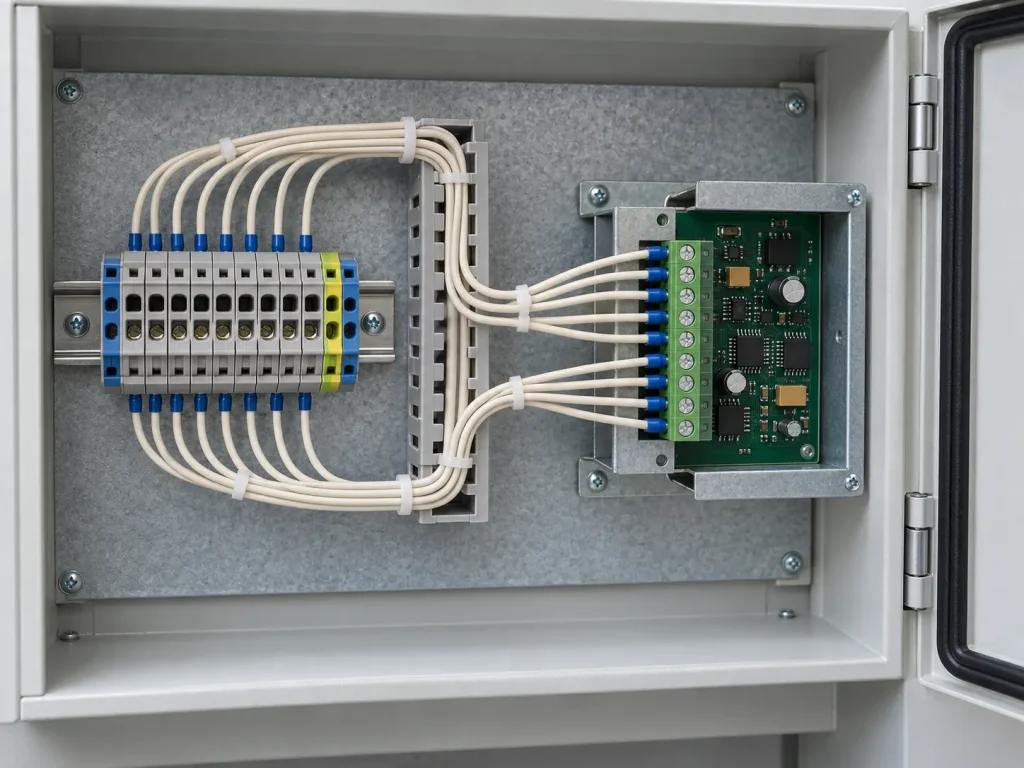
The official Use is “Internal Wiring.” Style 3266 is intended for wiring within equipment. It is not building wire, branch-circuit wiring, field wiring, motor feeder wiring, motor-to-drive or VFD cable, tray or conduit cable, external equipment wiring, portable cord or facility distribution wiring. Neither the 300 Vac rating, the 125°C rating nor the tag provision widens this boundary.
Drawings and legacy documents sometimes describe internal leads with terms such as “motor lead” or “lead wire.” Those are commercial or application terms. The Style 3266 record does not designate motor leads as a Use; the official Use remains Internal Wiring. Whether the component is acceptable in a specific end product is determined by that end product’s own evaluation.
What Style 3266 Does and Does Not Define
The Style record defines the construction (single conductor, extruded insulation); the rating (125°C, 300 Vac, Horizontal flame); the conductor range and form (32–10 AWG, solid or stranded); the insulation material and its two minimum thicknesses (extruded XLPE, 15 mils minimum average, 13 mils minimum at any point); the marking field (General); the Use (Internal Wiring); and the tag provision (600 Volts Peak – For Electronic Use Only).
The Style record does not define:
- conductor material, finish, plating or strand construction
- conductor resistance or current rating
- nominal insulation wall, finished outside diameter or diameter tolerance
- a DC voltage rating
- a vertical flame rating
- bend radius, flex performance or service life
- colours, put-up lengths or packaging
Common Procurement Errors
- Listing 600V, 600 Vac or 300/600V as the UL 3266 rating.
- Shortening the tag to “600V peak” and dropping “For Electronic Use Only”.
- Assuming every reel or package carries the 600 Volts Peak tag.
- Treating the tag provision as a use beyond Internal Wiring.
- Adding a DC rating that the Style record does not state.
- Treating 15 mils as the nominal wall and calculating a finished diameter from it.
- Assuming a conductor material or plating is part of the Style definition.
- Assigning a current rating by AWG.
- Assuming a VW-1, FT1 or other vertical flame rating.
- Recording the Use as “Motor Leads” instead of Internal Wiring.
How to Specify UL 3266 300 Vac Wire with the 600 Volts Peak Tag in an RFQ
An RFQ should keep the Style-fixed parameters apart from the order-specific details. The Style fixes the construction, 125°C, 300 Vac, Horizontal flame, extruded XLPE, the 15-mil minimum average and 13-mil minimum-point thicknesses, and the Internal Wiring Use. The following should be stated by the buyer and confirmed for the ordered construction:
- required AWG within 32–10 AWG
- solid or stranded conductor
- conductor material
- conductor finish or plating
- detailed strand construction, if controlled
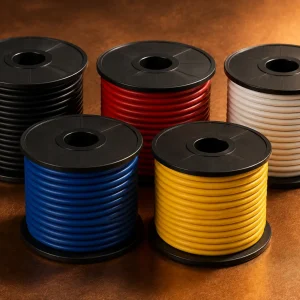
- insulation colour
- finished outside diameter, if controlled
- whether the 600 Volts Peak – For Electronic Use Only tag is specifically required
- quantity
- packaging
- marking requirement
- documentation requirement
- customer drawing or existing specification
If the drawing states a voltage for UL 3266 other than 300 Vac, identify whether it refers to the peak tag provision and quote the tag wording in full, so the requirement can be confirmed rather than assumed.
UL Marking and Documentation
Style 3266 wire is supplied as UL-recognized component wire where supplied under qualified manufacturing scope. The marking field of the Style record reads “General” and does not prescribe a fixed print legend. UL marking, and the 600 Volts Peak – For Electronic Use Only tag wording where required, is applied according to the confirmed ordered construction and should be confirmed at the order stage.
Applicable RoHS / REACH documentation can be confirmed according to the ordered construction. CE, UKCA, CSA, FT1, VW-1, CPR, VDE, DIN, EN and IEC are not declared for this product.
Commercial, origin, compliance and transport documents are identified during quotation and confirmed according to the order.