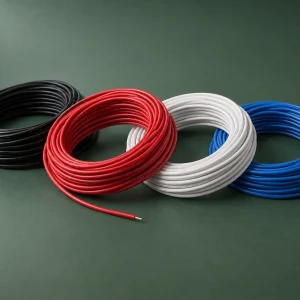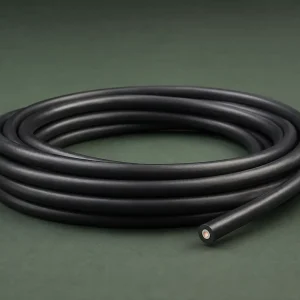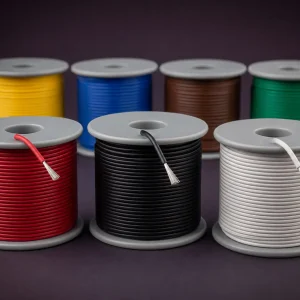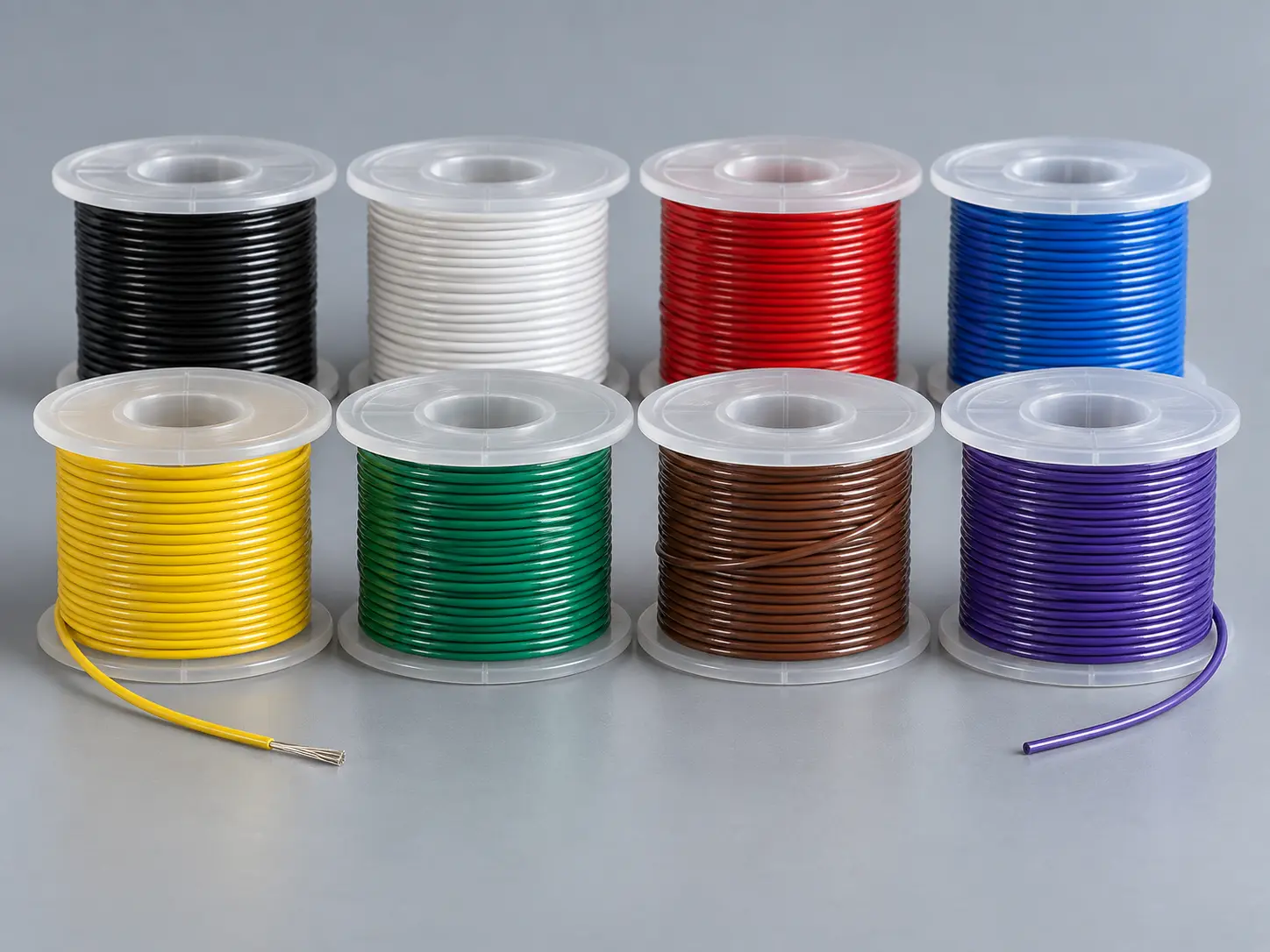
UL 3266 for Internal Harness Wiring in Fixed Equipment
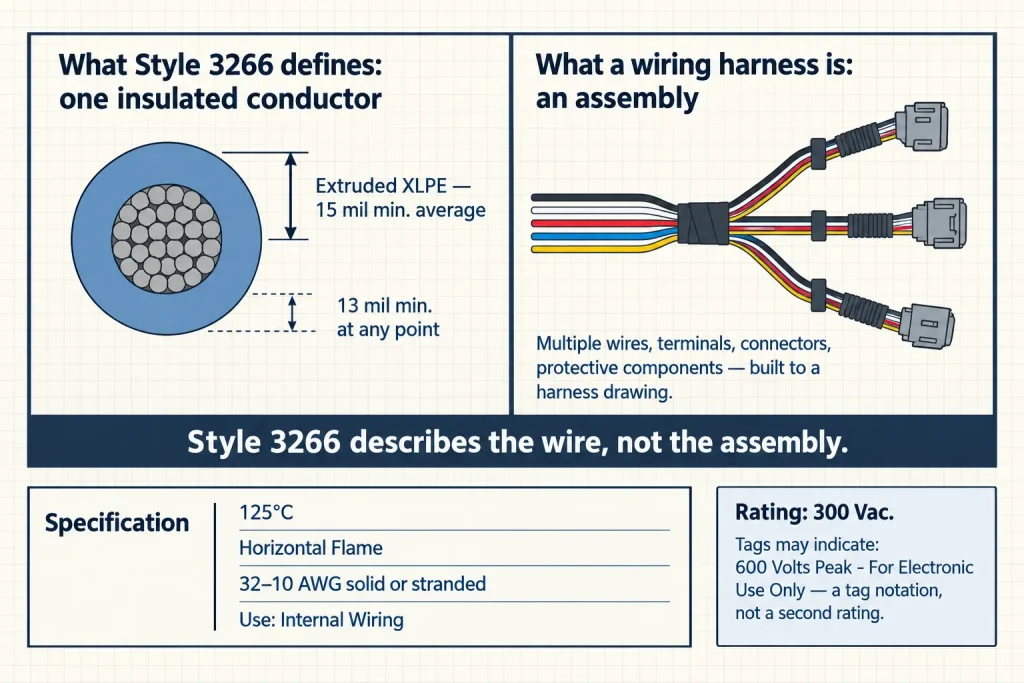
UL AWM Style 3266 is a single conductor with extruded insulation, rated 125°C and 300 Vac with Horizontal Flame, across a 32 AWG through 10 AWG conductor range in solid or stranded form. The insulation is extruded XLPE at 15 mils minimum average thickness and 13 mils minimum at any point.
This page is for buyers sourcing that construction as a component of an internal wiring harness in fixed electrical equipment. The official Use for Style 3266 is internal wiring. “Harness wire” here describes the purchasing context in which a Style 3266 single conductor is incorporated into an internal harness — it is not UL wording, and the Style record designates no harness or equipment category.
Single Conductor, Not a Completed Harness
The distinction is worth making early because the word “harness” does a lot of work in sourcing conversations.
Style 3266 is a single insulated conductor. A wiring harness is an assembly: multiple wires, terminals, connectors, and often tape, sleeving, clips or protective components, built to a harness drawing. The Style describes the first of those, not the second.
An enquiry for “UL3266 harness” therefore needs to say which is required. Bulk single-conductor wire and a completed harness assembly have different specifications, different documentation and different quotation structures. Completed harness assemblies are not presented here as automatically available; any such capability is confirmed separately.
Verified UL Style 3266 Construction
| Parameter | Style-level information |
|---|---|
| UL AWM Style | 3266 |
| Construction | Single conductor with extruded insulation |
| Temperature rating | 125°C |
| Voltage rating | 300 Vac |
| Flame | Horizontal Flame |
| Conductor size range | 32 AWG–10 AWG |
| Conductor form | Solid or Stranded |
| Insulation | Extruded XLPE |
| Minimum average insulation thickness | 15 mils |
| Minimum thickness at any point | 13 mils |
| Marking | General |
| Official Use | Internal Wiring |
| Optional tag — separate from the rating above | 600 Volts Peak – For Electronic Use Only |
The two insulation figures are separate requirements: 15 mils governs the average across the wall, 13 mils sets a floor at every individual point on it.
Reading the 600 Volts Peak Tag Correctly
The Style information states that tags may indicate “600 Volts Peak – For Electronic Use Only.” This sits alongside the Use statement, not in the rating, and it is a different kind of statement from the voltage rating.
The normal Style rating is 300 Vac. That is what applies unless a qualifying tagged construction is specifically involved. The optional tag notation should not be converted into 600 Vac, into a 600V continuous rating, into a 600V general-purpose rating, into 600V equipment wiring, or into a substitute for a Style whose normal rating is 600 Vac.
Nor should the product be described as “300V/600V wire” without that qualification — a description which reads, to a harness engineer working from a drawing, as though two normal ratings were available.
Where a design references the peak notation, treat it as a construction-specific question: does the ordered construction qualify for that tag, and does the application match “for electronic use only”? Both are confirmed against the ordered construction rather than assumed from the Style number.
Handling the 32–10 AWG Range
32 AWG through 10 AWG is a wide range, spanning fine signal conductors at one end and substantially heavier conductors at the other.
No gauge inside it is correct on the strength of the Style number, and none is recommended here. The required conductor size comes from the equipment design, the harness drawing, the electrical load requirement and the applicable engineering specification. No ampacity table appears on this page and no current-carrying capacity is inferred from AWG, because the Style record establishes neither.
What is worth flagging is that fine-gauge and heavier-gauge constructions within one Style can carry quite different procurement requirements — different termination hardware, different handling in a harness build, different dimensional constraints. Those differences belong to the ordered construction and to the harness drawing, and no specific values are stated here.
Conductor Requirements Are RFQ Fields
The Style conductor requirement establishes the size range and the solid or stranded form. It establishes nothing else.
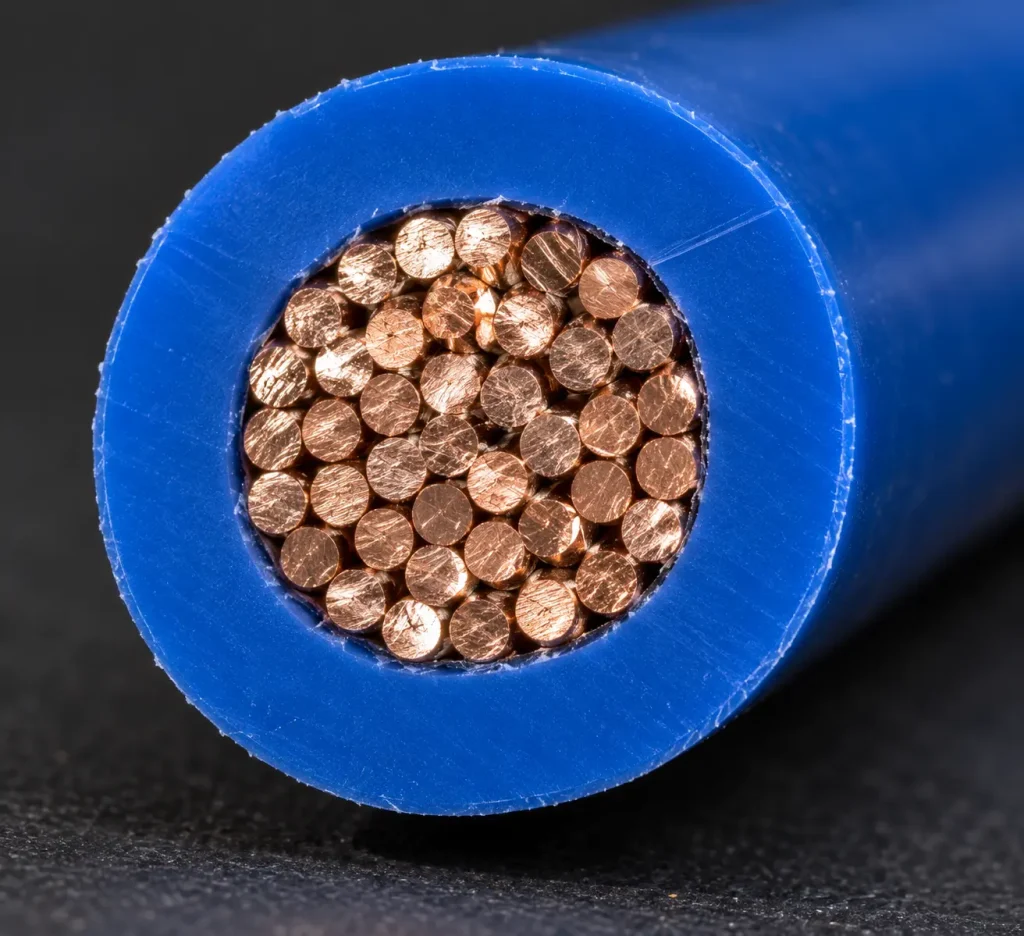
Copper, tinned copper, bare copper, silver-plated copper and nickel-plated copper are none of them established at Style level, and no strand count, strand diameter, conductor diameter, lay length, conductor resistance or ampacity is stated here. Where the harness drawing controls any of them — and stranding in particular is frequently controlled in harness work because of crimp compatibility — state it in the enquiry as a confirmation item.
Dimensional Requirements in Harness Procurement
The Style specifies insulation-wall requirements. It does not establish one universal finished outside diameter across a range as wide as 32–10 AWG, and no OD or tolerance value is published or derived here.
In harness work, dimensions often matter more than they do for a single loose lead, because the wire has to fit hardware that was selected independently. Where the drawing controls dimensions, useful fields include:
- Finished OD or maximum OD
- Conductor diameter, if controlled
- Terminal barrel compatibility
- Routing-channel clearance
- Connector cavity constraints
- Stripping dimensions
- Bundle-space limitations
These are buyer-confirmation fields against an ordered construction. No dimensional characteristic is claimed here as a general property of Style 3266.
Termination Is Determined Downstream, Not by the Style
Style 3266 alone does not determine terminal type, connector series, strip length, cut length, crimp specification, wire seal compatibility, contact size or finished lead assembly.
Where the customer is buying bulk wire, those decisions sit with the harness assembler and the harness drawing, and the wire specification only needs to be compatible with them. Where the customer expects processed leads or assemblies, the requirements have to be stated and separately confirmed. Terminals, connectors, cutting, stripping and crimping are not presented here as included services.
Fixed Equipment Internal Wiring
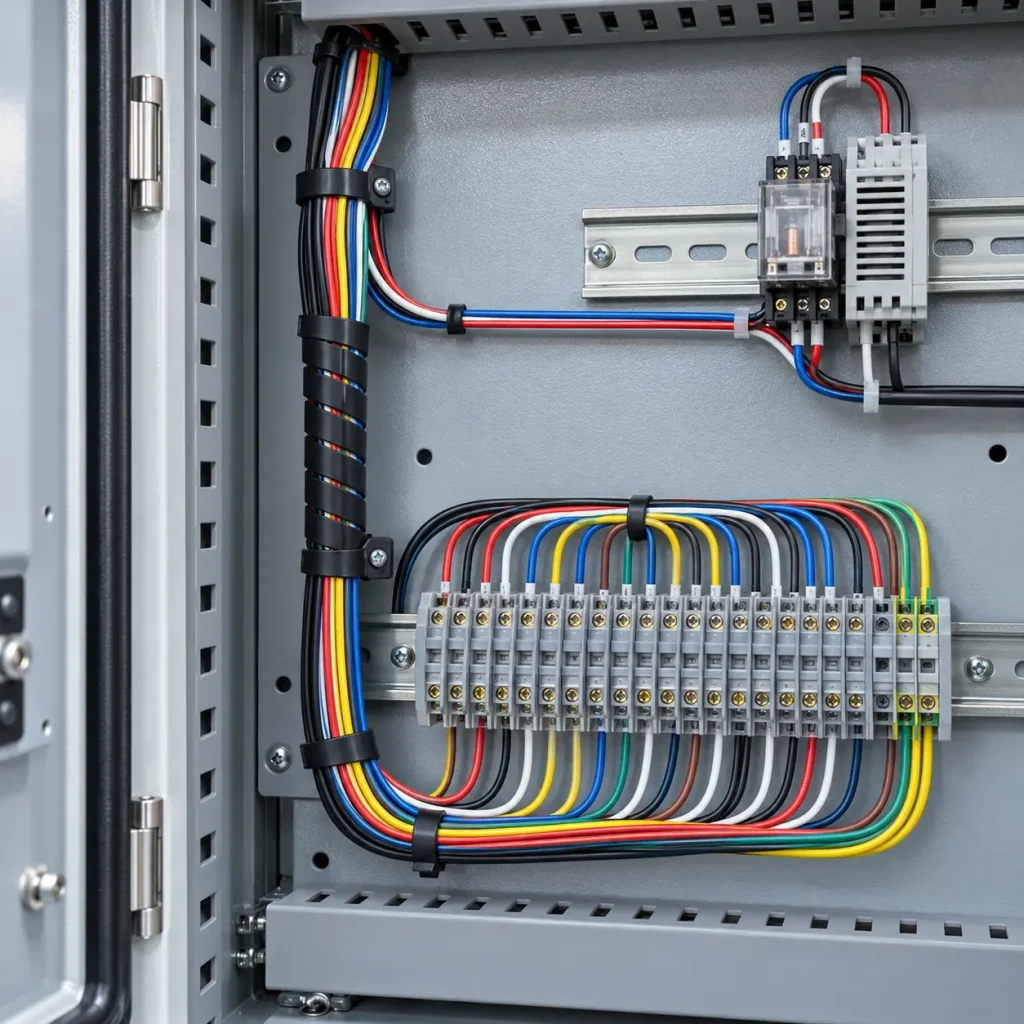
Fixed electrical equipment commonly routes internal wire along paths controlled by drawings, clips, channels, terminal locations and harness layouts. Those constraints are legitimate procurement inputs and are worth describing in an enquiry.
What “fixed equipment” does not do is extend the Use. Style 3266 is internal wiring within equipment. It is not building wiring, field wiring, branch-circuit wiring, conduit wiring, raceway wiring, tray cable, facility wiring, general power distribution or permanent building installation, and it is not offered for any of those here.
The 125°C Rating and Flame Classification
Style 3266 is rated 125°C, and that rating applies to the wire. It does not establish the permitted internal ambient of the equipment, the rating of terminals or connectors in the harness, or the rating of adjacent components.
The Style-level flame designation is Horizontal Flame. VW-1 and FT1 are separate classifications, are not claimed here, and Horizontal Flame is not converted into either. Any separately confirmed vertical-flame construction is order-specific rather than a universal Style 3266 rating.
What Style 3266 Does Not Define
- Conductor material and conductor plating
- Detailed strand construction
- Conductor resistance and ampacity
- Finished OD and OD tolerance
- Colour
- Cut length, terminal and connector
- Harness layout
- Packaging, reel length, MOQ, stock and lead time
Each must be confirmed against the buyer’s drawing, the ordered construction or a separately verified SKU specification.
Substitution and Comparison
UL 3271 and UL 3321 are separate AWM Styles with their own verified constructions and ratings. They are not presented here as automatic alternatives for a higher-voltage requirement, and no Style is treated as interchangeable with another on the basis of a single differing parameter — each requires independent evaluation against the equipment specification.
The same applies to insulation material. Silicone, PVC and fluoropolymer constructions are not recommended here on the basis of generic environmental assumptions, and sharing an insulation material family is not evidence of equivalence between two Styles.
A substitution assessment covers the required UL Style, the voltage rating, the temperature rating, the AWG, the conductor requirements, the insulation construction, the dimensions, the terminations, the marking and the equipment design.
Common Harness RFQ Gaps
- “UL3266 wire” requested with no AWG. The Style spans 32–10 AWG.
- Tinned copper assumed for all Style 3266 wire. Conductor material is not set at Style level.
- One finished OD assumed across the Style. OD varies with size and ordered construction.
- Bulk wire confused with a completed wiring harness. Different scopes and different quotations.
- Terminal or connector requirements not provided. The Style determines none of them.
- “600 Volts Peak” read as a normal 600V rating. The normal Style rating is 300 Vac.
- Internal wiring not distinguished from field or building wiring. The Use covers internal wiring only.
- Stranding left open where crimp compatibility depends on it. Solid and stranded are both permitted.
Each leaves the request matching more than one qualified construction, or matching a different scope than the one intended.
RFQ Checklist
- UL AWM Style 3266 requirement
- AWG within 32–10 AWG
- Solid or stranded form
- Required conductor material
- Required conductor finish
- Detailed stranding, if controlled
- Colour
- Finished OD or maximum OD, if controlled
- Equipment type
- Internal harness context
- Routing conditions
- Cut length, if applicable
- Strip dimensions
- Terminal or connector interface
- Marking requirements
- Quantity
- Packaging requirement
- Destination
- Required compliance documentation
These are RFQ inputs, not options presented as automatically available.
UL Marking and Documentation
Material is supplied as UL-recognized component wire where supplied under qualified manufacturing scope, and UL marking is applied according to the confirmed ordered construction. The Style-level marking designation is General.
CSA AWM, FT1, VW-1 and dual UL / CSA certification are not claimed here; any additional certification depends on the ordered construction. Applicable RoHS / REACH documentation can be confirmed according to the ordered construction.