Silicone Rubber Heaters
A silicone rubber heater is a thin, flexible heating element in which a resistance circuit is sealed inside silicone rubber, so it can be wrapped around a drum, clamped onto a compressor, wound along a pipe or bonded to a flat plate. This category groups the silicone rubber heater formats we supply: drum heater bands, LPG cylinder heater bands, crankcase heater belts, flat and coiled heating tapes, and heating pads built to size. Listed working temperature ranges reach -60 to +200°C, and supply voltages run from 12 V for small pads and tapes up to 380 V for large drum bands.
Every format below is specified by its own set of numbers: band length and width for drums and cylinders, belt length for crankcases, diameter and heated length for coiled tapes, and surface dimensions for pads. The tables and checklists on this page are organised around those numbers so that an enquiry can be matched to a configuration without guesswork.
Heater Formats and Listed Ranges
| Format | Listed sizes | Voltage | Power | Temperature |
|---|---|---|---|---|
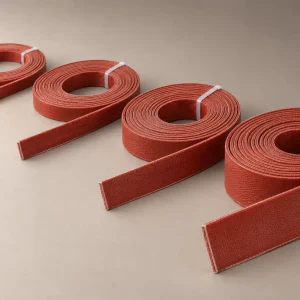
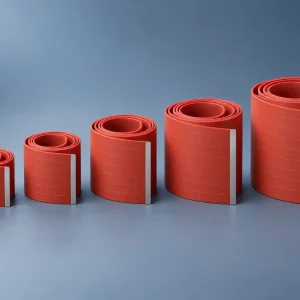
| Drum heater band | 860×200 mm (20 L) to 1740×250 mm (200 L) | 36 / 110 / 220 / 380 V; others on request | 800–3,000 W by size | -60 to +200°C |
| LPG cylinder heater band | 80×760 mm (5 kg) to 200×1250 mm (50 kg) | 220 V | 180–500 W | 0 to 200°C |
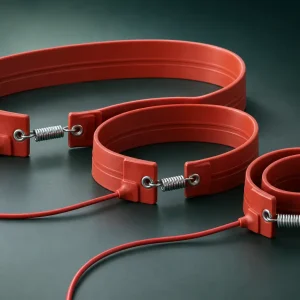
| Crankcase heater belt | 30 mm wide; 430–1,000 mm standard lengths, longer to 5,000 mm | 24–265 V range; 220 V standard | 43–100 W | -30 to +200°C |
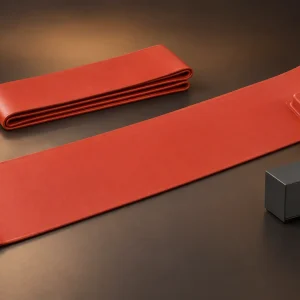
| Flat flexible heating tape | 15 / 25 / 30 / 50 mm wide; 1–5 m long | 220 V | 80 W per metre listed; 100–1,000 W versions | 150°C maximum |
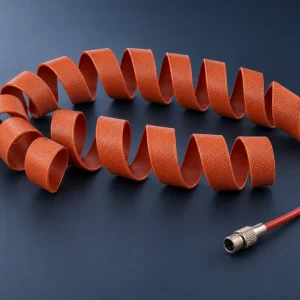
| Coiled (spiral) heating tape | Ø6 / 8 / 10 / 12 mm, 250–2,000 mm; Ø25 mm, 1–5 m | 12–220 V | 60–110 W/m (Ø6–Ø12); 80 W/m (Ø25) | -60 to +200°C |
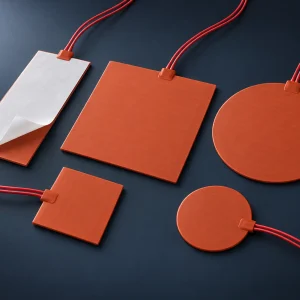
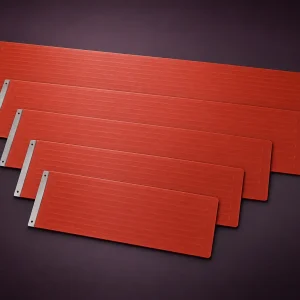
| Heating pad / plate | 30×60 to 300×300 mm; round Ø50–Ø300 mm; custom outlines | 12 / 24 / 220 V | Built to specification | Up to 200°C surface |
| Large-format blanket | 2900×300, 1000×300 and 2000×1000 mm | 220 V | Built to specification | Controlled by knob, digital or cabinet thermostat |
| Cold-room fan duct band | 80×2450 mm; other sizes on request | 230 V maximum | Built to specification | 40–70°C surface |
Further formats in this group include silicone heating plates for tyre-repair vulcanising tools, heating pads for livestock water troughs and half-round or full-round pads for funnels and laboratory vessels. These are offered in listed models plus custom outlines, so they are quoted against a drawing or a set of dimensions rather than a fixed table.
Working Range Versus Surface Temperature
The -60 to +200°C figures above describe the range the heater construction is listed for, not the temperature a given heater will reach in service. The surface temperature in use depends on watt density, how well the heater contacts the vessel, whether the outer face is insulated and where the thermostat sensor sits. The figures in the table show how much the formats differ: the flat flexible tape is listed at 150°C maximum, and the cold-room fan duct band is a low-temperature design with a 40–70°C surface range.
For tapes and belts, the more useful figure is power per metre. A Ø6 mm coiled tape is listed at about 60 W/m and a Ø12 mm tape at about 110 W/m. Choosing between them changes how quickly a small tube warms and how hard the thermostat has to cycle. Total wattage alone cannot express that difference.
Control, Connection and Mounting Options
- Thermostats: mechanical knob thermostat or digital display thermostat on drum bands, pads, tapes and blankets; control cabinet for the largest blankets.
- Sensors: K-type thermocouple lead available as a separate item for coiled tapes and pads.
- Plugs and leads: standard plug or leakage-protection plug; 1 m power lead on crankcase belts; aviation-type connector option on Ø25 mm coiled tape; series connector for linking tape sections.
- Mounting: spring-hook closure on drum bands and crankcase belts; spring-clip half-round or adhesive-backed full-round versions for funnel pads; aluminium foil tape for securing tapes to pipes.
Matching a Format to the Job
- Steel or plastic drums, pails and resin containers: drum heater band, chosen by drum volume and band length.
- Gas cylinders that lose pressure in cold weather: LPG cylinder heater band, chosen by cylinder size (5, 10, 15 or 50 kg class).
- Refrigeration and air-conditioning compressors: 30 mm crankcase heater belt, chosen by compressor shell circumference.
- Small tubes, hoses and oil lines: coiled heating tape, chosen by tube diameter and heated length.
- Larger pipes, valves and vessels: flat flexible tape wrapped in a spiral, with a digital thermostat.
- Flat surfaces, instruments and printer beds: heating pad cut to the plate outline, at 12, 24 or 220 V.
Common Specification Errors
- Ordering by total wattage only. Two tapes with the same total wattage but different lengths deliver different power per metre and run at different surface temperatures.
- Not measuring the circumference. Drum and cylinder bands are sized to a band length (for example 1740 mm for a 200 L drum). Drums of the same nominal volume vary in diameter, so measure before you order.
- Treating a test voltage as the operating voltage. Dielectric test figures quoted in kV are not the supply voltage. Specify the mains or control voltage the heater will run on.
- Leaving the plug and control undefined. State the plug type for the destination market, and say whether a knob or digital thermostat is needed. If not, the heater arrives without the control the application assumes.
- Ignoring lead length and sensor position. Crankcase belts ship with a 1 m lead as listed. Longer runs and remote sensor placement must be stated at enquiry.
RFQ Checklist
- Heater format (drum band, cylinder band, crankcase belt, flat tape, coiled tape, pad or blanket)
- Dimensions: band length × width, tape width × length, coil diameter × length, or pad outline drawing
- Object to be heated, and its measured diameter or circumference
- Supply voltage and required power (total watts, or W/m for tapes)
- Required surface or process temperature, and the lowest ambient temperature
- Control: none, knob thermostat, digital thermostat or thermocouple output
- Plug type, lead length and connector requirements
- Mounting method: spring hook, clip, adhesive backing or foil tape
- Required certification or test documents for your market (confirmed per order)
- Quantity per configuration
Related Categories
For silicone and other high-temperature hook-up wire used alongside these heaters, see the High Temperature Wire Cable category.
Showing all 9 results