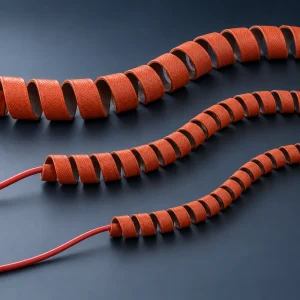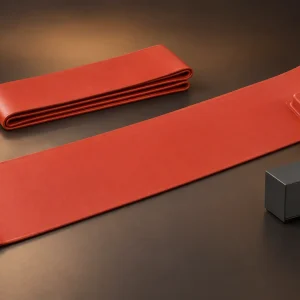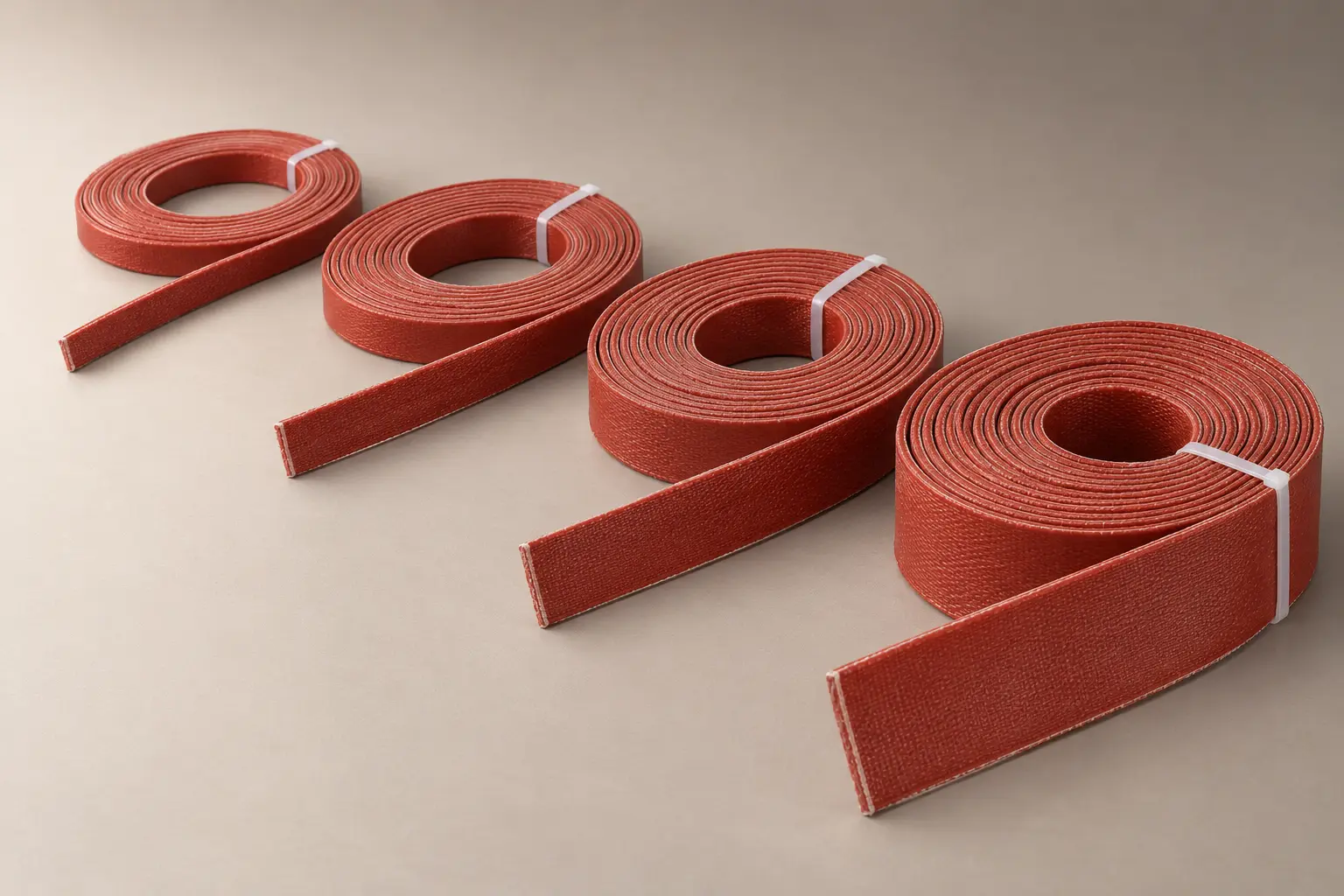
This flexible heating tape is a thin, flat silicone rubber heater made to be wound in a spiral around pipes, valves, small tanks and other equipment that must be kept warm or protected from freezing. It is offered in 15, 25, 30 and 50 mm widths and in lengths from 1 m to 5 m. The standard tapes are rated at about 80 W per metre, from 80 W for a 1 m tape up to 400 W for a 5 m tape, and higher-wattage builds from 100 to 1,000 W are available. The tape runs on 220 V, and its maximum working temperature is 150°C. It can be ordered with a digital display thermostat, a leakage-protection plug or a standard plug.
The tape’s main advantage is its shape. A thin flat strip follows the curve of a pipe, wraps around valve bodies and elbows, and sits flat against the surface it heats, so it suits the irregular objects where a rigid heater or a drum band cannot be fitted. This page explains how width changes watt density, how much tape a given length of pipe needs, and how the thermostat option is used.
Key Features
- Widths 15, 25, 30 and 50 mm
- Lengths 1, 1.5, 2, 3 and 5 m; custom on request
- Approx. 80 W per metre standard; 100–1,000 W builds available
- 220 V supply
- Maximum working temperature 150°C
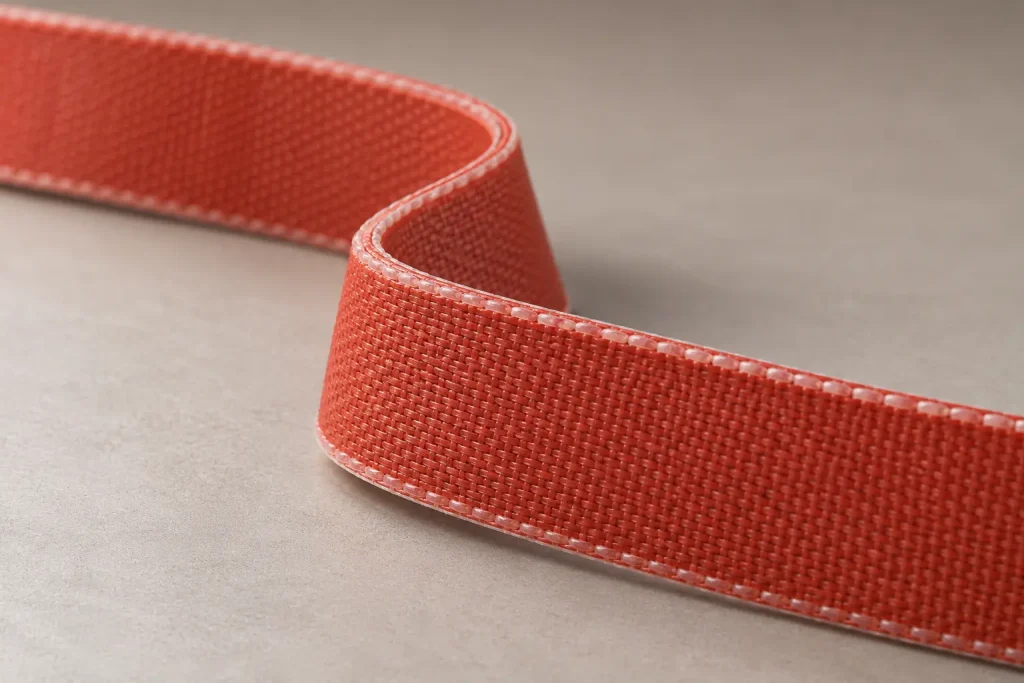
- Thin, flexible silicone rubber with a fabric-textured surface
- Optional digital display thermostat
- Leakage-protection plug or standard plug
Sizes and Power
| Length | Power at 220 V | Current* | Widths listed |
|---|---|---|---|
| 1 m | 80 W | approx. 0.36 A | 15 / 30 / 50 mm |
| 1.5 m | 120 W | approx. 0.55 A | 15 / 30 / 50 mm |
| 2 m | 160 W | approx. 0.73 A | 15 / 30 / 50 mm |
| 3 m | 240 W | approx. 1.1 A | 15 / 30 / 50 mm |
| 5 m | 400 W | approx. 1.8 A | 15 / 30 / 50 mm |
| 1, 2, 3 m with digital thermostat | 100–1,000 W builds | up to approx. 4.5 A | 15 / 25 / 50 mm |
*Calculated as power divided by 220 V.
How Width Changes Watt Density
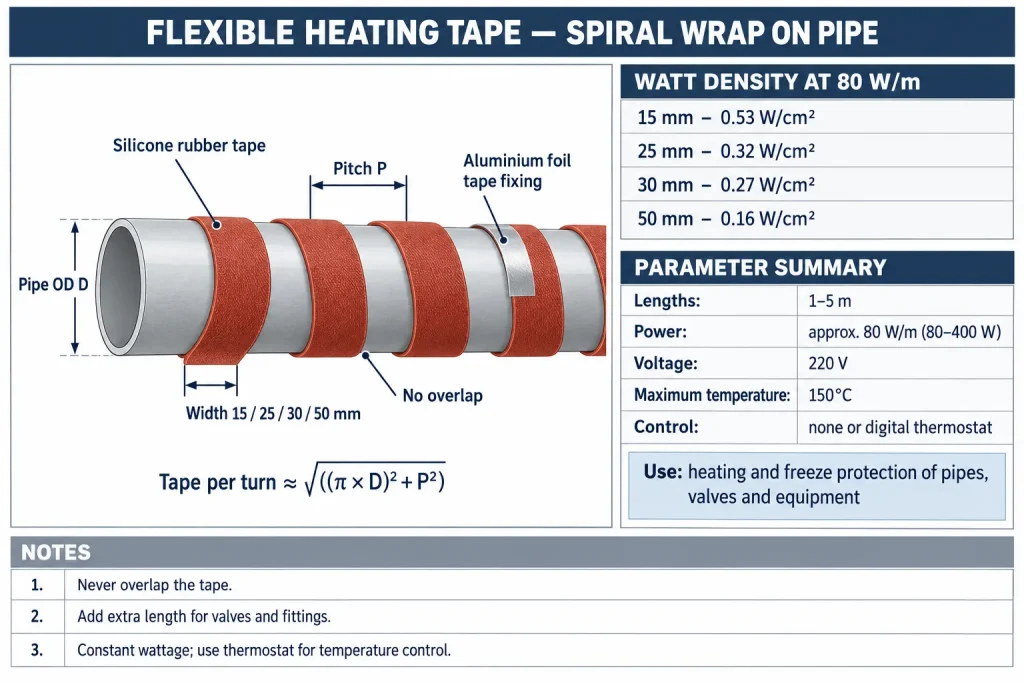
On the standard tapes, power is set per metre of length, so all widths deliver about 80 W per metre. What changes with width is how that heat is spread. A narrow tape concentrates it on a thin strip, and a wide tape spreads it over a larger contact area, so it runs cooler at the surface.
| Width | Watt density at 80 W/m* | Typical fit |
|---|---|---|
| 15 mm | approx. 0.53 W/cm² | Small pipes, tubing, instrument lines, tight bends |
| 25 mm | approx. 0.32 W/cm² | General pipe and hose tracing |
| 30 mm | approx. 0.27 W/cm² | Medium pipes, valve bodies |
| 50 mm | approx. 0.16 W/cm² | Larger pipes, small tanks, plastic surfaces |
*Calculated as 80 W divided by the tape area of one metre.
For plastic pipes and heat-sensitive surfaces, a wider tape at the same wattage is the gentler choice. A narrow 15 mm tape is the one that bends tightly enough to follow small-diameter tubing and fittings.
How Much Tape a Pipe Needs
When the tape is wound in a spiral, the length used depends on the pipe’s outside diameter and the spacing between turns (the pitch). One turn uses roughly √((π × D)² + P²) of tape, where D is the pipe diameter and P is the pitch. The table gives worked examples.
| Pipe outside diameter | Pitch between turns | Tape per metre of pipe* | Heat per metre of pipe at 80 W/m* |
|---|---|---|---|
| 25 mm | 50 mm | approx. 1.9 m | approx. 150 W |
| 25 mm | 100 mm | approx. 1.3 m | approx. 100 W |
| 50 mm | 100 mm | approx. 1.9 m | approx. 150 W |
| 100 mm | 150 mm | approx. 2.3 m | approx. 185 W |
*Geometric estimate for a single spiral with no overlap. Valves and fittings need extra tape.
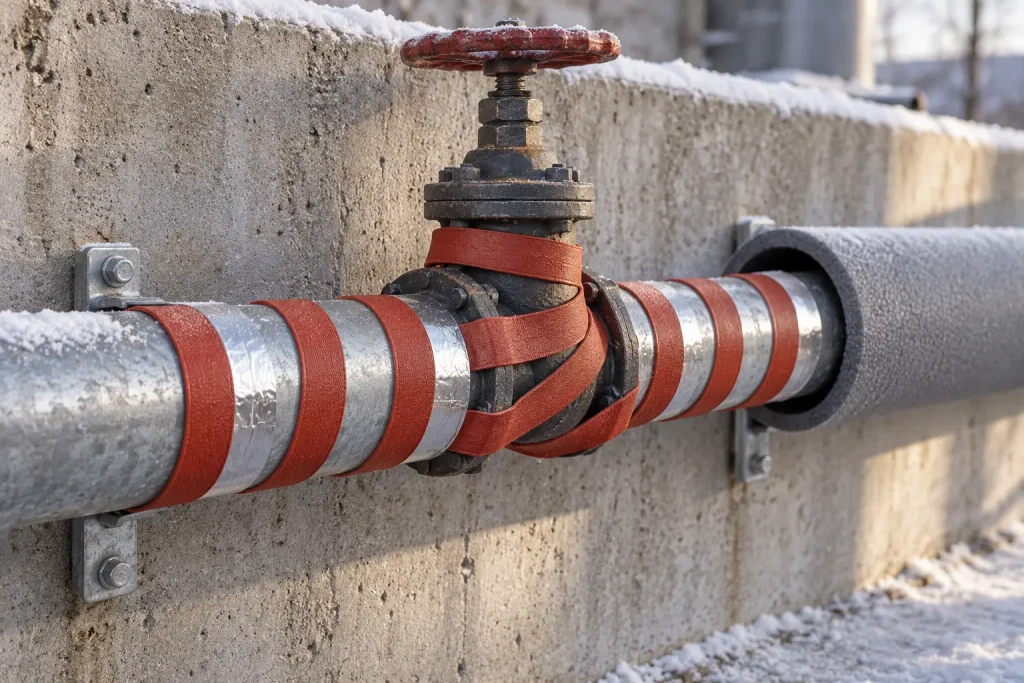
A tighter pitch puts more watts on each metre of pipe, and a looser pitch puts fewer. Choose the pitch from the heat the pipe needs, then pick the tape length that covers the run. Valves, flanges and pumps lose more heat than straight pipe and take extra tape, so add length for each fitting rather than stretching the pitch.
Installation Notes
- Never let the tape overlap or cross itself. Overlapped sections cannot shed heat and will overheat.
- Keep the tape flat against the surface along its full width, and avoid twisting it at bends.
- Secure it with aluminium foil tape or glass-fibre tape, not with tight metal bands that cut into the silicone.
- Where the pipe is insulated, fit the insulation over the tape. This reduces the power needed and evens out the temperature.
- On metal pipes, connect through the leakage-protection plug and a properly earthed supply.
Thermostat or No Thermostat
Without a thermostat, the tape delivers its full wattage whenever it is powered, and the surface temperature settles wherever heat input balances heat loss. That suits frost protection on uninsulated pipes in steady conditions, provided the surface temperature stays well below the 150°C limit. With the digital display thermostat, the tape switches on and off to hold a set temperature at the sensor. That is the better choice on insulated pipes, which can overheat without control, on plastic pipe, and wherever the contents must stay within a temperature window.
The tape is a constant-wattage heater. Its output does not change with temperature the way self-regulating heat-trace cable does. Any temperature limiting comes from the thermostat, not from the tape itself.
Specification
| Parameter | Value |
|---|---|
| Product type | Flat flexible silicone rubber heating tape, constant wattage |
| Widths | 15, 25, 30, 50 mm |
| Lengths | 1, 1.5, 2, 3, 5 m; custom on request |
| Power | Approx. 80 W/m standard (80–400 W); 100–1,000 W builds available |
| Supply voltage | 220 V |
| Maximum working temperature | 150°C |
| Outer material | Silicone rubber, fabric-textured surface |
| Temperature control | None, or digital display thermostat |
| Plug options | Leakage-protection plug or standard plug |
| Listed use | Wrap-on heating and freeze protection of pipes, valves and equipment |
| Certification | Not stated for this item; confirm required documents per order |
What This Heater Specification Covers
The specification defines the tape’s width, length, rated power at 220 V, maximum working temperature and control options. It does not establish the heat loss of a particular pipe or the wattage needed to protect it at a given ambient temperature, since that depends on pipe size, insulation and wind exposure. It also does not cover potable-water fittings that need specific approvals, or hazardous areas. Confirm application suitability for drinking-water systems and classified locations before specifying the tape.
Common Procurement Errors
- Ordering by pipe length instead of tape length. A spiral wrap uses more tape than the pipe is long, often 1.3–2.5 times as much.
- Choosing 15 mm for a plastic pipe. The narrow tape concentrates heat. A wider tape at the same wattage is gentler.
- Insulating over the tape without a thermostat. Insulation traps heat, and an uncontrolled tape can exceed its limit.
- Assuming it is self-regulating. It is a constant-wattage tape, so temperature control needs the thermostat option.
- Leaving out fittings. Valves and flanges need extra length beyond the straight-pipe estimate.
RFQ Checklist
- Object to be heated: pipe outside diameter and material, valve or vessel size
- Length of pipe run and number of fittings
- Insulated or uninsulated; lowest ambient temperature
- Tape width and length, or the target wattage
- Thermostat required: none or digital display
- Plug: leakage-protection or standard, and plug type for your market
- Certification or test documents required for your market
- Quantity per size
Certification and Documentation
No certification is stated for this heater in the current specification. If your market or customer requires a specific approval or test report, name it at enquiry so that availability can be confirmed for the ordered width, length and control before quotation. Applicable RoHS / REACH documentation can be confirmed according to the ordered construction.
Related Categories
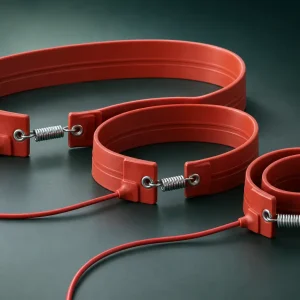
Coiled heating tapes, drum and cylinder bands, crankcase belts and heating pads are listed in the Silicone Rubber Heaters category, part of the High Temperature Wire Cable range.