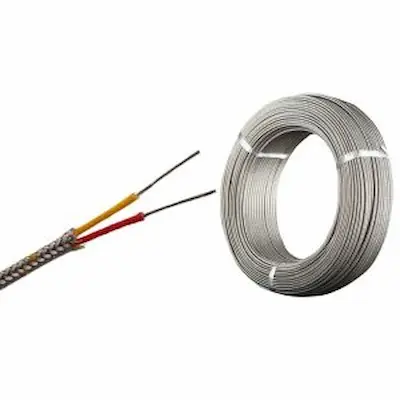
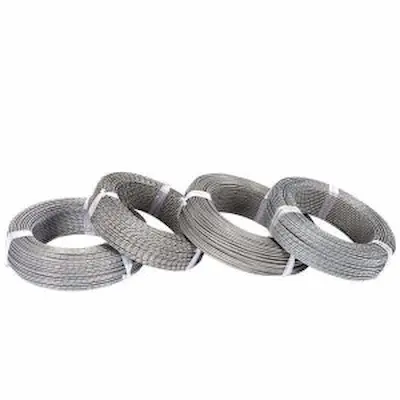
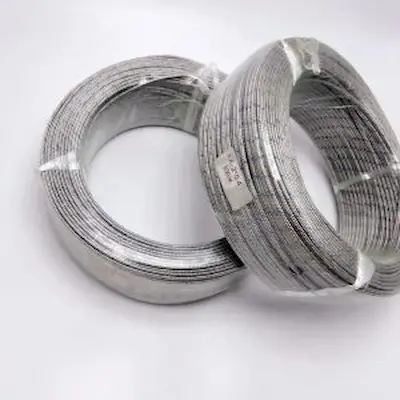
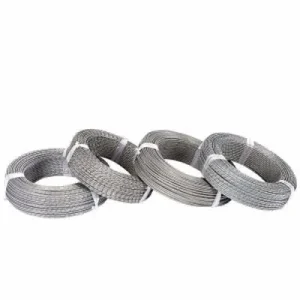
K/J/T Type Thermocouple Compensation and Extension Cable
K, J, and T type thermocouple compensation and extension cable is a specialised signal cable used to transmit the low-level EMF (electromotive force) signal generated by a thermocouple sensor back to the temperature measurement instrument, controller, or data acquisition system. Unlike standard copper signal cable, thermocouple extension and compensation cable must be manufactured from conductor alloys that closely match the thermoelectric properties of the thermocouple they serve — using generic copper cable in this signal path introduces a parasitic junction at the cable termination that generates its own EMF and corrupts the temperature reading.
Compensation cable uses lower-cost alloys that match the thermoelectric output of the thermocouple type within a limited ambient temperature range (typically –20°C to +100°C at the cold junction), making it suitable for the majority of industrial installations where the cable runs through a conditioned plant room or control cabinet. Extension cable uses the same alloy pair as the thermocouple itself, providing accurate signal transmission across a wider ambient temperature range and to higher cold junction temperatures, and is specified for applications where the cable passes through hot zones or the cold junction temperature is uncertain.
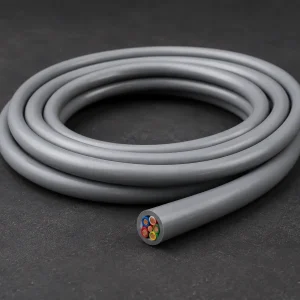
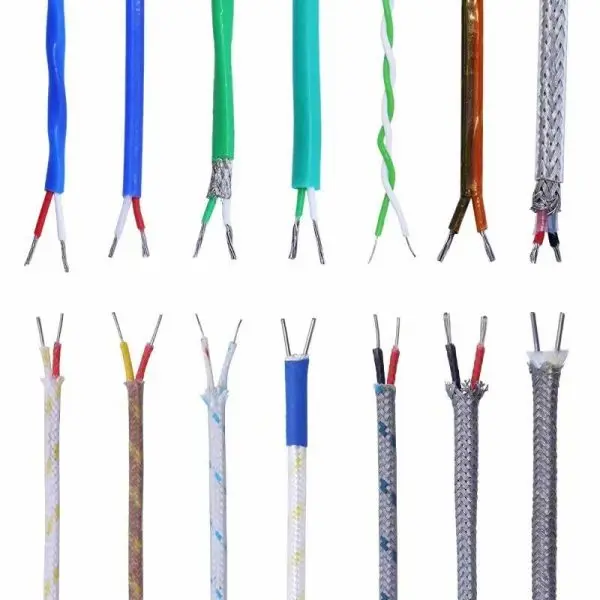
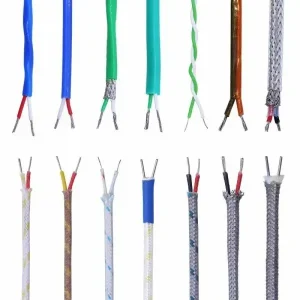
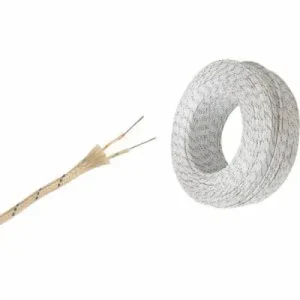
CableApex supplies K, J, and T type thermocouple cable with a choice of PVC, silicone rubber, or PTFE insulation, allowing the correct cable to be selected for the ambient temperature conditions at each point along the signal run — from the hot thermocouple head, through the plant, and into the instrument panel.
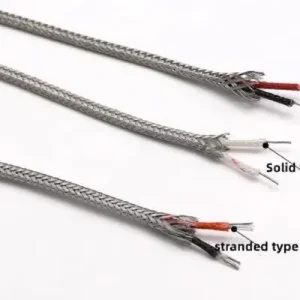
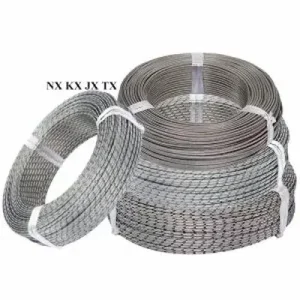
Thermocouple Type Reference
Technical Specifications
| Parameter | Specification |
|---|---|
| Thermocouple types | K, J, T (other types on request: E, N, R, S, B) |
| Cable function | Compensation cable or extension cable (specify on order) |
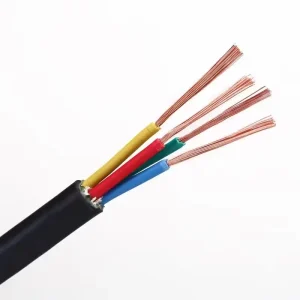
| Conductor pairs | 1 pair, 2 pair, 4 pair, 6 pair, 8 pair, 12 pair |
| Conductor cross-section | 0.5 mm², 0.75 mm², 1.0 mm², 1.5 mm², 2.5 mm² |
| Voltage rating | 300V AC |
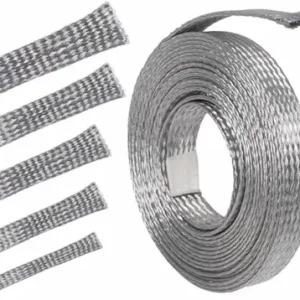
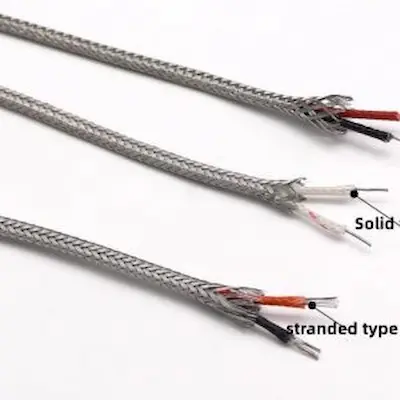
| Shield options | Unshielded / copper braid shield / aluminium foil + drain wire |
| Outer sheath | PVC, silicone rubber, or PTFE (see insulation options) |
| Colour code standard | IEC 60584-3 (international) or ANSI MC96.1 (US) — specify on order |
| Accuracy class | Class 1 or Class 2 per IEC 60584-2 |
| Standard | IEC 60584, GB/T 4990, RoHS compliant |
| Packaging | 50 m / 100 m rolls or custom drum lengths |
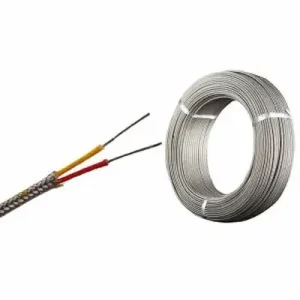
Insulation Options by Ambient Temperature
| Insulation type | Temp range | UL style reference | Best suited for |
|---|---|---|---|
| PVC | –15°C to 80°C | — | Standard plant rooms, conditioned cable routes, control panels |
| Silicone rubber (SR) | –60°C to 200°C | UL AWM Style 3135 | Hot cable routes, furnace surrounds, motor junction boxes |
| PTFE (TFE) | –60°C to 260°C | UL AWM Style 1659 | Chemical environments, very high ambient temperatures, clean-room |
UL AWM Style 3135 (silicone rubber, 200°C, 600V) and Style 1659 (PTFE, 250°C, 600V) are produced at our Yangzhou facility under UL Follow-Up Service, File No. E333030.
Colour Code Reference
| Type | IEC 60584-3 (positive / negative / overall) | ANSI MC96.1 (positive / negative / overall) |
|---|---|---|
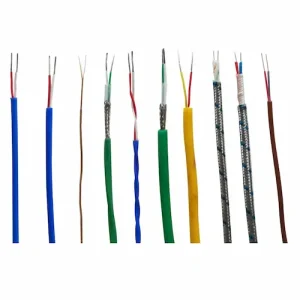
| Type K | Green / White / Green | Yellow / Red / Yellow |
| Type J | Black / White / Black | White / Red / Black |
| Type T | Brown / White / Brown | Blue / Red / Blue |
Key Features
Signal accuracy
- Matched alloy conductors — no parasitic EMF at cold junction
- IEC Class 1 accuracy option for precision measurement
- Copper braid or foil shield option — rejects EMI from VFDs and power cables
- Twisted pair construction — reduces magnetically induced noise
- Low conductor resistance — minimises voltage drop on long runs
Construction & durability
- PVC, silicone, or PTFE insulation — covers –60°C to 260°C ambient range
- UL AWM 3135 and 1659 styles available (File No. E333030)
- Single pair to 12 pair — one cable for multi-point temperature systems
- IEC and ANSI colour codes available — specify standard on order
- RoHS compliant throughout
- K, J, T types in stock — most common thermocouple types available for immediate despatch; E, N, R, S, B types on request
- Compensation and extension cable — specify function at time of order; extension cable (same alloy as thermocouple) available for high cold-junction temperature applications
- Multi-pair configurations — up to 12 pairs in a single sheathed cable for multi-zone temperature monitoring systems
- Custom sheath colours and print — available for OEM and panel builder orders from 500 m MOQ
Common Applications
Industrial furnace and kiln temperature control
Type K compensation cable is the standard specification for connecting thermocouple heads mounted on industrial furnaces, kilns, and heat treatment equipment to the temperature controllers and recorders in the control panel. The silicone rubber insulated variant (UL AWM 3135) is used where the cable passes through or near the hot zone of the furnace; PVC insulation is used for the run from the panel entry gland to the instrument terminals.
Plastics and rubber processing
Type J and Type K cables are used extensively in plastic injection moulding machines, extruders, and rubber vulcanising presses where multiple barrel zone temperatures must be monitored and controlled simultaneously. Multi-pair cables reduce the wiring harness complexity on machines with 6, 8, or 12 temperature zones.
Food processing and pharmaceutical
Type T compensation cable is preferred for food process temperature monitoring due to its accuracy in the 0°C to 200°C range critical for pasteurisation, sterilisation, and cold chain monitoring. PTFE insulation is specified in washdown environments where chemical resistance and hygienic cleaning are required.
HVAC and building automation
Type T and Type K cables are used for duct air temperature sensing, chiller and heat pump performance monitoring, and energy management system temperature measurement points across commercial building services installations.
Other applications
- Power generation — turbine exhaust gas temperature monitoring
- Automotive testing — engine and exhaust temperature measurement
- Laboratory and R&D temperature logging systems
- Solar thermal collector and heat exchanger monitoring
- Semiconductor process equipment temperature control
Compensation Cable vs. Extension Cable — Key Differences
| Property | Compensation cable | Extension cable |
|---|---|---|
| Conductor alloy | Lower-cost alloy approximating TC output | Same alloy pair as the thermocouple |
| Accuracy range | –20°C to +100°C cold junction | Full thermocouple operating range |
| Cost | Lower | Higher |
| Use when | Cable runs through conditioned areas only | Cable passes through hot zones or ambient temp is uncertain |
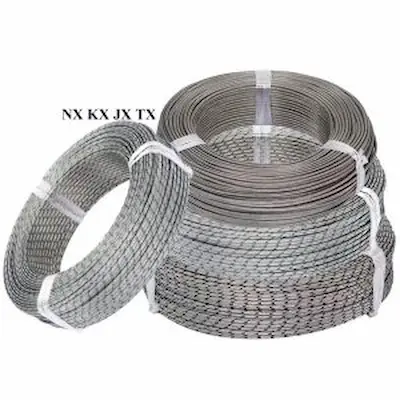
| IEC designation | “X” suffix (e.g. KX, JX, TX) — extension grade | “C” suffix (e.g. KC, JC) — compensation grade |
Ordering Information
Specify thermocouple type (K, J, T), cable function (compensation or extension), insulation type (PVC, silicone, PTFE), number of pairs, conductor cross-section, shield option, and colour code standard (IEC or ANSI) when ordering. Standard stock items are available in single-pair PVC and silicone insulated K-type from 10 m. Non-standard types, multi-pair configurations, and PTFE insulated cables are available from 100 m MOQ.
IEC Class 1 accuracy available on request. Third-party calibration certificates and material conformance reports supplied with Class 1 orders. Contact us for a quotation within 24 hours.
Why Choose CableApex
CableApex manufactures thermocouple compensation and extension cable with conductor alloys sourced from certified suppliers and verified against IEC 60584 thermoelectric EMF tables at our in-house calibration laboratory. Our silicone rubber and PTFE insulated variants are produced under UL Follow-Up Service (File No. E333030), providing verified insulation performance for installations requiring UL AWM recognition. We supply to temperature instrument manufacturers, furnace builders, OEM machine builders, and instrumentation contractors across more than 40 countries with lead times of 10–15 working days on standard types.