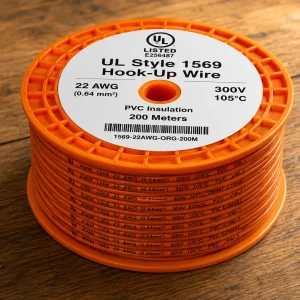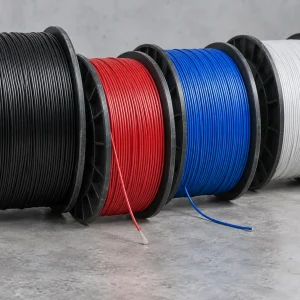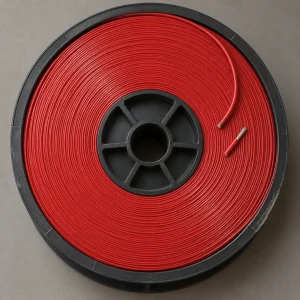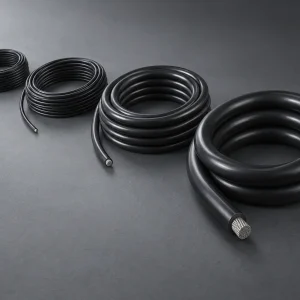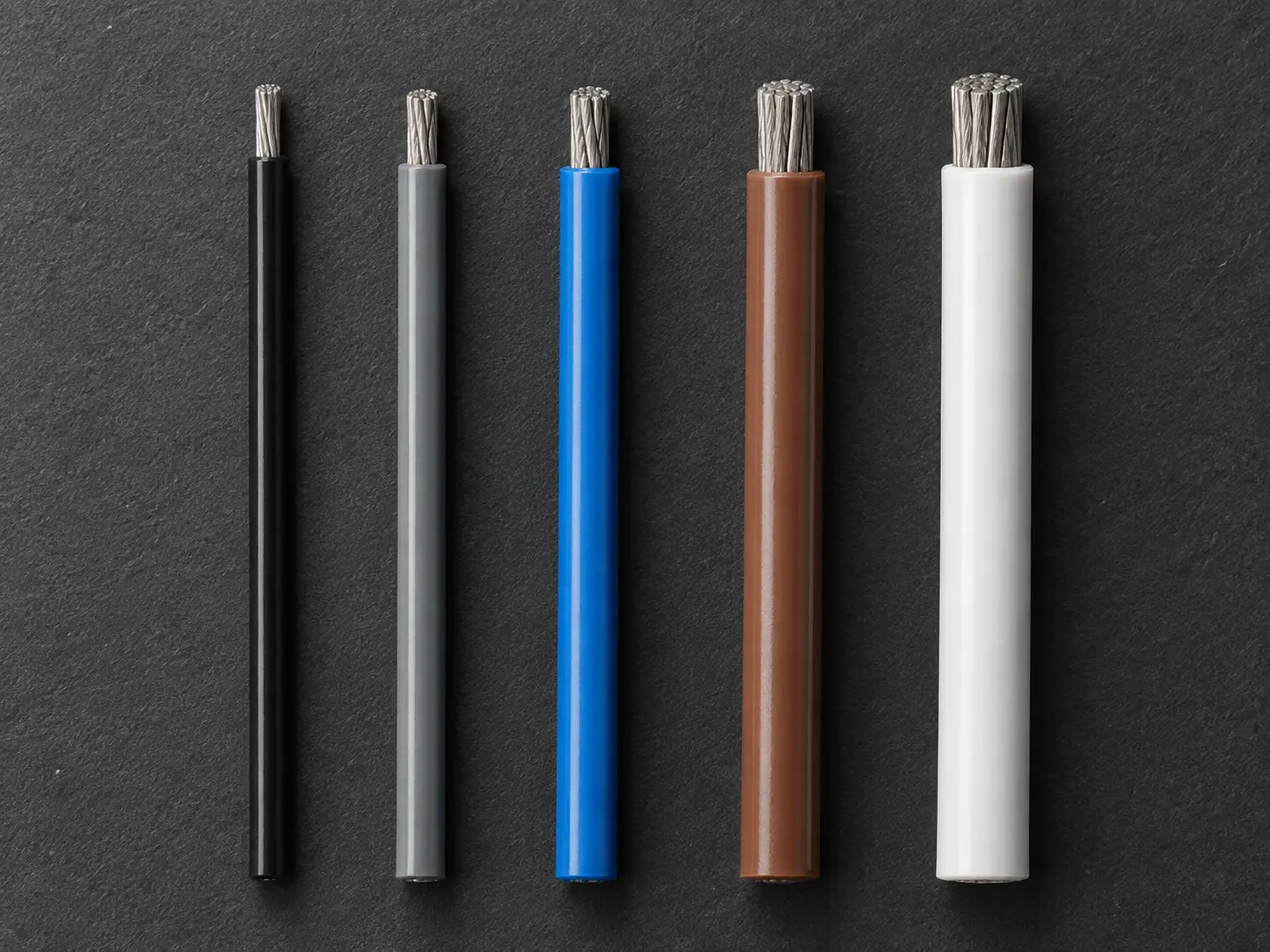
UL 1569 105°C 300V PVC Wire for Static Internal Wiring
This page covers UL AWM Style 1569 in its 105°C construction for a specific application boundary: internal wiring of appliances or electronic equipment where the wire is not subjected to movement or mechanical damage.
The Style is a single conductor with extruded PVC insulation, rated 300 Vac with a Horizontal Flame designation, across a conductor range of 30 AWG–2 AWG in solid or stranded construction, with insulation wall requirements that differ by conductor size. Marking is General.
That use limitation is not a footnote to the specification. It is part of the official Use as written, it applies to every Style 1569 construction regardless of conductor size or form, and it is the condition a buyer confirms against the actual assembly before specifying the Style. “Static internal wiring” is used on this page as concise buyer-facing wording for it, always in the sense the official Use gives it.
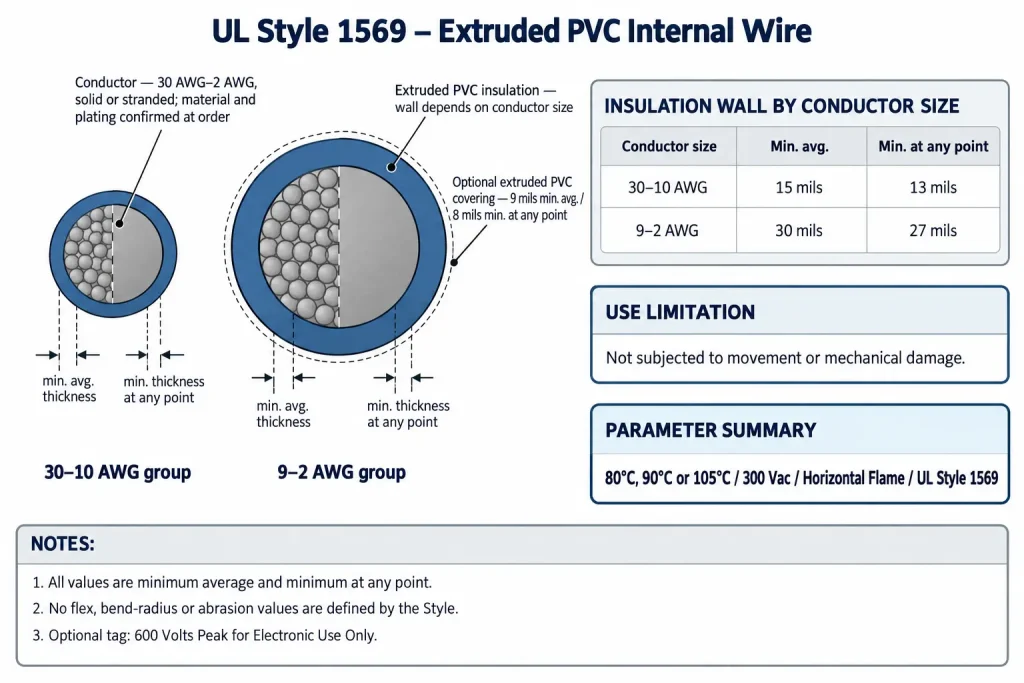
Confirmed UL Style 1569 Construction
| Parameter | Requirement |
|---|---|
| UL AWM Style | 1569 |
| Description | Single Conductor with extruded insulation |
| Temperature Ratings | 80°C / 90°C / 105°C |
| Page Focus | 105°C |
| Voltage | 300 Vac |
| Flame | Horizontal Flame |
| Conductor Range | 30 AWG–2 AWG |
| Conductor Construction | Solid or stranded |
| Insulation | Extruded PVC |
| 30–10 AWG Insulation | 15 mil minimum average / 13 mil minimum at any point |
| 9–2 AWG Insulation | 30 mil minimum average / 27 mil minimum at any point |
| Optional Covering | Extruded PVC |
| Optional Covering Thickness | 9 mil minimum average / 8 mil minimum at any point |
| Marking | General |
| Use | Internal wiring of appliances or electronic equipment where not subjected to movement or mechanical damage. |
| Optional Tag Statement | 600 Volts Peak for Electronic Use Only |
| RoHS / REACH | Applicable RoHS / REACH documentation can be confirmed according to the ordered construction |
Nine points to clarify about the table above:
- Style 1569 includes 80°C, 90°C and 105°C ratings. This page focuses on the 105°C construction, and the rating a given wire carries is confirmed for the ordered construction.
- The use limitation applies to the Style as a whole, not to a particular size, form or temperature rating.
- The insulation wall requirement splits into two conductor-size groups, and values from one do not apply to the other.
- Within each group, the minimum average and the minimum at any point are two independent requirements, not a range and not a nominal wall.
- The PVC covering is optional and is supplied only where the ordered construction supports it and the buyer specifies it.
- The covering’s own 9/8 mil values are separate requirements and are not added to the insulation wall to produce one figure.
- The normal voltage rating is 300 Vac. The record gives no DC rating.
- 600 Volts Peak for Electronic Use Only is a tag statement, not the normal working-voltage rating.
- Conductor material, plating, strand count, strand diameter, lay length, finished OD, OD tolerance, conductor resistance and ampacity are not defined by the Style.
What “Not Subjected to Movement” Means for Page Scope
The official Use limits Style 1569 to internal wiring positions where the wire is not subjected to movement. The Style is therefore not presented here for applications in which movement is an intended or expected part of service: repeated flexing, continuous-flex or drag-chain routing, hinged or sliding component connections, robotic or servo motion, or any position where the wire is carried by a moving part of the equipment.
The record states the limitation and nothing beyond it. It does not define an allowable number of flex cycles, a minimum bend radius, a vibration limit, an installation-force limit or any other quantified mechanical parameter, so none is published or implied on this page. A specification that assigns Style 1569 a flex rating or a movement allowance is adding data the Style record does not contain.
Whether a given position within an assembly involves movement is determined by the buyer’s equipment design and reviewed against the drawing. Where a design does involve intentional movement at the wire position, that requirement falls outside this Style’s Use, and the appropriate specification is established through independent engineering and compliance review rather than by substituting another AWM Style on the strength of its ratings.
One point of wording deserves care in an enquiry: a stranded conductor is a permitted construction within Style 1569, not an indication that the wire is intended for movement. The conductor form and the use limitation are separate matters, and selecting stranded construction does not relax the limitation.
Mechanical Damage Boundary
The same sentence carries a second condition: the wire is used where it is not subjected to mechanical damage. This addresses the routing environment rather than the wire’s own construction.
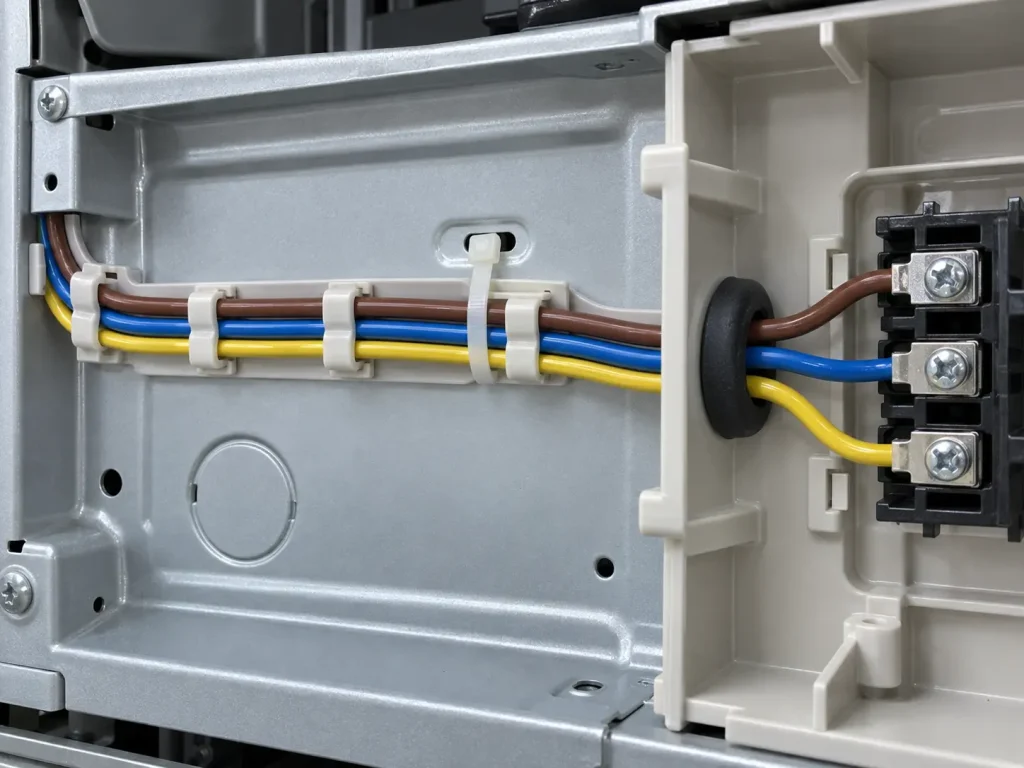
In practice this means the Style is not presented for exposed or unprotected routing, abrasive contact points, positions where the wire may be crushed, pinched or struck during service access, or field-installed runs outside the equipment. Protection at the routing position comes from the equipment design, through routing paths, clips, channels, grommets, barriers and service access arrangements.
Here too the record quantifies nothing. It states no impact, abrasion, crush or compression rating, so no such value appears on this page, and none is inferred from the insulation wall, the conductor form or the optional covering. The relationship between the published wall requirements and any mechanical behaviour is not established by the record, and this page draws no causal link between them in either direction.
Routing, protection and equipment design are therefore evaluated by the buyer for the actual assembly. Where a drawing shows the wire in a position with possible mechanical exposure, that position is assessed on its own terms rather than answered by the Style designation.
Insulation Wall Requirements by AWG Range
Style 1569 sets the extruded PVC wall in two groups. For 30 AWG through 10 AWG the requirement is 15 mils minimum average and 13 mils minimum at any point. For 9 AWG through 2 AWG it is 30 mils minimum average and 27 mils minimum at any point.
Both directions of error are common. Describing the whole Style as a 15 mil construction understates the requirement for every size from 9 AWG upward; applying the 30 mil figure to a 20 AWG requirement overstates it. The governing group is the one containing the ordered size, and a specification spanning the boundary carries both sets of values.
Within each group the two values work together. The average wall must meet the first figure, and no single point of the wall may fall below the second, whatever the average reads. Both are minimums: the record states no nominal wall and no manufacturing tolerance, so an actual construction may sit above these figures, and how far above belongs to that construction rather than to the Style.
Neither value produces a finished outer diameter, and this page publishes no AWG-to-diameter, conductor resistance or current table. Actual OD depends on the conductor material and form, the actual conductor dimensions, the applicable insulation group, whether the optional covering is applied, the PVC extrusion and manufacturing tolerance. Where grommet fit, terminal entry or routing clearance is controlled by the design, state a maximum finished OD and an OD tolerance in the RFQ so the proposed construction can be checked against the actual requirement.
105°C Within the UL 1569 Temperature Ratings
Style 1569 includes 80°C, 90°C and 105°C ratings. This page focuses on the 105°C construction, and that focus does not narrow the Style: 80°C and 90°C constructions exist within it, and a listing presenting Style 1569 as a 105°C-only product omits part of the record.
The rating a given wire carries belongs to its qualified construction, so the applicable rating and the final marking must be confirmed for the specific RFQ rather than treated as an open configuration choice. A buyer whose equipment specification controls a wire temperature rating should state 105°C explicitly, or supply the drawing that states it.
The rating is stated without a duty qualifier. This page does not describe it as continuous, derives no service life, thermal cycling count or thermal margin from it, and publishes no temperature threshold at which one rating should be selected over another. No rating above 105°C belongs to this Style.
300 Vac and the Optional 600 Volts Peak Tag
The normal Style rating is 300 Vac. That is the figure that belongs in a specification.
Separately, the tag may state 600 Volts Peak for Electronic Use Only. Both qualifiers stay attached whenever that statement is cited: it is a peak indication for electronic use rather than a working voltage, it does not replace or raise the 300 Vac rating, and it does not widen the official Use. Writing the Style as 300–600 V, 600 Vac or 600 V continuous misstates the record, and the record gives no DC rating.
In an enquiry the two stay distinct: the voltage requirement is stated against the 300 Vac rating, and any need for the peak tag statement is listed separately as a marking and construction question.
Conductor Range and Optional Covering
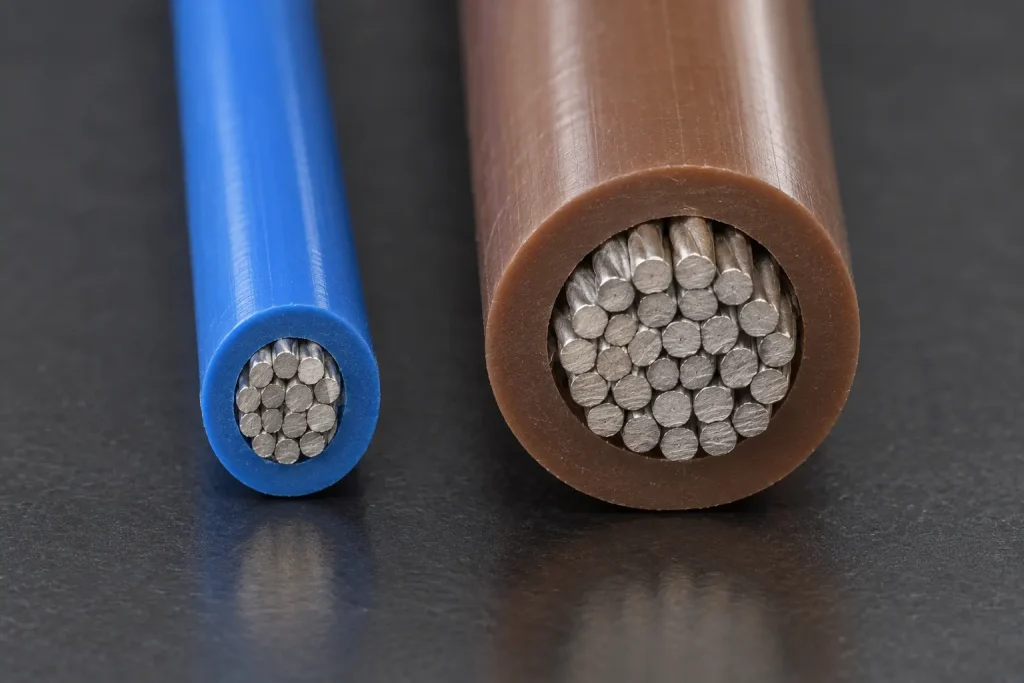
The confirmed range is 30 AWG through 2 AWG, solid or stranded, and both forms are permitted across the range. The Style states nothing further about the conductor: material, plating, strand count, strand diameter, lay construction, conductor resistance and any metric cross-section are SKU-specific characteristics, confirmed by drawing or RFQ where the buyer controls them. No stranding class or flexibility grade is applied here, since the record contains none, and conductor size assigns no circuit function or current capacity.
As a secondary option, the Style may include an extruded PVC covering with 9 mils minimum average thickness and 8 mils minimum thickness at any point, where the confirmed ordered construction supports it. It is not included unless specified, its values are requirements for that layer alone, and the record assigns it no function: no mechanical protection, abrasion qualification, chemical resistance, waterproofing, shielding, flexibility, higher voltage rating or higher temperature rating is claimed for it. In particular, the covering does not relax the use limitation described above.
How to Specify UL 1569 in an RFQ
A Style designation is a construction requirement, not a complete purchase specification. A complete enquiry states:
- the UL AWM Style 1569 requirement
- the required conductor size within 30 AWG–2 AWG
- the required temperature-rated construction
- solid or stranded construction
- conductor material or plating, if controlled by the drawing
- insulation colour
- whether the optional extruded PVC covering is required
- marking requirements
- the drawing or BOM
- documentation requirements
- quantity and packaging
- destination and Incoterm
Confirming the internal wiring position is equally part of the enquiry, since the official Use turns on it: the drawing should show that the wire is not subjected to movement or mechanical damage at that position.
The Style data does not define finished OD, OD tolerance, ampacity, current rating, conductor resistance, strand count, MOQ or lead time. Those are confirmed separately against the ordered construction, and applicable marking requirements are likewise confirmed according to the ordered construction.
Pricing and commercial terms depend on the confirmed conductor size, solid or stranded construction, temperature-rated construction, insulation colour, optional covering, marking requirements, documentation, packaging, order quantity, destination and Incoterm. Final commercial terms are confirmed after RFQ review.
What Style 1569 Does and Does Not Define
Style 1569 defines:
- 80°C, 90°C and 105°C temperature ratings
- 300 Vac voltage rating
- Horizontal Flame
- conductor range 30 AWG–2 AWG, solid or stranded
- extruded PVC insulation: 15/13 mils for 30–10 AWG and 30/27 mils for 9–2 AWG
- an optional extruded PVC covering at 9 mil minimum average / 8 mil minimum at any point
- Marking: General
- Use: Internal wiring of appliances or electronic equipment where not subjected to movement or mechanical damage.
- the optional tag statement 600 Volts Peak for Electronic Use Only
Style 1569 does not universally define:
- conductor material, plating, strand count, strand diameter or lay length
- flex cycles, bend radius, vibration, abrasion, crush or installation-force limits
- a reason or mechanism for the use limitation
- a nominal insulation wall or a manufacturing tolerance
- a function or performance for the optional covering
- finished OD, OD tolerance, conductor resistance, ampacity or metric cross-section
- a normal 600 V rating or any DC rating
- a temperature threshold for selecting one rating over another
- colour, reel length, MOQ, stock, lead time, production capacity or shipping term
Common Procurement Errors
- Reading a stranded conductor as permission for repeated movement.
- Assigning the Style a flex-cycle count, bend radius or vibration limit.
- Attributing the use limitation to the insulation wall thickness, or deriving mechanical durability from wall thickness in either direction.
- Treating the optional covering as removing the movement or mechanical-damage limitation.
- Describing Style 1569 as a 105°C-only Style, or treating the temperature class as a free configuration choice.
- Writing “105°C continuous”, or applying a selection threshold the record does not contain.
- Applying the 15/13 mil values to 9–2 AWG, or the 30/27 mil values to finer sizes.
- Omitting the minimum-at-any-point value, or treating the minimum average as a nominal wall.
- Deriving a finished OD from the minimum wall values, or an ampacity from conductor size.
- Describing Style 1569 as a 600 V wire, or dropping “for Electronic Use Only” from the tag statement.
- Assuming the conductor is tinned copper, or claiming a stranding class.
- Extending the Use into field, external, portable, conduit or moving-machinery wiring.
- Substituting another AWM Style for a position involving movement without independent engineering and compliance review.
RFQ Information to Confirm
Style and ratings
- UL AWM Style 1569 requirement
- Required temperature-rated construction
- 300 Vac voltage rating requirement
- Required conductor size within 30 AWG–2 AWG
- Whether the optional peak tag statement is required
Conductor and construction
- Solid or stranded construction
- Conductor material and plating requirement, if controlled by the drawing
- Strand construction, if controlled
- Maximum conductor resistance, if controlled
- Whether the optional extruded PVC covering is required
- Maximum OD and OD tolerance, if controlled
Identification and application references
- Insulation colour
- Marking requirements
- Internal wiring position, with confirmation that it is not subjected to movement or mechanical damage
- Drawing, BOM or equipment specification
Commercial
- Quantity and packaging
- Destination and Incoterm
- Requested UL marking and compliance documents, including any RoHS / REACH documentation requirement
UL Marking and Documentation
Supplied wire is UL-recognized component wire where supplied under a qualified manufacturing scope, with UL marking according to the confirmed ordered construction. The Style record lists Marking as General, and applicable marking requirements should be confirmed according to the ordered construction.
Applicable RoHS / REACH documentation can be confirmed according to the ordered construction. CE, UKCA, CSA, FT1, VW-1, CPR, VDE, DIN, EN, IEC and dual UL/CSA designations are not claimed here unless separately documented for the specific ordered construction.
Commercial, origin, compliance and transport documents are identified during quotation and confirmed according to the order.
Related Internal Links
- UL 1569 PVC Wire — category page for broad Style 1569 enquiries
- PVC Wire
- AWM Wire
- UL 1569 with optional extruded PVC covering — separate page for the optional-covering construction