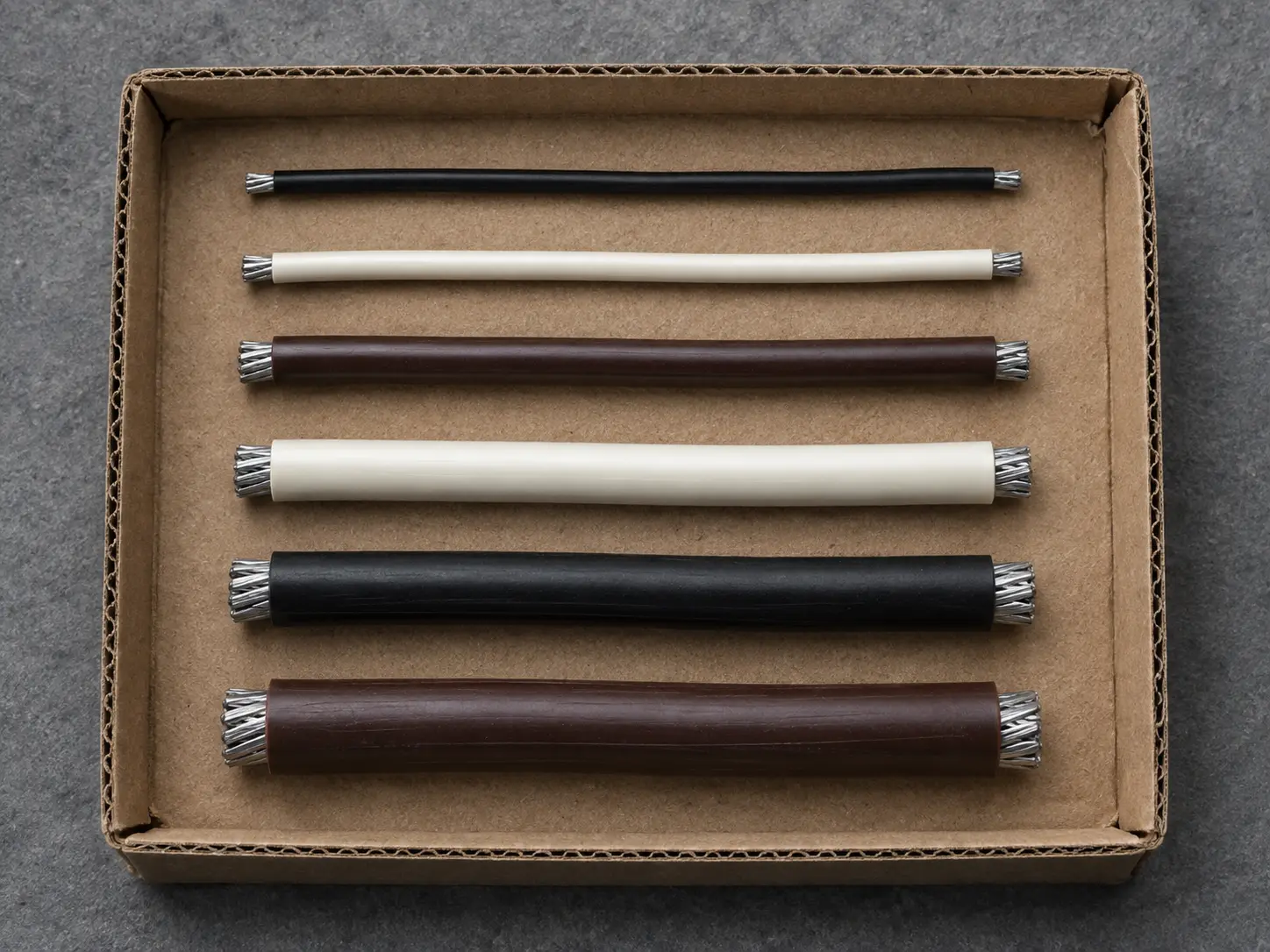
UL 3239 Nickel Conductor High-Voltage DC Wire Overview
UL AWM Style 3239 permits a 24–10 AWG conductor in either copper or nickel, solid or stranded. This page concerns the nickel option specifically — nickel as the conductor material itself — for protected internal high-voltage DC sections in ignition-related equipment.
Three figures in the product title need qualification before they reach a BOM. 24–10 AWG is the Style-level range for copper or nickel conductors, not a single size. 200°C and 60,000 Vdc are Style-level maximum values. The actual voltage and temperature ratings must be confirmed for the specific qualified nickel-conductor construction ordered.
UL 3239 Style-Level Technical Specifications
| Parameter | Style-level information |
|---|---|
| UL AWM Style | 3239 (UL 758) |
| Description | High voltage DC wire with extruded or non-extruded insulation |
| Maximum temperature | 200°C maximum |
| Maximum voltage | 60,000 Vdc maximum |
| Flame | Horizontal Flame and VW-1 |
| Copper / nickel conductor range | 24–10 AWG |
| Conductor form | Solid or stranded |
| Aluminum range | 12–10 AWG |
| Resistance wire range | 27–20 AWG |
| Coated high-strength copper | 24–10 AWG, minimum 90% conductivity |
| Insulation | Extruded or non-extruded thermoplastic and/or thermosetting |
| Shield | Optional |
| Covering | Optional |
| Jacket | Optional |
| Use | Internal wiring of TV receivers or where the acceptability has been determined by Underwriters Laboratories |
Everything above is Style-level. It describes what constructions the Style permits, not the specification of one individual nickel-conductor product. A quotation is written against a construction, and the construction is what carries the ratings.
Nickel Conductor and Copper Conductor Are Both Permitted
Style 3239 lists copper and nickel side by side within the same 24–10 AWG range. Neither is described here as the better choice — that is not a claim the Style supports, and the material a project needs comes from the customer drawing, the BOM, the approved specification and the qualified construction, not from a category preference.
What matters commercially is that the two are genuinely different products under the same Style number. An enquiry that names Style 3239 and an AWG size has not yet said which conductor material the drawing requires.
Nickel Conductor Is Not Nickel-Plated Copper
This is the most common source of error on this construction, and it is worth stating without ambiguity.
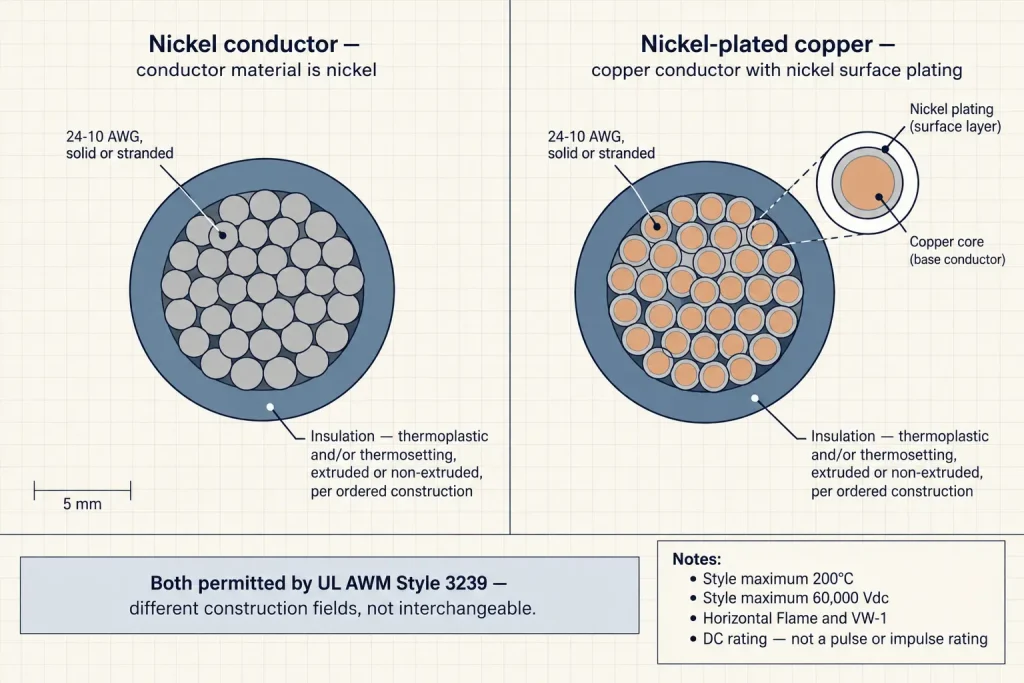
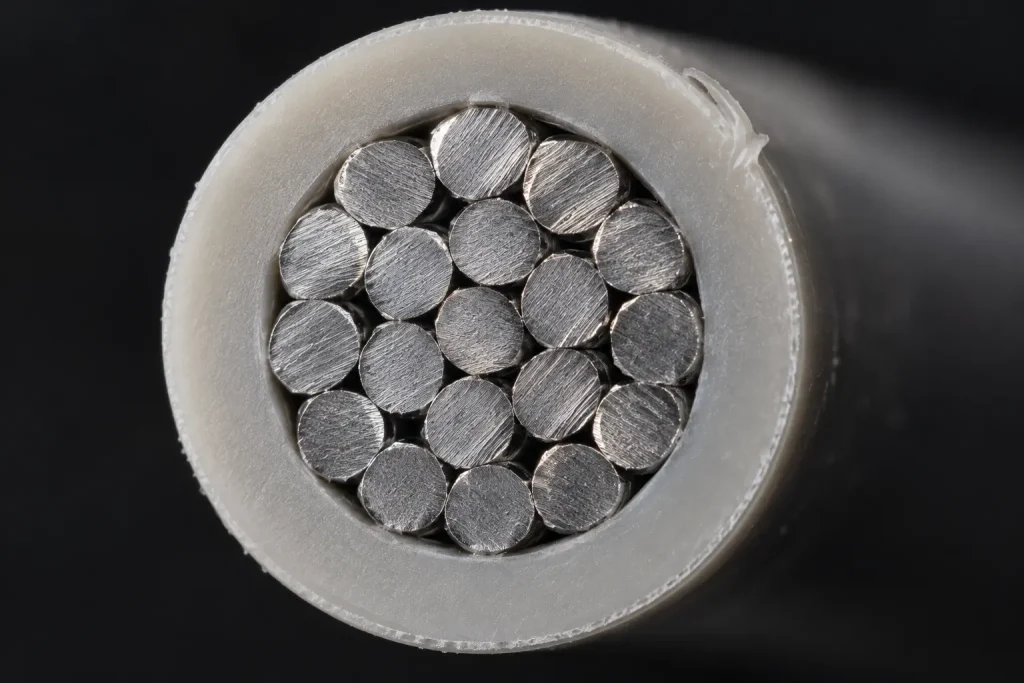
- Nickel conductor — the conductor material is nickel.
- Nickel-plated copper — the conductor material remains copper; nickel is a surface plating on it.
The Style keeps these separate. It permits 24–10 AWG copper or nickel as conductor materials, and separately states that copper conductors may be tinned, silver or nickel plated, heat bonded or overcoated. Nickel appears in both sentences with completely different meanings.
An RFQ line reading only “nickel wire” is therefore ambiguous, and the two should not be quoted interchangeably unless the customer’s specification explicitly allows an alternative. Where the requirement is unclear, the question to settle first is whether the drawing calls for a nickel conductor or a copper conductor with nickel plating.
What the Style Does Not Say About Nickel Conductor
The Style identifies nickel as a permitted conductor material. It does not attribute any performance characteristic to it. Higher temperature capability, oxidation or corrosion resistance, mechanical strength, resistance or conductivity behaviour, service life, ignition or spark performance and vibration resistance are not established for a nickel conductor by the Style information behind this page, and none of them are claimed here.
Conductor resistance is a specific case worth naming. There is no universal resistance value for a 24–10 AWG nickel conductor at Style level, so no ohms-per-kilometre figure, voltage drop, ampacity, current rating or conductor loss is published. Where the BOM controls conductor resistance, send the required resistance limit and it can be verified against the specific construction.
Solid or Stranded Must Be Stated
The Style permits solid or stranded conductors within the applicable conductor description, so neither form is a default. The RFQ should state which the construction requires. Strand count and strand diameter are construction details and are not assumed here.
Selecting AWG for an Ignition-System Internal Lead
24–10 AWG is the Style-level range for the nickel conductor option. Which size a specific design needs comes from the engineering data behind that design.
No ampacity table, current recommendation, ignition energy rating or transformer power guidance appears on this page. AWG on its own does not establish final electrical suitability in any case — it is one input among the voltage requirement, the temperature requirement, the insulation system and the dimensional envelope.
60,000 Vdc Is a Style Maximum, Not a Product Rating
Maximum 60,000 Vdc describes the ceiling the Style allows. It does not mean that every 24 AWG nickel conductor is a 60kV item, that every 18 AWG one is, that every stranded nickel construction is, that every thermosetting nickel-conductor construction is, or that any ignition-related Style 3239 product may be marked 60kV.
The actual DC voltage rating is established by the specific construction. Phrases such as “guaranteed 60kV,” “60kV nickel ignition wire” or “60kV nickel wire” should not be used without construction-specific evidence. State the actual required DC working voltage in the enquiry instead, and the construction can be confirmed against it.
A DC Rating Is Not an Ignition-Pulse Rating
Style 3239 is defined as high voltage DC wire. That definition matters more on this page than on most.
A 60,000 Vdc maximum should not be reinterpreted as an ignition pulse voltage, a spark voltage, a transformer secondary pulse voltage, an AC ignition voltage, a repetitive impulse rating or a transient withstand rating. An ignition system can contain several internal sections with different voltage waveforms, and a DC rating does not by itself demonstrate suitability for AC ignition transformers, repetitive ignition impulses, high-frequency pulse systems or spark-discharge leads.
Where the circuit is not a straightforward DC section, the buyer should supply the actual electrical condition — DC, AC or pulsed, with waveform information where relevant — so the requirement can be assessed rather than assumed.
Maximum 200°C Requires Construction Confirmation
Style 3239 permits constructions up to 200°C maximum; the actual ordered nickel-conductor construction must confirm its temperature rating. Selecting a nickel conductor does not itself create a 200°C rating, and the Style ceiling is not a default value for any construction under it.
Insulation Is an Independent RFQ Field
Conductor material and insulation material are specified separately. Style 3239 defines insulation as extruded or non-extruded thermoplastic and/or thermosetting, and a nickel conductor requirement says nothing about which insulation system applies.
Where the BOM controls the insulation material, state it in the enquiry. Where it does not, the qualified construction should be confirmed before quotation rather than a material being assigned by assumption.
Optional Shield, Covering and Jacket
Style 3239 separately permits an optional shield, an optional covering and an optional jacket. On this page they are confirmation fields only — yes or no for each, with specification details where the drawing controls them. None is implied by a nickel-conductor requirement, and no material or performance characteristic is assigned to any of them here.
Finished OD and Dimensional Requirements
There is no single finished OD for “UL3239 nickel conductor wire”, and insulation wall, conductor diameter, finished OD and tolerance are not published or estimated on this page.
Where ignition-system internal routing or terminal hardware controls the size, request nominal OD, maximum OD, tolerance and the conductor construction if it is controlled, taken from the approved construction record.
Termination Requirements
Compatibility with ignition boots, HV connectors, crimp contacts, ring terminals or spark terminals is not assumed. Where a terminated lead is required, supply the connector or terminal part number, the drawing, the strip length, the termination method and the finished lead length. Crimp and soldering settings are not published here.
Official AWM Use Boundary
The official Use for Style 3239 is: Internal wiring of TV receivers or where the acceptability has been determined by Underwriters Laboratories.
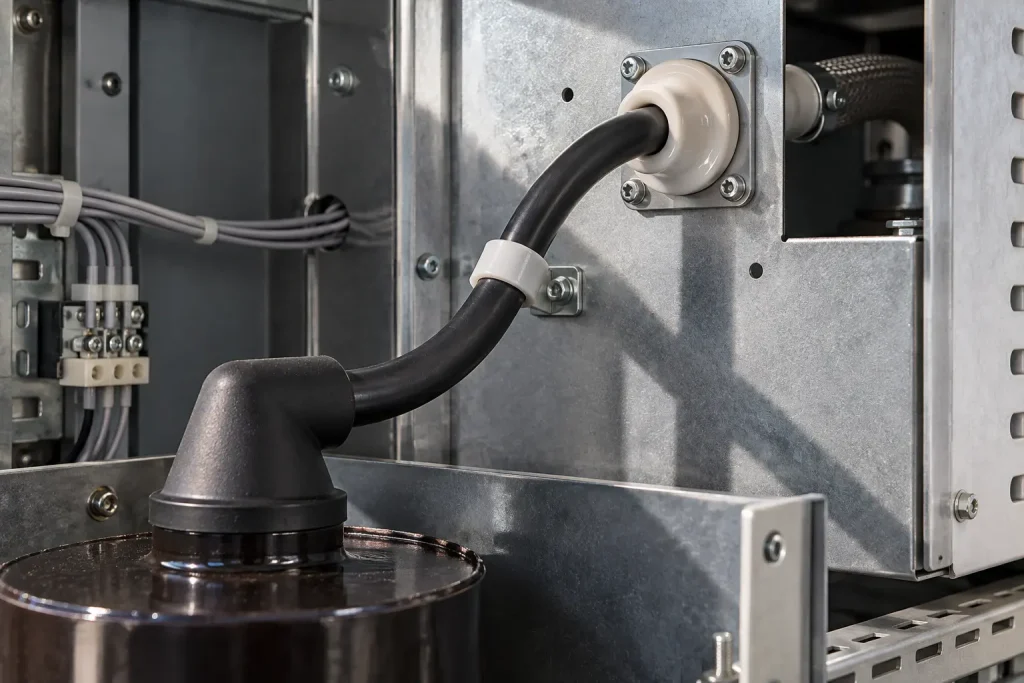
Ignition-system internal wiring is an application context in which a designer may evaluate an appropriate qualified construction, subject to the end-equipment requirements and the applicable acceptability determination. It is not an approved ignition wire, an ignition cable, a certified ignition lead, a spark plug wire, a burner ignition cable or a gas ignition wire.
This page is also not a general ignition-wire category page. CableApex lists other Styles associated with ignition-related product families, and nothing here suggests that a Style 3239 nickel-conductor construction replaces UL 3304, UL 3573, conventional ignition wire or spark lead wire. Which Style applies depends on the actual equipment specification.
What Style 3239 Does Not Automatically Define
- Exact voltage rating of any individual nickel construction
- Exact temperature rating
- Strand count, strand diameter and conductor resistance
- Ampacity
- Insulation material and insulation wall thickness
- Finished OD
- Shield, covering and jacket design
- Bend radius and flex-cycle rating
- Ignition-pulse suitability and spark-lead suitability
- Terminal compatibility
- Reel length, MOQ, stock and lead time
Common RFQ Mismatches
- “Nickel wire” written where nickel-plated copper is meant. Two different conductors under the same Style.
- “60kV UL3239” requested with no 60kV construction confirmed. The Style ceiling quoted as a product rating.
- Ignition system named, circuit type not stated. DC, AC or pulsed changes what has to be confirmed.
- All UL 3239 assumed to be silicone. Insulation is thermoplastic and/or thermosetting, per construction.
- AWG omitted. 24–10 AWG is a permitted range, not a size.
- Solid or stranded not specified. Both are permitted; neither is a default.
- Insulation material and finished OD both left open. Neither can be inferred from the conductor requirement.
- 200°C applied to every construction. It is a Style ceiling requiring construction confirmation.
Each of these leaves more than one qualified construction fitting the request, which means the quotation may not describe the product the drawing intended.
RFQ Checklist
- UL AWM Style 3239
- Nickel conductor required: yes
- Conductor AWG within 24–10 AWG
- Solid or stranded
- Actual required DC voltage
- Temperature requirement
- Waveform / electrical-condition information where relevant
- Insulation system, if controlled
- Shield required: yes / no
- Covering required: yes / no
- Jacket required: yes / no
- Nominal / maximum OD, if controlled
- Color
- Terminal / connector details
- Finished lead length or reel requirement
- Quantity, packaging and destination
- Documentation requirements
- Actual ignition-system internal-wiring context
Applicable RoHS / REACH documentation can be confirmed according to the ordered construction. UL marking is applied according to the confirmed ordered construction, and material is supplied as UL-recognized component wire under qualified manufacturing scope.