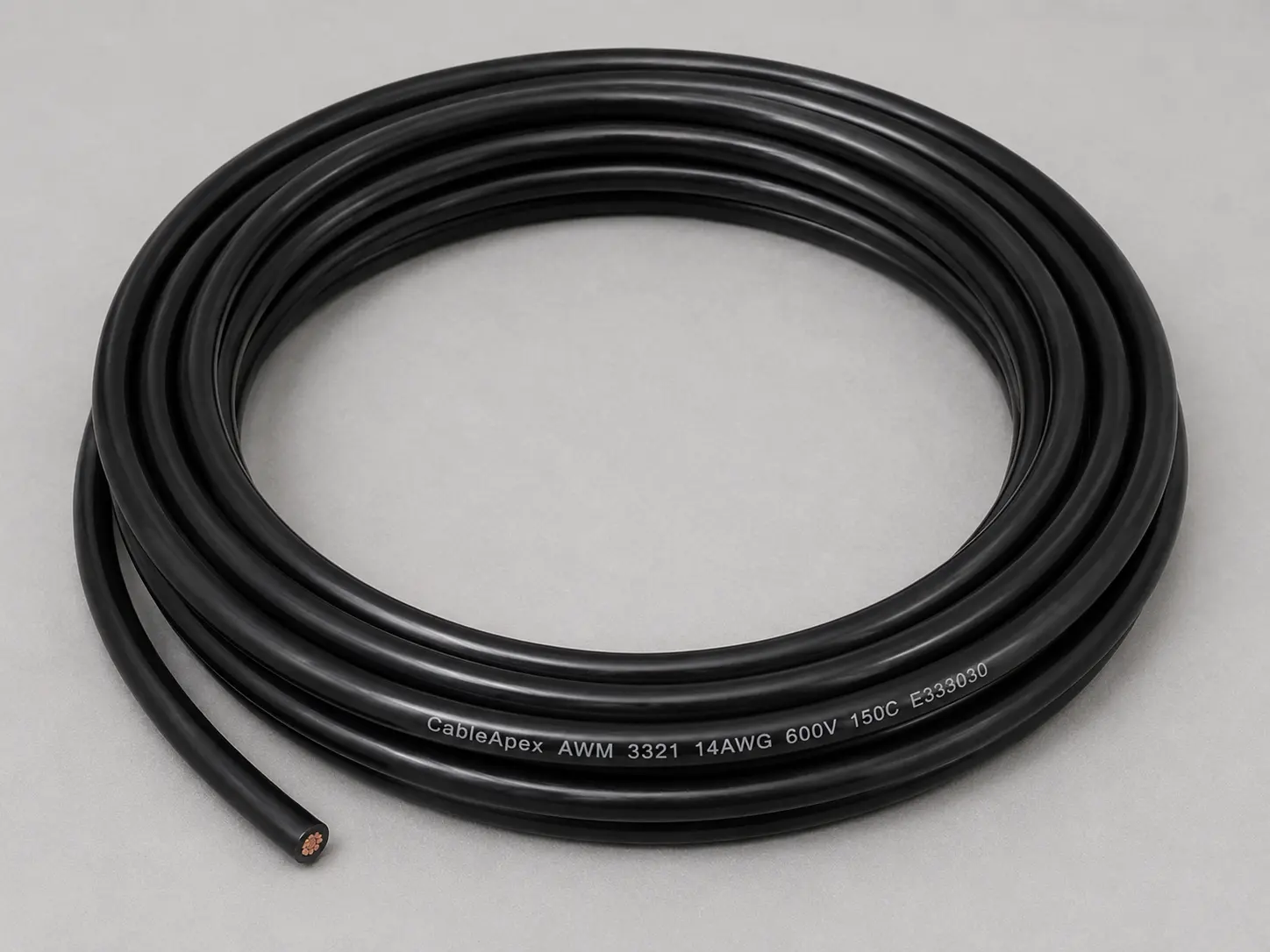
UL 3321 — The Temperature Gap Filler in the XLPE Family
Within the UL Recognized XLPE wire family produced by CableApex under UL File No. E333030, four Styles cover different temperature/voltage combinations:
- UL 3666: 105°C, 600V AC, 32-1000 kcmil — entry-level XLPE for general appliance internal wiring at standard temperatures
- UL 3266: 125°C, 300V AC, 32-10 AWG — moderate-temperature XLPE at lower voltage class
- UL 3271: 125°C, 600V AC / 750V DC, 30-2000 kcmil — UL-designated motor lead Style at 125°C / 600V
- UL 3321: 150°C, 600V AC / 750V DC, 30-4/0 AWG — the highest-temperature XLPE Style in the family
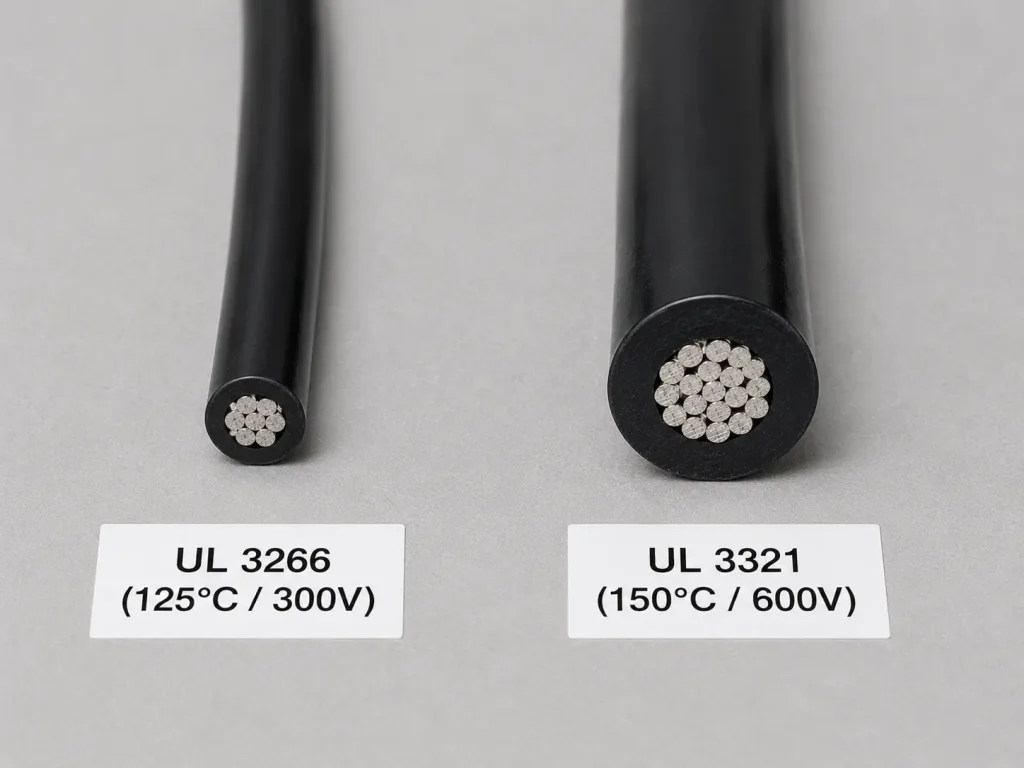
UL 3321’s distinguishing characteristic is its 150°C continuous temperature rating — 25°C higher than UL 3266 and UL 3271’s 125°C rating, but 50°C lower than the entry to silicone rubber territory (UL 3071 and UL 3135 at 200°C). For German engineers searching UL 3321 150C XLPE Draht Germany export, this Style fills a specific application gap: situations where 125°C XLPE provides insufficient thermal margin but the cost premium of 200°C silicone rubber is not justified.
Where 150°C XLPE Solves Real Engineering Problems
The 25°C temperature increase from UL 3266/3271 (125°C) to UL 3321 (150°C) matters more than it might first appear. Wire insulation operates in actual cabinet, enclosure, and equipment environments where local temperatures often exceed the equipment’s nameplate ambient rating due to internal component heating. A common pattern:
- Equipment nameplate ambient: 40°C
- Internal cabinet temperature rise from power components: 30-40°C
- Local hot spot near heat-generating components: additional 20-40°C
- Wire temperature near heat sources: 90-120°C continuous
At wire temperatures of 90-110°C, both 125°C UL 3266 and 150°C UL 3321 work. At wire temperatures of 110-130°C, UL 3266 approaches its thermal limit with limited safety margin, while UL 3321 retains 20-40°C of margin. For equipment with thermal uncertainty, accelerated aging concerns, or extended service life requirements, the additional 25°C of UL 3321 provides meaningful design robustness without crossing into silicone rubber price territory.
2026 Growth Markets — Where UL 3321 Demand Is Expanding
LED Driver Internal Wiring
The transition to LED lighting across commercial, industrial, and outdoor applications has created sustained demand for LED driver power supplies that operate at elevated internal temperatures. LED drivers handle significant power dissipation (typically 5-20% of total LED system power as heat) within compact enclosures. Internal wiring near LED driver power components routinely operates at 100-140°C continuous. UL 3321’s 150°C rating provides comfortable thermal margin for this growing application class, particularly for commercial and industrial LED drivers exported from German manufacturers to North American markets.
EV Charging Station Internal Wiring
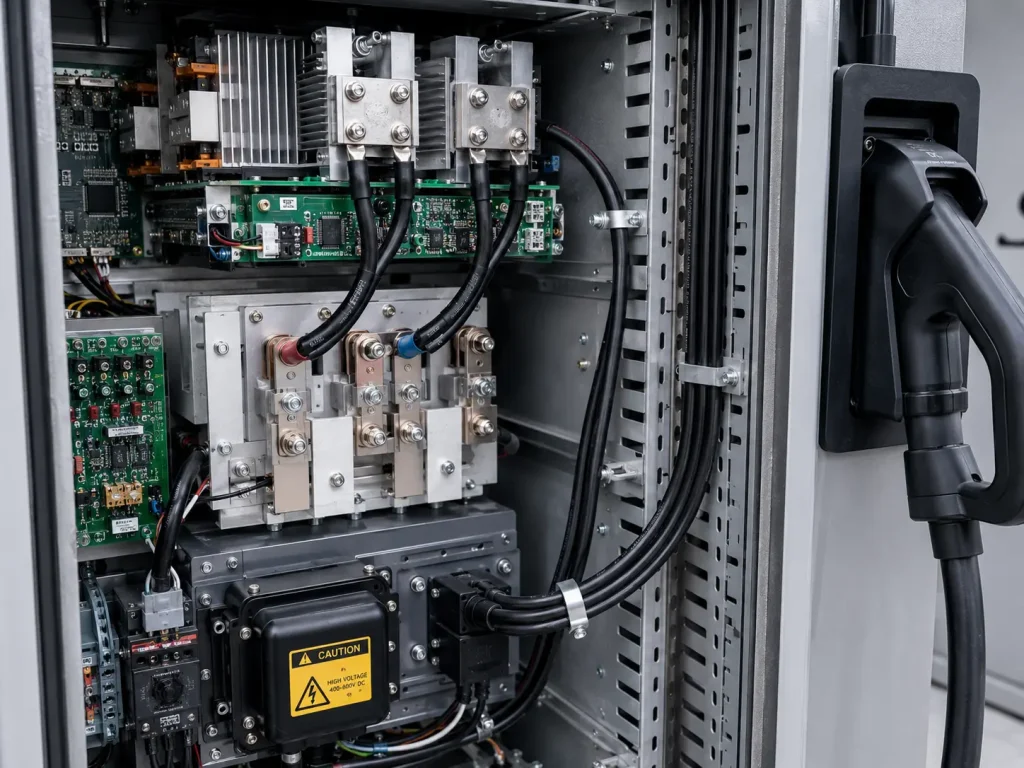
The North American EV charging infrastructure rollout has created strong demand for charging station equipment from European manufacturers. EV charging station internal wiring carries DC bus current at 400-1000V DC levels with thermal management challenges from power conversion components. UL 3321’s 600V AC / 750V DC voltage rating combined with 150°C temperature rating addresses this application class. The narrow 30-4/0 AWG range covers the typical conductor sizes for charging station internal power distribution and control wiring.
Battery Management System (BMS) Internal Wiring
Energy storage systems for grid-scale and commercial battery installations require BMS internal wiring that operates near battery cell heat sources at elevated temperatures. The combination of 600V/750V DC rating (covering typical battery bus voltages up to 600V) and 150°C temperature rating makes UL 3321 well-suited for BMS module internal wiring. The growing North American energy storage market creates sustained demand for UL-certified BMS components from German specialty manufacturers.
Industrial Control System Internal Wiring
Industrial control panels with integrated power components (VFDs, motor starters, soft starters with their internal SCR heat sinks) generate internal hot spots that exceed 125°C XLPE ratings. UL 3321 internal wiring routes through these elevated-temperature panel zones without requiring the cost of silicone rubber. For German industrial control panel manufacturers exporting to US distribution, UL 3321 provides the thermal margin for cabinet hot zones.
UL 3321 vs UL 3266 — Engineering Decision Framework
For German engineers choosing between UL 3266 (125°C / 300V) and UL 3321 (150°C / 600V) for a specific application, the decision involves both voltage and temperature considerations:
| Application Characteristic | UL 3266 | UL 3321 |
|---|---|---|
| Voltage at or below 300V continuous | ✓ | ✓ |
| Voltage above 300V (up to 600V AC / 750V DC) | ✗ (insufficient) | ✓ |
| Wire temperature up to 110°C continuous | ✓ (adequate margin) | ✓ (generous margin) |
| Wire temperature 110-125°C continuous | ✓ (limited margin) | ✓ (comfortable margin) |
| Wire temperature 125-145°C continuous | ✗ (exceeds rating) | ✓ (adequate margin) |
| Wire temperature above 145°C | ✗ | ✗ (specify silicone or fluoropolymer) |
| Typical cost relative to UL 3266 | 1.0 (reference) | 1.15-1.25 |
UL 3321 is the right choice when EITHER voltage exceeds 300V OR temperature exceeds 110°C continuous. When both conditions are below those thresholds, UL 3266 is the cost-effective choice. The 15-25% cost premium of UL 3321 over UL 3266 reflects the thicker XLPE wall thickness and the optional braid covering when specified — premium that is application-justified when the voltage or temperature increase is genuinely needed.
UL 3321 Specifications
| Parameter | Value (per UL Subject 758) |
|---|---|
| UL Style | AWM 3321 |
| UL File Number | E333030 (Follow-Up Service) |
| AWG Range | 30 AWG – 4/0 AWG, solid or stranded |
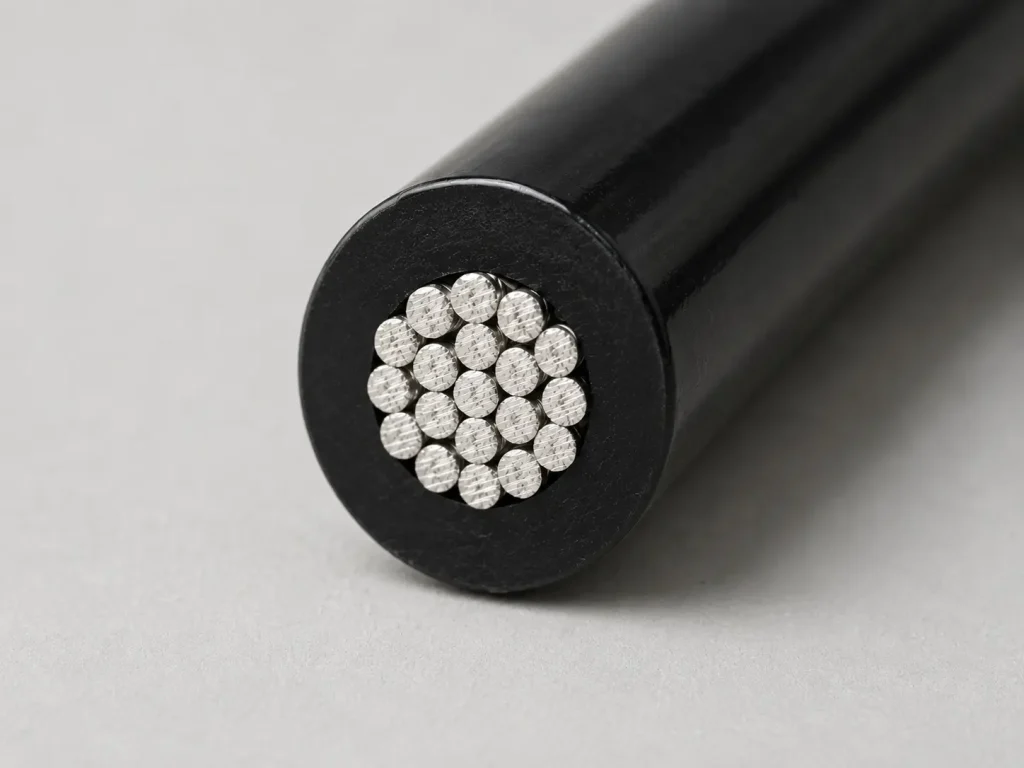
| Conductor Material | Bare or tinned copper, solid or stranded round |
| Voltage Rating | 600V AC / 750V DC |
| Temperature Rating | 150°C continuous |
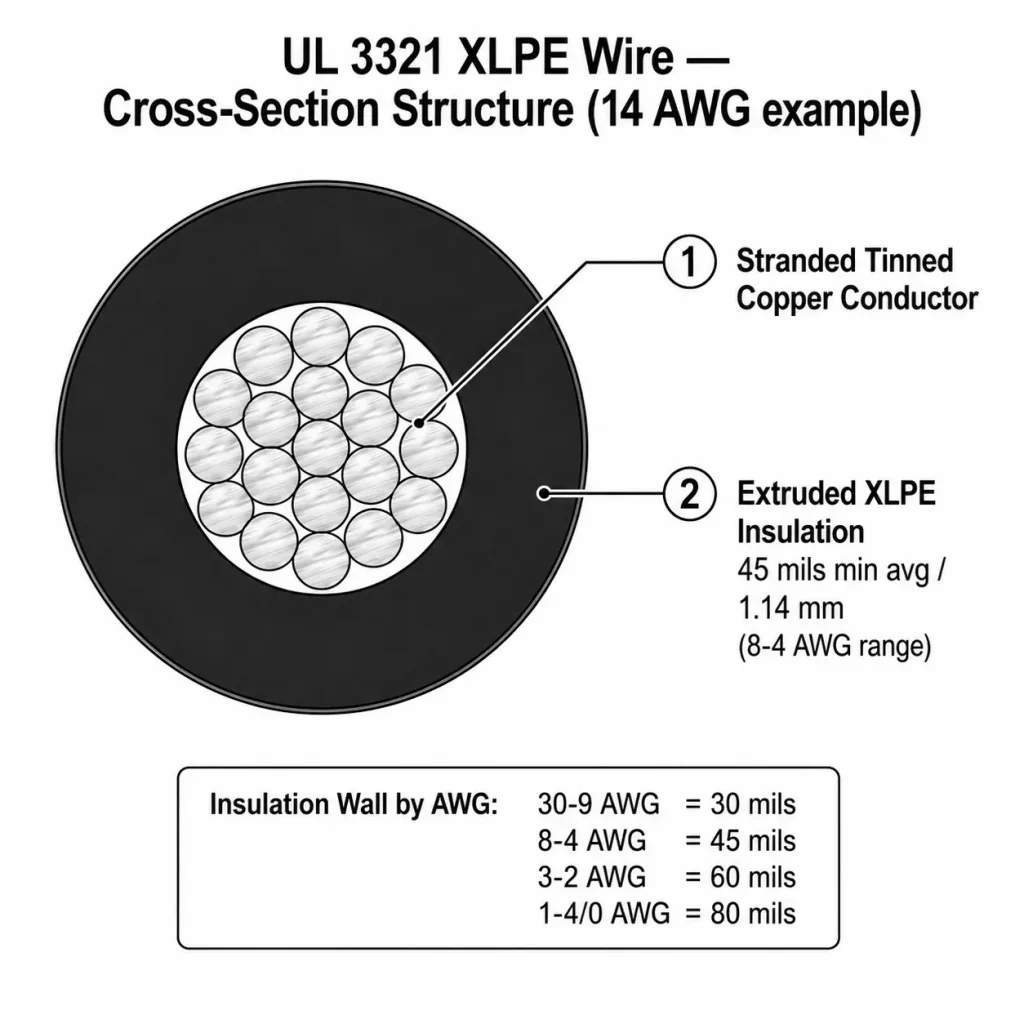
| Insulation | Extruded XLPE (cross-linked polyethylene) |
| Insulation Wall (30-9 AWG) | 30 mils (0.76 mm) min avg / 27 mils (0.69 mm) min at any point |
| Insulation Wall (8-4 AWG) | 45 mils (1.14 mm) min avg / 40 mils (1.02 mm) min at any point |
| Insulation Wall (3-2 AWG) | 60 mils (1.52 mm) min avg / 54 mils (1.37 mm) min at any point |
| Insulation Wall (1-4/0 AWG) | 80 mils (2.03 mm) min avg / 72 mils (1.83 mm) min at any point |
| Optional Covering | Treated or untreated braid |
| Insulation Type | Thermoset (does not soften at elevated temperature) |
| Flame Rating | Horizontal Flame per UL Subject 758 |
| Designated Use | Internal wiring of appliances |
| Compliance | UL Subject 758 (AWM), RoHS, REACH |
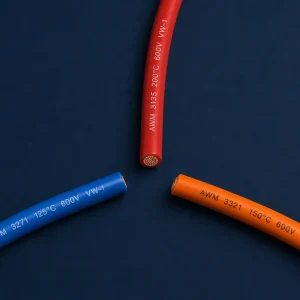
| Marking | CableApex · UL AWM 3321 · AWG · 600V · 150°C · E333030 |
Engineering Notes from CableApex
Three points German export manufacturers raise about UL 3321 specification:
- “For an LED driver application running at 130°C internal cabinet temperature, should I use UL 3321 or step up to UL 3071 silicone rubber?” At 130°C continuous, UL 3321 provides 20°C of thermal margin (150°C rating minus 130°C operating), which is acceptable for most LED driver applications with reasonable service life expectations (5-10 years). UL 3071 silicone rubber at 200°C provides 70°C of margin — significantly more thermal headroom but at 2.5-4x the cost of UL 3321. For commercial LED drivers with standard 5-7 year warranty, UL 3321 is the cost-effective choice. For premium industrial LED drivers with 10+ year warranties or for installations with limited maintenance access, UL 3071’s additional thermal margin may be justified despite the cost premium.
- “What’s the practical difference between treated and untreated braid options on UL 3321?” The UL 3321 listing permits both treated and untreated optional braid coverings. Untreated braid is plain fiberglass or similar non-finished braided material — provides mechanical abrasion protection at lower cost. Treated braid has a finish (typically silicone varnish or polyurethane) that adds moisture resistance and dimensional stability — more useful for applications with potential humidity exposure or where the braid surface must remain consistent over service life. For most enclosed appliance internal wiring, untreated braid is sufficient when braid is specified at all. For applications with humidity exposure or outdoor-derated equipment, treated braid is preferred.
- “How does UL 3321 handle the high voltage transients from VFD switching?” UL 3321 carries the same 600V AC / 750V DC continuous rating as UL 3271, but UL 3321 does not include the optional semi-conductive layer that UL 3271 offers. For internal wiring routed in panels with VFDs, the dV/dt switching transients are an application concern. If your application involves wire routing near VFD outputs or motor connections where PWM switching transients exceed steady-state voltage substantially, UL 3271 with optional semi-conductive layer is the more conservative specification. UL 3321 is appropriate for general internal wiring in VFD-containing panels but is not the right specification for wire directly experiencing VFD-induced switching transients.
MOQ, Packaging & Shipping
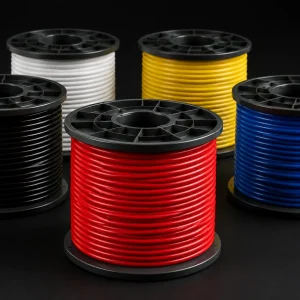
MOQ varies by AWG, color combination, optional braid covering, and production schedule — contact us for current MOQ on UL 3321. Standard packaging: spools or reels per customer specification. Export documentation: Commercial Invoice, Packing List, Certificate of Origin (CCPIT), Bill of Lading, UL Recognition reference letter (File No. E333030), RoHS Declaration, REACH SVHC Declaration, MSDS. HS Code: 8544.49. CIF Hamburg or Rotterdam, transit time 25–30 days from Shanghai or Ningbo origin port.
Related UL XLPE Styles for Comparison
UL 3321 buyers commonly cross-reference: UL 3266 (125°C / 300V XLPE, 32-10 AWG — lower temperature and voltage for general internal wiring), UL 3271 (125°C / 600V AC / 750V DC XLPE, 30-2000 kcmil — UL-designated motor lead Style with optional semi-conductive layer), UL 3666 (105°C / 600V XLPE, 32-1000 kcmil — entry-level XLPE at lower temperature), and UL 3071 (200°C / 600V silicone rubber, 18-13 AWG — silicone alternative when applications exceed 150°C continuous).