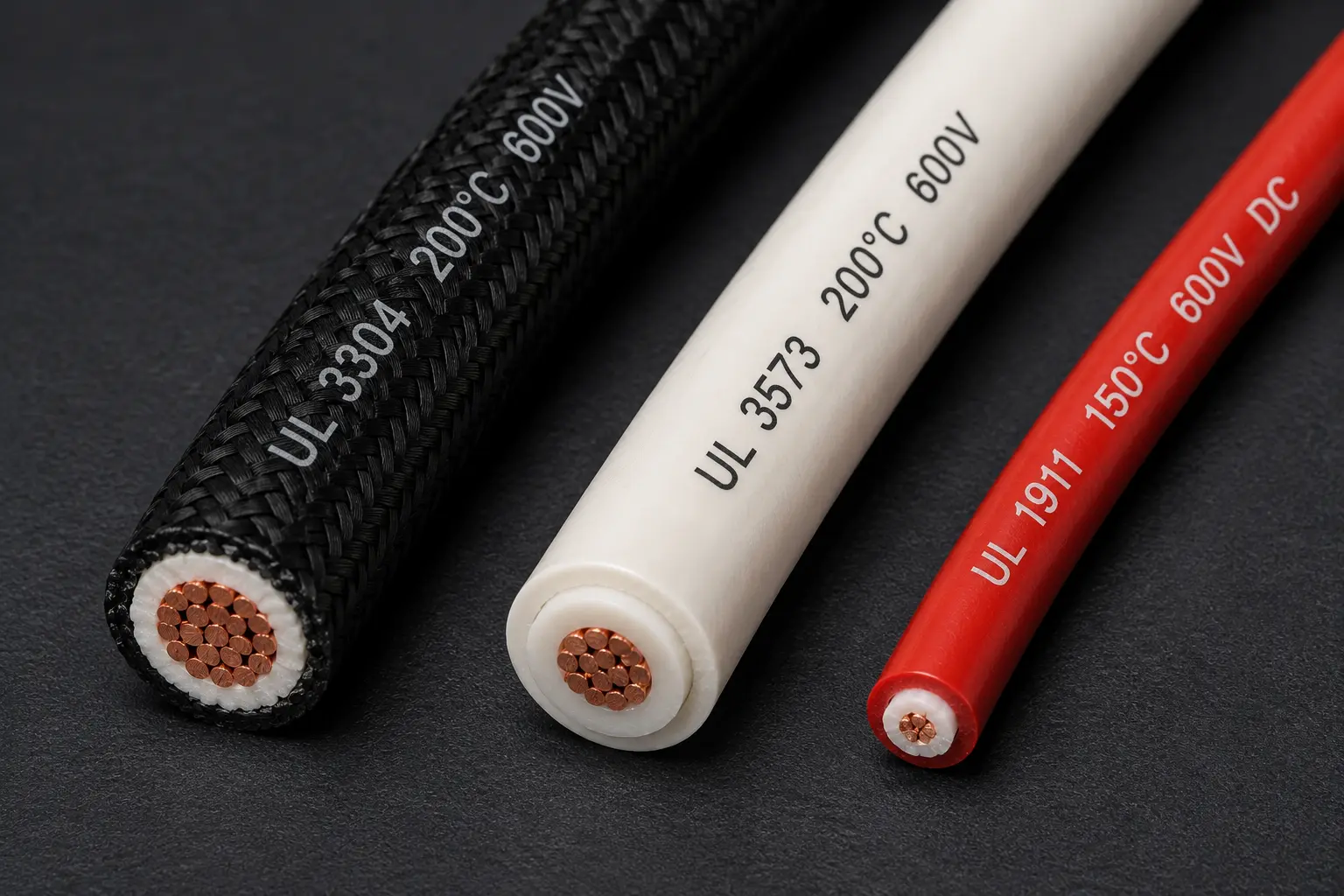
UL 3304 / UL 3573 / UL 1911 Ignition Wire — Replacement & Selection Guide for Gas Burner Systems
Ignition wire replacement is one of the most specification-sensitive MRO tasks in gas appliance and heating equipment maintenance. The wrong replacement wire — wrong voltage rating, wrong waveform type, wrong insulation construction — will fail within weeks or cause immediate ignition system malfunction. Three UL Subject 758 wire styles cover the complete range of gas appliance and fuel oil burner ignition lead applications: Style 3304, Style 3573, and Style 1911. Each serves a distinct ignition system type, and substituting one for another without understanding the specification differences causes field failures.
This guide covers the correct replacement ignition wire selection for each ignition system type — from residential gas range spark igniters to commercial fuel oil burner transformers — with the specification parameters needed to identify the correct UL Style at point of failure.
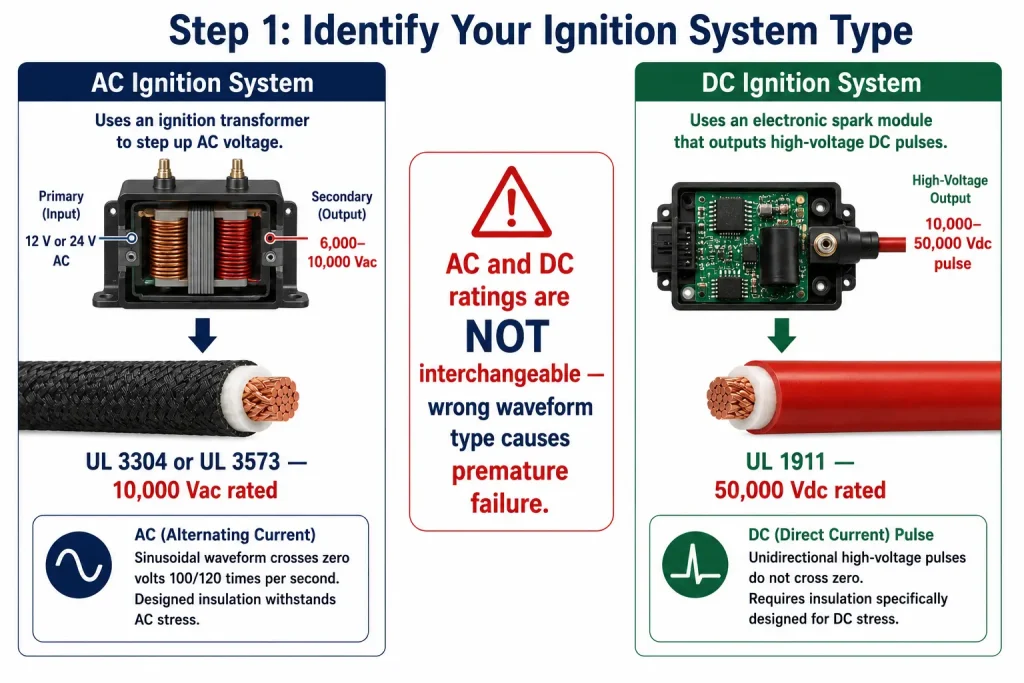
The Critical First Question: AC or DC Ignition System?
The single most important parameter in ignition wire selection is whether the ignition system generates AC or DC high voltage output. This determines which UL Style is correct — and the two are not interchangeable:
| Ignition System Type | Output Waveform | Typical Output Voltage | Correct UL Style |
|---|---|---|---|
| Ignition transformer (fuel oil burner, commercial gas burner) | AC | 6,000–10,000 Vac | UL 3304 or UL 3573 |
| Electronic spark igniter (residential gas range, cooktop) | DC pulse | 10,000–30,000 Vdc peak | UL 1911 |
| Piezoelectric igniter (manual push-button) | DC pulse | Up to 50,000 Vdc peak | UL 1911 |
| Gas-fired HVAC igniter module | AC or DC (check module spec) | 6,000–15,000 V | Check module output — see guide below |
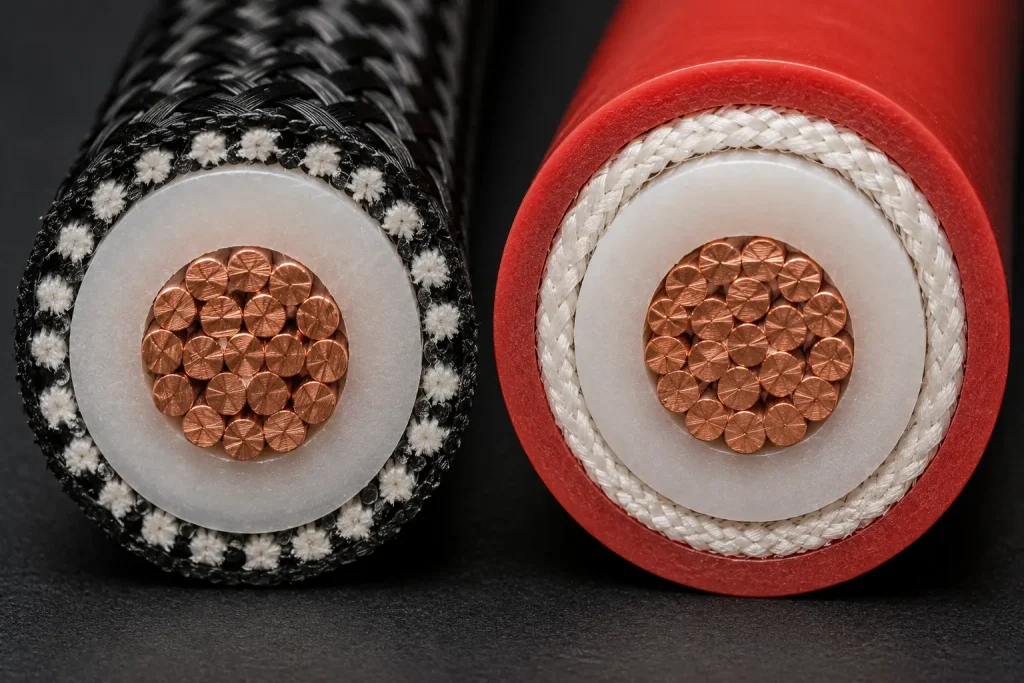
UL Ignition Wire Styles — Full Specifications and Application Guide
UL 3304 — Silicone Rubber 200°C / 10,000 Vac + Fiberglass Braid
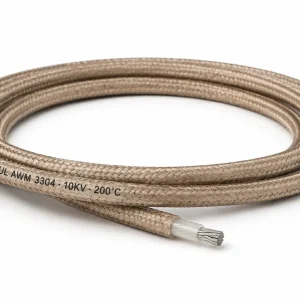
Style 3304 is the standard AC ignition lead wire for ignition transformer-fed systems — fuel oil burner ignition transformers and commercial gas burner ignition systems where the transformer secondary output is AC high voltage at 6,000–10,000 Vac. Construction: extruded silicone rubber primary insulation at 40 mils minimum average wall, fiberglass braid outer covering. The 40-mil silicone wall provides the dielectric mass required for sustained 10,000 Vac ignition pulse stress over the appliance service life. The single fiberglass braid provides mechanical protection for OEM factory installation environments where the wire is routed once and remains static throughout service life.
Specify UL 3304 for: fuel oil burner ignition transformer secondary leads, commercial gas range burner ignition leads, commercial kitchen equipment AC ignition systems, industrial gas burner ignition wiring in static installation environments.
UL 3573 — Silicone Rubber 200°C / 10,000 Vac + Fiberglass Braid + Outer Silicone Jacket
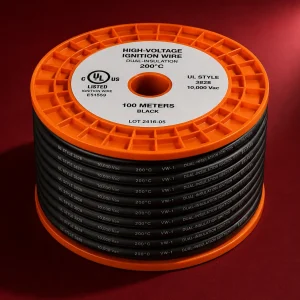
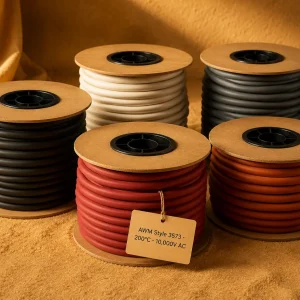
Style 3573 provides the same 200°C / 10,000 Vac AC ignition rating as Style 3304 with a dual-layer insulation system: silicone rubber primary insulation (30 mils minimum average) plus fiberglass braid plus outer silicone rubber jacket. The outer silicone jacket adds a second mechanical protection layer and provides a smooth, cleanable outer surface — making Style 3573 the preferred specification for MRO replacement wire in commercial kitchen environments where ignition leads are accessed repeatedly during cleaning and servicing operations, and for industrial gas equipment where the ignition lead routing path is subject to contact with grease, cleaning agents, or mechanical abrasion during maintenance access.
Specify UL 3573 for: MRO replacement in commercial gas range ignition systems accessed frequently during cleaning, fuel oil burner ignition leads in mechanically demanding environments, industrial gas ignition system replacement where outer jacket durability is required.
UL 1911 — 250°C / 50,000 Vdc — Electronic Spark Ignition
Style 1911 is the DC-rated high voltage wire for electronic spark ignition systems — residential gas range and cooktop igniters, gas dryer ignition systems, and piezoelectric push-button ignition where the ignition module generates DC high-voltage pulses rather than AC transformer output. Rated 250°C and up to 50,000 Vdc, covering 24–10 AWG. The DC rating is fundamentally different from Style 3304/3573’s AC rating — do not substitute AC-rated wire for DC ignition systems or vice versa. The dielectric stress mechanism of sustained AC voltage differs from DC pulse stress, and wire rated for one waveform type may fail prematurely under the other.
Specify UL 1911 for: residential gas range and cooktop electronic spark ignition leads, gas dryer ignition system wiring, piezoelectric ignition system leads, any ignition system where the ignition module generates DC pulse output rather than AC transformer output.
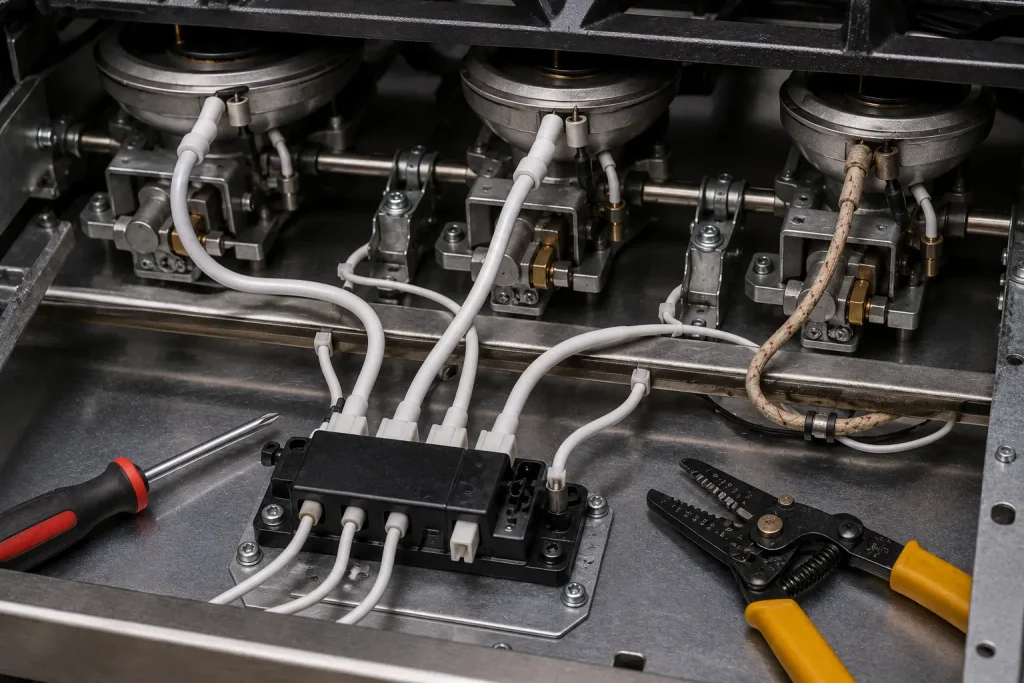
UL 3304 vs UL 3573 — When to Choose Each
| Parameter | UL 3304 | UL 3573 |
|---|---|---|
| Voltage Rating | 10,000 Vac | 10,000 Vac |
| Temperature Rating | 200°C | 200°C |
| Primary Insulation | SR-Silicone 40 mils min avg | SR-Silicone 30 mils min avg |
| Outer Covering | Fiberglass braid only | Fiberglass braid + outer silicone jacket |
| AWG Range | 22–12 AWG | 22–12 AWG |
| Outer Surface | Fiberglass texture — not cleanable | Smooth silicone — cleanable, grease resistant |
| MRO Durability | Good — static installation | Better — repeated servicing access |
| Best For | OEM factory installation, fuel oil burner leads, static routing | MRO replacement, commercial kitchen, mechanically demanding environments |
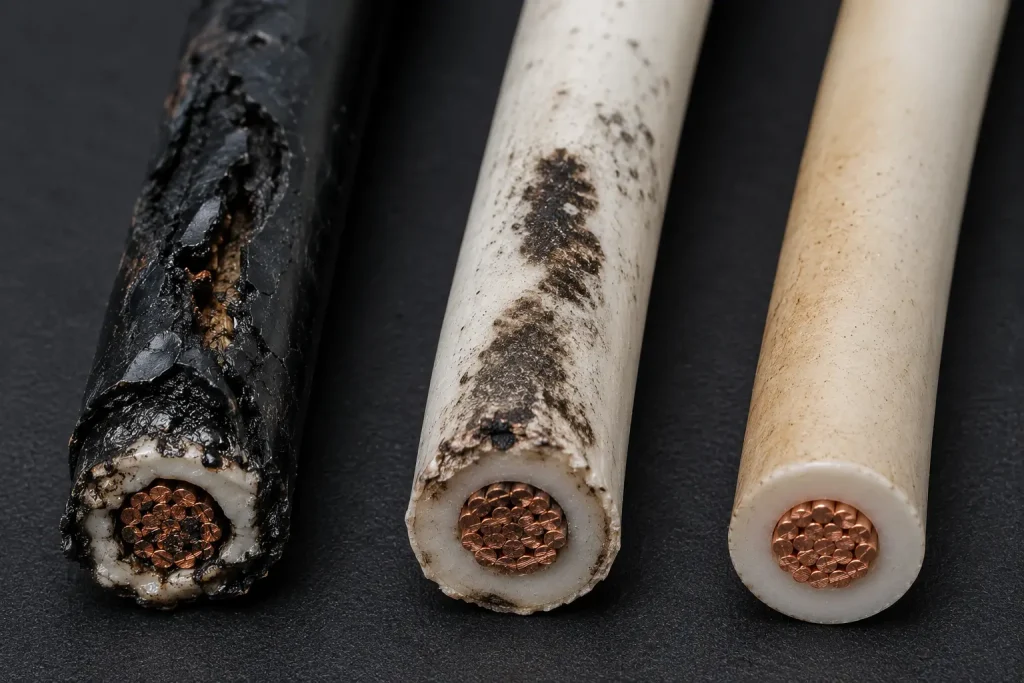
Field Replacement Guide — Identifying the Correct Wire at Point of Failure
When an ignition lead fails in the field, use this sequence to identify the correct replacement specification:
- Step 1 — Read the failed wire surface markings: intact sections of the failed wire will show “AWM Style XXXX” and voltage/temperature ratings. If Style 3304, 3573, or 1911 is visible, replace with the same style and AWG.
- Step 2 — Identify the ignition system type: if wire markings are illegible, open the appliance and locate the ignition module or transformer. An ignition transformer with primary and secondary coil windings indicates AC output — specify UL 3304 or 3573. An electronic spark module with a transistorized circuit board indicates DC pulse output — specify UL 1911.
- Step 3 — Determine voltage output: the ignition transformer or module nameplate typically states output voltage. For unlabeled components, 6,000–10,000V transformers are standard for fuel oil and commercial gas burners; 10,000–30,000V DC modules are standard for residential gas range igniters.
- Step 4 — Select 3304 or 3573 for AC systems: for OEM-type static installation replacement, specify UL 3304. For commercial kitchen MRO replacement where the lead will be accessed repeatedly during servicing, specify UL 3573 for its outer silicone jacket durability advantage.
- Step 5 — Measure AWG or OD of failed wire: match the replacement AWG to the original. Common AWG for ignition leads: 18 AWG for residential gas ranges, 16 AWG for commercial burners, 14 AWG for industrial burner ignition transformers.
Related UL Styles for Comparison
Ignition wire buyers commonly cross-reference: UL 3239 (200°C / up to 60,000 Vdc silicone high voltage, for neon sign transformer secondary leads and CRT display high-voltage supply wiring), UL 3135 (200°C / 600V silicone rubber, for standard voltage internal wiring in the same gas appliance adjacent to the ignition system), UL 3304 (200°C / 10,000 Vac silicone + fiberglass braid, full product page), and UL 3573 (200°C / 10,000 Vac dual-layer ignition wire, full product page).
Request a Quote — Ignition Wire Replacement Supply
Submit your ignition system type (AC transformer or DC electronic), required voltage rating, AWG, quantity, and annual volume estimate below. Our team responds within 12 business hours. Cut-to-length ignition lead sets available for MRO replacement orders. Free samples available for ignition system qualification testing.