UL 1591 FEP Wire 24 AWG — 150°C at 300 Vac with Silver, Nickel or Tin Plated Conductor
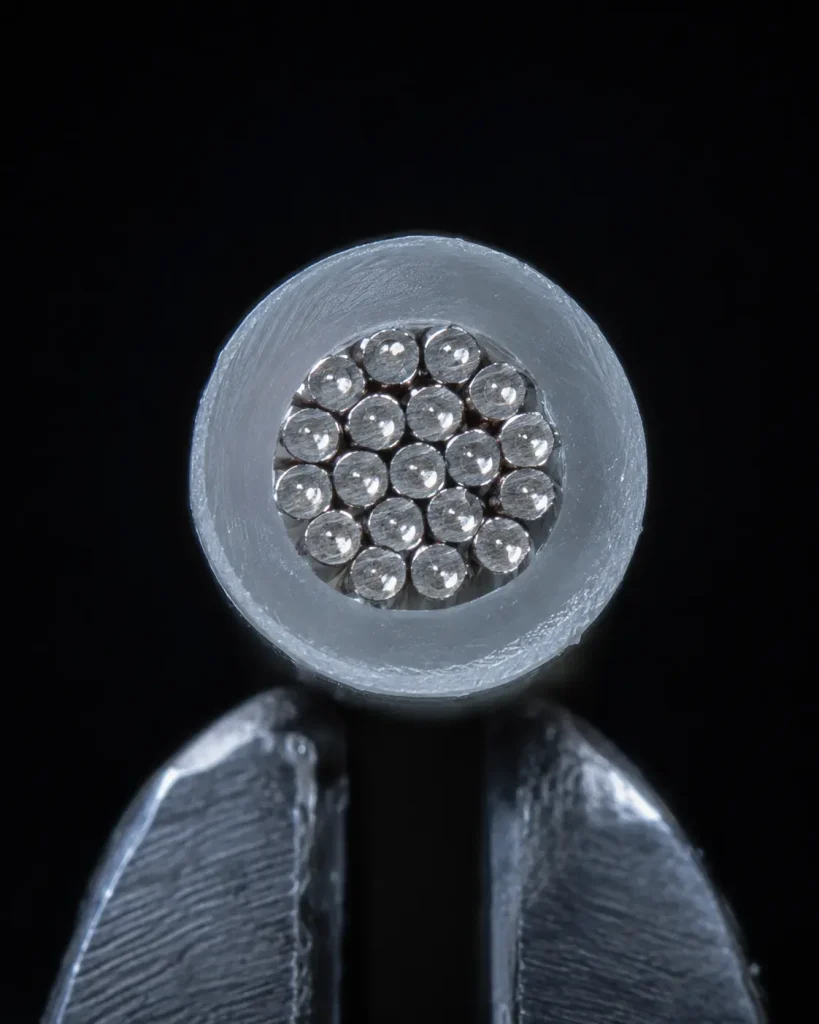
UL 1591 in 24 AWG is a single-conductor appliance wiring material with extruded FEP insulation, rated 150°C maximum at 300 Vac with a horizontal flame rating. The insulation is specified at 16 mils minimum average thickness, 13 mils minimum at any point, applied uniformly across the style’s 32 AWG to 16 AWG range. At 24 AWG the conductor is fine enough that its surface treatment has a measurable effect on termination behaviour and long-term stability, which is why the four plating options this style recognises are worth settling deliberately rather than by default. CableApex supplies UL 1591 24 AWG as a UL Recognized Component — file on record.
Why Plating Matters More at Fine Gauge
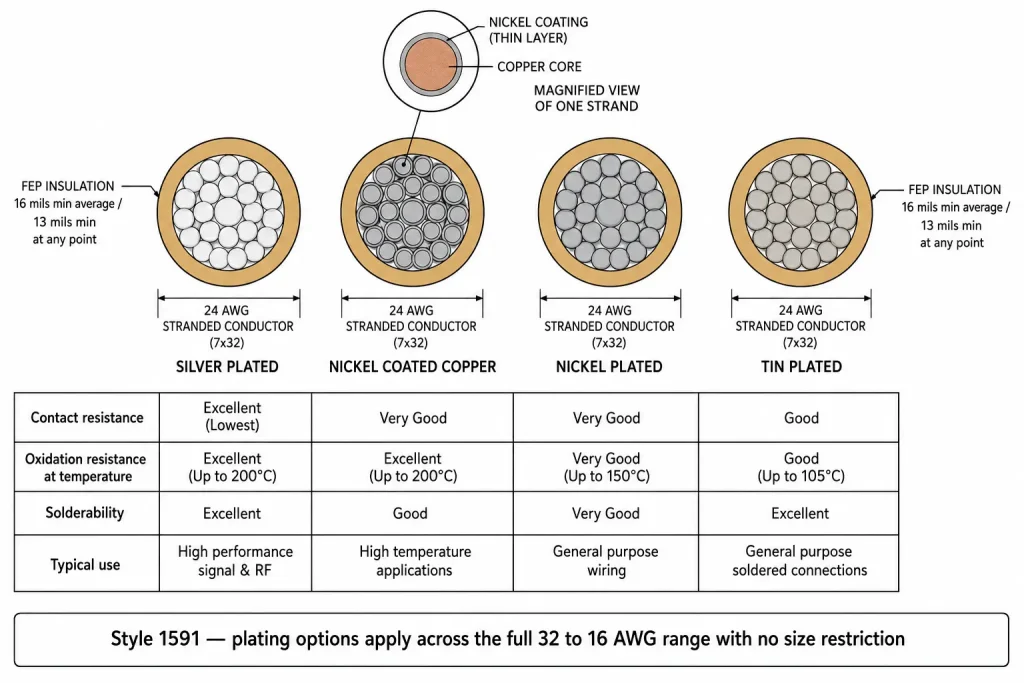
Every conductor has a surface, and on a fine one that surface is a large share of the whole. A 24 AWG conductor has roughly a quarter of the cross-sectional area of a 18 AWG conductor but nowhere near a quarter of the surface-related margin: oxidation that forms a given depth into the copper removes a proportionally larger fraction of a fine conductor’s usable material, and the contact resistance that oxide introduces sits in series with a circuit that may already be operating at low signal levels. Plating puts a stable, low-oxidation layer between the copper and the environment, and at 150°C sustained operating temperature that protection is doing continuous work rather than sitting idle.
Conductor Plating Options Compared
| Conductor treatment | Contact resistance | Oxidation resistance at temperature | Typical reason to specify |
|---|---|---|---|
| Silver plated | Lowest | Good | Low-level signal circuits; surface conductivity critical |
| Nickel coated copper | Higher | Highest | Sustained operation at the top of the temperature range |
| Nickel plated | Higher | High | Elevated-temperature service with standard termination |
| Tin plated | Moderate | Moderate | General purpose; standard solder process chemistry |
Silver and tin remain readily solderable with conventional process chemistry. Nickel surfaces are more demanding to solder and are more commonly terminated by crimping or welding — if the assembly process is soldering and the operating temperature does not genuinely require nickel, that is a reason to choose otherwise. Note also that UL 1591 places no size restriction on any of its plating options across the 32 to 16 AWG range, which is not the case in the otherwise comparable UL 1592.
UL 1591 24 AWG Specifications
| Item | Specification |
|---|---|
| UL Style | 1591 — single conductor with extruded insulation |
| Temperature Rating | 150°C maximum |
| Voltage Rating | 300 Vac |
| Conductor | 24 AWG, solid or stranded (style range 32–16 AWG) |
| Conductor Plating | Silver plated, nickel coated copper, nickel plated, or tin plated |
| Insulation | Extruded FEP, 16 mils minimum average thickness, 13 mils minimum at any point |
| Flame Rating | Horizontal flame; VW-1 vertical flame test available |
| UL Recognition | UL Recognized Component — file on record |
| Marking | Per UL Subject 758 marking requirements |
| Permitted Use | Internal wiring of appliances |
| RoHS / REACH | Documentation available on request |
A Single Wall Across the Style
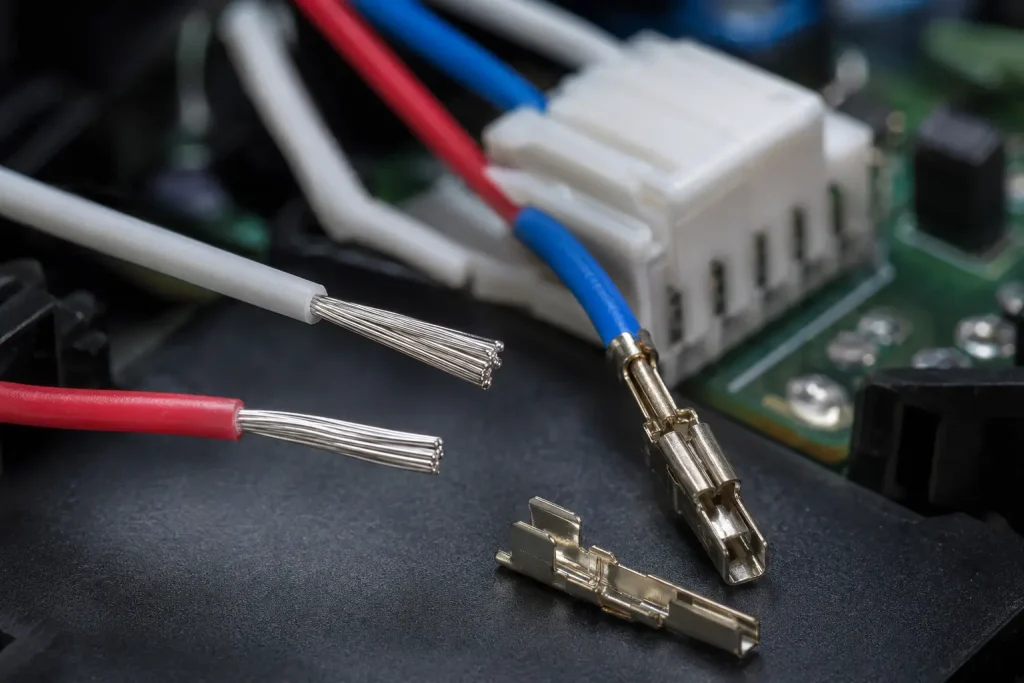
UL 1591 specifies one insulation figure for its entire conductor range rather than a bracket table — 16 mils minimum average, 13 mils minimum at any point, whether the conductor is 32 AWG or 16 AWG. At 24 AWG that wall is proportionally substantial against the conductor, giving the lead more resistance to clamp pressure and edge contact than its slim finished diameter suggests. It also means a gauge change within the style does not alter the insulation dimension, so a circuit revised from 26 AWG to 24 AWG changes diameter only by the conductor difference.
Applications
Within its permitted use — internal wiring of appliances — UL 1591 24 AWG suits sensor and signal leads, low-current control conductors and fine internal connections in appliances operating at 300 Vac in zones reaching 150°C. Silver plated conductor is the selection where low contact resistance in a low-level signal circuit is the priority; nickel coated or nickel plated conductor where the lead sits at sustained high temperature; tin plated conductor for general-purpose use with standard soldering. For applications outside internal appliance wiring, confirm application suitability before specifying.
Key Features
- Four recognised conductor treatments: silver, nickel coated copper, nickel, tin
- No size restriction on plating options across the 32–16 AWG range
- 16 mils uniform FEP wall gives a generous ratio at 24 AWG
- 150°C maximum at 300 Vac in a fine-gauge fluoropolymer construction
- Horizontal flame; VW-1 vertical flame test available
- UL Recognized Component — file on record
Request a Quote
CableApex supplies UL 1591 24 AWG from 100 m per color and responds to B2B inquiries within 12 hours. Specify conductor construction (solid or stranded), the required plating, and colors through the form below. If the termination method or operating temperature is not yet fixed, state the application and we can confirm which plating suits it.
Related FEP styles: UL 1592 FEP Wire (200°C / 300 Vac) · UL 1333 FEP Wire (150°C / 300 Vac, 30–10 AWG) · UL 1591 FEP Wire category