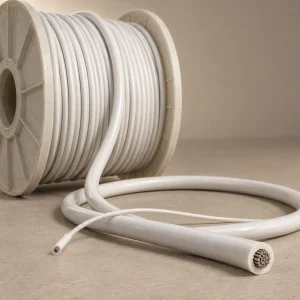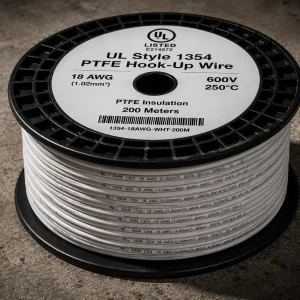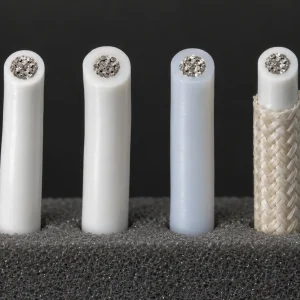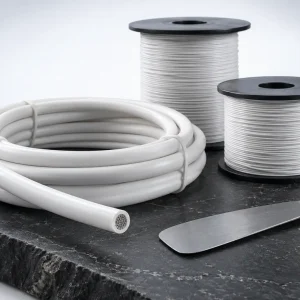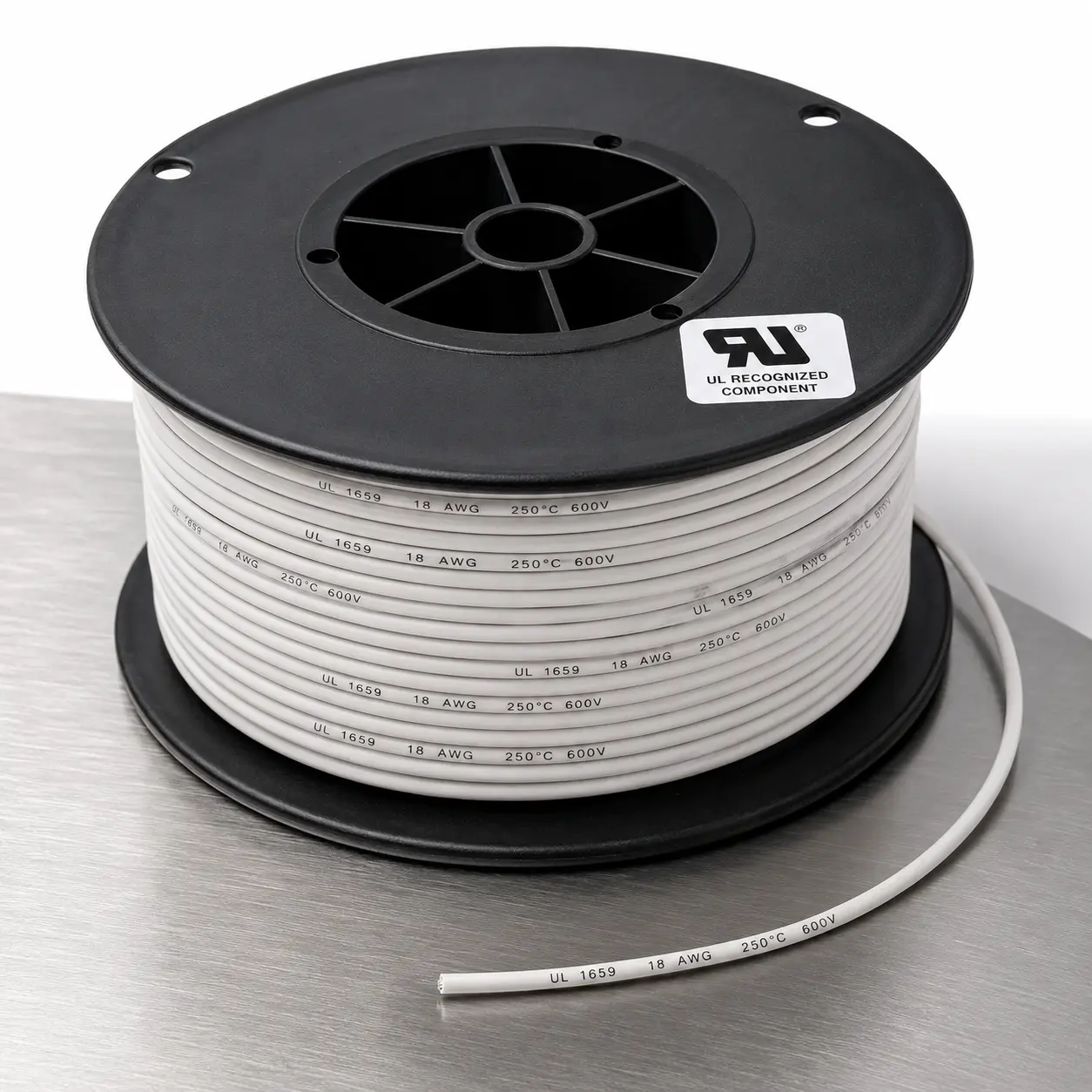
This page covers UL AWM Style 1659 PTFE wire supply for German buyers, and is organised around what needs to be settled before a quotation can be issued. UL Style 1659 is a single conductor with extruded insulation, rated 250°C and 600 Vac, covering 26 AWG to 4/0 AWG in solid or stranded round construction. The insulation material is PTFE/TFE and the stated use is internal wiring.
Because the Style file fixes only a limited set of parameters, most of a UL 1659 order is defined by the specification the buyer supplies rather than by the Style itself. The sections below set out which items are fixed, which are open to the order, and what to confirm before production begins. For the general product page, see UL 1659 PTFE wire for 250°C 600V internal wiring.
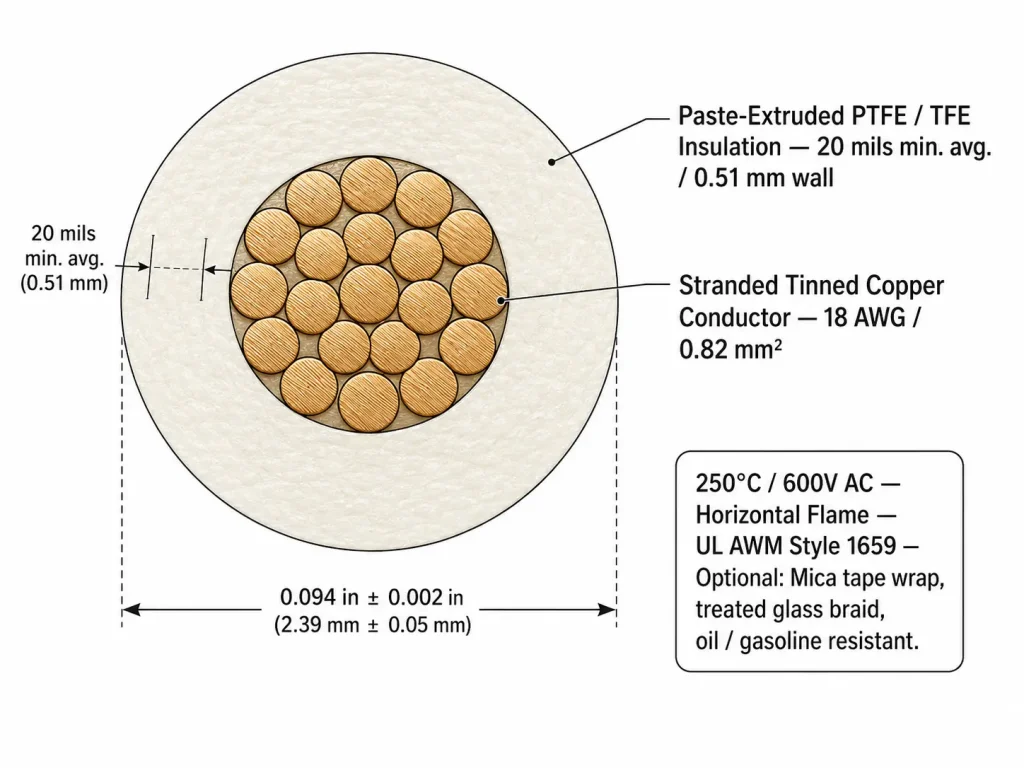
UL 1659 Ratings and Construction
| Parameter | Value per UL Style 1659 file |
|---|---|
| UL AWM Style | 1659 |
| Construction | Single conductor with extruded insulation |
| UL Subject / Section | 758, Section 1 |
| Temperature rating | 250°C |
| Voltage rating | 600 Vac |
| Conductor range | 26 AWG – 4/0 AWG, solid or stranded round |
| Insulation material | PTFE / TFE |
| Optional covering | Mica tape wrap |
| Optional braid | Treated glass braid |
| Optional ratings | Oil Resistant 80°C; Gasoline Resistant |
| Flame rating | Horizontal Flame per the UL Style file; VW-1 vertical flame testing available by confirmed construction and agreed order requirement |
| Marking | General |
| Use per UL Style file | Internal wiring |
Insulation Thickness by AWG Range
| AWG range | Minimum average | Minimum at any point |
|---|---|---|
| 26–10 AWG | 20 mils | 18 mils |
| 8–2 AWG | 30 mils | 27 mils |
| 1–4/0 AWG | 45 mils | 40 mils |
Order Requirements for German Buyers
The table below sets out the items that define a UL 1659 order. None of these is fixed by the Style file — each is established through the quotation and the approved order specification.
| Order item | Status |
|---|---|
| AWG | Within the Style range of 26 AWG – 4/0 AWG; specify at enquiry |
| Solid or stranded requirement | Both within the Style scope; specify at enquiry |
| Requested conductor material and plating | Not defined at Style level; confirmed for the ordered construction |
| Detailed stranding | Confirmed in the approved order specification or datasheet |
| Required finished outside diameter | Confirmed in the approved order specification or datasheet |
| Colour | Specify at enquiry; confirmed against production capability |
| Marking | Confirmed within the applicable certified scope before production |
| Reel length | Specify at enquiry; confirmed in the quotation |
| Packaging | Specify at enquiry; confirmed in the quotation |
| Required documents | Specify at enquiry; availability confirmed for the ordered construction |
Conductor resistance, strand construction and finished dimensions are set out in the approved order specification or datasheet for the construction being supplied, rather than published as fixed catalogue figures.
Optional Ratings and Coverings
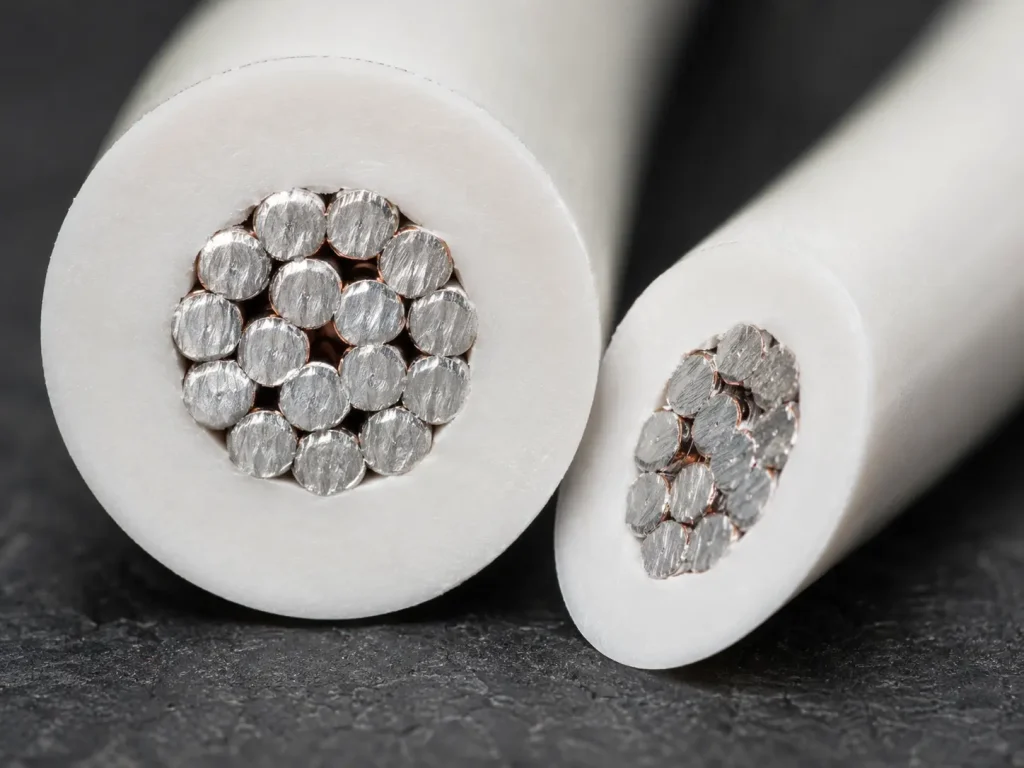
Four elements listed in the Style file are optional rather than standard: the mica tape wrap, the treated glass braid, the Oil Resistant 80°C rating and the Gasoline Resistant rating.
Each must be requested separately at enquiry — specifying one does not carry any of the others, and none is applied by default. The optional coverings do not change the Style temperature rating or extend the stated use beyond internal wiring. Where any optional element is required, the ordered construction, the covering or rating actually applied, the product marking and any supporting documents must all be confirmed for the ordered product before production.
Information to Confirm with the Supplier
For a German buyer setting up a first UL 1659 order, the following items are worth settling explicitly in writing rather than assuming:
- The applicable UL Style being supplied
- AWG and whether solid or stranded construction is required
- Requested conductor material and plating
- Which insulation-thickness group applies to the specified AWG
- Whether an optional mica tape wrap or treated glass braid is required
- Whether an optional Oil Resistant 80°C or Gasoline Resistant rating is required
- The actual marking to be applied to the wire
- Whether samples are required before the production order
- The approved datasheet for the construction being supplied
- Packaging format and reel or cut length
- Batch identification, if your incoming inspection process requires it
- Required commercial, compliance and import documents
- Final destination and requested Incoterm
Settling these at quotation stage avoids the situation where a construction is produced against an assumption rather than against a confirmed specification.
UL Marking and Required Documentation
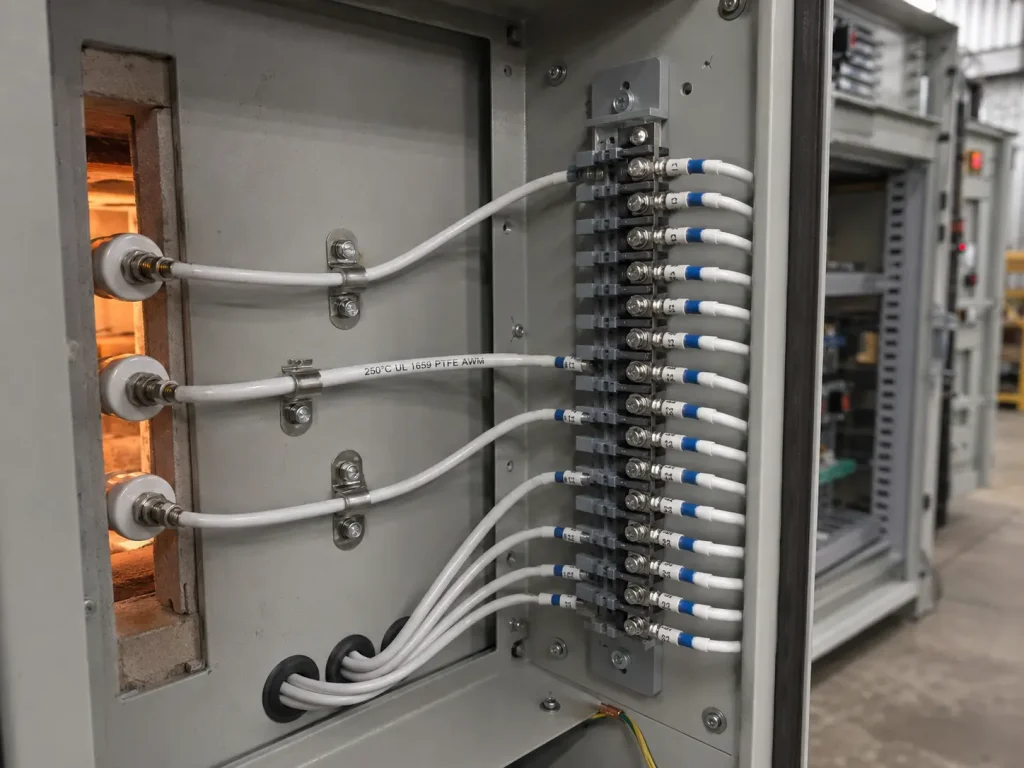
The ordered construction, the applicable certified scope, any optional rating specified, the actual UL marking applied and the supporting documents must all be confirmed before production. Only products bearing the applicable UL Mark should be represented as covered products.
Where UL, RoHS, REACH, oil-resistance, gasoline-resistance, batch or import documents are required for your process, specify them during enquiry so availability can be confirmed for the ordered construction rather than assumed.
Shipping and Packaging Requirements
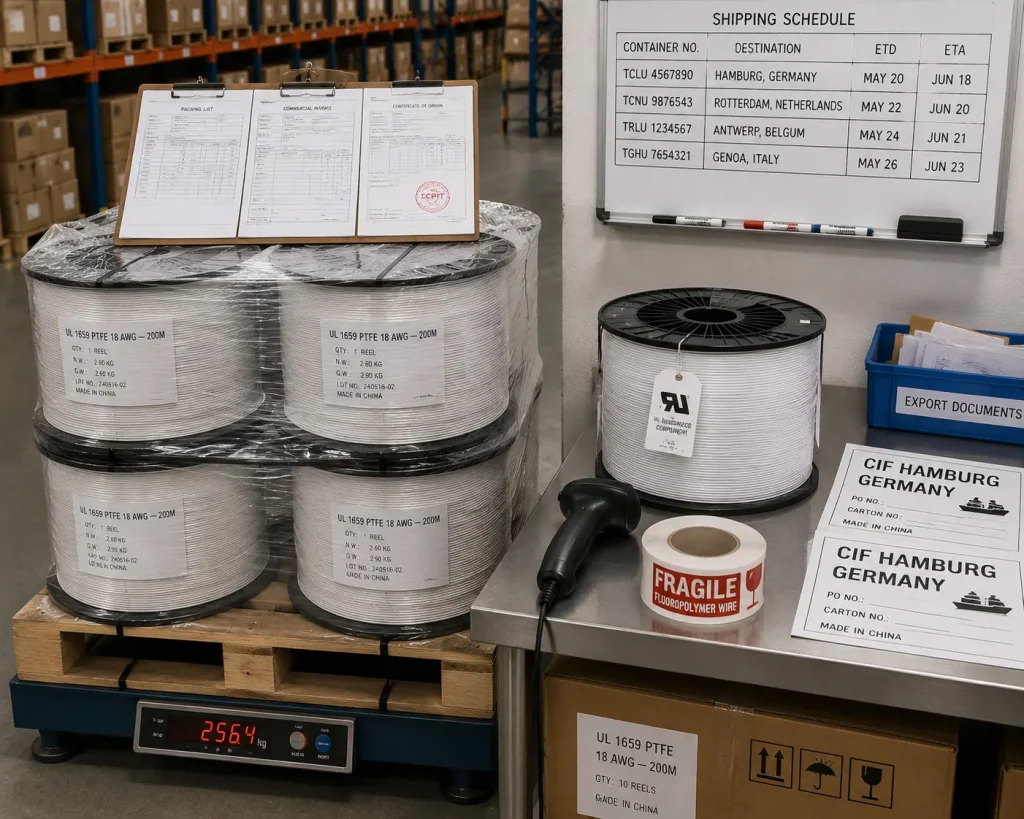
Shipment arrangements are set per order. To prepare a quotation, confirm the final destination, the requested Incoterm, the transport method, the quantity, the reel or cut length, the packaging format, the delivery schedule, the marking, and the commercial, import and compliance documents required at the destination.
Minimum order quantity, sample availability, stock position, price, shipment terms and delivery schedule are all confirmed in the quotation rather than fixed in advance.
Related UL 1659 Products
For general UL 1659 supply, see UL 1659 PTFE wire for 250°C 600V internal wiring. For the full range of UL 1659 constructions and purchasing options, see the UL 1659 PTFE wire category.
Two other fluoropolymer Styles are available: UL 10362 PFA Wire (250°C / 600 Vac, extruded PFA, 30 AWG–4/0 AWG) and UL 1332 FEP Wire (200°C / 300 Vac, extruded FEP, 30–10 AWG). Selection follows the insulation material, ratings and conductor range required by the equipment design. The wider range is available under Fluoropolymer Wire and AWM Wire.
Request a UL 1659 Supply Quote
Send the following with your enquiry so the construction and the shipment can be confirmed together:
- AWG size
- Solid or stranded round requirement
- Requested conductor material and plating
- Detailed stranding requirement
- Required finished outside diameter
- Colour
- Optional mica tape wrap requirement
- Optional treated glass braid requirement
- Optional oil-resistant or gasoline-resistant rating requirement
- Quantity
- Reel or cut length
- Packaging format
- Equipment or internal-wiring context
- Actual temperature requirement at the wire location
- Voltage requirement
- Final destination
- Requested Incoterm
- Required wire marking
- Required order, compliance and import documents