UL 5476 3–4/0 AWG Mica Tape Wire for High-Temperature Internal Wiring
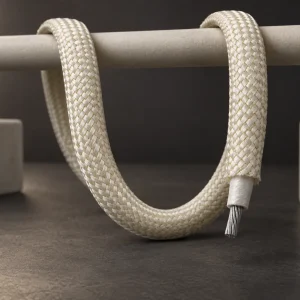
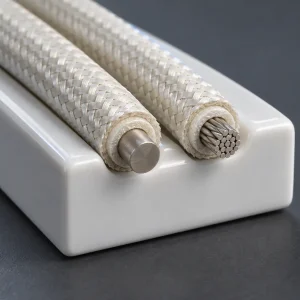
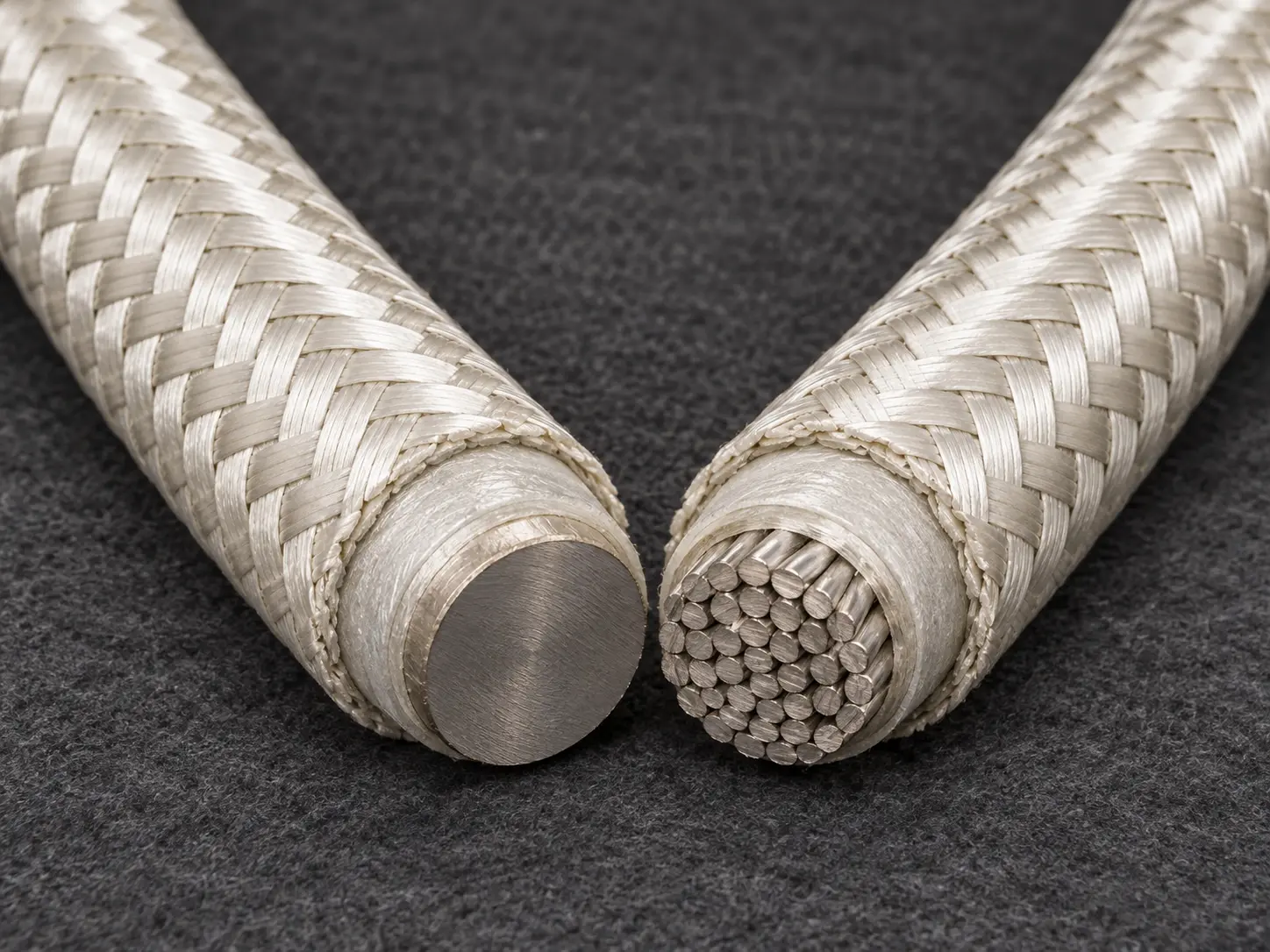
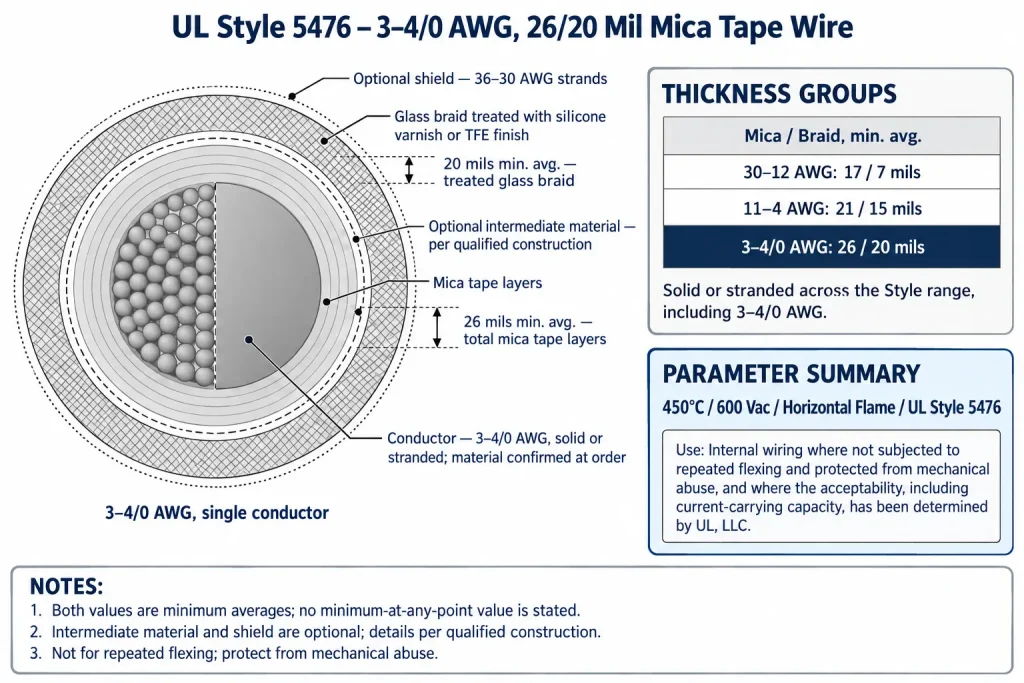
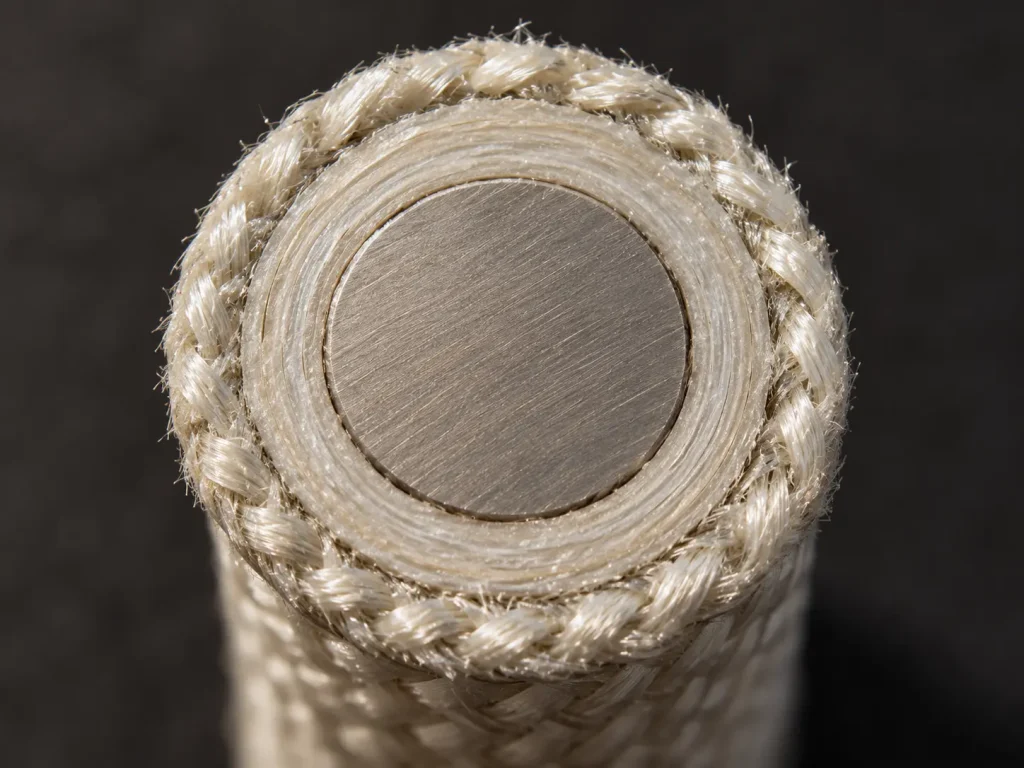
UL AWM Style 5476 is a single or multiple conductor with other-than-extruded insulation, rated 450°C and 600 Vac with a Horizontal flame classification. Its insulation is mica tape with glass braid, the braid treated with silicone varnish or TFE finish. For 3 AWG through 4/0 AWG, the Style requires a minimum average of 26 mils for the total mica tape layers and 20 mils for the treated glass braid. The Use is internal wiring where not subjected to repeated flexing and protected from mechanical abuse: the wire is for high-temperature internal wiring, in static routing that is protected from mechanical abuse.
This page covers the 3–4/0 AWG single-conductor construction. The 11–4 AWG group is covered on the UL 5476 11–4 AWG mica tape wire page, the 30–12 AWG group on its own UL 5476 page, cabled assemblies on the UL 5476 Multi-Core Mica Glass Braid Cable page, and the broader Style overview in the UL 5476 Mica Wire category.
Verified UL 5476 Technical Specifications
| Parameter | UL AWM Style 5476 record |
|---|---|
| Style | 5476 |
| Description | Single or multiple conductor with other-than-extruded insulation |
| Temperature | 450°C |
| Voltage | 600 Vac |
| Flame | Horizontal flame |
| Overall AWG range | 30 AWG – 4/0 AWG |
| Conductor form | Solid or stranded |
| Insulation | Mica Tape with Glass Braid |
| Thickness schedule (min avg) | 30 – 12 AWG: 17 / 7 mils; 11 – 4 AWG: 21 / 15 mils; 3 – 4/0 AWG: 26 / 20 mils (mica tape / treated glass braid) |
| Braid treatment | Silicone varnish or TFE finish |
| Optional intermediate material | May be applied between mica tape and glass braid; material per the qualified construction |
| Optional assembly | Two or more conductors cabled together, max overall diameter 1.500 inches; mica glass binder and/or fiberglass fillers; optional overall treated glass braid |
| Optional shield | 36 – 30 AWG Type “A” Nickel or 27 percent minimum nickel coated copper |
| Marking | General |
| Use | Internal wiring where not subjected to repeated flexing and protected from mechanical abuse, and where the acceptability, including current-carrying capacity, has been determined by UL, LLC. |
Four points in this table need clarification. First, all thickness values are minimum averages; the record states no minimum-at-any-point value. Second, the Style 5476 conductor field permits solid or stranded conductors across the whole range, including 3–4/0 AWG; no stranded-only rule applies. Third, the shield materials are for the optional shield only; the record does not state the primary conductor material or plating. Fourth, the optional intermediate material is not identified by composition in the data used here.
3 AWG–4/0 AWG, 26/20 Mil Construction
For every size from 3 AWG through 4/0 AWG (3, 2, 1, 1/0, 2/0, 3/0 and 4/0 AWG), a Style 5476 conductor carries two separate minimum-average requirements: 26 mils (0.66 mm by unit conversion) for the total mica tape layers and 20 mils (0.51 mm by unit conversion) for the treated glass braid.
The conductor field reads “30 AWG – 4/0 AWG, solid or stranded.” Unlike some other mica Style records, it contains no rule limiting larger sizes to stranded construction, so both solid and stranded conductors are permitted at Style level for 3–4/0 AWG. The record does not define strand count, strand diameter, conductor class, lay length or flexibility class, and it does not state the conductor material, plating or resistance; these are confirmed according to the qualified ordered construction.
These are large conductor sizes, but size alone does not establish current capacity, power level or circuit function. No size in this group is described as high-power, power-class, a main feed or a power-feed conductor.
26 Mil Minimum-Average Mica Tape Layers
The record lists “Total Mica tape layers” for 3–4/0 AWG with a minimum average thickness of 26 mils.
- “Total mica tape layers”: the requirement applies to the combined thickness of all mica tape layers, not to a single tape.
- “Minimum average”: the average thickness of those combined layers must not fall below 26 mils.
The 26-mil figure is not nominal, exact or a minimum at any point, and no tolerance is attached. The actual mica thickness of an ordered construction may exceed it. The record does not specify the number of tape layers, tape width or overlap, and no dielectric strength is derived from the thickness. The insulation is mica tape; it is not described as mineral-insulated cable, MI cable, composite mica glass, silicone rubber, PTFE-insulated or ceramic wire.
20 Mil Minimum-Average Treated Glass Braid
Over the mica tape is a glass braid, listed in the record as “Glass braid treated with silicone varnish or TFE finish,” with a minimum average thickness of 20 mils for 3–4/0 AWG. It is a minimum average only; it is not nominal or exact, and no point minimum is stated.
Silicone varnish and TFE finish are permitted treatments of the glass braid, not primary insulation; neither makes the wire silicone rubber wire or PTFE-insulated wire. The record does not tie either treatment to a temperature rating and makes no statement about relative abrasion, chemical, flexibility, dielectric or service-life behaviour. Where a drawing requires one treatment, it is confirmed for the ordered construction.
The mica and braid values are separate requirements and do not add up to a guaranteed insulation wall. The finished outside diameter, its tolerance and the bend radius are not calculated from them; where a drawing controls finished diameter, it is confirmed against the ordered construction.
UL 5476 Thickness Schedule Across the Full Style Range
| Conductor size | Total mica tape layers, min average | Treated glass braid, min average |
|---|---|---|
| 30 – 12 AWG | 17 mils | 7 mils |
| 11 – 4 AWG | 21 mils | 15 mils |
| 3 – 4/0 AWG (this page) | 26 mils | 20 mils |
Two points in this table need clarification. First, each group’s values apply only to that group: 4 AWG uses 21/15, while 3 AWG and every larger size up to 4/0 AWG use 26/20. Second, all values are minimum averages, and the record attributes no performance difference to the larger values. The 3–4/0 AWG group, with its 26/20 mil requirement, remains the subject of this page.
450°C, 600 Vac and Horizontal Flame
The rating field reads “450 deg C, 600 Vac, Horizontal flame.” Style 5476 is rated 450°C; the record does not describe the rating as continuous, sustained or long-term, and no such qualifier is added. 600 Vac is the voltage rating; no DC value applies, and the rating does not define a circuit function or make the wire a main power feed, three-phase or power-distribution conductor. Horizontal flame is the flame classification; VW-1, FT1, FT2 and vertical flame are not Style-wide properties.
Optional Intermediate Material
The Style record permits an optional material to be applied between the mica tape and the glass braid, with its material detail referenced to a facing page that is not part of the data used here. This page describes it only as an optional intermediate material that may be applied between the mica tape and glass braid according to the qualified construction. Its composition is not named, and no adhesion, delamination, thermal-cycling, dielectric or flexibility effect is attributed to it. Whether it is required is confirmed for the qualified ordered construction.
High-Temperature Internal Wiring and Application Limits
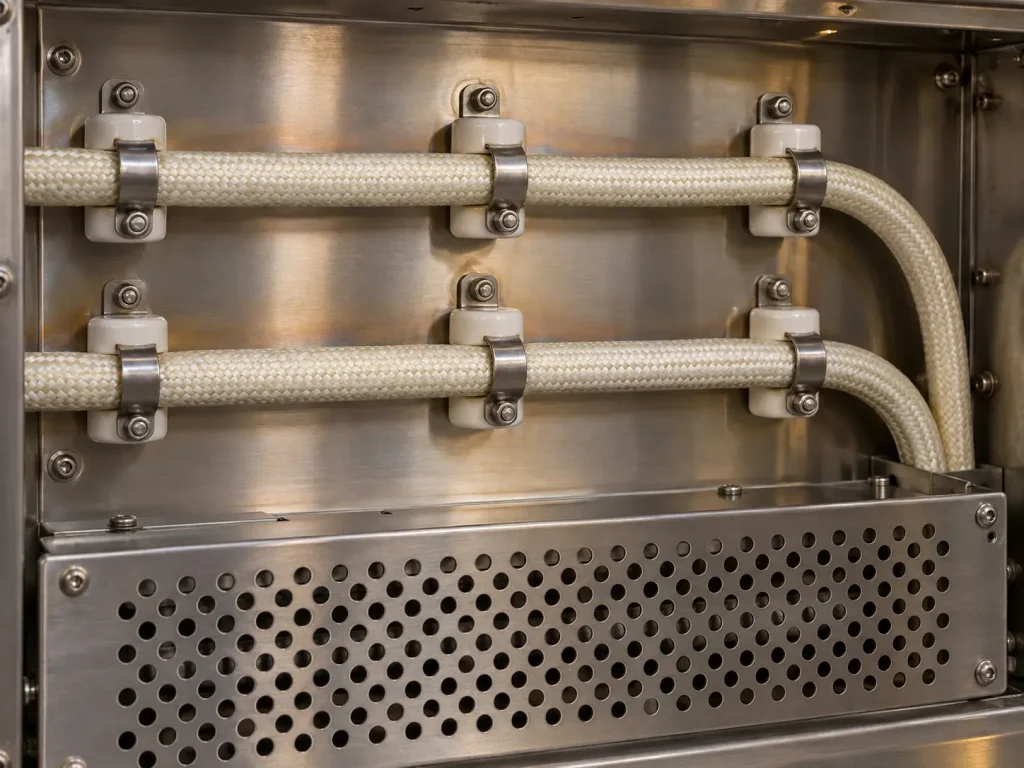
The Use reads: “Internal wiring where not subjected to repeated flexing and protected from mechanical abuse, and where the acceptability, including current-carrying capacity, has been determined by UL, LLC.” “High-temperature internal wiring” combines two verified facts, the Internal Wiring Use and the 450°C rating. It does not shorten or replace the limits that follow:
- Internal wiring: the Use does not name equipment types. UL 5476 is not described here as approved for furnaces, kilns, heating elements, glass machinery, aerospace equipment, boilers or heat exchangers; suitability for specific equipment depends on the actual end-use design and routing.
- Not subjected to repeated flexing: the wire is not flexible, high-flex, continuous-flex, drag-chain or robotic cable, and no flex-cycle rating is given.
- Protected from mechanical abuse: field, building, tray, exposed, direct-burial, outdoor and exposed machinery routing fall outside the Use. The glass braid, optional shield and optional assembly covering do not remove this condition.
- Current-carrying capacity: it is determined at the equipment and end-use level. No ampacity is given or inferred for 3, 2, 1, 1/0, 2/0, 3/0 or 4/0 AWG, and general wiring-code tables are not applied.
Optional Shield and Multi-Conductor Provisions
The Shield entry reads: “Optional – 36-30 AWG Type “A” Nickel or 27 percent minimum nickel coated copper.” These are shield materials, not the primary conductor material. The record establishes no EMI attenuation, shielding effectiveness, braid coverage, mechanical, abrasion or thermal-shielding performance for the shield.
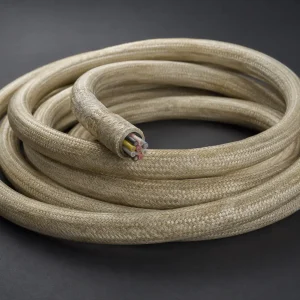
The Assembly entry permits two or more qualifying conductors to be cabled together with a maximum overall diameter of 1.500 inches, with a mica glass binder and/or fiberglass fillers and an optional overall treated glass braid. This page covers the individual conductor; buyers requiring a cabled assembly can refer to the UL 5476 Multi-Core Mica Glass Braid Cable page. No conductor counts are given here.
What Style 5476 Does and Does Not Define
For 3–4/0 AWG, the Style record defines the rating (450°C, 600 Vac, Horizontal flame); the conductor form (solid or stranded); the insulation (mica tape with glass braid); the 26-mil minimum-average total mica tape layers; the 20-mil minimum-average treated glass braid; the braid treatments; the optional intermediate material, shield and assembly; the marking field (General); and the Use.
The Style record does not define, in the data used here:
- conductor material, plating or strand construction
- conductor resistance or current rating
- minimum-at-any-point thicknesses
- finished outside diameter or tolerance
- the composition of the optional intermediate material
- shielding performance
- bend radius, flex life or service life
Common Procurement Errors
- Applying the 21/15 mil values of 11–4 AWG to 3 AWG.
- Treating 26 or 20 mils as nominal or point minimums.
- Importing a stranded-only rule from another Style to 3–4/0 AWG.
- Treating large conductor sizes as high-power or main-feed wire.
- Naming or assigning performance to the optional intermediate material.
- Reading a shield material as the conductor material.
- Assigning ampacity from AWG.
- Specifying the wire for repeated flexing or unprotected routing.
How to Specify UL 5476 3–4/0 AWG Mica Tape Wire in an RFQ
The Style fixes the rating, conductor forms, the 26/20 mil minimum averages, the braid treatments, the optional provisions and the Use. The following should be stated by the buyer and confirmed for the ordered qualified construction, not filled with assumed values:
- exact conductor size: 3 AWG through 4/0 AWG
- solid or stranded requirement
- conductor material
- conductor plating
- detailed stranding, if controlled
- required finished OD or tolerance, if controlled
- Silicone Varnish or TFE Finish requirement, if controlled
- optional intermediate material requirement
- optional shield requirement
- single-conductor or assembled construction requirement
- marking requirement
- equipment type
- internal routing condition
- confirmation that repeated flexing does not occur
- mechanical protection arrangement
- current requirement
- quantity
- packaging
- documentation requirements
UL Marking and Documentation
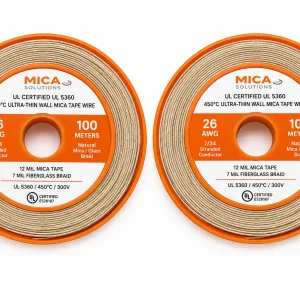
Style 5476 wire is supplied as UL-recognized component wire where supplied under qualified manufacturing scope. The marking field of the Style record reads “General”; it does not prescribe a fixed legend. UL marking is applied according to the confirmed ordered construction and should be confirmed at the order stage.
Applicable RoHS / REACH documentation can be confirmed according to the ordered construction. CE, UKCA, CSA, FT1, VW-1, CPR, VDE, DIN, EN and IEC are not declared for this product.
Commercial, origin, compliance and transport documents are identified during quotation and confirmed according to the order.