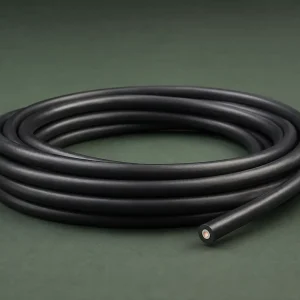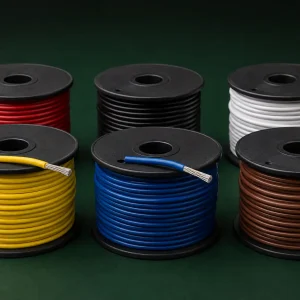
UL 3304 for Fuel Oil Burner Ignition Internal Wiring
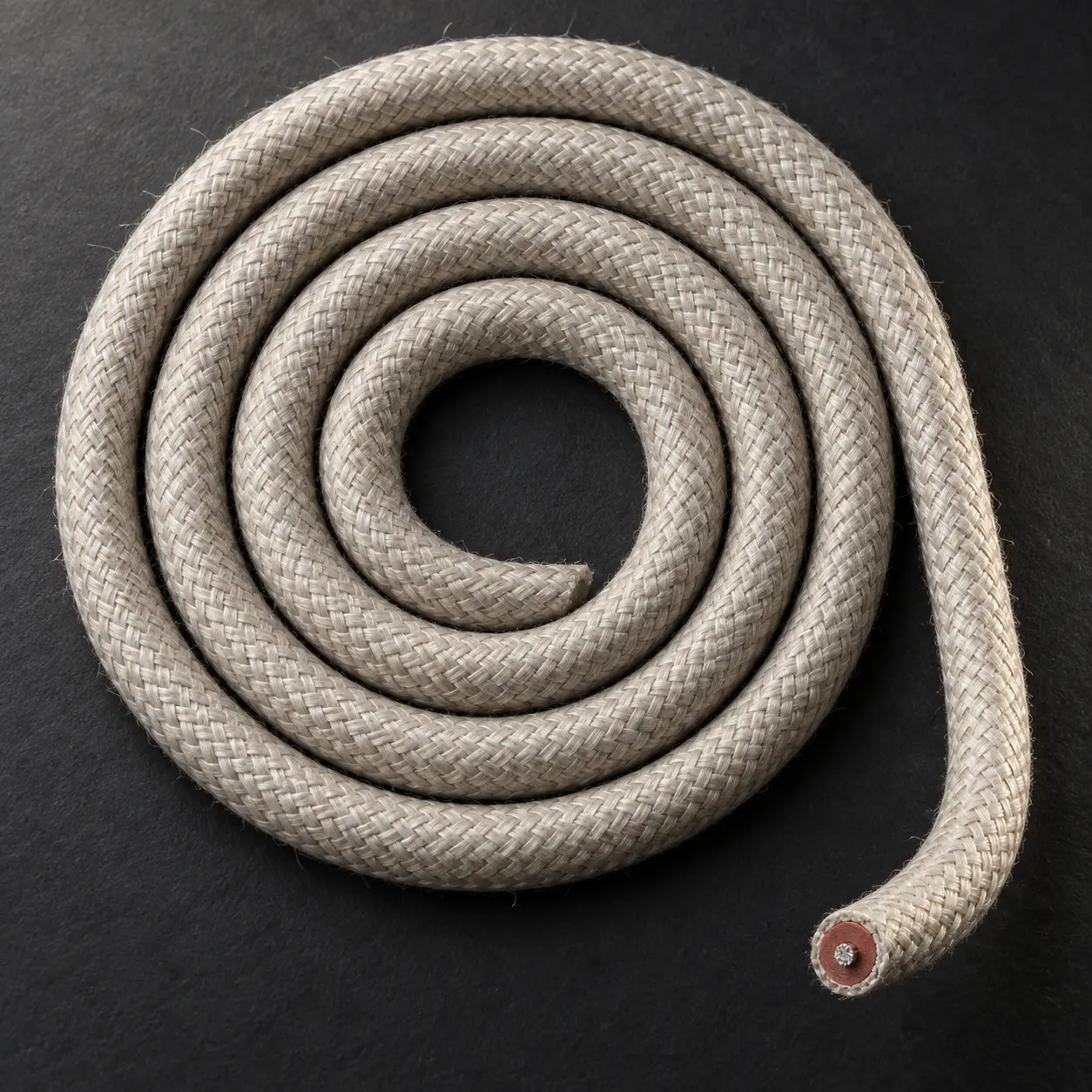
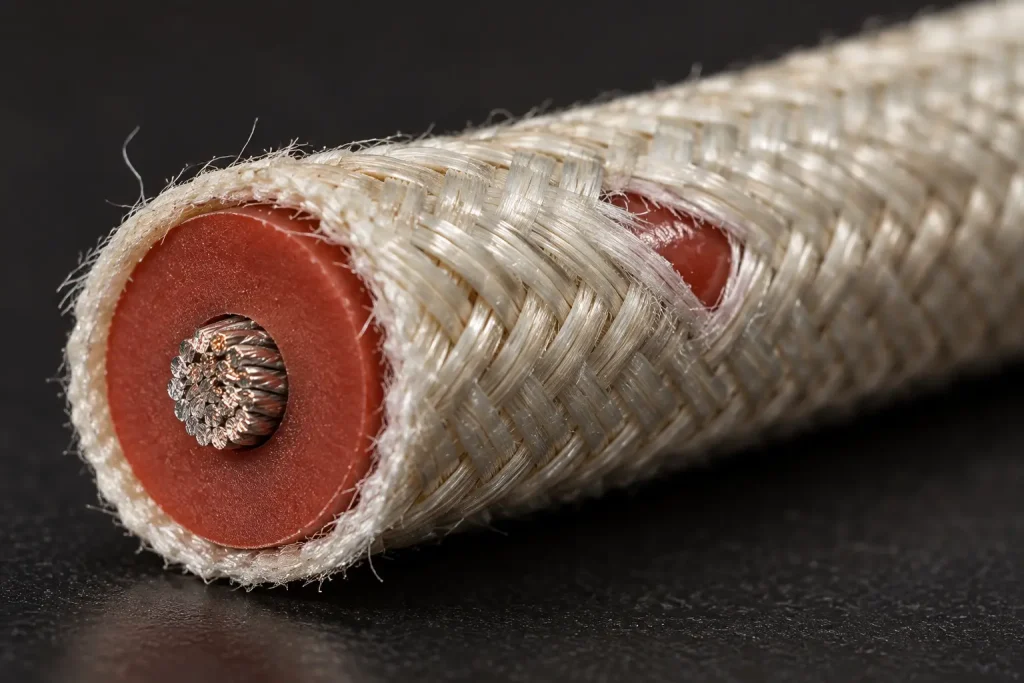
UL AWM Style 3304 is a single conductor with extruded insulation, rated 200°C and 10,000 Vac with Horizontal Flame, constructed as extruded silicone rubber insulation with a fiberglass braid covering, across a 22 AWG through 12 AWG conductor range in solid or stranded round form.
This page is written for buyers sourcing a Style 3304 lead for the ignition wiring inside a fuel oil burner system. Fuel oil burner systems appear by name in the official Use, so the application sits inside the Style’s stated scope rather than beside it — but the Use is conditional, and the condition is protection from damage during handling, installation and servicing of the appliance.
The full 22–12 AWG range is used here because it is the verified Style range. No individual gauge is singled out, because no verified SKU document supports treating one as the identity of this page.
Verified UL Style 3304 Construction and Ratings
| Parameter | Style-level information |
|---|---|
| UL AWM Style | 3304 |
| Product description | Single Conductor with Extruded Insulation |
| Temperature rating | 200°C |
| Voltage rating | 10,000 Vac |
| Flame | Horizontal Flame |
| Conductor size range | 22 AWG–12 AWG |
| Conductor form | Solid or Stranded Round |
| Insulation | Extruded SR / Silicone |
| Minimum average insulation thickness | 40 mils |
| Minimum thickness at any point | 36 mils |
| Covering | Fiberglass Braid |
| Marking | General |
| Official Use | Internal Wiring of Electronic Ignition or similar application in Gas Ranges or Gas or Fuel Oil Burner Systems where protected from damage during handling, installation and servicing of the appliance |
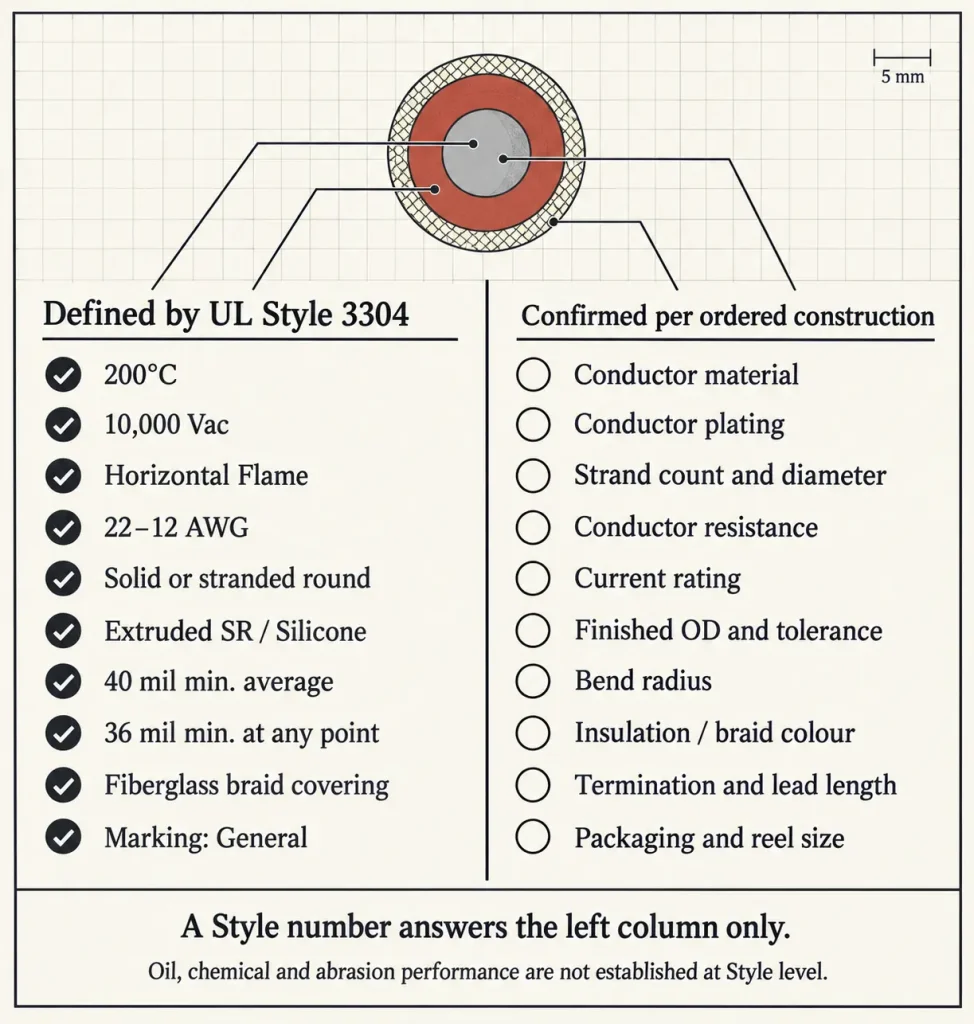
The two insulation figures are separate requirements. 40 mils governs the average across the wall; 36 mils sets a floor at every individual point. Nothing beyond what appears in this table is established by the Style record, and no additional performance characteristic is inferred from it here.
The Fuel Oil Burner Application Boundary
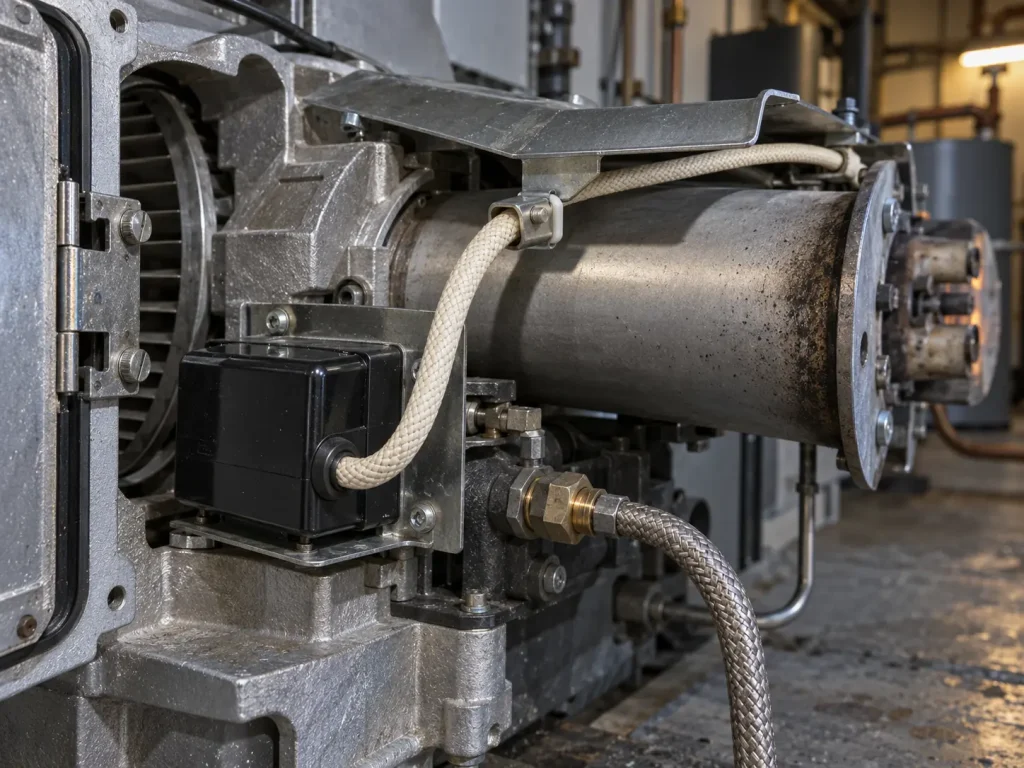
The official Use names electronic ignition or similar application in gas ranges or gas or fuel oil burner systems. Fuel oil burner systems are therefore within the stated scope, which is a stronger position than most AWM applications occupy.
The protection condition applies equally. Handling covers the manufacturing and assembly stage. Installation covers the point at which the burner is fitted into its equipment and commissioned. Servicing covers everything afterwards, and on a fuel oil burner that is not an occasional event — burner assemblies are designed to be accessed, and any internal lead near that access path is exposed to handling it would not see in normal operation.
Where the burner assembly is withdrawn, hinged or partially disassembled for service, say so in the enquiry. It changes which routing and protection questions matter.
A fuel oil burner is usually installed within a larger piece of equipment. That surrounding equipment is a context in which the burner assembly sits; it does not extend the Style’s Use. Style 3304 is not a general boiler wire, a furnace wire or a general-purpose high-voltage internal wire, and it remains internal appliance wiring rather than field wiring, conduit wiring, building wire, tray cable, portable cord or general power distribution cable.
Fuel Oil Service Environment Does Not Imply Oil Resistance
This deserves stating plainly, because the application name invites the inference.
The Style record defines the insulation material and its thickness requirements and identifies the covering as a fiberglass braid. It states no oil resistance, no chemical resistance, no fuel compatibility, no abrasion performance and no quantified mechanical, thermal or dielectric performance for either the insulation or the braid. None of those are claimed here, and none follow from the fact that the application involves fuel oil.
If exposure to fuel, atomising oil, cleaning solvents or combustion residue is part of the design condition at the lead’s position, that is a requirement to state and have evaluated against a specific construction — not something the Style number answers.
What the UL Style Does and Does Not Define
Style 3304 establishes the construction and rating boundaries in the table above. It does not automatically determine any of the following:
- Conductor material and plating
- Exact strand construction — strand count, strand diameter, lay length
- Conductor diameter and conductor resistance
- Current rating or ampacity
- Finished OD and OD tolerance
- Bend radius, flex-cycle life and flexibility class
- Insulation or braid colour
- Termination and lead length
- Packaging and reel size
Each requires confirmation against the ordered construction or a verified SKU specification. In particular, the Style conductor statement defines size and form only — copper, bare copper, tinned copper, silver-plated copper and nickel-plated copper are none of them established by it, and none is assumed on this page.
AWG Selection
Style 3304 permits 22 AWG through 12 AWG. No gauge within that range is universally correct, and none is recommended here.
The appropriate conductor size is specified by the buyer according to the actual equipment design and the approved construction. No ampacity value and no AWG-based electrical performance claim appears on this page, because the Style record establishes neither.
Dimensional Requirements
No finished OD is published here, because none is verified for this page and it cannot be derived from the insulation figures.
Dimensional control still matters commercially. Where the burner assembly constrains the lead, state the required finished OD or maximum OD, the routing envelope, stripping dimensions, connector entry dimensions and any other controlled dimension. These are RFQ confirmation fields against an ordered construction.
Termination Requirements
The Style does not define a terminal type, a connector interface, a termination process, a stripped-end configuration or a lead length, and none are invented here.
Where the requirement is a cut or terminated lead rather than wire on a reel, supply the stripped-end requirement, the terminal type, the connector interface, the termination process and the lead length. Nothing in this page should be read as meaning that a particular terminal, connector, pre-cut length or terminated assembly is automatically available; that is a scope question answered per order.
Why Matching on Ratings Alone Creates Substitution Risk
Selecting a lead because it is silicone, because it is 200°C, because it is 10kV, or because it is described as high-voltage ignition wire is not sufficient to establish that it matches a Style 3304 requirement.
A substitute has to be verified against the required Style, the actual construction, the dimensions, the conductor requirement, the termination requirement, the marking requirement, any other controlled parameter, and the equipment-level approval that the original selection sits inside. Products sharing a temperature and voltage rating can differ in every one of those respects.
No UL Style is automatically interchangeable with another, and none is presented that way here.
UL 3304 and UL 3573
Both are AWM ignition-wire Styles, and the difference between them is structural rather than incremental. Style 3304 has extruded SR / silicone insulation at 40 mils minimum average and 36 mils minimum at any point, with a fiberglass braid as the covering over that insulation — the braid is the outer surface. Style 3573 uses a different insulation and braid arrangement, in which the braid is not the outermost element.
Neither Style is better than the other, and neither substitutes for the other automatically. Where a burner design has been approved around one construction, changing to the other is a construction change.
The 200°C and 10,000 Vac Ratings
Style 3304 is rated 200°C. The Style record does not use the word continuous, and neither does this page. The rating applies to the wire, not to connectors, electrodes, the ignition transformer or adjacent burner components, each of which carries its own rating.
10,000 Vac is the verified Style voltage rating. It is not an ignition pulse value, and it is not restated as 10,000 Vdc, a peak value, an impulse voltage, a spark-test voltage or a dielectric test voltage. No transformer output voltage, spark frequency, spark energy, arc duration, electrode gap, burner capacity or duty cycle is stated on this page, because none is established by the Style record.
Flame Classification
The verified Style record supports Horizontal Flame. VW-1 is a separate classification, is not claimed here, and Horizontal Flame is not converted into it. Where vertical flame performance is required by a specification, it depends on a separately confirmed construction and order requirement.
Common RFQ Mismatches
- “UL3304” requested with no AWG. The Style spans 22–12 AWG.
- Conductor material inferred from the Style number. The Style defines size and form only.
- Tinned copper assumed to be mandatory. It is not established at Style level.
- Finished OD constraint not stated. It cannot be derived from the insulation figures.
- Termination requirement omitted. Wire and finished lead are different scopes.
- Only voltage and temperature provided. Construction, dimensions and marking remain open.
- Fuel oil burner use not distinguished from general high-voltage internal wiring. The Use boundary differs.
- Packaging or lead length assumed from the Style. Neither is defined by it.
Each of these leaves the request matching more than one qualified construction, which is more expensive to correct after a first article than before quotation.
RFQ Checklist
- UL AWM Style 3304
- AWG within 22–12 AWG
- Solid or stranded round requirement
- Required conductor material
- Required conductor plating / finish
- Detailed stranding, if controlled
- Finished OD or maximum OD, if controlled
- Insulation / braid colour requirement
- Actual fuel oil burner application
- Internal routing conditions
- Protection from damage during handling, installation and servicing
- Cut length, if required
- Stripped-end requirements
- Terminal / connector interface
- Required marking
- Quantity
- Packaging or reel requirement
- Destination
- Required order-level compliance documentation
These are items to specify or confirm. None is presented as automatically available.
UL Marking and Documentation
Material is supplied as UL-recognized component wire where supplied under qualified manufacturing scope, and UL marking is applied according to the confirmed ordered construction. The Style-level marking designation is General.
CSA AWM, FT1 and dual UL / CSA certification are not claimed here; any additional certification depends on the ordered construction. Applicable RoHS / REACH documentation can be confirmed according to the ordered construction.