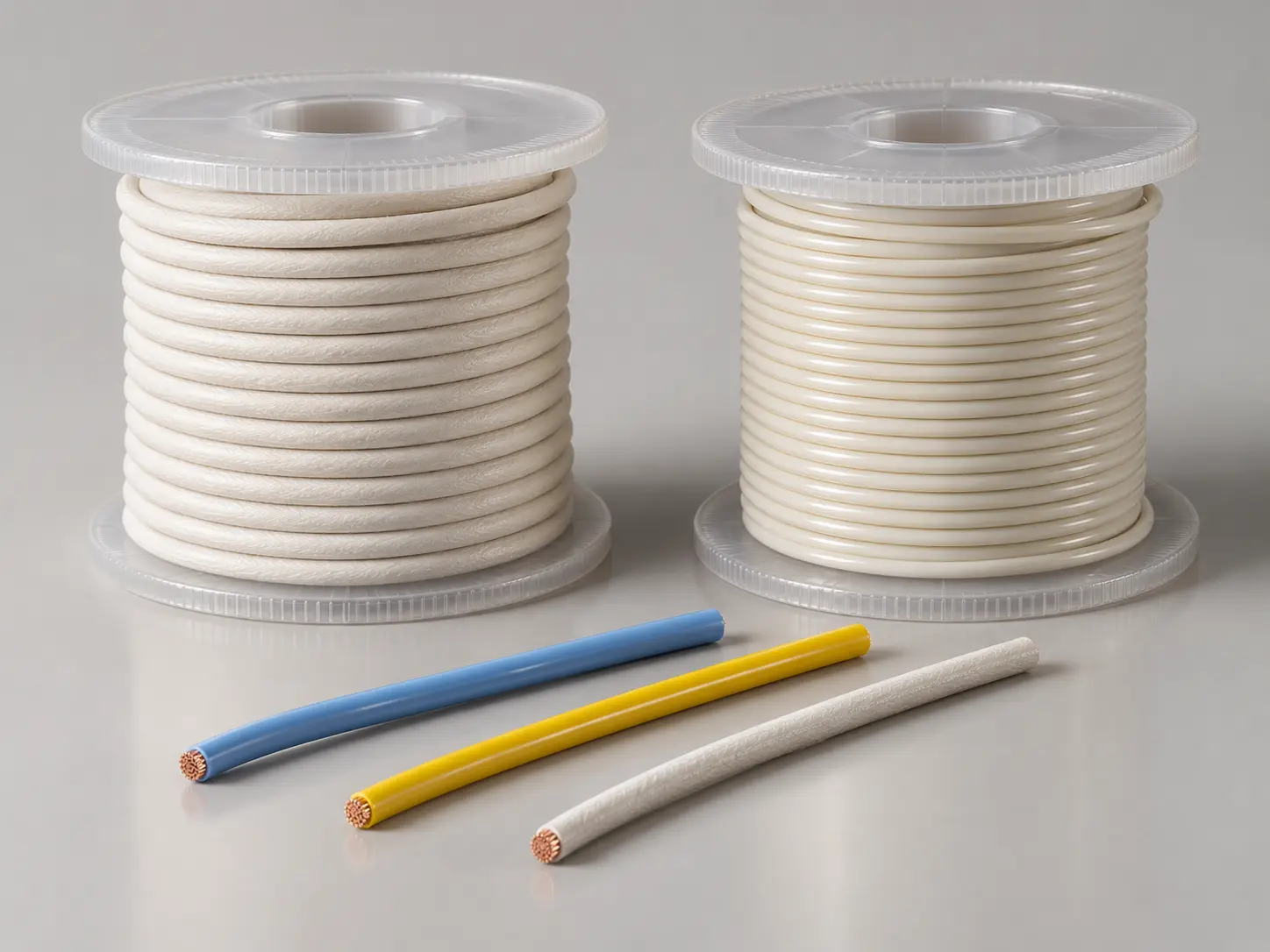
UL 3239 High Voltage DC Wire for Electronic HV Leads
This page covers UL AWM Style 3239 high-voltage DC wire in the 24–10 AWG copper or nickel conductor range, ordered with or without the optional covering, for protected internal high-voltage leads in electronic equipment. Style 3239 is defined by UL as high voltage DC wire with extruded or non-extruded insulation, rated at Style level to a maximum of 200°C and a maximum of 60,000 Vdc, with Horizontal Flame and VW-1 Flame.
Read those figures correctly before they reach a BOM. 24–10 AWG is the copper or nickel range the Style permits, not a single size. 200°C and 60,000 Vdc are Style ceilings, and the Style record directs the reader to the facing page for the ratings that apply to an individual construction — they are not a guaranteed simultaneous pair for every 24–10 AWG build. The construction variable this page is built around is the optional covering, and electronic high-voltage leads are the buyer application context rather than a UL-certified application.
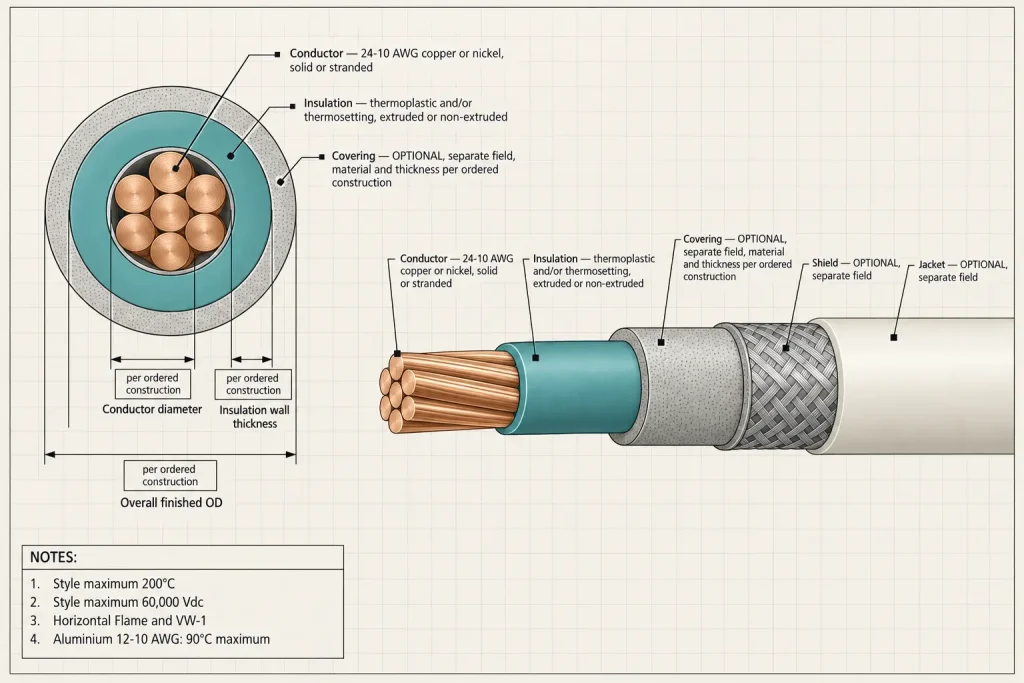
UL 3239 Style-Level Technical Specifications
| Parameter | UL 3239 Style-level information |
|---|---|
| UL AWM Style | 3239 (UL 758) |
| Description | High voltage DC wire with extruded or non-extruded insulation |
| Maximum temperature | 200°C maximum |
| Maximum voltage | 60,000 Vdc maximum |
| Flame | Horizontal Flame and VW-1 |
| Copper / nickel range | 24–10 AWG |
| Aluminum range | 12–10 AWG |
| Resistance wire | 27–20 AWG |
| Conductor form | Solid or stranded |
| Insulation | Thermoplastic and/or thermosetting, extruded or non-extruded |
| Shield | Optional |
| Covering | Optional |
| Jacket | Optional |
| Use | Internal wiring of TV receivers or where the acceptability has been determined by Underwriters Laboratories |
Everything the Style leaves open — the applicable temperature and voltage rating, the insulation material, and the covering, shield and jacket details — is resolved by the individual construction record, not by the Style number.
What “60,000 Vdc Maximum” Actually Means
60,000 Vdc is the ceiling the Style allows. It does not mean that every 24 AWG product is a 60kV product, that every 18 AWG product is, that a covered construction is, or that a thermosetting construction is. No arbitrary Style 3239 wire can be sold as a 60kV item on the strength of the Style number alone.
What establishes a voltage rating is the ordered construction. The useful RFQ line is therefore the actual required DC operating voltage of the lead, taken from the circuit design; the construction is confirmed against that number, and the confirmation — not the Style ceiling — is what belongs in the BOM.
Do Not Convert the 60kV DC Ceiling into an AC Rating
The Style maximum is explicitly a DC value. It should not be restated as 60 kVac, as an “AC/DC 60kV” rating, as an equivalent AC working voltage, as a dielectric-test voltage, or as an impulse rating. None of those follow from the Style entry, and a drawing that carries an AC requirement needs that requirement stated separately and confirmed against the construction.
Maximum 200°C Requires the Same Qualification
200°C is a Style maximum on the same terms: a construction is 200°C when its own record says so, not because it carries Style 3239. The conductor scope makes the point directly — aluminum conductors shall be permitted for a 90°C maximum operating temperature. That limitation sits inside Style 3239 itself, so two compliant constructions can be more than a hundred degrees apart. A covering requirement does not change the rating either way.
Selecting AWG for an Electronic HV Lead
The 24–10 AWG figure in the product title is the Style-level copper or nickel range; which size an electronic HV lead needs is settled by the equipment design. Ampacity, current capacity, power and circuit wattage cannot be derived from a Style number or from AWG alone, so no AWG-to-current table appears here. Where resistance wire or coated high-strength copper is used instead, a different size range applies and should be named in the enquiry.
When an Optional Covering Must Be Specified
The Style lists the covering as optional. Constructions exist both with and without one, so the enquiry has to say which: covering required — yes or no.
Where the answer is yes and the drawing controls the covering, supply or request:
- The construction drawing or specification reference
- Required covering material, where controlled
- Required covering thickness, where controlled
- Finished outside diameter
- Color, where controlled
- Dimensional tolerance
- Termination interface affected by the covering
No default covering is published here. The Style-level record establishes no universal covering material, thickness, braid or textile construction, color, diameter, treatment or mechanical performance, and none of those are assumed on a buyer’s behalf.
Insulation, Shield, Covering and Jacket Are Separate Fields
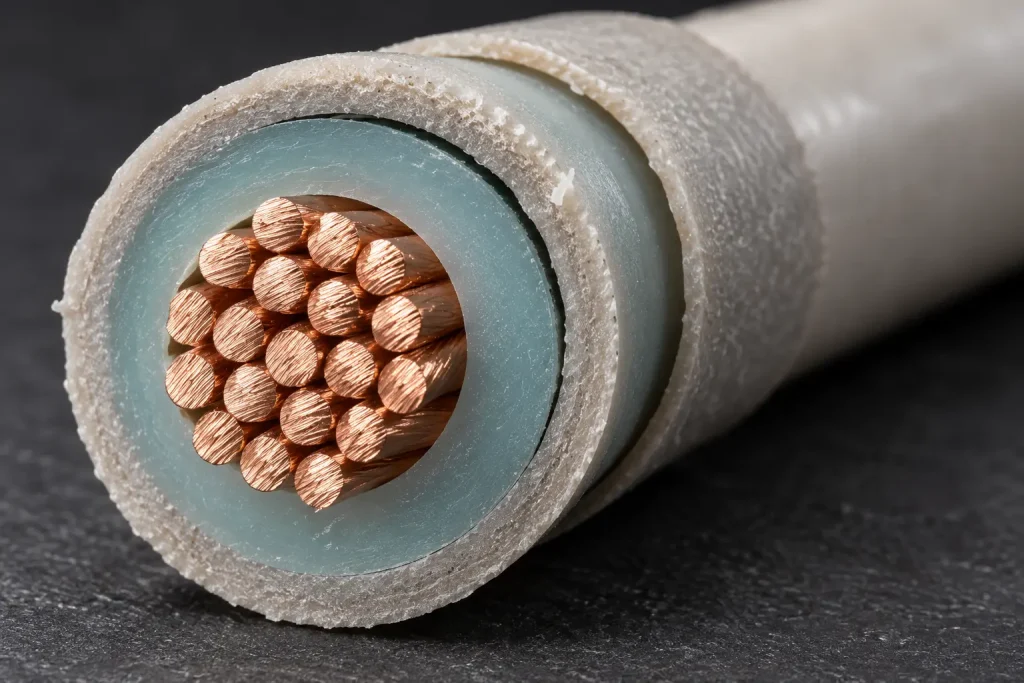
UL 3239 lists insulation, shield, covering and jacket as four distinct construction fields. The insulation is the primary qualified electrical insulation construction; the other three are each optional and specified independently.
An optional covering is therefore not a second insulation layer, and should not be described as one unless the qualified construction establishes that function. It is not a jacket either: both are separate optional fields, so a request reading only “outer layer required” does not identify which one the drawing controls. Where the engineering drawing uses its own terminology, quote that terminology rather than translating it. Nor is a covering a shield — it does not make a construction shielded and does not establish EMI shielding, RFI suppression, electrical screening, electrostatic shielding, grounding or a drain-wire function.
The same caution applies to performance. Abrasion and cut resistance, mechanical protection, heat protection, chemical or oil resistance, flame behaviour, dielectric improvement, corona resistance and service life are not conferred by an optional covering, and are stated only where construction-specific documentation supports them. The covering is a specification field here, not a performance feature.
Finished OD Is Construction-Specific
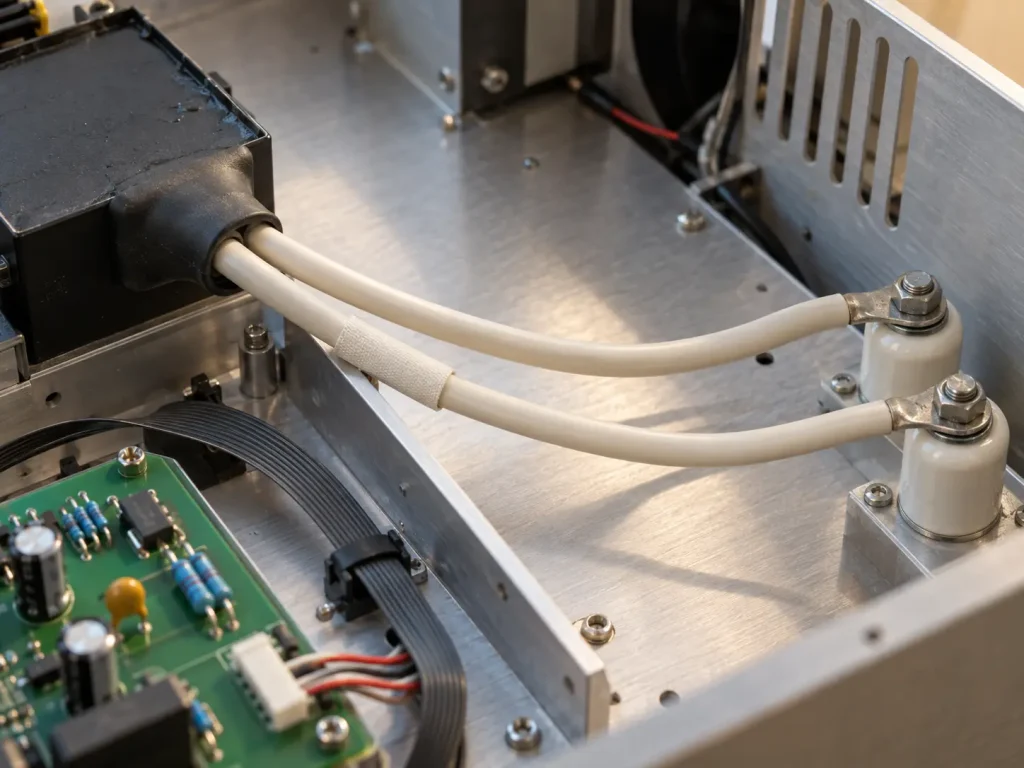
There is no single finished outside diameter for “UL3239 24–10 AWG 60kV wire”, and the Style-level information does not support publishing one. Where the equipment contains routing channels, insulating sleeves, clamps, boots, terminal housings or restricted passages, the finished OD should be controlled explicitly by the project specification — nominal OD, maximum OD and tolerance from the approved construction. Those are mechanical-interface constraints in the buyer’s equipment, not UL-approved applications of the wire.
Electronic HV Lead Does Not Define the Required Voltage
“Electronic high-voltage lead” describes where the wire goes, not what it must be rated for. Two assemblies described in the same words can require materially different constructions, and no assumed voltage or voltage margin is published here. Selecting from the 60,000 Vdc ceiling because the application sounds high-voltage is the most common way an enquiry ends up matched to the wrong construction; state the actual operating-voltage requirement instead.
Wire Voltage Rating Does Not Define Equipment Clearances
A UL 3239 wire rating is a rating of the wire. PCB creepage, air clearance, terminal spacing, connector clearance and enclosure spacing are not derived from it. Those are end-product engineering requirements determined by the applicable end-product standard and the equipment layout, and no generic values are offered here.
Conductor Material and Finish Must Be Confirmed
Style 3239 permits 24–10 AWG copper or nickel, 12–10 AWG aluminum, 27–20 AWG resistance wire, and 24–10 AWG coated high-strength copper of minimum 90% conductivity, solid or stranded. “Stranded tinned copper” is therefore not a safe default. Where copper is used, the Style permits tinned, silver plated, nickel plated, heat bonded and overcoated finishes. If the BOM controls conductor material or plating — usually because of solder process, terminal type or operating temperature — that control has to be written into the enquiry rather than inferred.
Official UL Use Boundary
The official Use for Style 3239 is: Internal wiring of TV receivers or where the acceptability has been determined by Underwriters Laboratories.
This is an AWM internal-wiring Style and stays inside that boundary. It is not building wiring, branch-circuit wiring, tray cable, conduit wiring, portable cord, external high-voltage interconnect or medium-voltage power cable. A buyer may evaluate an appropriate Style 3239 construction for a protected internal high-voltage DC lead in electronic equipment where the end-equipment design and the applicable acceptability determination permit it; acceptability remains dependent on the end equipment and the ordered construction.
What Style 3239 Does Not Automatically Define
None of the following follows from the Style number. Each belongs to the qualified ordered construction and is confirmed where the project controls it:
- Exact voltage rating and exact temperature rating
- Conductor material and conductor plating
- Strand count and strand diameter
- Insulation material and insulation thickness
- Covering material and covering thickness
- Shield construction and jacket construction
- Finished outside diameter
- Ampacity
- Bend radius and flex-cycle rating
- Terminal and connector compatibility
- Reel length, MOQ, stock and lead time
Common RFQ Errors for Electronic High-Voltage Leads
- “UL3239 60kV” with no construction confirmed. The Style ceiling is quoted as if it were a product rating.
- AWG stated, required voltage omitted. Size alone does not let a construction be matched.
- All UL 3239 assumed to be silicone. The Style permits thermoplastic and/or thermosetting insulation, extruded or non-extruded.
- Covering confused with jacket. Two separate optional fields; the quotation cannot tell which is meant.
- Covering confused with shield. A covered construction is not a shielded construction.
- Conductor material left undefined. Copper, nickel, aluminum, resistance wire and coated high-strength copper are all permitted.
- Maximum OD omitted. The lead may be correct electrically and still not pass the routing channel or boot.
- 200°C applied to every construction. Aluminum, for example, is permitted for 90°C maximum.
- Style maximum values copied into the BOM. The BOM then specifies a ceiling rather than a product.
Each produces the same result: a quotation that cannot be tied to one construction. All are cheaper to correct at enquiry stage than after a first article.
RFQ Checklist for UL 3239 Electronic HV Leads
- UL AWM Style 3239
- Conductor AWG
- Conductor material and conductor finish
- Actual required DC voltage
- Actual required temperature
- Insulation system, where controlled
- Shield required: yes / no
- Covering required: yes / no, with covering specification where controlled
- Jacket required: yes / no
- Nominal and maximum OD
- Insulation or covering color
- Terminal or connector information
- Lead length or reel requirement
- Quantity, packaging and destination
- Documentation requirements
- End-equipment internal-wiring context
Applicable RoHS / REACH documentation can be confirmed according to the ordered construction. UL marking is applied according to the confirmed ordered construction, and material is supplied as UL-recognized component wire under qualified manufacturing scope.