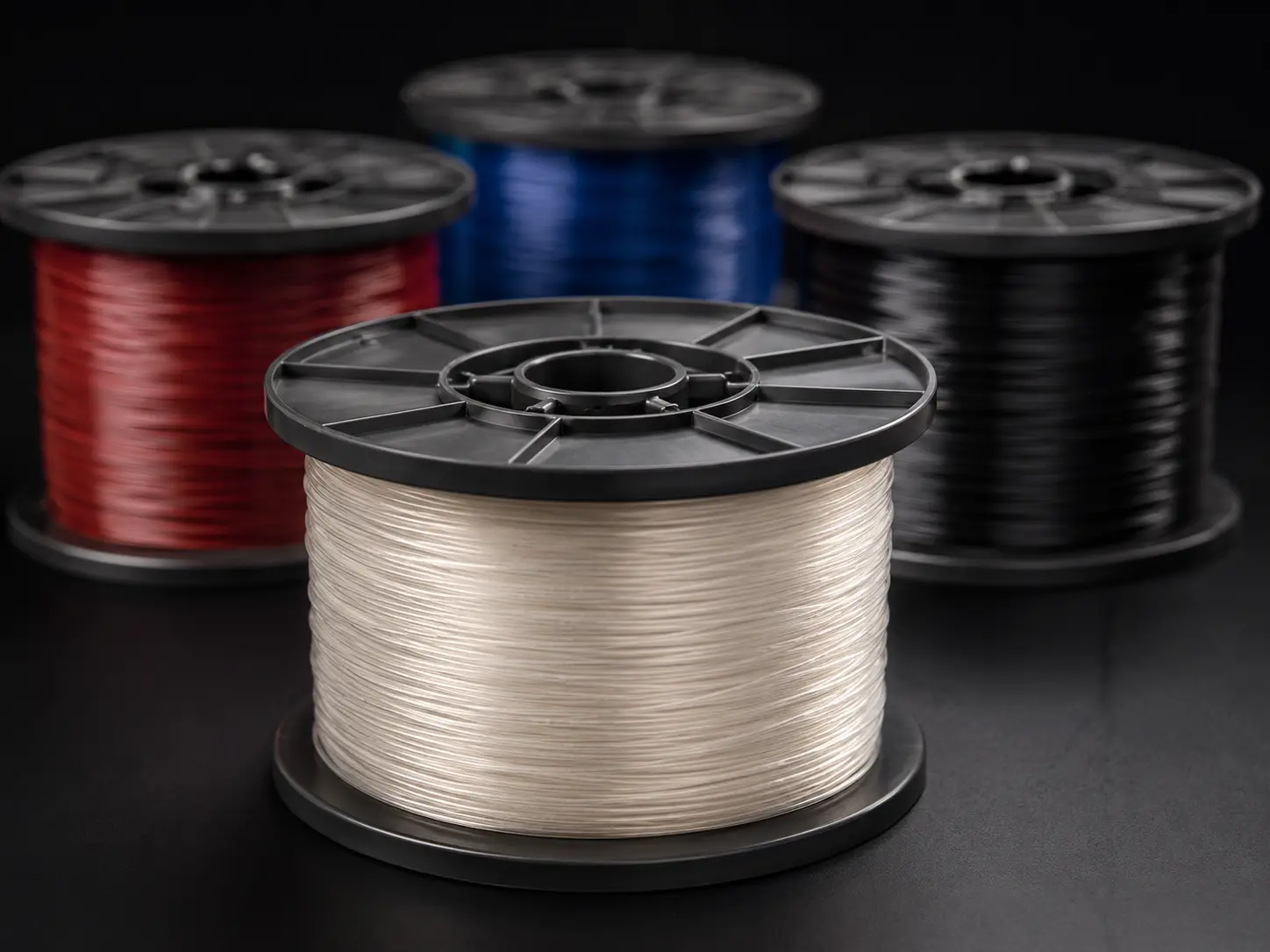
UL AWM Style 10362 — PFA Fluoropolymer Wire for High-Temperature Protected Internal Wiring
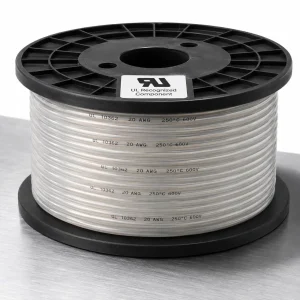
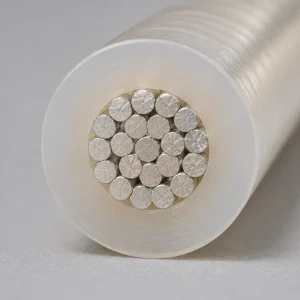
UL AWM Style 10362 uses extruded PFA (Perfluoroalkoxy) fluoropolymer insulation, rated at 250°C maximum and 600 Vac, covering a conductor range from 30 AWG to 4/0 AWG. The Style is covered under UL Subject 758, Section 1, and is designated for internal wiring. CableApex supplies UL AWM Style 10362 PFA wire from factory production. UL AWM documentation and order-specific construction details can be confirmed before quotation.
PFA is a melt-processable fluoropolymer with thermal and chemical resistance properties comparable to PTFE, while being produced through conventional extrusion processes. For enclosed equipment wiring where 250°C maximum temperature rating and fluoropolymer chemical resistance are required, UL 10362 PFA is typically more cost-efficient than UL 1659 PTFE, depending on construction, AWG, order volume, and processing requirements.
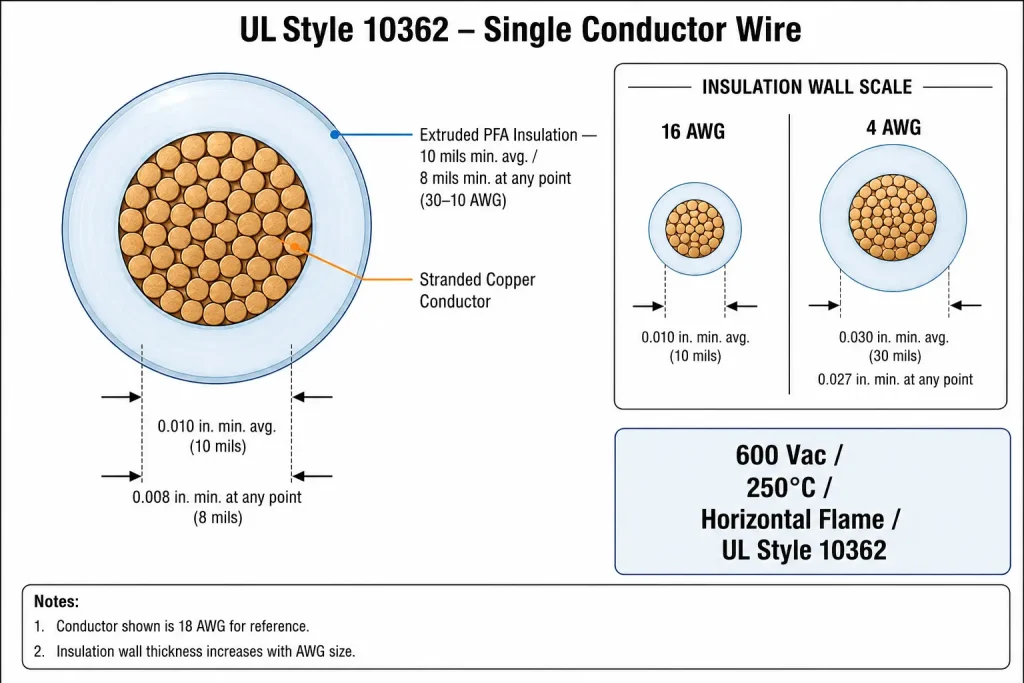
UL AWM Style 10362 — Key Specifications
| Parameter | Value per UL Style 10362 File |
|---|---|
| UL Style Number | AWM 10362 |
| UL Subject / Section | Subject 758, Section 1 |
| Temperature Rating | 250°C maximum |
| Voltage Rating | 600 Vac |
| Conductor | 30 AWG – 4/0 AWG, solid or stranded |
| Insulation Material | Extruded PFA (Perfluoroalkoxy) |
| Wall Thickness (30–10 AWG) | 10 mils (0.25 mm) min average / 8 mils (0.20 mm) min at any point |
| Wall Thickness (9–2 AWG) | 30 mils (0.76 mm) min average / 27 mils (0.69 mm) min at any point |
| Wall Thickness (1–4/0 AWG) | 45 mils (1.14 mm) min average / 41 mils (1.04 mm) min at any point |
| Flame Rating | Horizontal flame |
| UL Recognition | UL Recognized Component — file on record |
| Permitted Use (per UL Style file) | Internal wiring |
PFA vs FEP vs PTFE — Fluoropolymer AWM Style Comparison
The three fluoropolymer AWM Styles available from CableApex cover different combinations of temperature rating, voltage rating, insulation wall thickness, and production characteristics. The table below summarises the Style-level parameters for comparison purposes. All values are per UL Subject 758 Style files.
| Parameter | UL 1332 — FEP | UL 10362 — PFA | UL 1659 — PTFE |
|---|---|---|---|
| Temperature (max) | 200°C | 250°C | 250°C |
| Voltage | 300 Vac | 600 Vac | 600 Vac |
| Conductor Range | 30–10 AWG | 30 AWG–4/0 AWG | 26 AWG–4/0 AWG |
| Wall — fine wire (small AWG) | 13 mils min avg (30–10 AWG) | 10 mils min avg (30–10 AWG) | 20 mils min avg (26–10 AWG) |
| Insulation Processing | Melt extrusion | Melt extrusion | Paste extrusion |
| Relative Cost Position | Lower | Mid-range | Higher |
Cost comparisons between fluoropolymer Styles depend on construction, AWG, order volume, and market conditions. The relative positions shown above reflect general production economics rather than fixed ratios. Confirm pricing at the quotation stage based on the specific ordered construction.
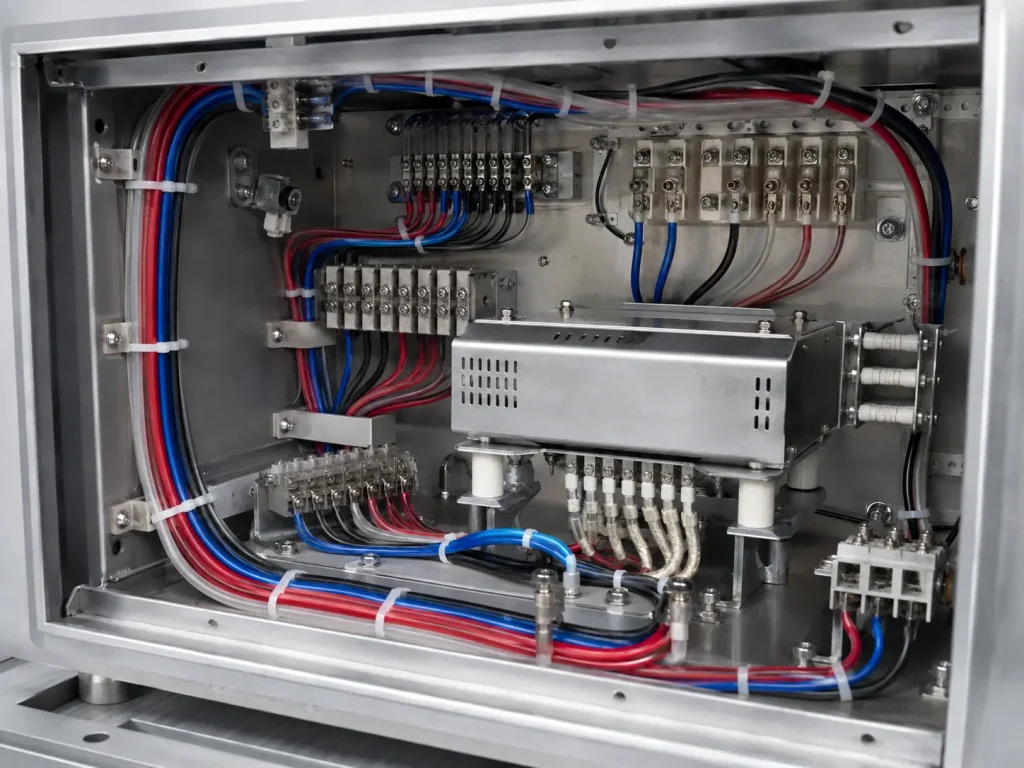
Applications — Protected Internal Equipment Wiring
UL AWM Style 10362 is designated for internal wiring. Constructions under this Style are typically evaluated for enclosed equipment wiring applications where PFA insulation, 250°C maximum temperature rating, and fluoropolymer insulation properties are required by the equipment design.
Equipment categories in which UL AWM Style 10362 constructions are commonly evaluated for protected internal wiring include high-temperature industrial processing equipment, enclosed analytical and measurement instrumentation, semiconductor fabrication equipment internal wiring exposed to process environments, and industrial control equipment requiring 250°C rated internal wiring within enclosed assemblies. In each case, the equipment-level evaluation by the applicable certification body determines whether the specific UL AWM 10362 construction is acceptable for that installation.
UL AWM Style 10362 is not designated for field wiring, building wiring, utility distribution, external cabling, or any use outside protected internal equipment wiring without a specific equipment-level acceptability determination.
Engineering Notes for Procurement Buyers
- PFA vs PTFE for 250°C internal wiring — construction and cost considerations: UL 10362 PFA and UL 1659 PTFE share the same temperature ceiling (250°C maximum) and voltage rating (600 Vac), but differ in wall thickness profile for smaller AWG sizes. UL 10362 specifies 10 mils minimum average wall for 30–10 AWG, while UL 1659 specifies 20 mils for 26–10 AWG. For fine-wire constructions, PFA offers a thinner wall option at equivalent temperature class. PFA is generally more cost-efficient than PTFE due to melt-extrusion production economics, though actual pricing depends on the ordered construction, AWG, and order volume. Confirm the cost position at the quotation stage.
- PFA vs FEP for 200°C vs 250°C applications: Where the equipment-level thermal design requires 250°C maximum rated internal wiring, UL 10362 PFA is the fluoropolymer alternative within the Ansheng production scope. For applications where 200°C maximum is sufficient, UL 1332 FEP (300 Vac, 30–10 AWG) is available at a lower cost position. The voltage ceiling also differs — UL 1332 is rated to 300 Vac while UL 10362 is rated to 600 Vac — so equipment voltage requirements should be confirmed before selecting between the two Styles.
- Wall thickness increases with AWG size — confirm construction before specifying: UL AWM Style 10362 insulation wall thickness is class-dependent: 10 mils minimum average for 30–10 AWG; 30 mils minimum average for 9–2 AWG; 45 mils minimum average for 1–4/0 AWG. Equipment designers should account for the significantly thicker wall in the larger AWG range when planning routing and connector compatibility. Final outer diameter depends on the conductor AWG, stranding, and the wall thickness of the specific ordered construction.
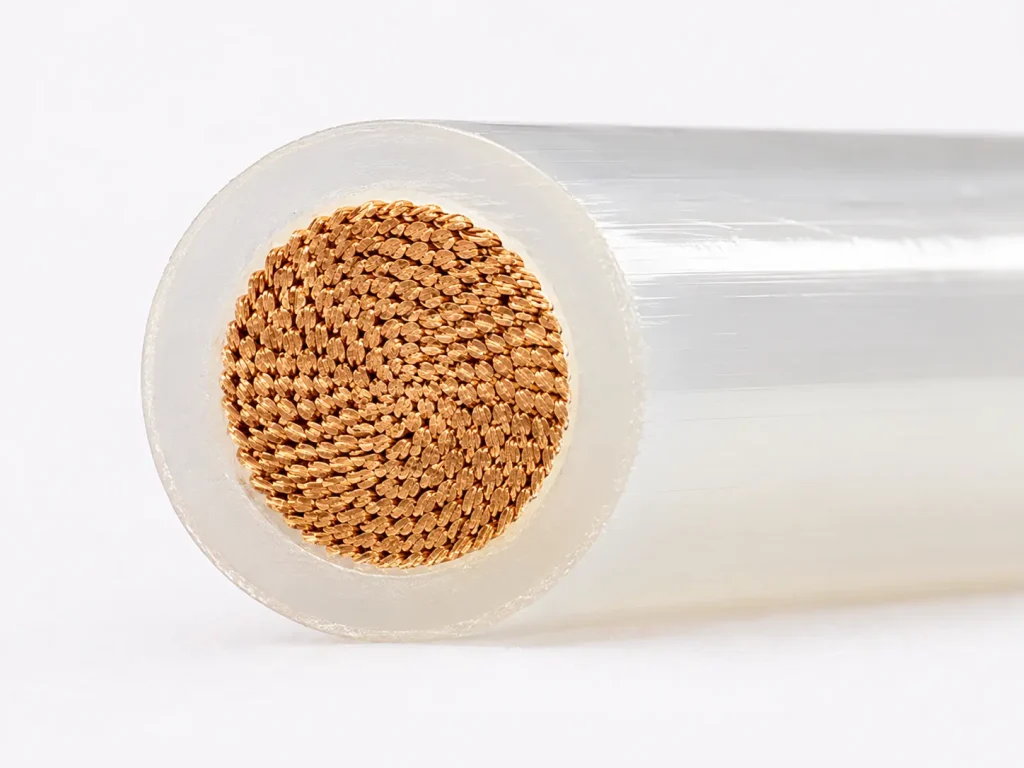
Factory Supply — UL AWM Style 10362
- Factory production for PFA fluoropolymer AWM wire: UL AWM Style 10362 PFA wire is produced at the Yangzhou facility and supplied through CableApex for B2B export orders. Direct factory communication supports efficient lead-time coordination and technical clarification before production.
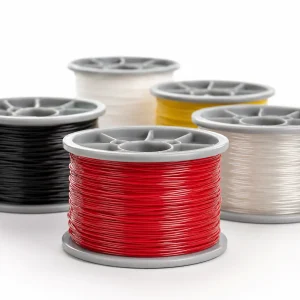
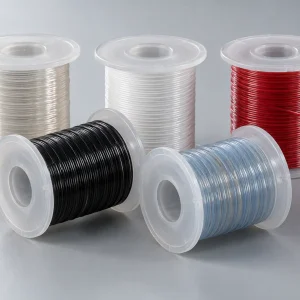
- Custom colour and spool length options: PFA jacket colour and spool length can be produced to the buyer’s specification. Custom options and applicable minimum order quantities are confirmed at the enquiry stage.
- AWG and stranding options: Standard production covers commonly ordered AWG sizes within the 30 AWG–4/0 AWG Style scope. Conductor stranding options can be discussed according to production capability and order volume.
- Documentation: Commercial Invoice, Packing List, Certificate of Origin (CCPIT), and Bill of Lading are provided as standard. UL AWM Style documentation can be confirmed according to the ordered construction. RoHS and REACH documentation is available on request where applicable to the order. HS Code: 8544.49.
Related Fluoropolymer and High-Temperature UL AWM Styles
Buyers evaluating UL AWM Style 10362 commonly cross-reference: UL AWM 1332 (200°C / 300 Vac, extruded FEP, 30–10 AWG — lower-temperature and lower-voltage fluoropolymer alternative); UL AWM 1659 (250°C / 600 Vac, PTFE/TFE, 26–4/0 AWG — PTFE alternative at the same temperature and voltage class); UL AWM 3071 (200°C / 600 Vac, extruded silicone rubber, 18–13 AWG — silicone rubber alternative for 200°C internal wiring); and UL AWM 5107 (200°C or 450°C / 600 Vac, mica with glass braid, 26 AWG–550 kcmil — mineral insulation alternative for above-250°C internal wiring requirements).