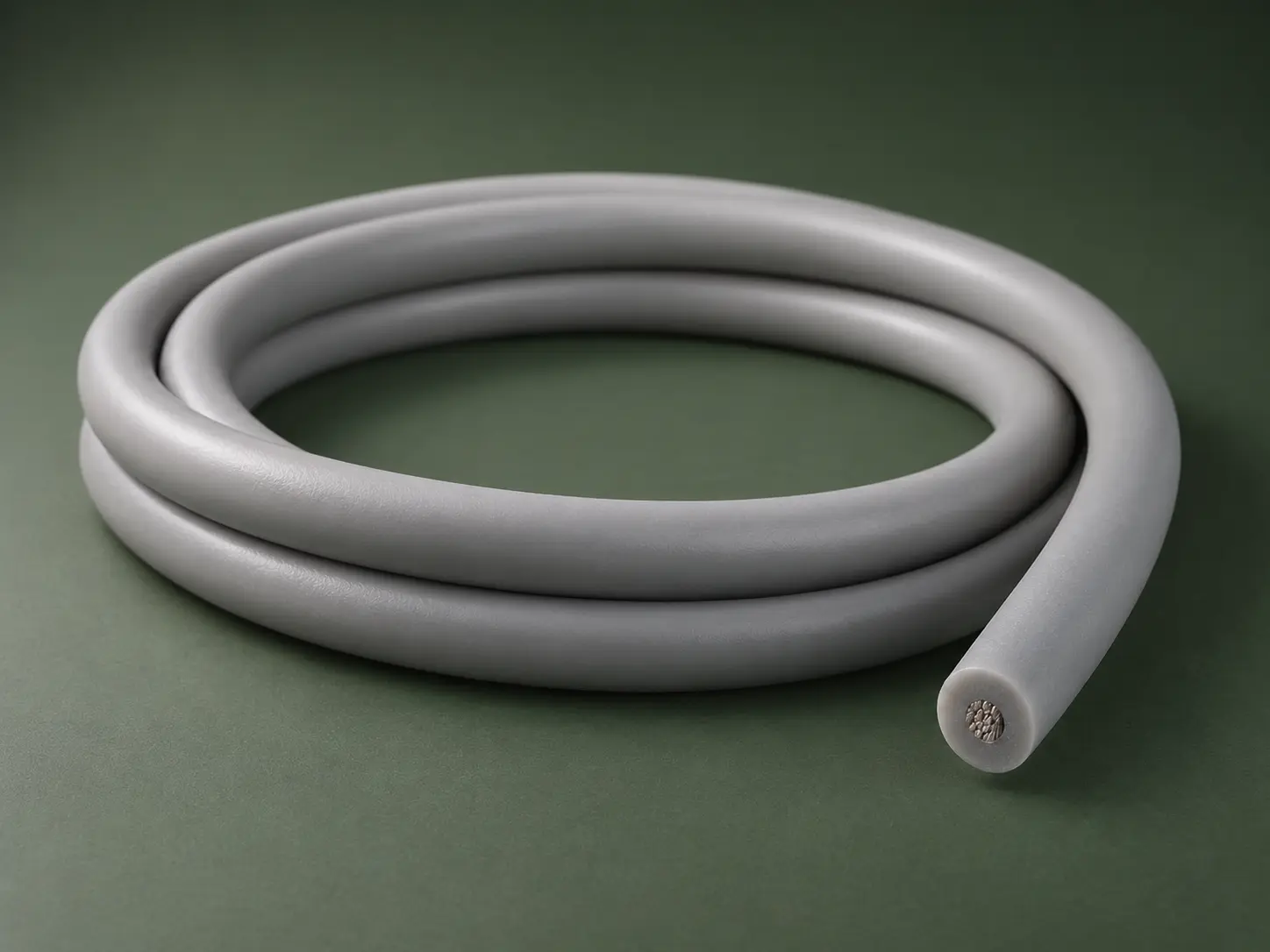
UL 3239 17 AWG 15 kVDC Wire Overview
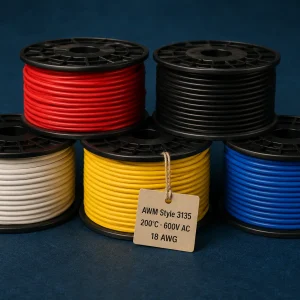
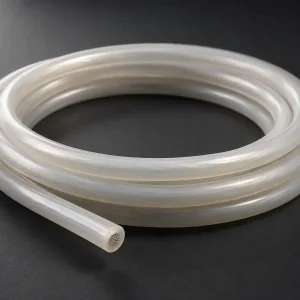
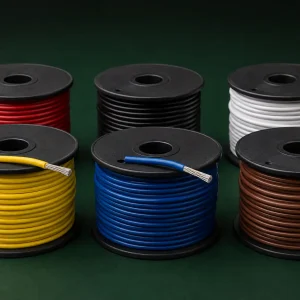
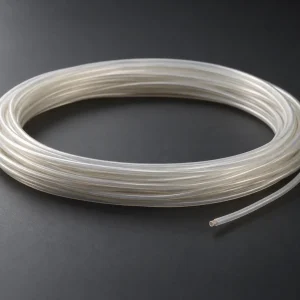
This page describes a specific 17 AWG, 200°C, 15 kVDC silicone-insulated construction within UL AWM Style 3239. These product-specific values should not be interpreted as universal parameters for every Style 3239 construction. The wire uses a tinned copper conductor in a 21 / 0.254 mm stranded construction, silicone insulation, and a finished outside diameter of 4.50 ±0.20 mm — a dimensional figure that matters directly when the lead must pass through a defined routing path inside a compact high-voltage module.
The procurement scenario this page addresses is concrete: an OEM engineering or sourcing team has a compact internal high-voltage DC module with a restricted wiring path, and needs a 17 AWG lead rated 200°C and 15 kVDC whose finished diameter fits the existing routing envelope and termination interface. Verifying conductor construction, insulation wall, finished OD, and equipment-level acceptability before approving the product is what prevents a specification mismatch at the assembly stage.
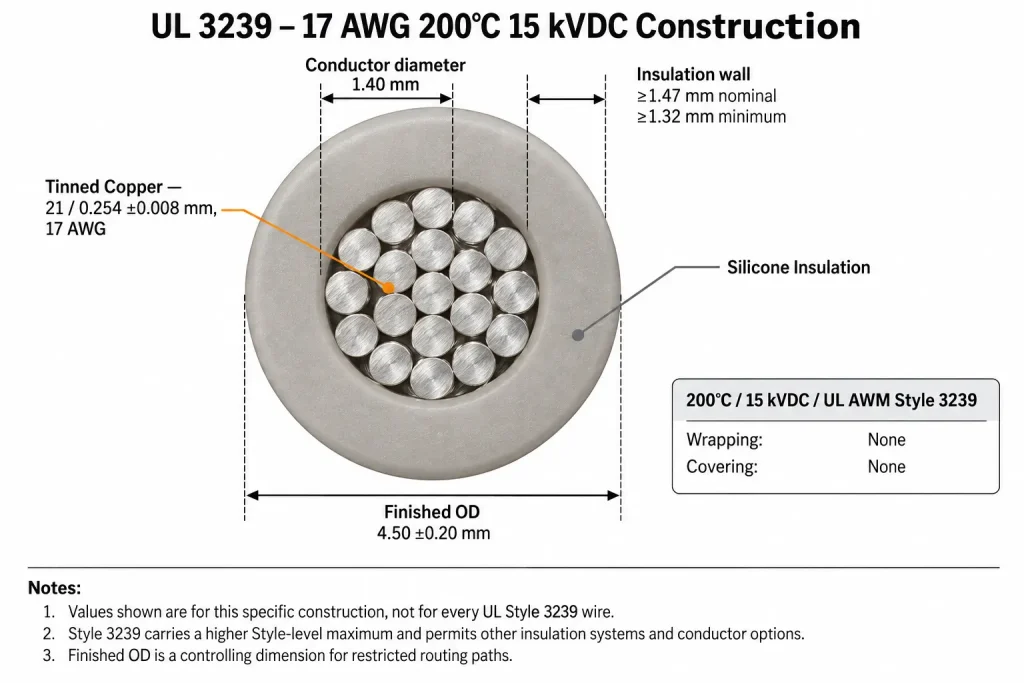
Specific 17 AWG 15 kVDC Construction
| Parameter | Specific Construction |
|---|---|
| UL AWM Style | 3239 |
| Conductor size | 17 AWG |
| Conductor material | Tinned copper |
| Conductor construction | 21 / 0.254 ± 0.008 mm |
| Conductor diameter | 1.40 mm |
| Rated temperature | 200°C |
| Rated voltage | 15 kVDC |
| Insulation | Silicone |
| Nominal insulation thickness | ≥ 1.47 mm |
| Minimum insulation thickness | ≥ 1.32 mm |
| Finished OD | 4.50 ± 0.20 mm |
| Wrapping | None |
| Covering | None |
These values represent the product-specific construction this page covers, not the Style’s full permitted range.
Why 17 AWG Matters in the Buyer BOM
17 AWG here is a defined BOM element, not a generic descriptor. A drawing that specifies 17 AWG for a high-voltage internal lead has already accounted for the electrical loading of that circuit, and substituting a nominally adjacent size can affect both termination fit and the finished cable envelope. This page does not publish an AWG-to-current table and does not infer ampacity, current rating, or equipment power from the 17 AWG designation — electrical loading is determined by the equipment designer, not by conductor size alone.
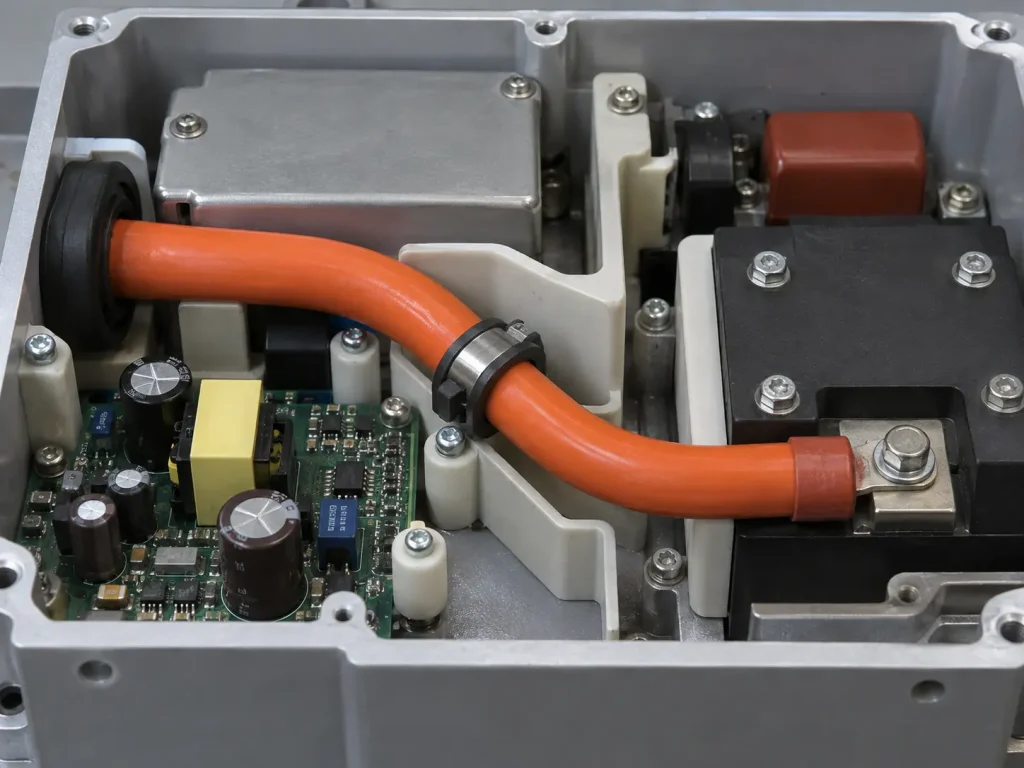
21 / 0.254 mm Stranded Conductor Construction
This specific product uses 21 strands at 0.254 mm nominal strand diameter, with a documented tolerance of ±0.008 mm. Detailed strand construction is worth stating in an RFQ because two wires described only as “17 AWG stranded” may use different strand counts and strand diameters, producing different conductor diameters, different handling characteristics, and different behaviour at a crimp interface. This page does not infer a flexibility class, minimum bend radius, or flex-cycle performance from strand count, and does not describe the product as ultra-flexible, high-flex, or continuous-flex, as none of those characteristics are established by the confirmed construction data.
Tinned Copper Is Specific to This Product
UL Style 3239 permits several conductor options at the Style level — copper, nickel, aluminum, resistance wire, or coated high-strength copper — and permits copper conductors to be tinned, silver plated, nickel plated, heat bonded, or overcoated. This specific SKU is confirmed as tinned copper. That is a defined BOM parameter for this construction, not a performance claim: this page makes no assertions about solderability, oxidation resistance, conductivity improvement, thermal life, or corrosion resistance relative to any other permitted finish.
15 kVDC Is the Rating of This Construction
The confirmed rating of this product is 15 kVDC. UL Style 3239 carries a higher Style-level ceiling, which is why different qualified Style 3239 constructions can carry substantially different voltage ratings — but that Style ceiling does not change the rating of this specific SKU. This page does not describe the product as 60 kV capable, as “up to 60 kV,” or as covering a 15–60 kV range. Where your design requires a different voltage class within Style 3239, that is a different construction and should be specified as such in your enquiry.
Do Not Convert 15 kVDC into an AC Rating
The confirmed product rating is 15 kVDC — a DC rating. This page does not convert or reinterpret that figure as 15 kVac, an equivalent AC voltage, a peak AC value, or an ignition pulse voltage. DC and AC voltage requirements are separate design parameters, and a DC-rated construction should not be substituted into an AC design calculation on the basis of the numerical value alone. Keep the DC designation explicit when specifying this construction.
Understanding the 200°C Rating
This specific construction is documented at 200°C. That figure describes the wire construction itself — it does not mean the compact module operates at 200°C, that terminal hardware in the assembly is rated 200°C, that adjacent components tolerate 200°C, or that 200°C is a recommended normal ambient condition. The wire’s temperature rating and the end product’s thermal design are separate engineering questions, and the actual local temperature at the wire’s routing position should be established from your equipment’s thermal analysis.
Silicone Insulation Is Specific to This Construction
For this SKU, silicone insulation is confirmed, so describing this product as silicone insulated is accurate. UL Style 3239 as a Style, however, is defined as permitting extruded or non-extruded thermoplastic and/or thermosetting insulation — it is not universally a silicone Style. A product-specific material should not be converted into a Style-wide statement when comparing suppliers or reading other UL 3239 listings.
Insulation Wall and Finished OD
This construction carries a nominal insulation thickness of ≥1.47 mm and a minimum insulation thickness of ≥1.32 mm, producing a finished outside diameter of 4.50 ±0.20 mm. Finished OD is the parameter most likely to determine whether the wire physically fits a compact module, since the lead may need to pass through defined module routing channels, grommets, insulating sleeves, terminal housings, clamps, or restricted enclosure paths. These are design-interface examples that a buyer verifies against their own drawing — they are not UL-approved application categories, and this page does not offer a tighter OD tolerance than the confirmed ±0.20 mm figure.
Why Finished OD Matters in Compact Modules
A buyer can have an electrically correct wire and still reject it on dimensional grounds. In compact high-voltage modules, a lead may be turned down because it does not fit a routing channel, because it interferes with an adjacent component at the intended bend, because it does not fit the specified grommet, because the terminal or insulating boot was designed around a different outside diameter, or because the assembly drawing controls a maximum cable envelope that the wire exceeds. Dimensional compatibility therefore needs to be checked alongside voltage and temperature rather than after them. This page does not claim guaranteed compatibility with any specific connector, grommet, boot, or housing — those interfaces should be verified against your own hardware.
Routing Space Does Not Prove Flexibility Performance
A compact module can have a restricted routing path, but the confirmed construction data does not establish a minimum bend radius, repeated-flex capability, flex-cycle life, torsional life, or suitability for dynamic cable-chain use. No such values are published on this page. If your assembly controls a minimum bend radius or requires repeated-flex performance, state that requirement as an RFQ field so it can be evaluated against the actual ordered construction rather than assumed from the insulation material.
UL AWM Use Boundary
UL Style 3239’s official Use is: internal wiring of TV receivers or where the acceptability has been determined by Underwriters Laboratories. “Compact high-voltage modules” is a buyer application context, not the official UL Use wording. This construction may be evaluated for protected internal wiring in compact high-voltage assemblies where the equipment design and applicable acceptability determination support its use. This page does not describe the product as UL approved for compact modules, UL certified for compact high-voltage modules, or specifically approved for module applications, and does not extend it into field wiring, external cable, or medium-voltage power cable use.
What This Product Specification Does Not Define
The confirmed construction data does not establish: ampacity, operating current, equipment power, minimum bend radius, flex-cycle rating, terminal compatibility, connector compatibility, creepage distance, clearance distance, installation spacing, cut length, reel length, MOQ, stock availability, or production lead time. These should be confirmed according to the project where required.
Common Procurement Mismatches
Several mismatches recur when a UL 3239 high-voltage lead is sourced without full construction data. A buyer needs 15 kVDC but a supplier quotes a different UL 3239 voltage construction. The quoted conductor is nominally similar but is not 17 AWG. The strand construction differs from 21 / 0.254 mm, changing the conductor diameter and crimp behaviour. The finished OD exceeds the module’s routing envelope. The insulation material differs from silicone. The terminal system was designed around a different diameter. A buyer assumes the Style’s higher voltage ceiling applies to this 15 kVDC SKU, or assumes all UL 3239 wire is interchangeable. Stating the exact SKU data — 17 AWG, 21 / 0.254 mm, tinned copper, silicone, 200°C, 15 kVDC, 4.50 ±0.20 mm — in the enquiry is what removes this ambiguity from the quotation.
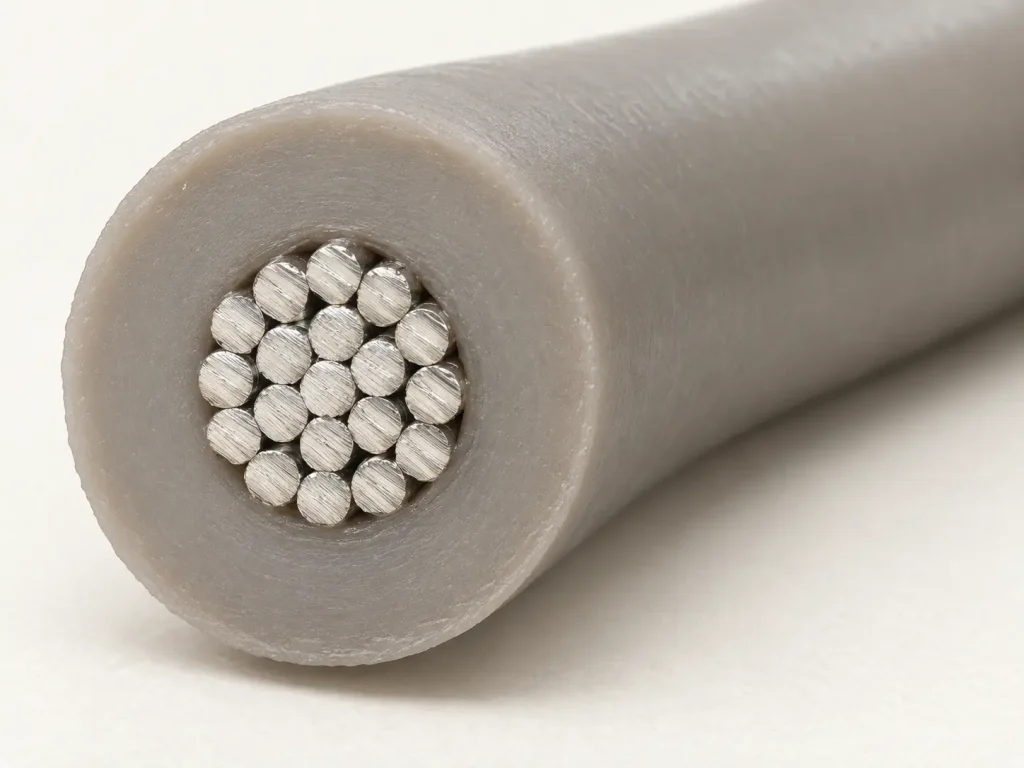
RFQ Checklist for This 17 AWG 15 kVDC Construction
To request an accurate quotation, please provide:
- UL AWM Style 3239
- 17 AWG
- 21 / 0.254 mm conductor construction
- Tinned copper
- 200°C
- 15 kVDC
- Silicone insulation
- Required finished OD / tolerance
- Insulation colour
- Required lead length
- Cut length tolerance, if prepared leads
- Terminal / connector drawing, if applicable
- Routing-space restriction
- Bend-radius requirement, if controlled
- Quantity
- Packaging
- Destination
- Documentation requirements
- End-product application context
Applicable RoHS / REACH documentation can be confirmed according to the ordered construction.
See our UL 3239 High Voltage Wire category, our High Voltage Wire range, or our AWM Wire category for related constructions.