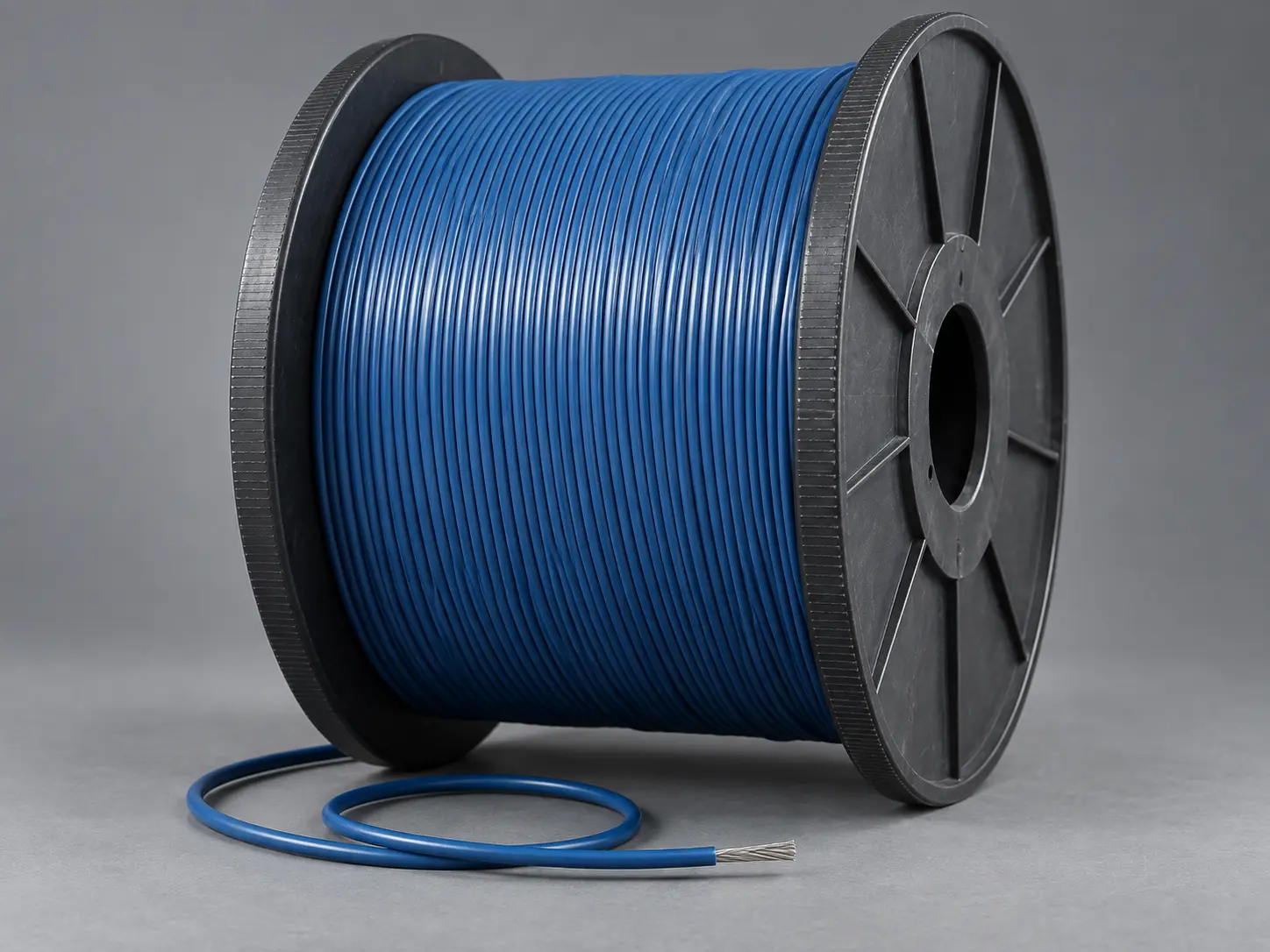
UL 3266 as an OEM Internal Lead in Compact Assemblies
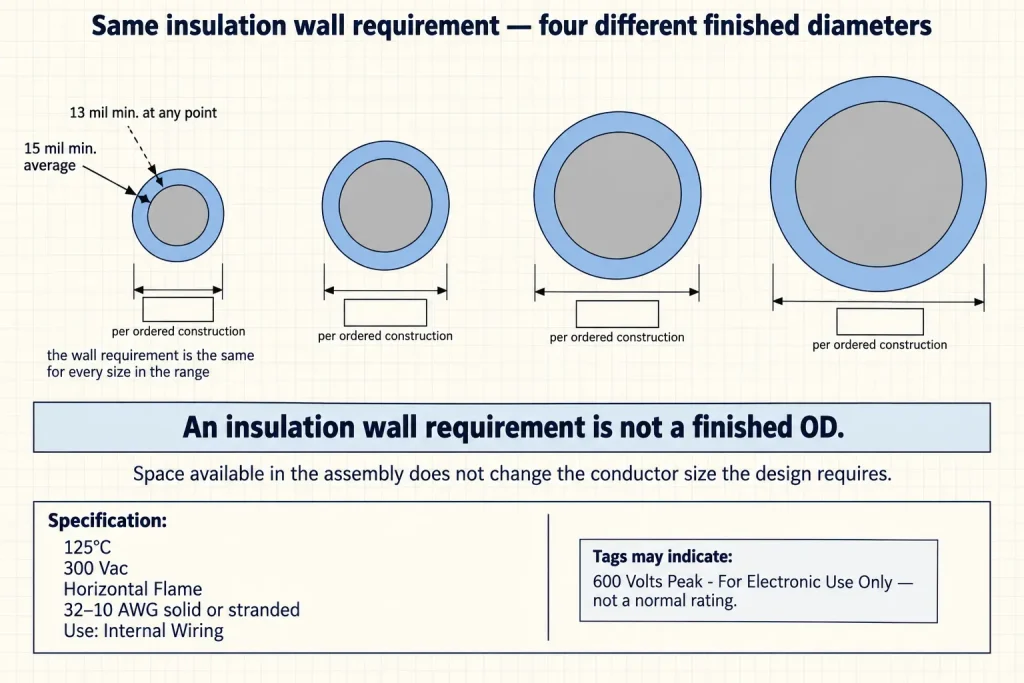
UL AWM Style 3266 is a single conductor with extruded insulation, rated 125°C and 300 Vac with Horizontal Flame, across a 32 AWG through 10 AWG conductor range in solid or stranded form. The insulation is extruded XLPE at 15 mils minimum average thickness and 13 mils minimum at any point.
This page covers that construction as bulk single-conductor wire purchased for internal OEM leads in compact electrical assemblies. The official Use for Style 3266 is internal wiring; compact assemblies and OEM leads are the purchasing contexts selected for this page, not UL wording.
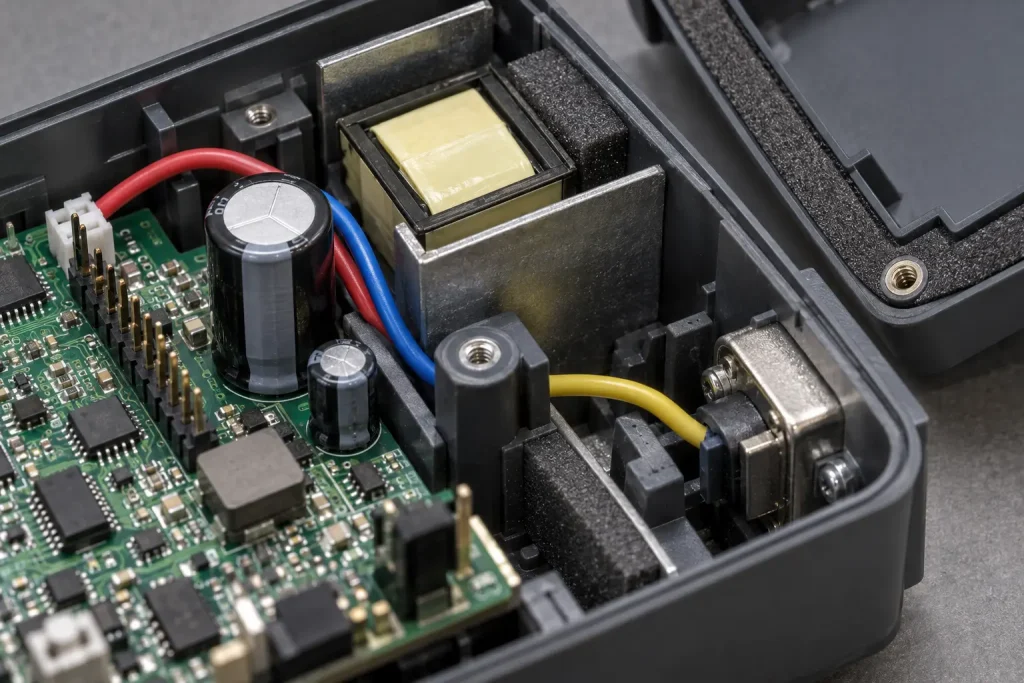
“Compact” Describes the Assembly, Not the Wire
This point is worth settling first, because it shapes how the rest of the page should be read.
Compact refers to the equipment and the internal space available in it. It is not a verified physical characteristic of Style 3266. The Style is not described here as a compact wire, a thin-wall wire, a small-OD wire or a tight-space wire, and no such terminology is applied to it without a separate authoritative source supporting it for a specific construction.
The 15 mil minimum average and 13 mil minimum-at-any-point figures are insulation-wall requirements. They do not create one universal finished outside diameter, and no OD is published or derived from them on this page. Finished diameter depends on the AWG and on the specific ordered conductor construction.
Nor is XLPE presented here as automatically producing a better fit, a smaller OD, greater flexibility, better bend performance, better abrasion resistance, greater mechanical strength, longer service life, superior routing or greater dimensional stability. The Style record supports none of those, and no supporting figure is offered for any of them.
Verified UL Style 3266 Construction
| Parameter | Style-level information |
|---|---|
| UL AWM Style | 3266 |
| Construction | Single conductor with extruded insulation |
| Temperature rating | 125°C |
| Voltage rating | 300 Vac |
| Flame | Horizontal Flame |
| Conductor size range | 32 AWG–10 AWG |
| Conductor form | Solid or Stranded |
| Insulation | Extruded XLPE |
| Minimum average insulation thickness | 15 mils |
| Minimum thickness at any point | 13 mils |
| Marking | General |
| Official Use | Internal Wiring |
| Optional tag — not a voltage rating | Qualifying tagged constructions may indicate: 600 Volts Peak – For Electronic Use Only |
The two insulation figures are separate requirements: 15 mils governs the average across the wall, 13 mils sets a floor at every individual point on it.
The 600 Volts Peak Tag Is Not a Normal Rating
The Style information states that tags may indicate “600 Volts Peak – For Electronic Use Only.” That notation accompanies the Use statement rather than the rating, and it is a different kind of statement from a voltage rating.
The normal Style rating is 300 Vac. Style 3266 is not described here as rated 600V, as “300V / 600V wire”, as 600 Vac, as 600V continuous, or as 600V OEM lead wire. Not every Style 3266 construction carries the tag, and where a design references the peak notation, both the qualification of the ordered construction and the fit of the application to “for electronic use only” are confirmed against that construction.
Bulk Wire and a Processed OEM Lead Are Different Things
An OEM lead in a drawing is usually a defined length with prepared ends. Style 3266 describes the wire that such a lead may be made from; it does not define the lead.
The Style establishes no finished lead assembly, and nothing on this page should be read as meaning that cut-to-length processing, stripping, crimping, terminals, connectors, ferrules, wire seals or finished harnesses are automatically included. Where processing is required, the requirements are specified and confirmed separately from the wire specification.
Saying in the enquiry whether the requirement is bulk wire on a reel or a processed lead removes a round of clarification that otherwise happens after quotation.
Available Space Does Not Override Required Conductor Size
Style 3266 covers 32 AWG through 10 AWG. No gauge inside that range is selected here, and no ampacity figure is published, because the Style record establishes none.
The required conductor size comes from the electrical design and the buyer’s specification. A smaller AWG is not automatically appropriate for a compact assembly — physical space does not override the current requirement, the conductor size the design calls for, or the applicable equipment requirements.
Where space is genuinely constrained, the question to answer is the other way round: does the required AWG, and the resulting ordered construction, fit the available dimensions? That is confirmed against the actual construction and the equipment drawing, not resolved by choosing a thinner wire.
Dimensional Control in Compact Assemblies
Dimensional confirmation matters more in a space-constrained assembly than almost anywhere else, precisely because the Style table cannot answer the question.
Where the equipment drawing controls dimensions, useful fields include:
- Maximum finished OD
- Minimum or maximum wire-entry diameter
- Connector-cavity limitation
- Terminal-barrel compatibility
- Routing-channel clearance
- Clip clearance
- Bundle-space limitation
- Strip length and cut length
- Bend-space requirement specified by the drawing
No numerical value is offered for any of these, and no minimum bend radius is published, because the Style data provides none. Dimensional suitability is evaluated against the actual ordered wire construction and the equipment drawing rather than assumed from the Style number.
Conductor Requirements Are RFQ Items
The verified Style information establishes the 32–10 AWG range and the solid or stranded form. It establishes nothing else about the conductor.
Copper, tinned copper, bare copper, silver-plated copper and nickel-plated copper are none of them established at Style level, and no strand count, individual strand diameter, conductor diameter, lay length, conductor resistance or ampacity is stated here. Where the OEM drawing controls conductor material, plating or detailed stranding, each is a confirmation item in the enquiry.
What an OEM Drawing Typically Controls
A useful way to prepare an enquiry is to separate what the Style already fixes from what the drawing has to supply. The Style fixes the temperature and voltage rating, the flame designation, the permitted conductor range and form, the insulation material and its wall requirements, and the Use.
The drawing or specification typically supplies the rest:
- AWG, and solid or stranded requirement
- Conductor material and conductor finish
- Detailed strand construction
- Insulation colour
- Finished OD or maximum OD
- Cut length and strip length
- Terminal and connector interface
- Marking
- Packaging
Only the first group is Style-level information. The second is order-specific, and a request containing only the first cannot be matched to a single construction.
Termination Requirements
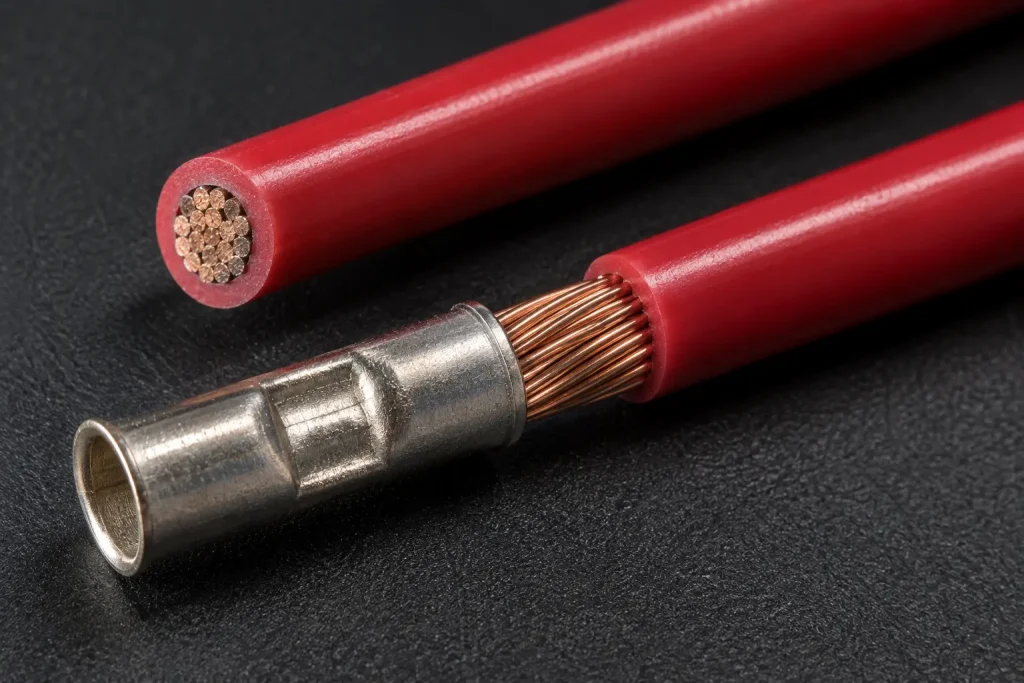
Style 3266 does not specify terminal model, connector family, contact size, ferrule, crimp geometry, strip length, wire seal or finished lead length. Where an OEM design controls those parameters, supply the drawing or the exact interface requirement in the enquiry.
No terminal compatibility is asserted here, and processing services are not presented as included.
Repeat OEM Purchasing
Internal lead wire is frequently bought to the same specification across successive production runs, which makes the reference used in the purchase order worth attention.
Repeat orders should reference the previously confirmed construction, drawing, colour, conductor requirement, dimensions, marking and packaging specification rather than the Style number alone. That is a procurement-control practice, not a technical claim: no batch-to-batch consistency, identical properties across production cycles, dimensional stability, supply continuity or stock availability is guaranteed here on the strength of the Style.
The 125°C Rating and Flame Classification
Style 3266 is rated 125°C, and the rating applies to the wire. It does not establish the permitted internal ambient of the assembly, the ratings of components the lead connects to, or the ratings of parts adjacent to its routing path.
The Style-level flame designation is Horizontal Flame. VW-1 and FT1 are separate classifications, are not claimed here, and Horizontal Flame is not converted into either. Any separately confirmed vertical-flame construction is order-specific.
What Style 3266 Does Not Define
- Conductor material and conductor plating
- Strand count and conductor resistance
- Ampacity
- Finished OD and OD tolerance
- Colour
- Cut length and strip length
- Terminal, connector and harness layout
- Packaging, reel length, MOQ, stock and lead time
Each comes from the ordered construction, the buyer’s drawing or separately verified SKU documentation.
Application Boundary
The official Use is internal wiring. Style 3266 is not building wiring, field wiring, branch-circuit wiring, facility wiring, tray cable, conduit wiring, raceway wiring, external power cable or general power distribution cable.
An assembly being an OEM electrical product does not expand that Use. The wire remains internal component wiring within equipment.
Substitution
UL 3271 and UL 3321 are separate AWM Styles with their own verified constructions and ratings, and they are not presented here as automatically more suitable whenever a higher voltage is required. UL 3135 is likewise not offered as a choice simply because a softer silicone wire is preferred.
Selection considers the required UL Style, the voltage rating, the temperature rating, the AWG, the conductor requirement, the insulation construction, the dimensional constraints, the termination requirements, the marking and the equipment specification. Material family alone is not evidence for substitution, and no Style is treated as automatically interchangeable with another.
Common OEM RFQ Mismatches
- “UL3266 OEM lead wire” requested with no AWG. The Style spans 32–10 AWG.
- Tinned copper assumed from the Style number. Conductor material is not set at Style level.
- 15 mil insulation read as one fixed OD. It is a wall requirement, not a diameter.
- Style 3266 assumed to be thin-wall or compact. Compact describes the assembly, not the wire.
- Terminals or connectors assumed to be included. The Style defines no lead assembly.
- Bulk wire confused with a processed OEM lead. Different scopes and quotations.
- “600 Volts Peak” read as a normal 600V rating. The normal rating is 300 Vac.
- Maximum OD omitted where space is controlled. Fit cannot be confirmed without it.
- Cut length or termination details omitted on a processed lead.
- No drawing or reference sample supplied where equivalence is required.
RFQ Checklist
- UL AWM Style 3266 requirement
- AWG within 32–10 AWG
- Solid or stranded form
- Required conductor material
- Required conductor finish or plating
- Detailed stranding, if controlled
- Insulation colour
- Finished OD or maximum OD, if controlled
- Equipment or assembly type
- Available routing space, if relevant
- Customer drawing or existing wire specification
- Cut length, if applicable
- Strip length
- Terminal or connector interface
- Marking requirement
- Quantity
- Packaging requirement
- Destination
- Required compliance documentation
These are RFQ inputs. No configuration is presented as automatically available.
UL Marking and Documentation
Material is supplied as UL-recognized component wire where supplied under qualified manufacturing scope, and UL marking is applied according to the confirmed ordered construction. The Style-level marking designation is General.
CSA AWM, FT1, VW-1 and dual UL / CSA certification are not claimed here; any additional certification depends on the ordered construction. Applicable RoHS / REACH documentation can be confirmed according to the ordered construction.