UL 3172 for Heated Cabinet Internal Wiring
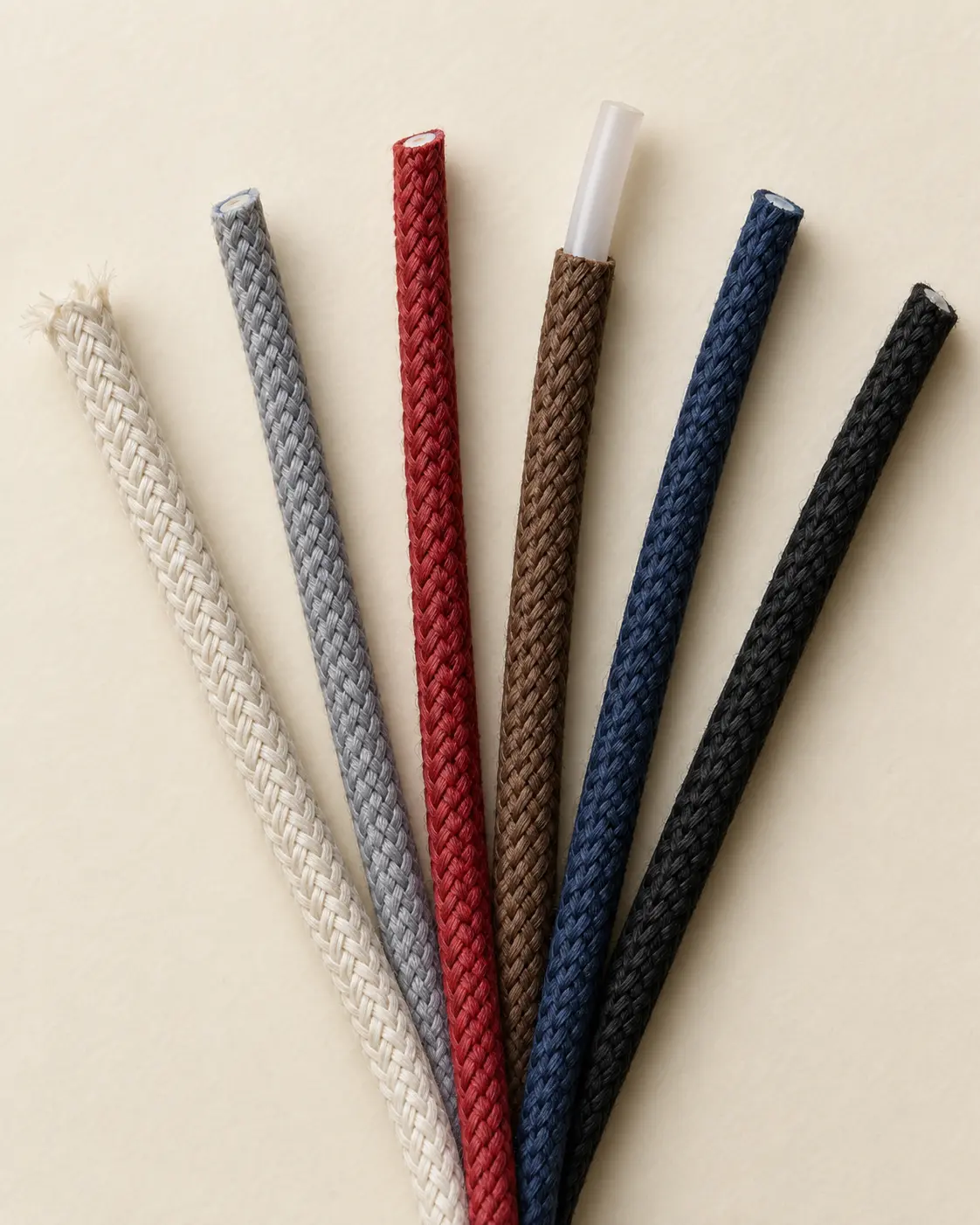
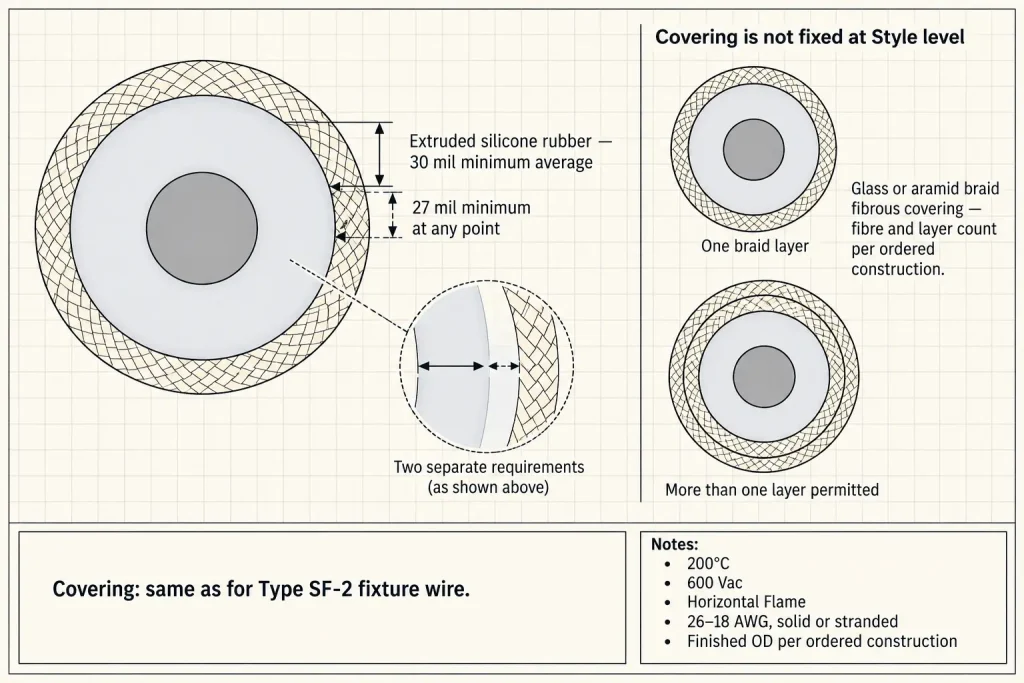
UL AWM Style 3172 is a single conductor with extruded insulation and a non-extruded covering, rated 200°C and 600 Vac with Horizontal Flame, across a 26 AWG through 18 AWG conductor range in solid or stranded form. The insulation is extruded silicone rubber; the covering is one or more glass or aramid braid fibrous coverings.
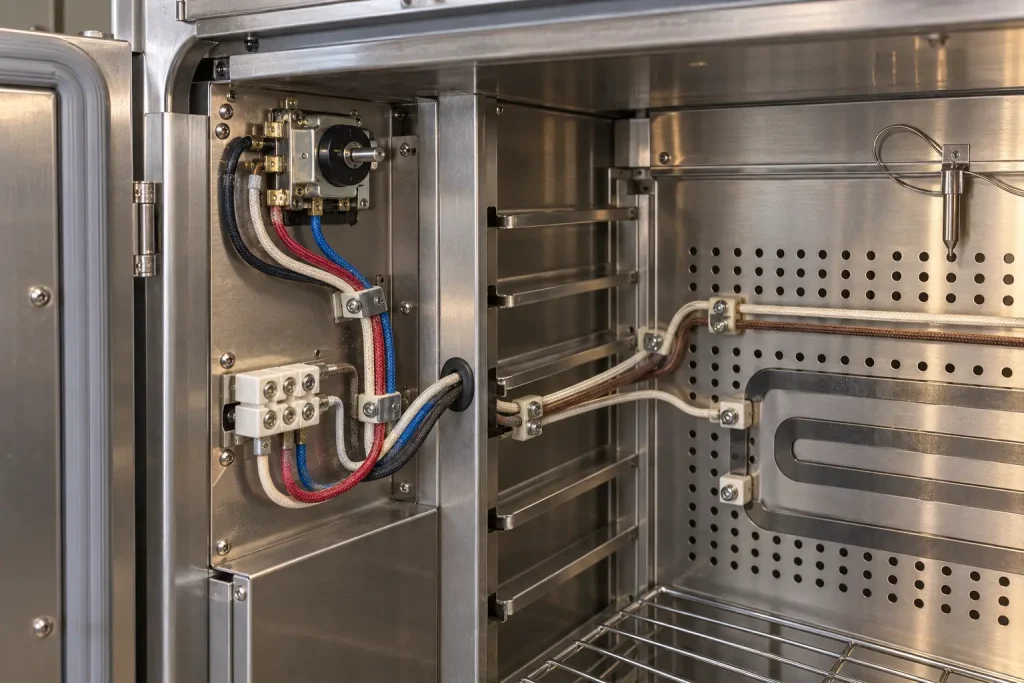
This page is written for buyers specifying that construction for internal wiring in heated cabinets, heated holding equipment and food-warming appliances. Those are practical OEM contexts, not UL designations — the official Use for Style 3172 is internal wiring of appliances, and no individual appliance type is named in the Style record.
The distinction matters at RFQ stage. An equipment designer may require a Style 3172 construction for a heated cabinet; what makes that requirement quotable is the AWG, the covering construction, the dimensional constraint and the termination interface, none of which the Style number supplies.
Verified UL Style 3172 Construction
| Parameter | Style-level information |
|---|---|
| UL AWM Style | 3172 |
| Product description | Single Conductor with Extruded Insulation and Non-Extruded Covering |
| Temperature rating | 200°C |
| Voltage rating | 600 Vac |
| Flame | Horizontal Flame |
| Conductor size range | 26 AWG–18 AWG |
| Conductor form | Solid or Stranded |
| Insulation | Extruded Silicone Rubber |
| Minimum average insulation thickness | 30 mils |
| Minimum thickness at any point | 27 mils |
| Covering | Same as for Type SF-2 Fixture Wire; one or more glass or aramid braid fibrous coverings |
| Marking | General |
| Official Use | Internal wiring of appliances |
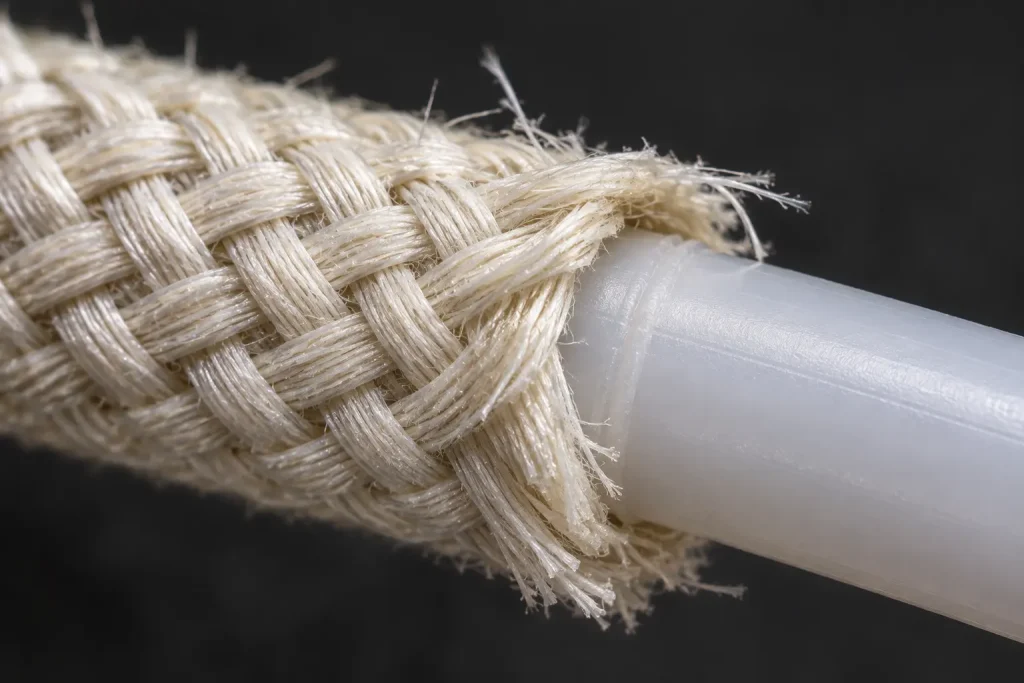
The construction has three defined parts in order: the conductor, the extruded silicone rubber insulation, and the non-extruded fibrous covering over it. The product description names that structure directly, which is why the covering is described as a covering rather than as a second insulation or an outer protective layer.
The two insulation figures are separate requirements. 30 mils governs the average across the wall; 27 mils sets a floor at every individual point on it. Both are part of the specification, and quoting only the average leaves the second requirement unstated.
What the Covering Reference Actually Says
The Style record defines the covering in two parts. It references the covering construction used for Type SF-2 fixture wire, and it states that the covering is one or more glass or aramid braid fibrous coverings.
Two things follow. First, more than one covering layer is permitted — “one or more” is the Style wording. Second, the fibre is not fixed at Style level: both glass and aramid braid are permitted. A glass-braid construction is one permitted option under Style 3172, and it is the version most often discussed in commercial terms, but the Style record does not restrict the covering to it.
Because of this, the required covering construction should be confirmed for the ordered wire rather than assumed from the Style number or from how the product is described commercially.
What the Covering Construction Does Not Establish
The Style record establishes what the covering is. It does not establish how the covering performs.
No abrasion-resistance value, cut resistance, tensile strength, thermal-cycle life, flex life, service life, dielectric improvement or chemical resistance is attributed to a glass or aramid braid covering on this page, because the Style information supports none of them. The covering is also not armour, and it is not described that way here.
Where a heated-cabinet design genuinely depends on one of those characteristics at the wire’s routing position, it is a requirement to state and have evaluated against a specific construction with supporting documentation — not something the presence of a braid answers.
“Internal Wiring of Appliances” Is the Use Boundary
The official Use for Style 3172 is internal wiring of appliances. That is the complete wording.
Heated cabinets, heated holding cabinets and food-warming appliances are appliance types in which a designer may specify a Style 3172 construction for internal wiring. Discussing them is equipment-selection context; it does not extend the Use, and none of them appears in the Style record by name.
The boundary also excludes other wiring categories entirely. Style 3172 is not building wire, field wiring, branch-circuit wiring, tray cable, conduit wire, portable cord or general power distribution wiring, and it is not presented as any of those here.
Selecting AWG Within 26–18 AWG
Style 3172 establishes the permitted conductor size range. It does not determine which gauge a particular appliance requires.
The required conductor size comes from the actual appliance design and the applicable equipment requirements, and is identified by the buyer. No ampacity value appears on this page and no current-carrying capacity is inferred from AWG, because the Style record establishes neither.
Conductor Material Is Not Defined at Style Level
The Style conductor specification defines the size range and the solid or stranded form. It defines nothing else about the conductor.
Conductor material, plating, strand count, individual strand diameter and conductor diameter are all outside what the Style establishes, so copper, tinned copper, bare copper, nickel-plated copper and silver-plated copper are none of them assumed here. Where any of these is controlled by the appliance BOM, state it in the enquiry so it can be confirmed against a qualified construction.
Dimensional Procurement Requirements
No finished OD is published on this page, because none is verified for it and none can be derived from the insulation figures — the covering construction affects the result and is itself variable within the Style.
OEM drawings frequently control dimensions nonetheless. Where they do, supply the finished OD or maximum OD, the routing envelope, insulation stripping dimensions, terminal entry dimensions and the clearance available around clips or channels. These are RFQ confirmation fields against an ordered construction.
Termination and Assembly Requirements
Whether the requirement is wire on a reel or a specified assembly changes the scope of a quotation, and it is worth stating explicitly.
Where the requirement goes beyond bulk wire, supply the cut length, stripped-end dimensions, terminal interface, connector interface and termination process. Nothing here should be read as meaning that pre-cut leads, terminals or connector assemblies are automatically available; that is confirmed per order.
Heated Cabinet Procurement Questions
For a heated cabinet or food-warming appliance, the information that turns a Style requirement into a quotable construction is mostly about position and interface:
- Where inside the appliance the wire is routed
- Whether the equipment design specifies Style 3172 or leaves the Style open
- Required AWG and conductor form
- Available routing space along the path
- Termination interface at each end
- Required covering construction
- Colour or identification needs
- Required marking and documentation
No heater wattage, cabinet temperature, element temperature, cycle frequency, airflow, duty cycle or service-life figure is stated on this page. Those belong to the appliance design and are not derived from the wire Style.
The 200°C and 600 Vac Ratings
Style 3172 is rated 200°C. The Style record does not use the word continuous, and neither does this page — “200°C rating” is the accurate form. The rating applies to the wire, not to the appliance ambient, the heating element, the terminals or adjacent components, each of which carries its own rating.
The voltage rating is 600 Vac. It is stated as an AC rating rather than a generic 600V, and it is not restated as a DC, peak, impulse or dielectric test value without separate documentation.
Flame Classification
The verified Style record states Horizontal Flame. VW-1 is a separate classification, is not claimed here, and Horizontal Flame is not silently converted into it. Where a specification calls for vertical flame performance, that depends on a separately confirmed ordered construction rather than on the Style 3172 rating.
What UL Style 3172 Does Not Define
- Conductor material and plating
- Detailed stranding — strand count and strand diameter
- Conductor diameter and conductor resistance
- Ampacity or current rating
- Finished OD and OD tolerance
- Bend radius, flex cycles and flexibility class
- Colour and identification
- Terminal, connector and cut length
- Packaging, reel length, MOQ and lead time
Each must be confirmed against the ordered construction or a verified SKU specification.
Why Matching on Appearance and Ratings Creates Substitution Risk
A wire that is 200°C, 600V, silicone insulated and braided in appearance is not thereby equivalent to a Style 3172 construction. Those four attributes describe a family of products, not one specification.
A substitution assessment should cover the required UL Style, the AWG, the conductor requirements, the insulation construction, the covering construction, the dimensions, the termination interface, the marking, the appliance design requirements and the required order documentation. Two products can match on temperature, voltage and visual character while differing on most of that list.
No other UL Style is automatically interchangeable with Style 3172, and none is presented that way here.
Common RFQ Mismatches
- “UL3172” requested with no AWG. The Style spans 26–18 AWG.
- Tinned copper assumed for all Style 3172 wire. Conductor material is not set at Style level.
- Glass braid assumed to be the only permitted covering. Aramid braid is equally permitted.
- Finished OD assumed to follow from the Style. It does not; the covering affects it and varies.
- 200°C read as an appliance ambient temperature. It is a wire rating.
- Terminal or stripping requirements omitted. Bulk wire and finished leads are different scopes.
- “High-temperature silicone wire” requested with no Style identified. Several Styles fit that description.
- Packaging and reel length assumed to be part of the Style. Neither is defined by it.
Each leaves the request matching more than one qualified construction, which is cheaper to resolve before quotation than after a first article.
RFQ Checklist
- UL AWM Style 3172 requirement
- AWG within 26–18 AWG
- Solid or stranded requirement
- Required conductor material
- Conductor plating or finish
- Detailed strand construction, if controlled
- Required glass or aramid fibrous covering construction
- Finished OD or maximum OD, if controlled
- Colour / identification requirement
- Actual appliance type
- Heated-cabinet or food-warming equipment application context
- Internal routing conditions
- Cut length, if required
- Stripping requirements
- Terminal / connector interface
- Marking requirements
- Quantity
- Packaging / reel requirements
- Destination
- Required compliance documentation
These are items to provide or confirm, not options presented as automatically available.
UL Marking and Documentation
Material is supplied as UL-recognized component wire where supplied under qualified manufacturing scope, and UL marking is applied according to the confirmed ordered construction. The Style-level marking designation is General.
CSA AWM, FT1 and dual UL / CSA certification are not claimed here; any additional certification depends on the ordered construction. Applicable RoHS / REACH documentation can be confirmed according to the ordered construction.