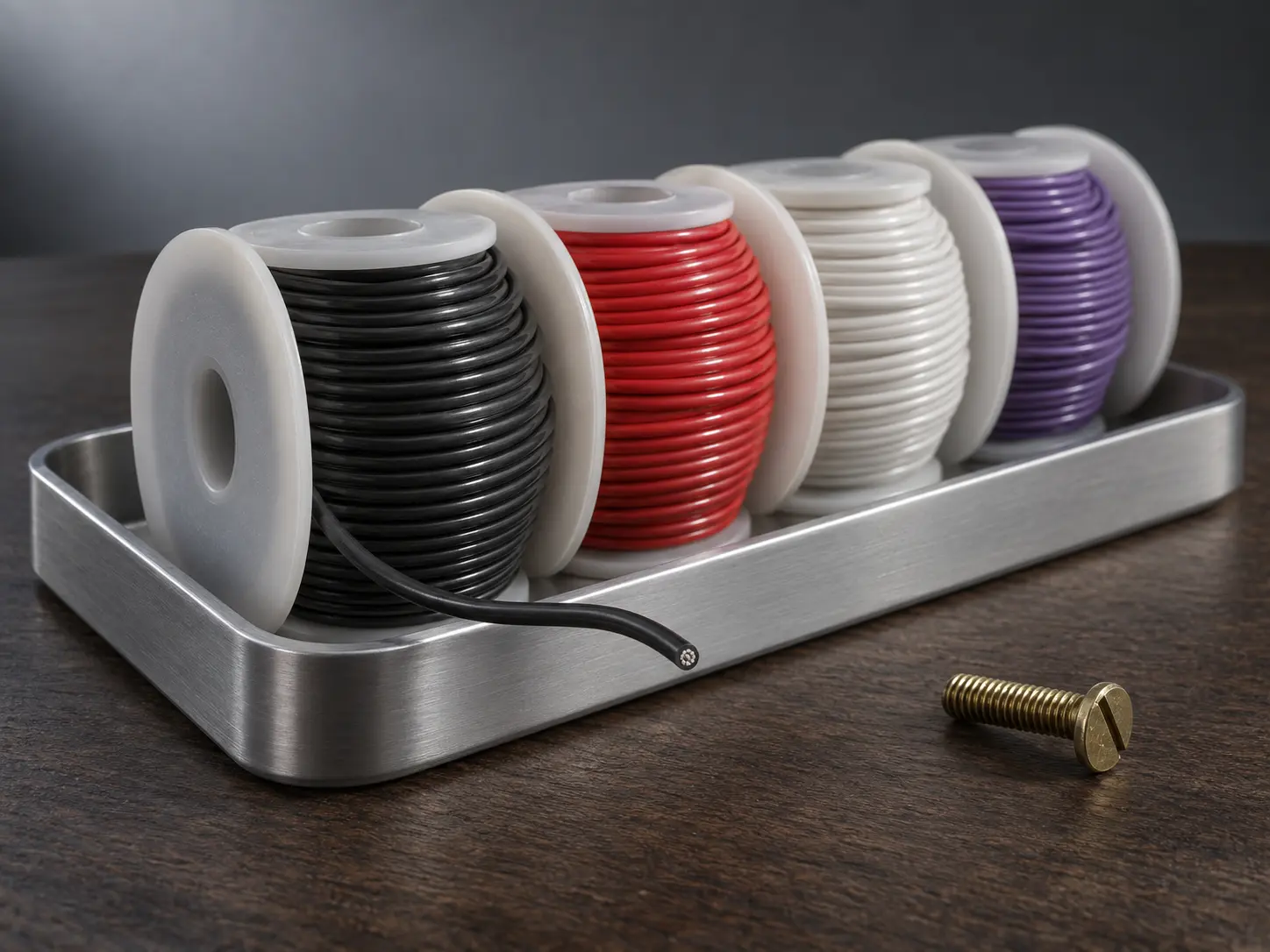
UL 1015 30 AWG Wire for Germany Price Inquiries
This page covers UL AWM Style 1015 in 30 AWG for buyers in Germany preparing a price inquiry or RFQ. It is written for appliance and equipment OEM procurement teams, engineering buyers and distributors whose drawing, BOM or harness specification calls for a fine-gauge Style 1015 construction.
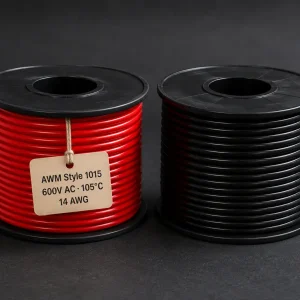
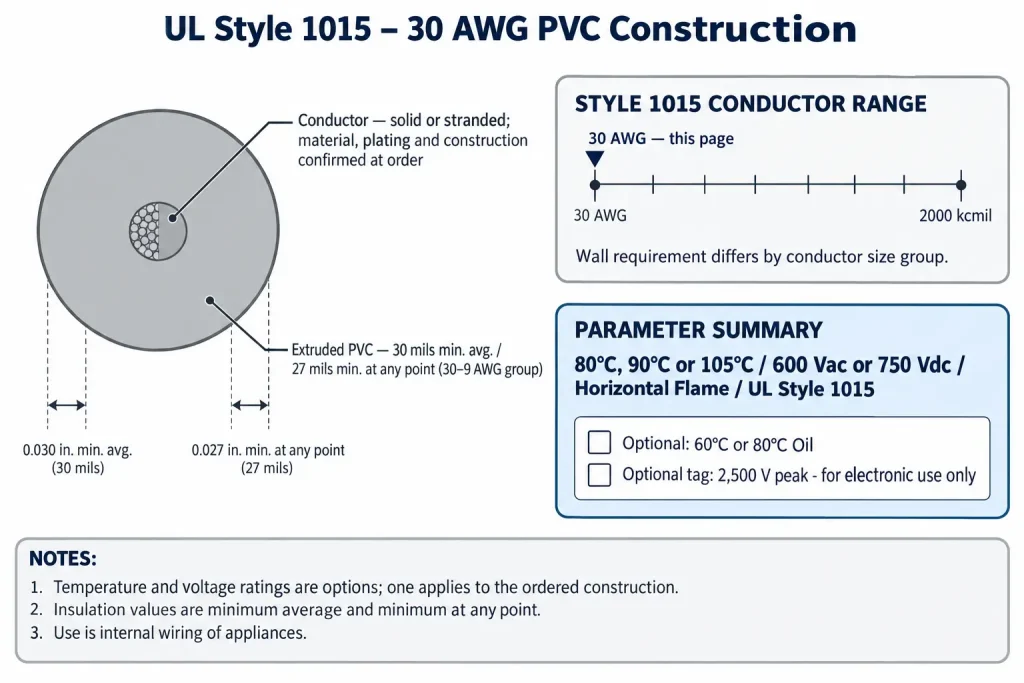
Style 1015 is a single conductor with extruded PVC insulation. The Style provides temperature rating options of 80°C, 90°C or 105°C and voltage rating options of 600 Vac or 750 Vdc, with a Horizontal Flame designation and an optional 60°C or 80°C Oil rating. The conductor range runs from 30 AWG to 2000 kcmil in solid or stranded form, and the official Use is “Internal wiring of appliances.”
30 AWG is the smallest conductor size in that range, which makes this an unusual combination: a heavy-duty voltage rating on a very fine conductor. This page sets out what the Style fixes at that size, what remains open, and what a quotation needs before it can be prepared.
Confirmed UL Style 1015 Construction and Ratings
| Parameter | Requirement |
|---|---|
| UL AWM Style | 1015 |
| Product Description | Single conductor with extruded insulation |
| Page-Specific Size | 30 AWG |
| Style Conductor Range | 30 AWG–2000 kcmil |
| Conductor Form | Solid or stranded |
| Temperature Rating Options | 80°C, 90°C or 105°C |
| Voltage Rating Options | 600 Vac or 750 Vdc |
| Flame | Horizontal Flame |
| Optional Oil Rating | 60°C or 80°C Oil (optional) |
| Insulation | Extruded PVC |
| Insulation Thickness for 30–9 AWG | 30 mil minimum average / 27 mil minimum at any point |
| Marking | General |
| Official Use | Internal Wiring of Appliances. |
| Optional Tag | 2,500 V peak – for electronic use only |
| Documentation | UL marking and compliance documents according to the confirmed ordered construction |
| RoHS / REACH | Applicable RoHS / REACH documentation can be confirmed according to the ordered construction |
Nine points to clarify about the table above:
- 80°C, 90°C and 105°C are alternative options. One applies to a given construction and is confirmed for the order, so a 105°C requirement must be stated rather than assumed.
- 600 Vac and 750 Vdc are likewise alternative options, not a combined AC/DC rating carried by every construction.
- 2,500 V peak – for electronic use only is an optional tag indication, not a normal working-voltage rating.
- The Oil rating is optional, and a 60°C or 80°C requirement must be stated by the buyer.
- 30 AWG falls in the 30–9 AWG insulation group, where the requirement is 30 mil minimum average and 27 mil minimum at any point. These are two independent minimums, not a range and not nominal values.
- Other conductor sizes in the Style belong to different insulation groups with different values. The 30/27 mil figures are not universal to Style 1015.
- Both conductor forms are permitted. Conductor material, plating, strand count, strand diameter and lay length are not defined by the Style.
- Finished OD, OD tolerance, conductor resistance, metric cross-section and ampacity are not defined by the Style.
- The Style range is not a stock list, and availability of a 30 AWG construction is confirmed per enquiry.
Choosing the Temperature and Voltage Options
An enquiry naming only “UL 1015” leaves two parameters open. German buyers whose equipment specification controls a wire temperature rating should state 80°C, 90°C or 105°C explicitly, or supply the drawing that states it, and the same applies to the 600 Vac or 750 Vdc choice.
The ratings are stated without duty qualifiers, and no service life, thermal cycling count or thermal margin is derived from them here. The DC option is a DC rating for the wire and is never rewritten as an AC value, nor presented as an equipment system rating. Writing the Style as 600/750 V, 600 V AC/DC or 750 Vac misstates the record in each case.
Tags may additionally indicate “2,500 V peak – for electronic use only”. Both qualifiers stay attached whenever that tag is cited: it is a peak indication for electronic use rather than a working voltage, and it does not widen the official Use. The flame designation is Horizontal Flame; VW-1, FT1 and vertical flame designations are not part of this record.
30 AWG Within the Style Range
30 AWG sits at the fine end of a range that extends to 2000 kcmil. Being inside the range means a 30 AWG construction can be qualified under Style 1015; it does not mean every manufacturer working under the Style produces 30 AWG, that it is held in stock, or that it is quoted on the same terms as mid-range sizes.
The Style states conductor size by AWG only. It gives no metric cross-section, conductor diameter or conductor resistance, so where a German drawing controls a mm² value or a maximum resistance, that figure is a buyer requirement checked against the proposed construction rather than read from a generic conversion table.
Conductor size also assigns no circuit function here. The Style does not classify 30 AWG as signal, sensor, measurement or precision wire, and the voltage options do not make it a power conductor either. No ampacity appears in the record, and none is inferred from the size, the temperature option or the voltage option. Current-carrying capacity is evaluated through the buyer’s equipment design and the applicable approval process.
Insulation at 30 AWG
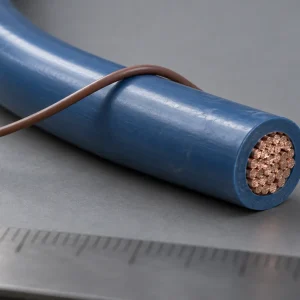
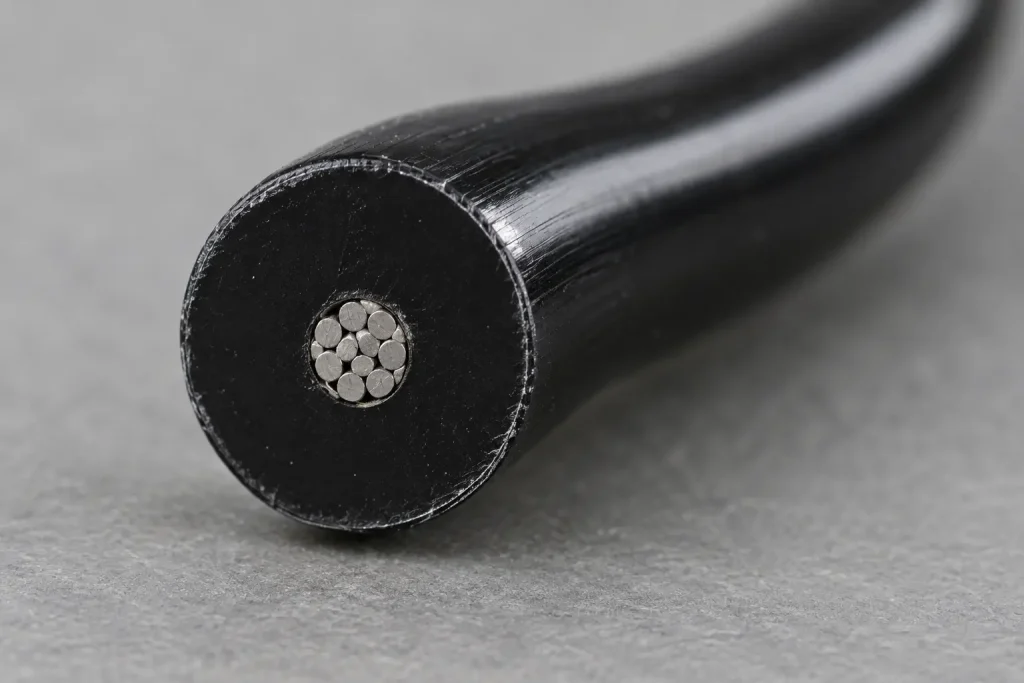
Style 1015 sets the extruded PVC wall in conductor-size groups, and 30 AWG belongs to the 30–9 AWG group: 30 mil minimum average thickness and 27 mil minimum at any point. Both conditions apply together, and neither is a nominal wall.
At this conductor size that wall is a large share of the finished diameter, which has a practical consequence for fine-gauge routing: minimum wall values do not produce a finished OD. Actual OD depends on the conductor material and form, the actual strand construction and diameter, the PVC extrusion and manufacturing tolerance. Where connector entry, clearance or automated handling controls the dimension, state a maximum finished OD and OD tolerance in the RFQ so the proposed construction can be checked against it.
“Extruded PVC” also does not mean lead-free, halogen-free or LSZH material. PVC contains chlorine, and a halogen-free requirement is a different material specification rather than an option on this Style.
Conductor Construction Is an Order Parameter
The Style conductor information consists of the size range and the words solid or stranded. At 30 AWG the following are RFQ fields rather than Style values:
- solid or stranded form
- conductor material
- plating or surface finish
- strand count, strand diameter and lay construction, where controlled
- maximum conductor resistance, where controlled
Descriptions such as “stranded tinned copper”, a stranding class or a flexibility grade belong to a specific product datasheet rather than to Style 1015, and none is claimed here.
Official Use: Internal Wiring of Appliances
The official Use is “Internal wiring of appliances.” This page keeps that wording and does not extend it to building or mains installation wiring, field wiring, conduit or tray installations, control cabinet field wiring, or general power cable.
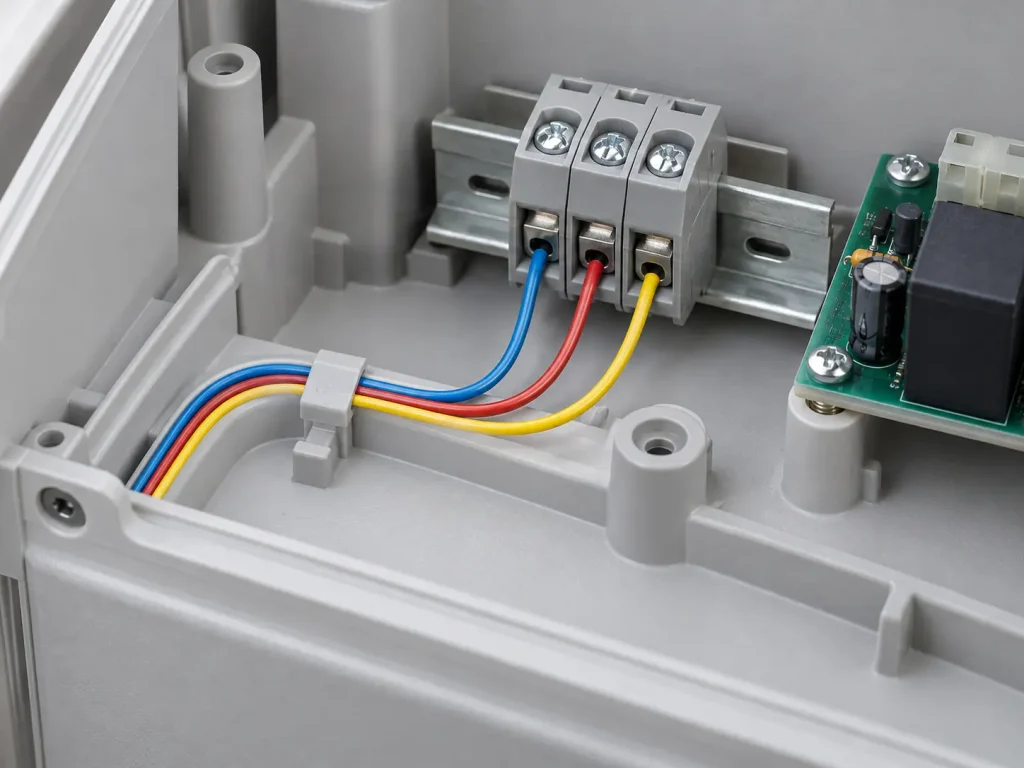
German enquiries at this gauge often come from contexts such as PCB terminals, terminal blocks, control assemblies, power supply modules, appliance harnesses or OEM subassemblies. Those are buyer enquiry contexts that can be reviewed against the drawing, and they do not change the Use. This page also does not describe the product as a precision signal wire or a PCB signal wire, since the Style record establishes no such classification. Compliance of a finished appliance or assembly is established at the equipment level and is not conferred by the Style designation of one internal wire.
What a Germany Price Inquiry Needs
No price, price per metre, currency, price validity period or pricing formula is published on this page, and no metal-index or copper-linked pricing policy is stated as a default. A quotation is prepared against a defined construction and a defined commercial scope, and it is issued as a separate quotation document.
The factors that typically shape a quotation are the conductor construction, the temperature and voltage options selected, the quantity, the packaging and reel configuration, the documentation required and the delivery terms. Where any of those is open, a quotation can only be indicative, so German buyers are asked to submit the drawing, BOM or RFQ specification before quotation, together with the commercial details below.
How to Specify UL 1015 30 AWG for a Germany RFQ
A Style designation is a construction requirement, not a complete purchase specification. A complete enquiry adds:
- the UL AWM Style 1015 requirement and the 30 AWG size
- the required temperature option: 80°C, 90°C or 105°C
- the required voltage option: 600 Vac or 750 Vdc
- solid or stranded construction
- conductor material and plating, where controlled by the drawing
- strand construction and maximum conductor resistance, where controlled
- whether an optional 60°C or 80°C Oil rating is required, and which
- insulation colour and any colour coding requirement
- the marking requirement
- maximum OD and OD tolerance, where controlled
- the appliance internal wiring location
- the drawing, BOM or harness specification
- documentation requirements, quantity and packaging or reel preference
- the German destination and the requested Incoterm
Germany Procurement Context
Germany is the destination and procurement context for this page. German buyers may search for Style 1015 in 30 AWG when a drawing or BOM requires a fine-gauge AWM construction carrying the Style’s voltage and temperature options, whether for a series build, a prototype programme or a replacement part, and any German city or port can be named as the destination in an enquiry.
CableApex is an international sales, export and customer communication company and coordinates RFQ communication, export documentation review and order confirmation. No German market demand, industry usage, customer or project is claimed here, and no conclusion is drawn about EU or German conformity, material regulation or import requirements. Where such requirements apply, the buyer should state them so the applicable documents can be reviewed for the ordered construction.
What Style 1015 Does and Does Not Define
Style 1015 defines:
- 80°C, 90°C or 105°C temperature rating options
- 600 Vac or 750 Vdc voltage rating options
- Horizontal Flame
- optional 60°C or 80°C Oil
- conductor range 30 AWG–2000 kcmil, solid or stranded
- extruded PVC with size-dependent minimum wall requirements, 30 mil minimum average and 27 mil minimum at any point for 30–9 AWG
- Marking: General
- Use: Internal wiring of appliances.
- optional tag: 2,500 V peak – for electronic use only
Style 1015 does not universally define:
- conductor material, plating, strand count, strand diameter or lay length
- a stranding class, flexibility grade or flex life
- finished OD, OD tolerance or bend radius
- conductor resistance, ampacity, current rating or metric cross-section
- signal, sensor, measurement or PCB circuit suitability
- halogen-free or LSZH material properties
- equipment system voltage ratings
- price, currency, pricing formula, MOQ, stock, lead time, production capacity or shipping term
Common Procurement Errors
- Treating 80, 90 and 105°C as one combined rating, or assuming 105°C without stating it.
- Writing “105°C continuous”.
- Writing “600V AC/DC”, or converting 750 Vdc into an AC value.
- Presenting 750 Vdc as an equipment system rating.
- Using 2,500 V peak as a working voltage, or dropping “for electronic use only”.
- Applying the 30/27 mil values to conductor sizes outside the 30–9 AWG group.
- Omitting the 27 mil minimum-at-any-point requirement, or treating 30 mil as a nominal wall.
- Deriving a finished OD from the minimum wall values.
- Assuming the conductor is tinned copper, or claiming a stranding class or flexibility grade.
- Using a generic AWG-to-mm² conversion or resistance table as a product specification.
- Deriving ampacity from conductor size or the ratings.
- Calling 30 AWG a precision signal or PCB wire on the basis of its size.
- Assuming 30 AWG is stocked in every option and colour.
- Expecting a firm price before the construction, options, quantity, packaging, documentation and delivery terms are defined.
RFQ Information to Confirm
Style and ratings
- UL AWM Style 1015 requirement
- 30 AWG requirement
- Required temperature option: 80°C, 90°C or 105°C
- Required voltage option: 600 Vac or 750 Vdc
- Whether an optional 60°C or 80°C Oil rating is required, and which
Conductor and dimensions
- Solid or stranded construction
- Conductor material and plating requirement, if controlled by the drawing
- Strand construction, if controlled
- Maximum conductor resistance or controlled mm² cross-section, if applicable
- Maximum OD and OD tolerance, if controlled
Identification and application references
- Insulation colour and colour coding requirement
- Marking requirement
- Appliance internal wiring location
- The circuit requirement for engineering review, rather than a self-derived ampacity
- Drawing, BOM or harness specification
Commercial
- Quantity and packaging or reel preference
- German destination and requested Incoterm
- Requested UL marking and compliance documents, including any RoHS / REACH documentation requirement
UL Marking and Documentation
CableApex is an international sales and export company and does not hold a UL File for Style 1015. Supplied wire is UL-recognized component wire where supplied under a qualified manufacturing scope, with UL marking according to the confirmed ordered construction. The Style record lists Marking as General.
Applicable RoHS / REACH documentation can be confirmed according to the ordered construction. CSA, FT1, VW-1, CE, dual UL/CSA and halogen-free designations are not claimed here.
Commercial, origin, compliance and transport documents are identified during quotation and confirmed according to the order. They are not supplied as a fixed package with every shipment.