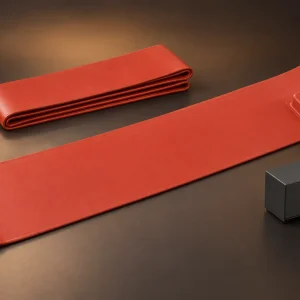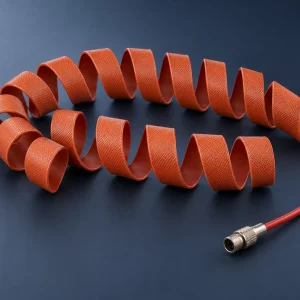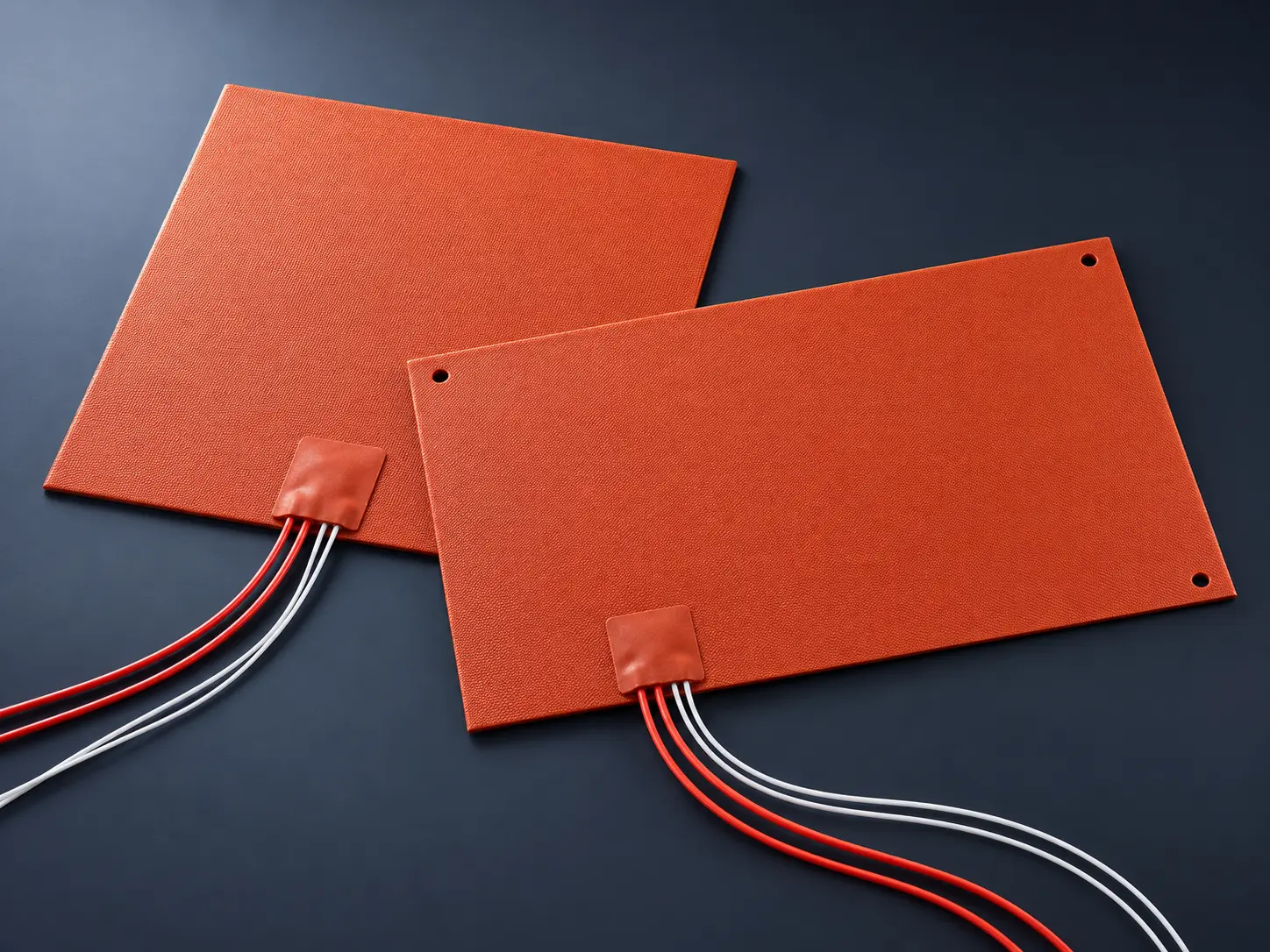
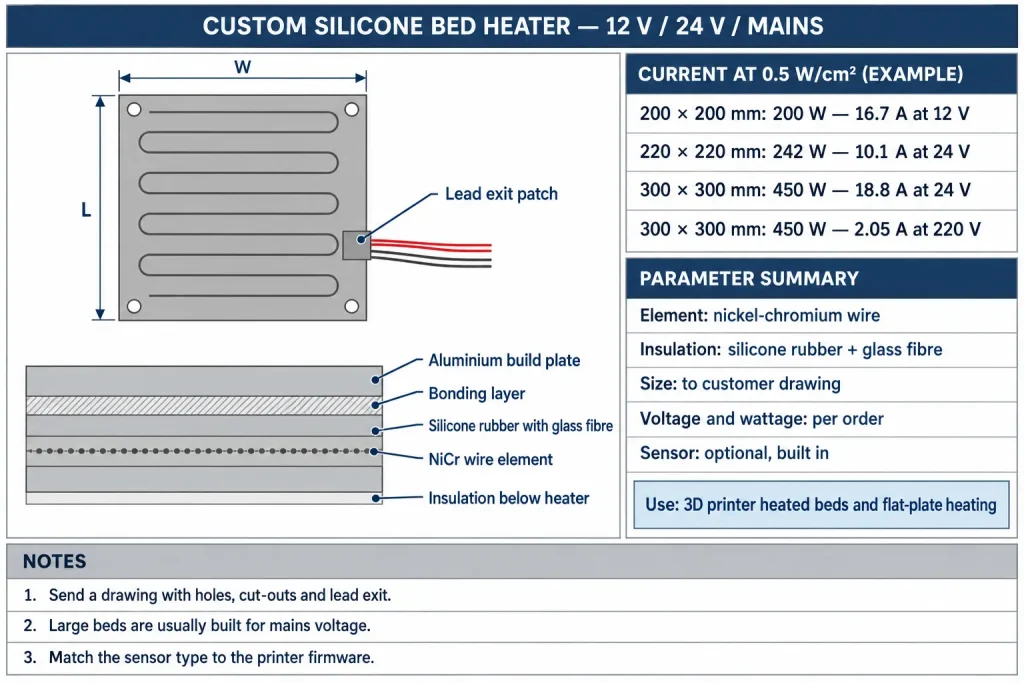
This silicone bed heater is a thin, flexible silicone rubber heating pad made to order for the heated bed of a 3D printer and for other flat plates that need even surface heating. Each heater is built to the outline of the bed, with the mounting holes and cut-outs the frame needs, and for the supply voltage and wattage the printer uses. The heating element is a nickel-chromium alloy wire laminated between layers of silicone rubber reinforced with glass fibre, and the pad is bonded to the underside of the build plate.
Because every silicone heater for a 3D printer is made to size, the order is defined by the bed drawing, the voltage, the wattage and the temperature sensor. The sections below explain how those choices relate, how much current a heated bed of a given size draws at 12 V, 24 V and mains voltage, and what to send with an enquiry.
Key Features
- Made to the bed outline, including holes and cut-outs
- Nickel-chromium alloy wire heating element
- Silicone rubber and glass fibre composite insulation
- Thin, flexible pad for bonding under a build plate
- Voltage and wattage specified per order
- Optional temperature sensor built into the pad
- Optional digital thermostat for stand-alone use
- Plain plug or leakage-protection plug on mains builds
Specification
| Parameter | Value |
|---|---|
| Product type | Flexible silicone rubber bed heater, made to order |
| Heating element | Nickel-chromium alloy resistance wire |
| Insulation | Silicone rubber with glass fibre reinforcement |
| Surface | Textured silicone face |
| Size and shape | To customer drawing; holes and cut-outs as required |
| Supply voltage | Specified per order (low-voltage DC or mains AC) |
| Wattage | Specified per order |
| Temperature sensor | Optional, built into the pad; type confirmed per order |
| Control options | Printer controller via sensor; or separate digital thermostat |
| Plug options (mains builds) | Plain plug or plug with leakage protection |
| Certification | Not stated for this item; confirm required documents per order |
Bed Size, Wattage and Current
The wattage of a heated bed decides how quickly it reaches printing temperature and how well it holds that temperature at the edges. It is normally set from the bed area and a chosen watt density. Larger beds need more total power, and on a low-voltage supply that power arrives as a large current. The table below shows what common bed sizes draw at one example watt density.
| Bed size | Power at 0.5 W/cm²* | At 12 V* | At 24 V* | At 220 V* |
|---|---|---|---|---|
| 200 × 200 mm | 200 W | 16.7 A | 8.3 A | 0.91 A |
| 220 × 220 mm | 242 W | 20.2 A | 10.1 A | 1.10 A |
| 300 × 300 mm | 450 W | 37.5 A | 18.8 A | 2.05 A |
| 400 × 400 mm | 800 W | 66.7 A | 33.3 A | 3.64 A |
*Calculated example only. Watt density, wattage and current for an actual heater are set by the order.
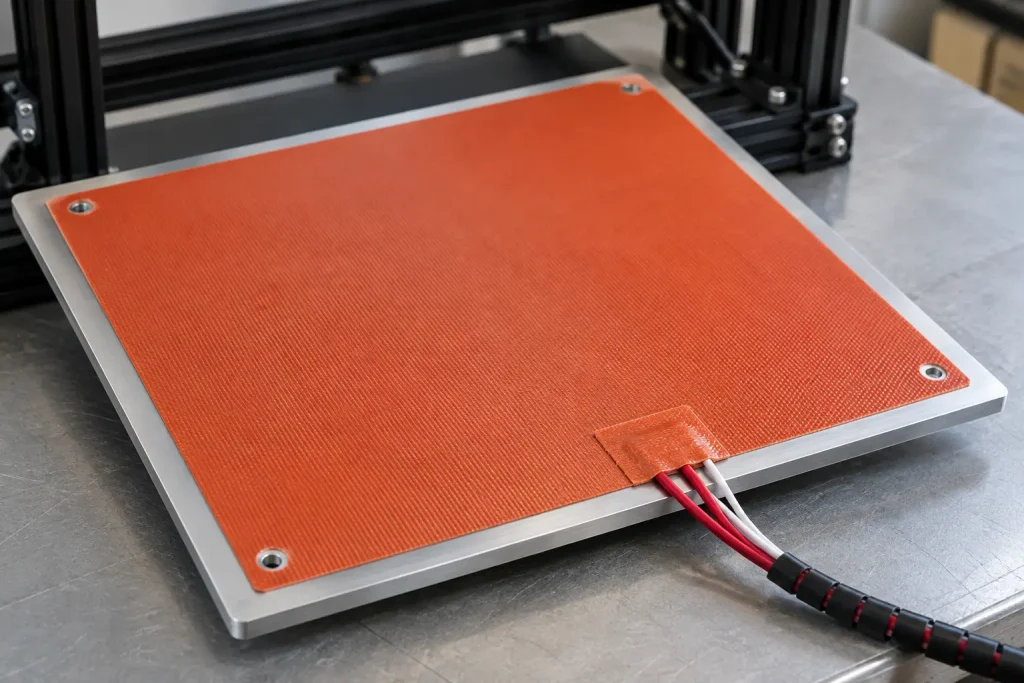
Low-Voltage or Mains 3D Printer Heated Bed
Small printers usually drive the bed heater directly from a 12 V or 24 V power supply through the printer’s control board. As the table shows, that works comfortably for small beds, but the current climbs quickly with size: a 300 × 300 mm 3D printer heated bed at 24 V can draw close to 19 A, beyond what many control boards are designed to switch. Large beds are therefore often built for mains voltage, which keeps the current low and lets the bed heat faster, with the printer board switching the heater through a solid-state relay.
A mains-voltage bed brings its own requirements. The build plate should be earthed, the wiring must be rated for mains, and a thermal cut-out on the bed is good practice as a backstop to the controller. State the voltage and how the bed will be switched at enquiry so that the heater, lead and connections can be matched to it.
Temperature Sensor and Control
In a printer, the controller reads a sensor on the bed and switches the heater to hold the set temperature. The pad can be built with a temperature sensor laminated into it, so the sensor sits at the heating surface and needs no separate mounting. The sensor type must match what the printer firmware expects, so name it at enquiry. For uses outside a printer, a separate digital thermostat is available to run the pad as a stand-alone heated plate.
Mounting the Silicone Bed Heater Under the Build Plate
The silicone pad is bonded to the underside of the aluminium build plate, which spreads the heat evenly across the printing surface. The bond must be continuous over the whole pad: any trapped air leaves a patch of the plate cooler and the pad above it hotter. Send the plate drawing with the position of mounting screws, levelling points and clips, so that the heater can be made with matching holes and cut-outs and the lead exit placed where the cables run. Insulation below the heater reduces heat lost downward and shortens warm-up.
Other Flat-Plate Uses
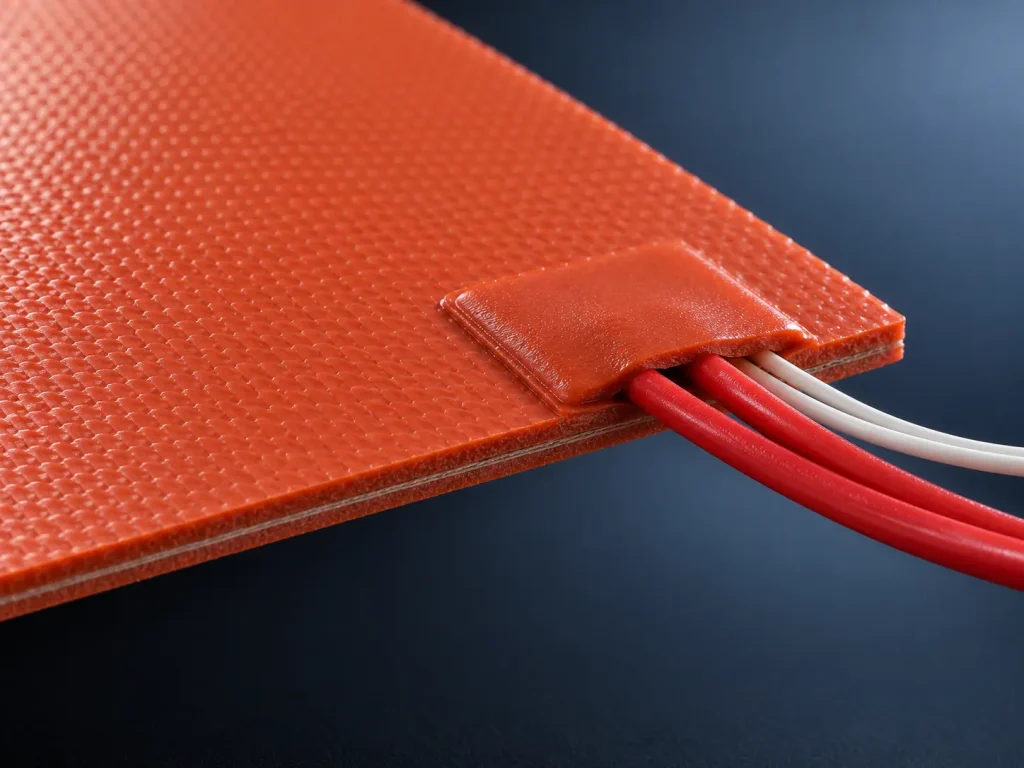
The same construction suits other flat surfaces that need even heat: platens, moulds, laboratory hot plates, laminating and heat-press plates, and equipment panels. For these, the specification is the same: outline, voltage, wattage, sensor and mounting method.
Common Procurement Errors
- Sending only overall dimensions. Holes, cut-outs and lead exit position need a drawing.
- Specifying 12 V for a large bed. A big bed at 12 V draws a current most control boards cannot switch.
- Not naming the sensor type. The sensor must match the printer firmware.
- Leaving wattage open. State wattage or the target temperature and warm-up time.
- Running a mains bed without earth or cut-out. Plan both before ordering.
RFQ Checklist
- Drawing of the heater outline with holes, cut-outs and lead exit position
- Supply voltage, AC or DC
- Required wattage, or bed temperature and warm-up time
- Temperature sensor: none, or the type required
- Mounting: bonded to plate, adhesive backing or plain back
- Lead length and termination; plug type for mains builds
- Thermostat, if the pad is used outside a printer
- Certification or test documents required for your market
- Quantity
Certification and Documentation
No certification is stated for this heater in the current specification. If your market or customer requires a specific approval or test report, state it at enquiry so that availability can be confirmed for the ordered size, voltage and sensor before quotation. Applicable RoHS / REACH documentation can be confirmed according to the ordered construction.
Related Categories
Low-voltage heating pads, heating tapes, spiral heat trace and other silicone heaters are listed in the Silicone Rubber Heaters category, part of the High Temperature Wire Cable range.