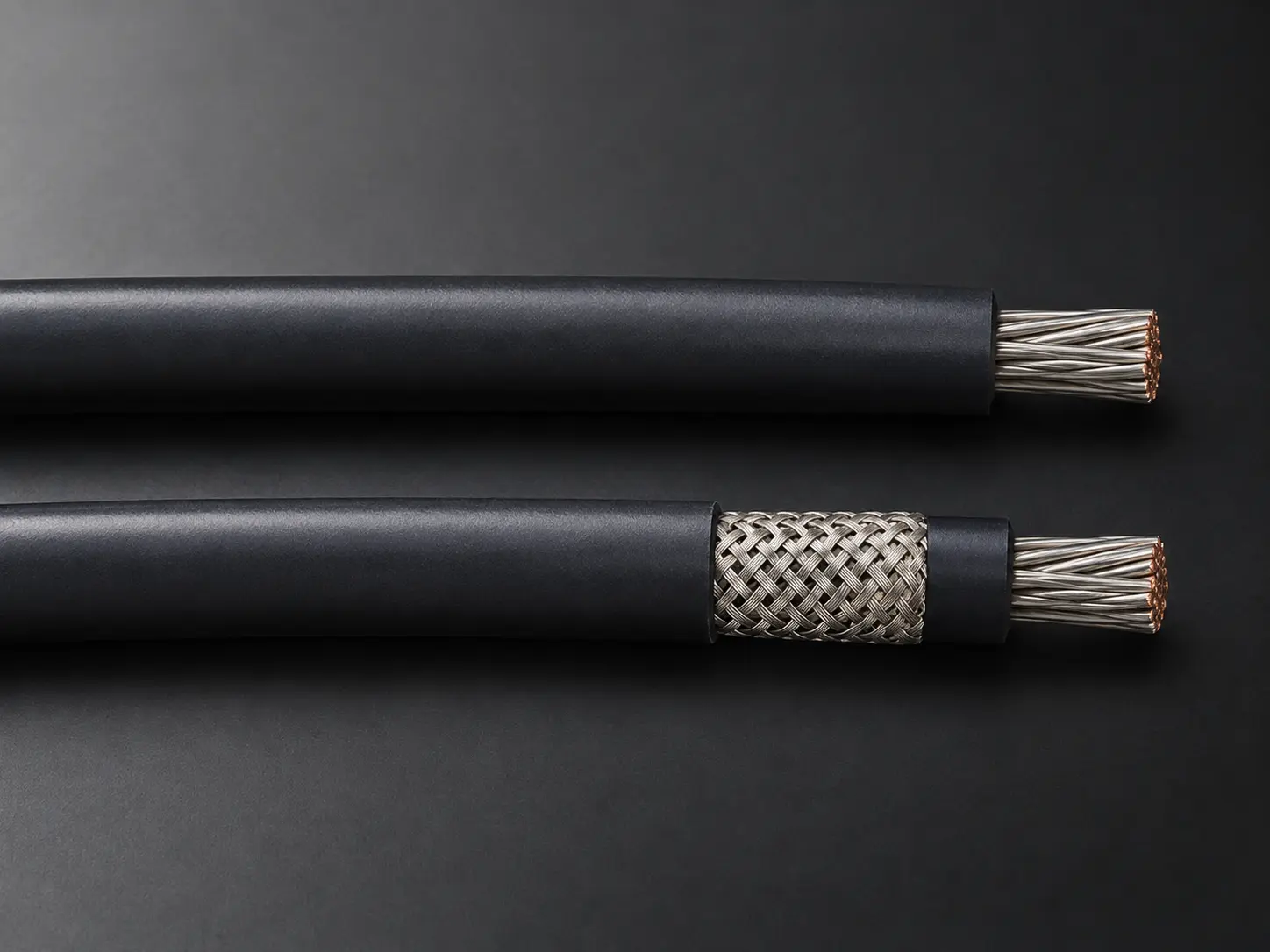
UL 3239 High Voltage DC Wire with Optional Shield
UL AWM Style 3239 is a high voltage DC wire construction with extruded or non-extruded insulation, carrying maximum ratings of 200°C and 60,000 Vdc. Among its defined construction variables, the Style permits an optional shield — and whether your project requires that shield, and what shield construction the drawing specifies, is the central procurement question this page addresses. This is not a generic UL 3239 overview or an application-specific page; it is built around the shield decision and the surrounding construction confirmation that a UL 3239 RFQ requires.
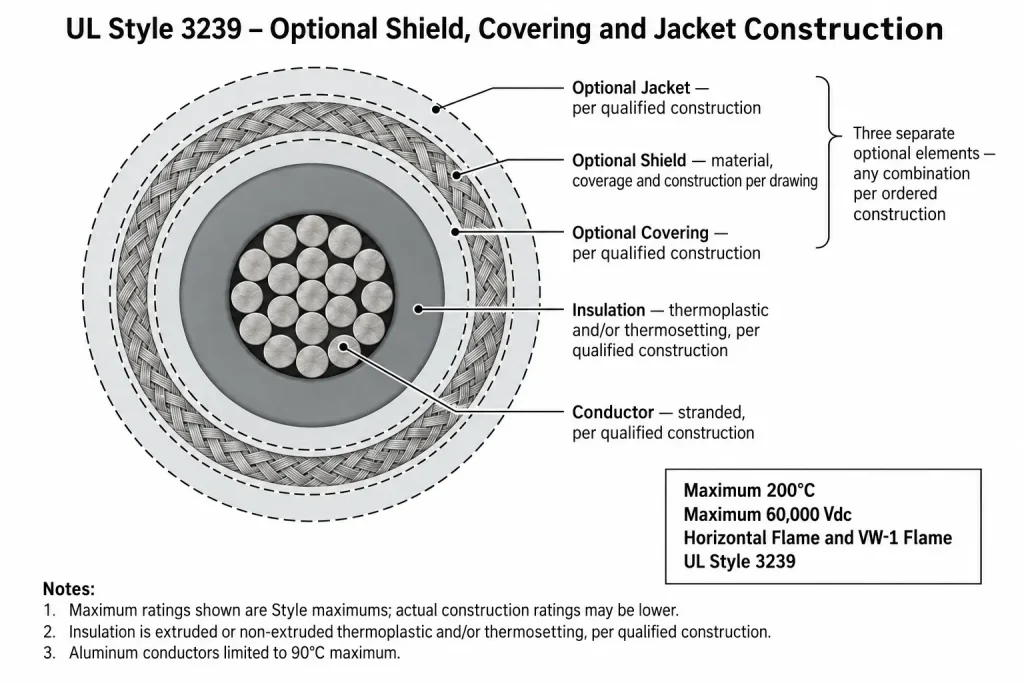
The Confirmed UL 3239 Construction
| Parameter | UL 3239 |
|---|---|
| UL AWM Style | 3239 |
| Description | High voltage DC wire with extruded or non-extruded insulation |
| Maximum Temperature | 200°C (construction-dependent; see below) |
| Maximum Voltage | 60,000 Vdc (DC rating — construction-dependent) |
| Flame | Horizontal flame and VW-1 flame |
| Insulation | Extruded or non-extruded thermoplastic and/or thermosetting — confirmed per qualified construction |
| Covering | Optional — confirmed per qualified construction |
| Shield | Optional — confirmed per qualified construction |
| Jacket | Optional — confirmed per qualified construction |
| UL-Defined Use | Internal wiring of TV receivers, or where the acceptability has been determined by Underwriters Laboratories |
The Optional Shield Decision
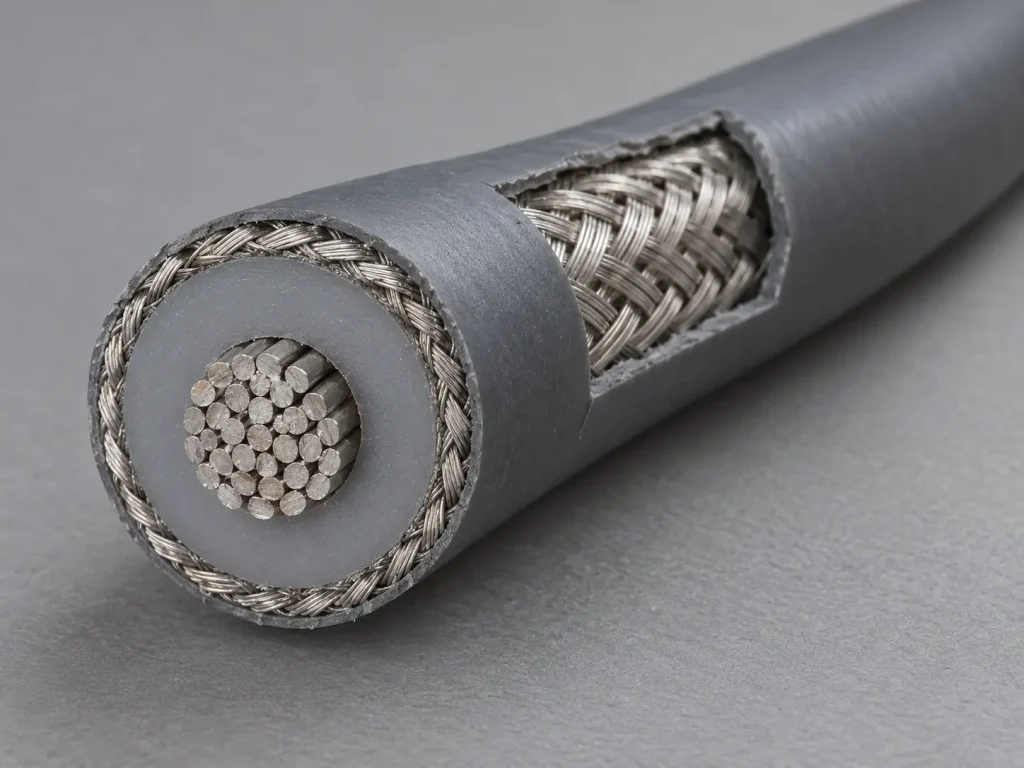
UL Style 3239 lists the shield as an optional construction element, with the specific shield details determined by the qualified construction rather than fixed at the Style level. This means a UL 3239 wire may be supplied with or without a shield, and the presence of a shield is not implied by the Style number alone. When a drawing or specification calls for “shielded UL 3239,” that phrase by itself does not define the construction — the shield material, coverage, and configuration must come from the drawing or the qualified ordered construction. This page does not publish a default shield material, braid coverage percentage, foil specification, drain-wire construction, or shielding-effectiveness figure, because none of these are established by the Style-level record.
The practical consequence for procurement is direct: if two suppliers quote “UL 3239 shielded wire” without a defined shield construction, those quotations may represent materially different products. Specifying shield requirements explicitly — or stating clearly that no shield is required — is one of the highest-value details a buyer can include in a UL 3239 RFQ.
Covering, Shield and Jacket Are Three Separate Optional Elements
UL Style 3239 lists covering, shield, and jacket as three independent optional construction elements. They are not interchangeable terms and they are not a single option. A construction may include a covering without a shield, a shield without a jacket, or any other combination the qualified construction supports. Confusing an optional covering with an optional jacket — or assuming that requesting a shield automatically includes a jacket over it — is a common source of construction mismatch between a drawing and a supplied product. Each element should be stated separately in the RFQ as required or not required.
Maximum Ratings Are Not Automatically the Construction’s Ratings
UL 3239’s 200°C and 60,000 Vdc figures are the Style’s maximum ratings, and the Style record explicitly directs that actual temperature and voltage ratings are determined by the specific construction. A given qualified UL 3239 construction may carry a lower temperature rating, a lower voltage rating, or both. This page does not state that every UL 3239 wire operates at 200°C or 60,000 Vdc. Your required operating temperature and required operating voltage should be stated in the RFQ so the applicable qualified construction can be confirmed — not assumed from the Style’s maximum figures.
The 60,000 Vdc figure is also a DC rating. This page does not present it as an AC voltage rating, and it should not be treated as equivalent to an AC withstand or working-voltage figure in a design calculation.
UL 3239 Is Not Universally a Silicone-Insulated Wire
This correction matters for accurate specification. The Style 3239 insulation is defined as extruded or non-extruded thermoplastic and/or thermosetting, with details determined by the qualified construction. Silicone rubber is a thermosetting material and may be used in a particular qualified UL 3239 construction, but the Style itself does not establish silicone as its universal insulation system. This page therefore describes UL 3239 as a high voltage DC wire construction, not as “silicone high voltage wire” at the Style level. If a specific insulation material is required by your design — silicone, another thermoset, or a thermoplastic — state that material in your RFQ so the corresponding construction can be confirmed.
Conductor Options and the Aluminum Temperature Limit
UL Style 3239 permits several distinct conductor categories: 24–10 AWG copper or nickel; 12–10 AWG aluminum; 27–20 AWG resistance wire; or 24–10 AWG solid or stranded coated high-strength copper with a minimum 90% conductivity. Solid or stranded construction is permitted where applicable to the conductor category. Copper conductors may be tinned, silver plated, nickel plated, heat bonded, or overcoated.
One conductor-dependent limit deserves specific attention: aluminum conductors are permitted only for a 90°C maximum operating temperature. This means the Style’s 200°C maximum does not apply to an aluminum-conductor construction. Buyers specifying an aluminum UL 3239 construction should confirm that the 90°C limit is compatible with their equipment’s internal temperature conditions before proceeding.
The Confirmed Use Boundary
UL Style 3239’s confirmed Use is internal wiring of TV receivers, or where the acceptability has been determined by Underwriters Laboratories. The second clause is significant for procurement: applications beyond TV-receiver internal wiring are not automatically within scope simply because a high-voltage internal section exists — acceptability for such applications is subject to determination through the applicable UL evaluation. This page does not present UL 3239 as generally approved for any high-voltage internal assembly, and does not describe a broad “specialized internal electrical assemblies” application category as if it were a UL-defined use.
What UL 3239 Does Not Automatically Define
The Style data does not automatically define: the specific insulation material for a given construction, shield material, shield coverage, shielding effectiveness, drain-wire construction, covering material, jacket material, actual temperature rating, actual voltage rating, conductor material, plating, strand count, conductor resistance, ampacity, finished OD, bend radius, flexibility class, terminal compatibility, connector compatibility, standard colour, reel length, cut-length tolerance, MOQ, stock availability, or lead time. These remain drawing, RFQ, or qualified-ordered-construction parameters.
Common RFQ Gaps for UL 3239 Constructions
Certain specification fields are frequently left out of an initial enquiry and typically require a follow-up before an accurate quotation can be issued. These are common information gaps, not observations about any particular buyer: using “shielded” without defining the required shield construction; omitting conductor material; omitting conductor plating; assuming every conductor option supports 200°C when aluminum is limited to 90°C; confusing the optional covering with the optional jacket; treating 60,000 Vdc as an AC rating; assuming the Style’s maximum ratings apply to every construction; or omitting finished OD where routing space is controlled. Resolving these items before quotation reduces specification mismatch between the drawing and the supplied construction.
RFQ Checklist for UL 3239 with Optional Shield
To request an accurate quotation, please provide:
- UL AWM Style 3239
- Required operating voltage
- Required temperature
- Conductor size
- Conductor category (copper, nickel, aluminum, resistance wire, or coated high-strength copper)
- Solid or stranded, where applicable
- Conductor plating / finish, where required
- Required insulation system
- Shield required: yes / no
- Shield requirements, if controlled by the drawing
- Covering required: yes / no
- Jacket required: yes / no
- Insulation colour
- Finished OD / maximum OD, if controlled
- Termination details
- Cut length or reel requirement
- Quantity
- Destination
- Documentation requirements
- End-product / internal-wiring context needed for construction confirmation
Applicable RoHS / REACH documentation can be confirmed according to the ordered construction.
See our UL 3239 High Voltage Silicone Wire category, our High Voltage Wire range, or our AWM Wire category for related constructions.