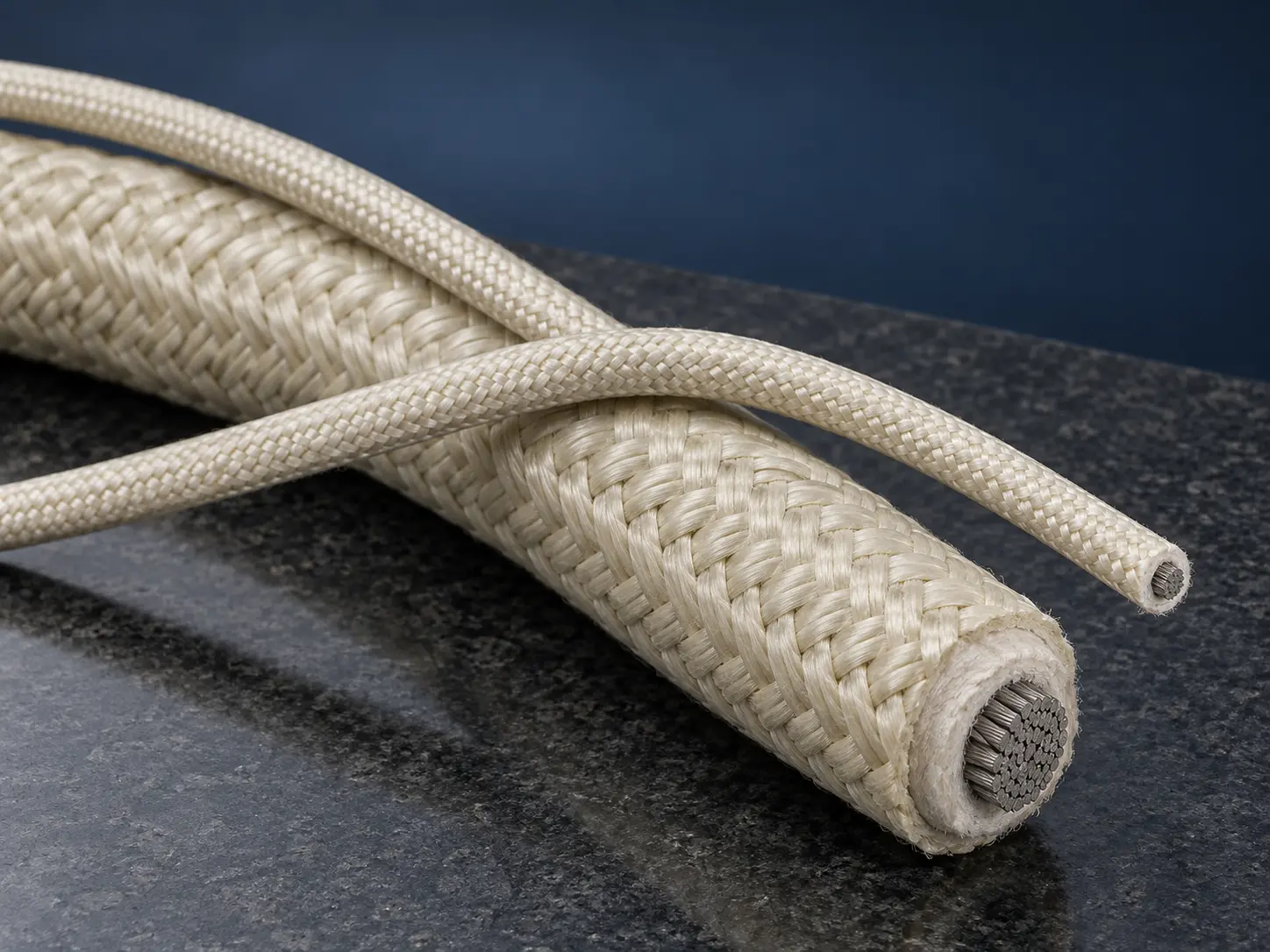
UL 5107 Mica Glass Wire for Vietnam and Indonesia
This is the regional procurement page for UL AWM Style 5107 mica glass wire for buyers in Vietnam and Indonesia. It is written for equipment OEM buyers, sourcing teams, maintenance departments and distributors whose drawing, BOM or equipment specification calls for Style 5107.
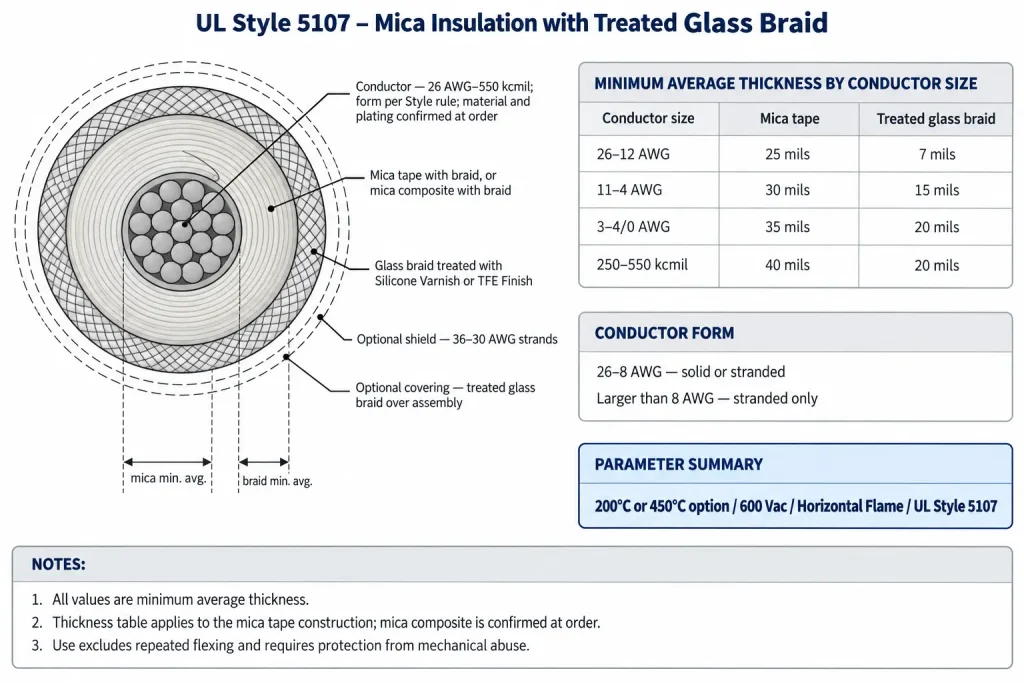
The Style record describes Style 5107 as a single or multiple conductor construction with other-than-extruded insulation, rated 600 Vac with temperature rating options of 200°C or 450°C, and a Horizontal Flame designation. The conductor range is 26 AWG–550 kcmil, the insulation is mica tape with braid or a mica composite with braid, and the thickness requirement changes across four conductor-size groups.
Two points shape the rest of this page. First, the temperature is an option rather than a fixed value, so 200°C and 450°C constructions both exist within the Style and the applicable rating is confirmed for the order. Second, the conductor range extends well beyond the AWG sizes commonly listed for this Style, up to 550 kcmil, with a form rule that changes above 8 AWG.
Confirmed UL Style 5107 Construction and Ratings
| Parameter | Requirement |
|---|---|
| UL AWM Style | 5107 |
| Product Description | Single or Multiple conductor with other-than-extruded insulation |
| Temperature Rating | 200°C or 450°C |
| Voltage Rating | 600 Vac |
| Flame | Horizontal Flame |
| Style Conductor Range | 26 AWG–550 kcmil |
| Conductor Form | Solid or stranded for sizes 26–8 AWG; stranded only for sizes larger than 8 AWG |
| Insulation | Mica tape with braid, or mica composite with braid; for a mica composite construction the applicable requirements are confirmed from the qualified construction |
| Optional Assembly | Two or more insulated conductors may be cabled together with a maximum O.D. of 1.500 inches; a mica glass binder and/or fiberglass fillers may be employed |
| Optional Covering | Treated glass braid over the assembly |
| Optional Shield | 36–30 AWG strands |
| Marking | General |
| Official Use | Internal Wiring of high-temperature equipment where not subjected to repeated flexing and protected from mechanical abuse, and where the acceptability, including current-carrying capacity, has been determined by Underwriters Laboratories Inc. |
| Documentation | UL marking and compliance documents according to the confirmed ordered construction |
| RoHS / REACH | Applicable RoHS / REACH documentation can be confirmed according to the ordered construction |
| Conductor size | Total mica tape layers — minimum average thickness | Glass braid treated with Silicone Varnish or TFE Finish — minimum average thickness |
|---|---|---|
| 26–12 AWG | 25 mils | 7 mils |
| 11–4 AWG | 30 mils | 15 mils |
| 3–4/0 AWG | 35 mils | 20 mils |
| 250–550 kcmil | 40 mils | 20 mils |
Ten points to clarify about the tables above:
- 200°C and 450°C are alternative rating options. One applies to a given construction and is confirmed for the order.
- 600 Vac is the voltage rating. The record gives no DC rating.
- All eight construction values are minimum average thickness values. The record states no minimum-at-any-point value for this Style.
- The four groups are separate, and values from one group do not apply to another.
- The thickness table corresponds to the mica tape route. Where a mica composite construction is used, the applicable requirements are confirmed from the qualified construction.
- The conductor range runs to 550 kcmil, not to 4 AWG, and the form rule changes above 8 AWG.
- The Style covers a single or multiple conductor construction, and the cabled assembly is an optional provision.
- 1.500 inches is the maximum O.D. under that assembly provision, not the outer diameter of a single conductor.
- The optional shield is described in the record as 36–30 AWG strands. No shield material is specified in this Style record, and none is supplied here.
- Conductor material, plating, strand count, strand diameter, lay length, finished OD, conductor resistance, bend radius and ampacity are not defined by the Style.
The 200°C and 450°C Rating Options
A Style 5107 construction carries the temperature rating confirmed for it. An enquiry that names only the Style leaves that open, and a listing that presents Style 5107 as a 450°C-only product omits half of the record. Buyers whose equipment specification controls a wire temperature rating should state 200°C or 450°C, or supply the drawing that states it.
Neither option is described here as continuous, sustained or continuous-duty, and no service life, thermal cycling count or thermal margin is derived from either. A high temperature rating is also not a fire-survival property: the flame designation is Horizontal Flame, and fire-resistant, fireproof and circuit-integrity descriptions are not claimed, nor are VW-1, FT1 or vertical flame designations.
Conductor Range from 26 AWG to 550 kcmil
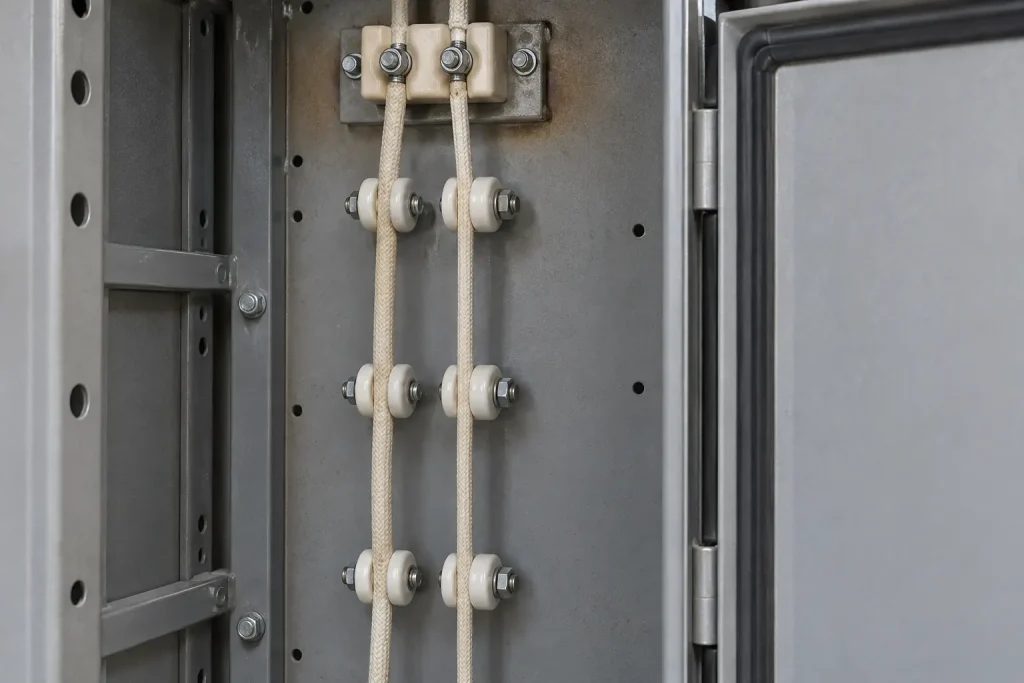
The Style range spans 26 AWG at the fine end to 550 kcmil at the heavy end. That breadth is easy to lose: a listing that stops at 4 AWG drops both the 3–4/0 AWG group and the 250–550 kcmil group, each of which carries its own thickness requirement.
The conductor form rule is equally specific. Sizes 26–8 AWG may be solid or stranded, and sizes larger than 8 AWG are stranded only. Describing the whole Style as stranded, or as offering a free choice of form across the range, misstates one case or the other.
Conductor size does not assign circuit function or current capacity. The Style designates no size as a signal, control or power conductor, gives no ampacity for any size, and none is inferred here from conductor size, the 600 Vac rating or either temperature option. Style scope is also not inventory: not every size, rating option or configuration is regularly produced or held, and availability is confirmed per enquiry.
Mica Tape with Braid, or Mica Composite with Braid
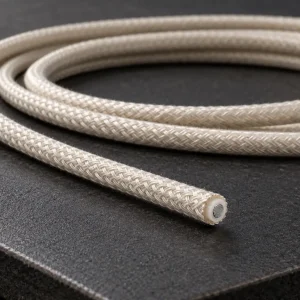
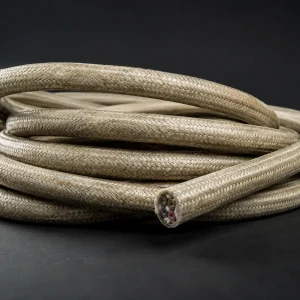
The insulation entry offers two routes: mica tape with braid, or a mica composite with braid. The published thickness table belongs to the mica tape route, while the composite route refers to separate requirements in the record. A buyer whose drawing calls for a composite construction should say so, and the applicable requirements are then confirmed for that qualified construction rather than assumed to match the tape values.
In both routes the braid is a glass braid treated with Silicone Varnish or TFE Finish. That is a braid treatment, not a separate insulation system, and this page does not restate it as silicone insulation or PTFE insulation.
The four thickness groups rise with conductor size, from 25 mils mica and 7 mils treated braid at 26–12 AWG, to 40 mils mica and 20 mils treated braid at 250–550 kcmil. The braid requirement is identical at 20 mils in the top two groups while the mica requirement continues to rise, so the two values are not read as a single proportional build.
Optional Assembly, Covering and Shield
Three optional provisions appear in the record, and each stays optional here.
Assembly. Two or more insulated conductors may be cabled together within a maximum O.D. of 1.500 inches, with a mica glass binder and/or fiberglass fillers employed as required. The number of conductors, the binder and the fillers are configuration-dependent and confirmed from the drawing or BOM.
Covering. A treated glass braid may be applied over the assembly. It is not automatic, and the record assigns it no performance function.
Shield. An optional shield of 36–30 AWG strands is permitted. The record specifies the strand size range only; it does not state a shield material, and this page does not add one. No screening performance is claimed.
Official Use and Its Three Elements
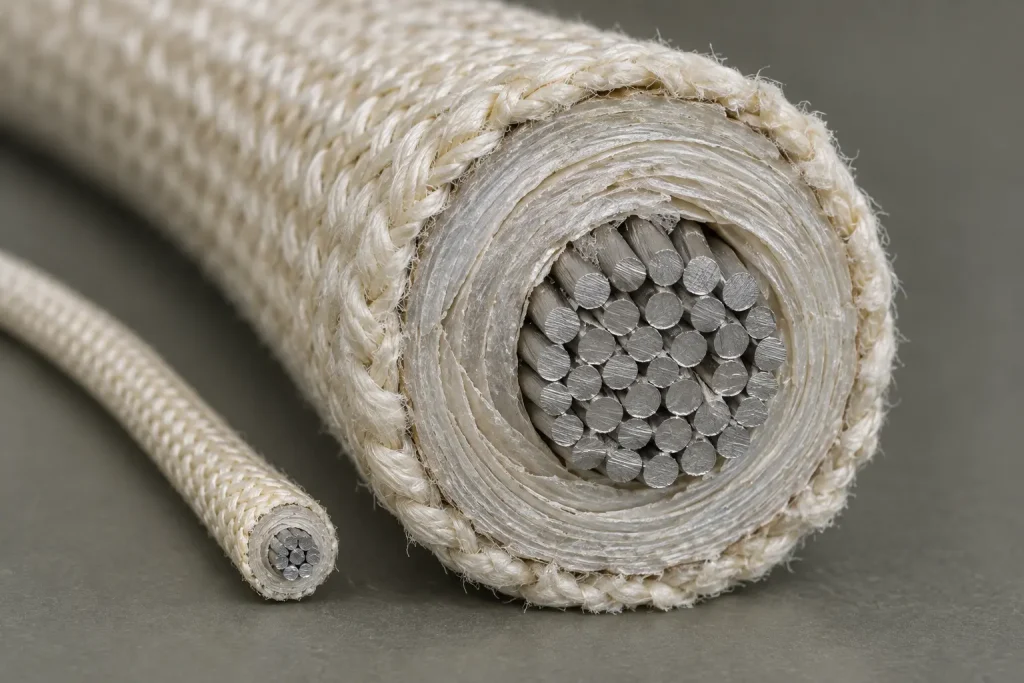
The official Use is “Internal Wiring of high-temperature equipment where not subjected to repeated flexing and protected from mechanical abuse, and where the acceptability, including current-carrying capacity, has been determined by Underwriters Laboratories Inc.”
Internal wiring of high-temperature equipment. The Use is internal, and it is not extended to building or field wiring, external equipment wiring, portable cord or installation cable. Buyer contexts may include internal wiring in thermal equipment such as furnaces, kilns, ovens or dryers, but those are the buyer’s own equipment contexts rather than UL-approved uses, and compliance of the finished equipment is established at the equipment level.
Not subjected to repeated flexing. The wire is not presented for continuous flexing, dynamic routing, drag chains, hinged routes, moving equipment doors or robotic motion.
Protected from mechanical abuse. Protection at the routing position comes from the equipment design. The construction includes a braid and may include a covering or a shield, but the record states no mechanical protection, abrasion or compression function for any of them, so none is presented here as satisfying this condition, whether at conduit entries, routing clips or contact points.
The statement that acceptability, including current-carrying capacity, has been determined by Underwriters Laboratories Inc. is part of the Use. This page therefore publishes no ampacity or current-by-size figure. Current-carrying capacity for a given installation is evaluated through the buyer’s equipment design and the applicable approval process.
Dimensions and Material Comparisons
The Style publishes minimum average thicknesses and one maximum O.D. for the cabled assembly provision. It does not publish a finished outer diameter for any individual size, an OD tolerance, a conductor resistance, a minimum bend radius or a flex rating. Finished dimensions depend on the actual conductor construction, the insulation route, the braid construction, any covering or shield, the number of conductors and fillers in an assembly, and manufacturing dimensions, so an OD calculated from a generic conductor diameter plus the minimum thicknesses is not a valid product dimension.
This page also draws no comparison between mica and other insulation systems. Temperature ratings for silicone, fluoropolymer or other AWM constructions describe those constructions; they are not failure temperatures, and no claim is made here that another material decomposes, is destroyed or becomes unusable at a given temperature. Material and Style selection follows the drawing, the equipment specification and the required UL construction rather than a comparison table, and where a drawing specifies Style 5107, that is the Style quoted.
How to Specify UL 5107 for a Vietnam or Indonesia RFQ
A complete Style 5107 enquiry combines the Style requirement with the parameters the Style leaves open: the AWG or kcmil size, the conductor form within the 26–8 AWG and larger-than-8-AWG rule, conductor material and plating where the drawing controls them, single or multiple conductor construction, the required temperature option, maximum OD or OD tolerance where controlled, the internal wiring location, how the wire is mechanically protected there, whether repeated flexing is present, required marking, compliance documents, quantity, packaging, destination and Incoterm.
Current-carrying capacity is not fixed by this page. It is evaluated by the buyer’s equipment design and the applicable approval process, and a stated circuit requirement can be passed to engineering review rather than converted into an ampere figure here.
Vietnam and Indonesia Procurement Context
Vietnam and Indonesia are the procurement and destination context for this page. Buyers in both markets may search for Style 5107 when a drawing or BOM requires a 600 Vac mica-insulated AWM wire with a 200°C or 450°C rating option, whether for an equipment build, an export equipment programme or a maintenance replacement. In each case the final Style selection comes from the drawing, BOM or engineering specification rather than from a supplier listing.
CableApex coordinates international sales, RFQ communication, export documentation review and order confirmation for qualified AWM wire supply. No industry demand, usage practice or named facility is claimed for either market, and destination city or port, Incoterm, packaging and quantity are handled per enquiry rather than published as fixed terms.
What Style 5107 Does and Does Not Define
Style 5107 defines:
- 200°C or 450°C rating options and a 600 Vac voltage rating
- Horizontal Flame
- a single or multiple conductor construction with other-than-extruded insulation
- conductor range 26 AWG–550 kcmil, solid or stranded for 26–8 AWG and stranded only above 8 AWG
- mica tape with braid, or mica composite with braid, the braid treated with Silicone Varnish or TFE Finish
- minimum average mica thickness of 25, 30, 35 and 40 mils by size group
- minimum average treated glass braid thickness of 7, 15, 20 and 20 mils by size group
- an optional cabled assembly to a maximum O.D. of 1.500 inches, with optional binder and fillers
- an optional treated glass braid covering over the assembly
- an optional shield of 36–30 AWG strands
- Marking: General
- the Use limitations on repeated flexing and mechanical abuse, with acceptability including current-carrying capacity determined by Underwriters Laboratories Inc.
Style 5107 does not universally define:
- conductor material, plating, strand count, strand diameter or lay length
- a shield material
- finished OD of an individual conductor, OD tolerance, bend radius, flex cycles or flex class
- conductor resistance, ampacity, current rating or metric cross-section
- a DC voltage rating
- a mechanical protection function for the braid, covering or shield
- equipment ambient temperature at any routing position
- furnace, kiln, oven or heat-treatment suitability as an approved use
- any comparison with, or substitution for, another insulation system or UL Style
- colour or identification, reel length, MOQ, stock, lead time, production capacity or shipping term
Common Procurement Errors
- Presenting Style 5107 as 450°C only, or writing “450°C continuous”.
- Publishing the range as 22 AWG–4 AWG, or otherwise stopping it at 4 AWG.
- Describing the whole Style as stranded, or ignoring the form rule above 8 AWG.
- Assuming the conductor is nickel-plated or bare copper.
- Applying one size group’s mica or braid value to another group.
- Reading the mica tape thickness table as applicable to a mica composite construction.
- Quoting a minimum-at-any-point value the record does not contain.
- Assigning a material to the optional shield, or treating the shield, covering or assembly as standard.
- Treating 1.500 inches as the OD of a single conductor.
- Deriving a finished OD from minimum thickness values.
- Deriving ampacity from conductor size, or describing large sizes as heavy power feeds.
- Presenting another material’s temperature rating as its failure or decomposition temperature.
- Presenting furnace, kiln or heating-zone wiring as an approved use.
- Relying on the braid instead of protecting the wire from mechanical abuse, or using it where repeated flexing is present.
- Treating component Style recognition as equipment-level compliance.
RFQ Information to Confirm
Style, ratings and construction
- UL AWM Style 5107 requirement
- Required temperature option: 200°C or 450°C
- 600 Vac requirement, or the application-specific voltage requirement within the Style rating
- AWG or kcmil size
- Conductor form, solid or stranded, where the Style permits a choice
- Single or multiple conductor construction
- Whether a mica tape or mica composite construction is required
- Whether the optional shield or the optional covering is required
Conductor
- Conductor material and plating requirement, if controlled by the drawing
- Strand construction, if controlled
- Maximum conductor resistance, if controlled
Dimensions and identification
- Maximum OD and OD tolerance, if controlled
- Colour, marking or conductor identification requirement
Application references
- Internal wiring location and the mechanical protection method at that position
- Whether repeated flexing is present
- The circuit requirement for engineering review, rather than a self-derived ampacity
- Drawing, BOM or equipment specification
Commercial
- Quantity and packaging preference
- Vietnam or Indonesia destination and requested Incoterm
- Requested UL marking and compliance documents, including any RoHS / REACH documentation requirement
UL Marking and Documentation
CableApex is an international sales and export company and does not hold a UL File for Style 5107. Supplied wire is UL-recognized component wire where supplied under a qualified manufacturing scope, with UL marking according to the confirmed ordered construction. The Style record lists Marking as General.
Applicable RoHS / REACH documentation can be confirmed according to the ordered construction. CSA, FT1, VW-1, CE and dual UL/CSA designations are not claimed here.
Commercial, origin, compliance and transport documents are identified during quotation and confirmed according to the order. They are not supplied as a fixed package with every shipment.