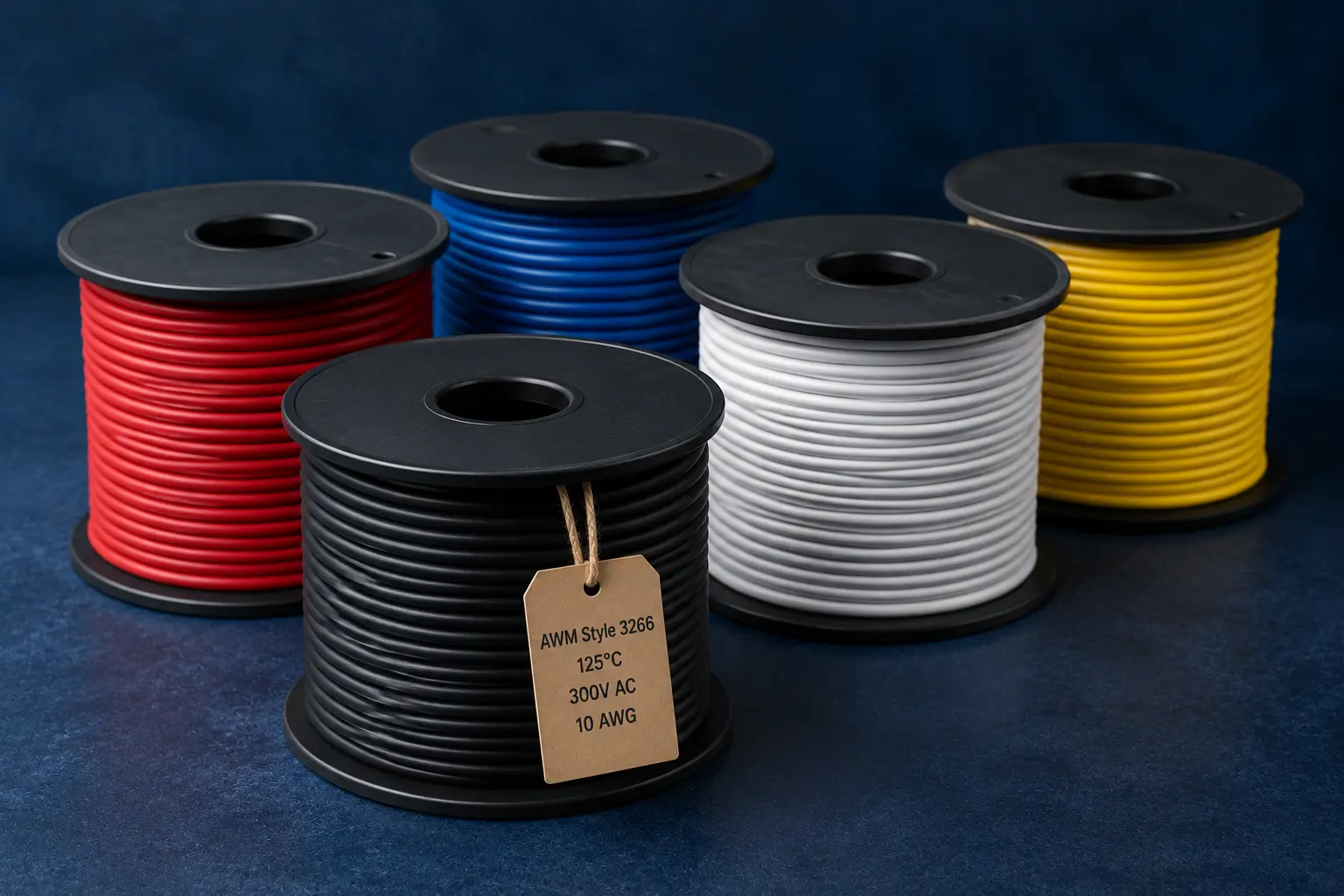
UL 3266 XLPE Wire — 10 AWG / 125°C / 300V AC — Germany Export
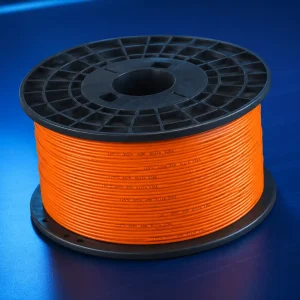
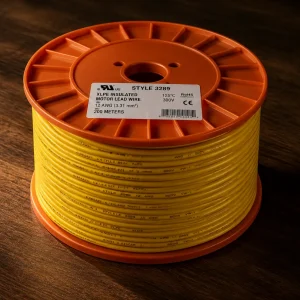
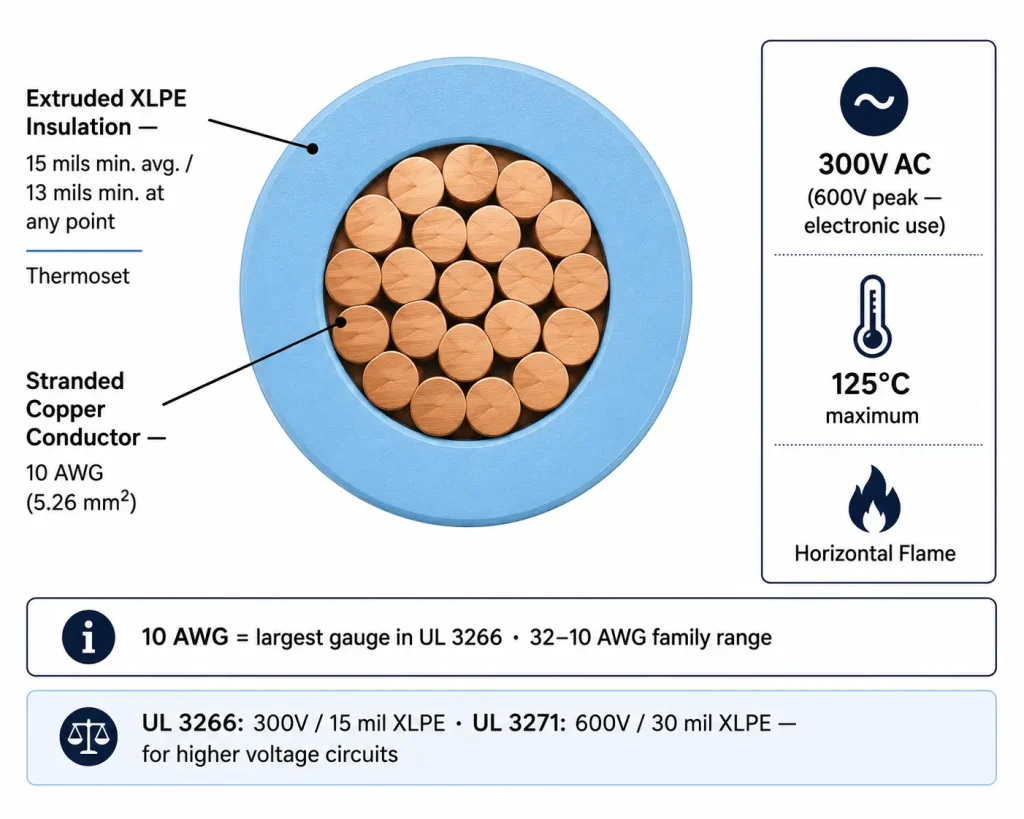
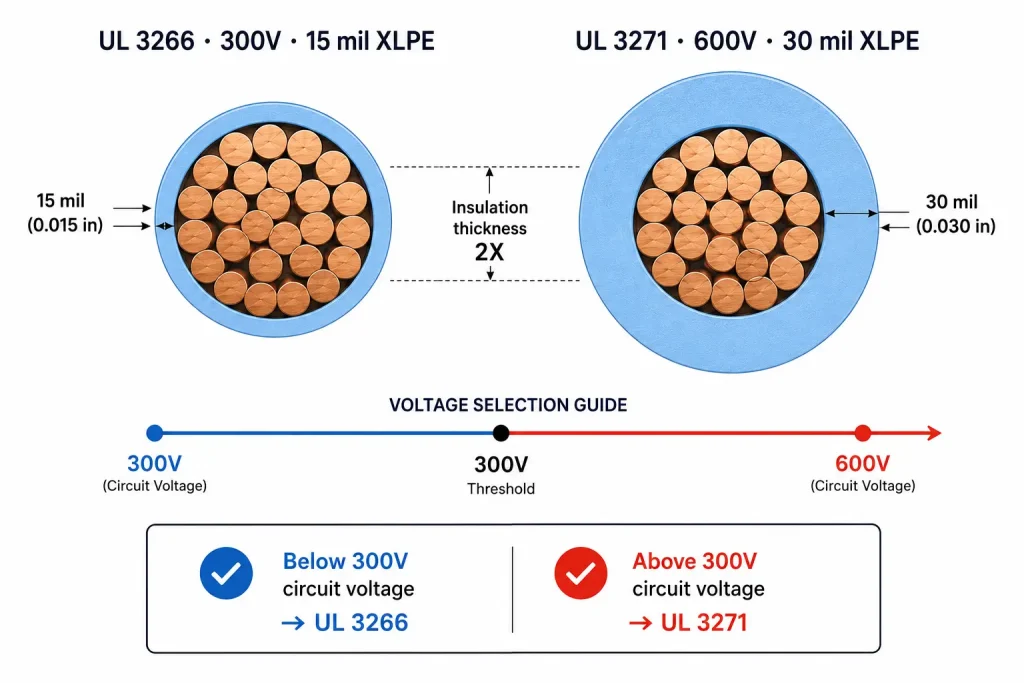
UL AWM Style 3266 is a single-conductor extruded XLPE insulated wire rated at 125°C and 300V AC under UL Subject 758. The conductor range covers 32 AWG to 10 AWG — with 10 AWG (approximately 5.26 mm²) being the largest gauge permitted under this Style. For conductor sizes larger than 10 AWG at 600V, see UL 3271 (125°C / 600V, 30 AWG–2000 kcmil). For 600V XLPE at 105°C, see UL 3666.
German engineers searching UL 3266 XLPE Draht 10 AWG Deutschland are typically working at the upper current end of the UL 3266 application range. At 10 AWG, the cross-section supports higher continuous current than smaller UL 3266 gauges, covering applications that the smaller gauges cannot serve — while remaining within UL 3266’s 300V voltage limit. For circuits requiring 600V, UL 3271 is the required upgrade. Export to Germany: CIF Hamburg or Rotterdam, transit 25–30 days.
Technical Specifications — UL AWM Style 3266 / 10 AWG
| Parameter | Value |
|---|---|
| UL AWM Style | 3266 |
| UL Subject | 758, Section 3 |
| Conductor Size (this product) | 10 AWG (5.26 mm² nominal) — largest gauge in UL 3266 |
| Full Style AWG Range | 32 AWG – 10 AWG, solid or stranded round |
| Temperature Rating | 125°C maximum |
| Voltage Rating | 300V AC (600V peak — for electronic use only, when tag indicates) |
| Insulation Material | Extruded XLPE (cross-linked polyethylene) — thermoset |
| Insulation Thickness | 15 mils (0.38 mm) min avg / 13 mils (0.33 mm) min at any point |
| Conductor Material | Bare or tinned copper, solid or stranded round |
| Flame Rating | Horizontal flame |
| UL Recognition | UL Recognized Component — file on record |
| Permitted Use | Internal wiring; tags may indicate 600V peak — for electronic use only |
| Marking | Per UL Subject 758 marking requirements |
| RoHS / REACH | Documentation available on request |
Current-Carrying Capacity — 10 AWG XLPE at 125°C
10 AWG conductor at the 125°C temperature class supports higher continuous current than the same gauge at 90°C or 105°C. NEC Table 310.16 ampacity values provide a reference for engineers sizing internal panel wiring:
- 10 AWG at 60°C insulation: 30A continuous
- 10 AWG at 75°C insulation: 35A continuous
- 10 AWG at 90°C insulation: 40A continuous
- 10 AWG XLPE at 125°C: higher than 90°C class — exact internal cabinet derating depends on bundling, conduit fill, and ambient per UL 508A Table 28.1
For German engineers familiar with DIN VDE 0298-4 ampacity tables: 10 AWG UL 3266 covers internal panel wiring applications comparable to 4 mm² H07V-K at 70°C in terms of conductor cross-section, but with a higher temperature rating. Note that H07V-K is rated 450/750V at 70°C under HD 21.3, while UL 3266 is 300V at 125°C under UL Subject 758 — for circuits above 300V, UL 3271 at 600V is required.
Application Contexts in German Equipment Export
UL 508A panel power distribution — branch circuits below 300V
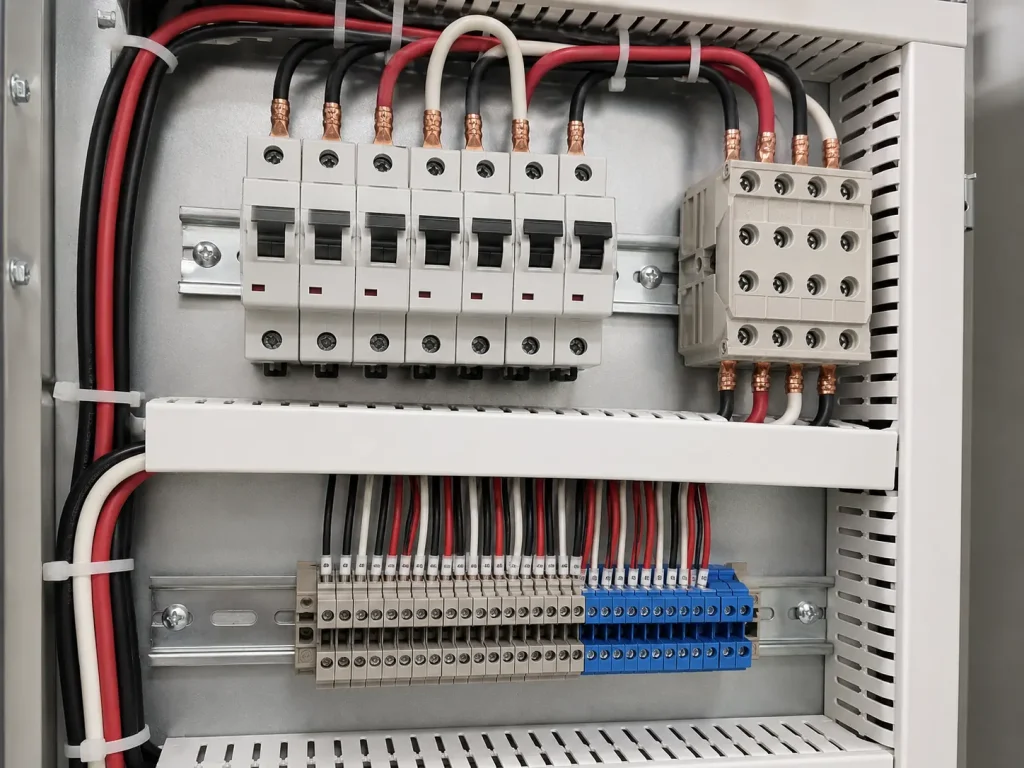
Inside German UL 508A control panels exported to North America, 10 AWG UL 3266 is used for 24V DC and 120V AC branch circuit distribution where the load draws up to 35–40A continuous. The 300V rating covers 120V supply circuits with adequate margin; the 125°C XLPE thermoset provides headroom over typical cabinet temperatures. For 240V or 480V three-phase circuits, UL 3271 at 600V is required.
DC internal wiring in battery and energy storage equipment
German battery system manufacturers — UPS systems, energy storage equipment, and DC backup systems for the North American market — use 10 AWG UL 3266 for internal connections between battery strings, BMS modules, and DC bus terminals where the system voltage stays within the 300V limit. The thermoset XLPE insulation does not soften at elevated temperatures in the way that standard PVC does, which is relevant in applications where thermal management of adjacent components is a design consideration. Confirm that the application falls within UL 3266’s permitted use of internal wiring before specifying.
Industrial heating equipment auxiliary circuits
German industrial heating equipment OEMs producing equipment for North American distribution use 10 AWG UL 3266 for auxiliary control circuits, contactor coil supply, and instrumentation power distribution inside heated equipment housings. The 125°C rating covers the elevated ambient temperature inside heating equipment cabinets where 80–105°C PVC constructions may be insufficient.
Engineering Notes
- Why is the UL 3266 wall thickness only 15 mils for 10 AWG when UL 1015 PVC at the same gauge requires 30 mils? Different UL Styles specify different minimum wall thicknesses based on the insulation material’s dielectric and mechanical properties. XLPE has higher dielectric strength per unit thickness and lower water absorption than PVC. The thinner wall on UL 3266 results in a smaller finished OD at equivalent conductor size. UL 3271 (600V XLPE) returns to 30 mils minimum because of the higher voltage requirement.
- Can 10 AWG UL 3266 replace 4 mm² H07V-K in an existing German design? Not a direct substitute. H07V-K is rated 450/750V at 70°C under HD 21.3; UL 3266 is 300V at 125°C under UL Subject 758. If the circuit voltage is below 300V and a higher temperature rating is required, UL 3266 may be appropriate. If the circuit voltage exceeds 300V, UL 3271 at 600V is required.
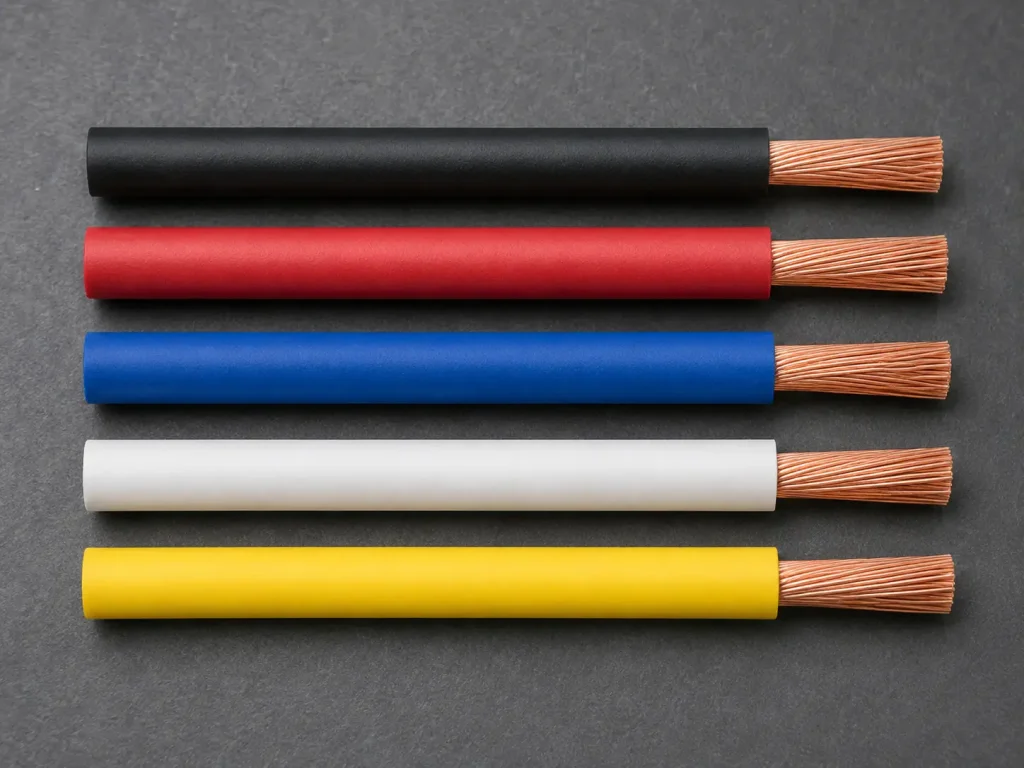
- Stranded vs solid 10 AWG — which is more common? For internal panel wiring in OEM equipment, stranded 10 AWG is the standard choice for routing flexibility through cable management channels and crimp termination compatibility. Solid 10 AWG is occasionally specified for terminal-block direct connections where the wire is fully supported. Both are available under the UL 3266 listing — specify at enquiry stage.
Local Stock vs Direct Supply — A Procurement Reference
| Factor | German Local Stock | Direct Supply from China |
|---|---|---|
| Lead time — stock items | 1–5 days | 25–30 days CIF |
| Lead time — non-stock 10 AWG XLPE | 4–8 weeks (special order) | 25–30 days CIF (standard production run) |
| Pricing on container quantities | Distribution channel pricing | Direct supply pricing |
| UL documentation | Through distribution channel | UL recognition documentation on request |
| MOQ flexibility | Often 100 m minimum, reels only | Production-run MOQ; custom packaging available |
Export Documentation for Germany
Standard CIF Hamburg or Rotterdam shipment includes: Commercial Invoice, Packing List, Certificate of Origin (CCPIT), Bill of Lading, UL recognition documentation, RoHS Declaration, REACH SVHC Declaration, and MSDS. HS Code: 8544.49. Transit 25–30 days from origin port.
Related UL Styles
10 AWG UL 3266 buyers commonly cross-reference: UL 3271 (125°C / 600V XLPE, 30 AWG–2000 kcmil — the 600V upgrade beyond UL 3266’s 300V limit), UL 1015 (105°C / 600V PVC, 30 AWG–2000 kcmil), UL 3666 (105°C / 600V XLPE, 32 AWG–1000 kcmil), and UL 10269 (80–105°C / 1000V PVC, when higher voltage is required).
Request a Quote
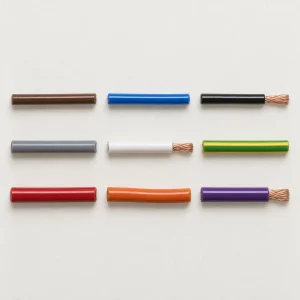
Specify AWG, conductor type (bare / tinned; solid / stranded), insulation colour, reel length, quantity, and destination port. Response within 12 hours.