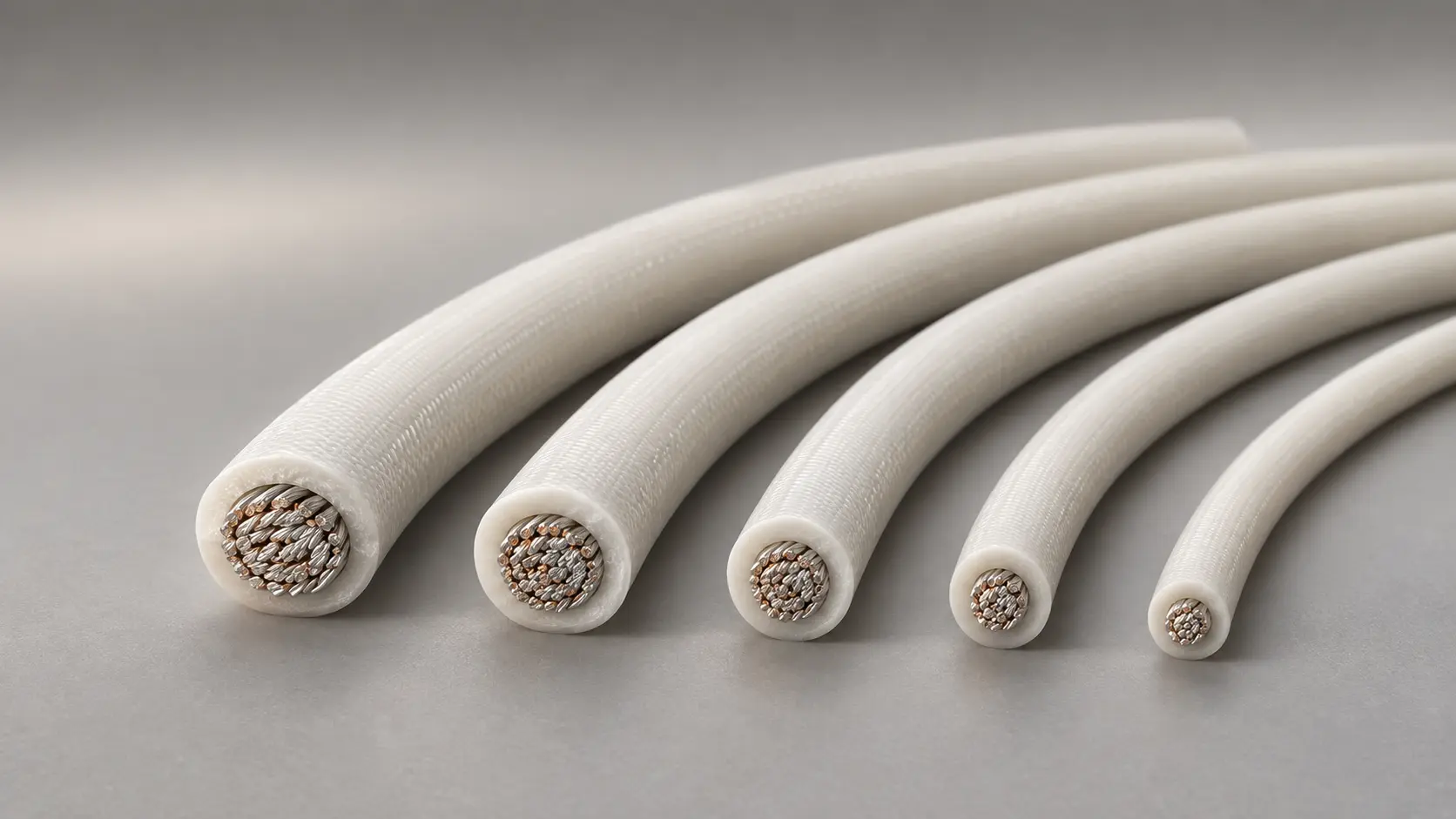
UL 3071 200°C 600V Silicone Wire with Type SF-2 Covering Reference
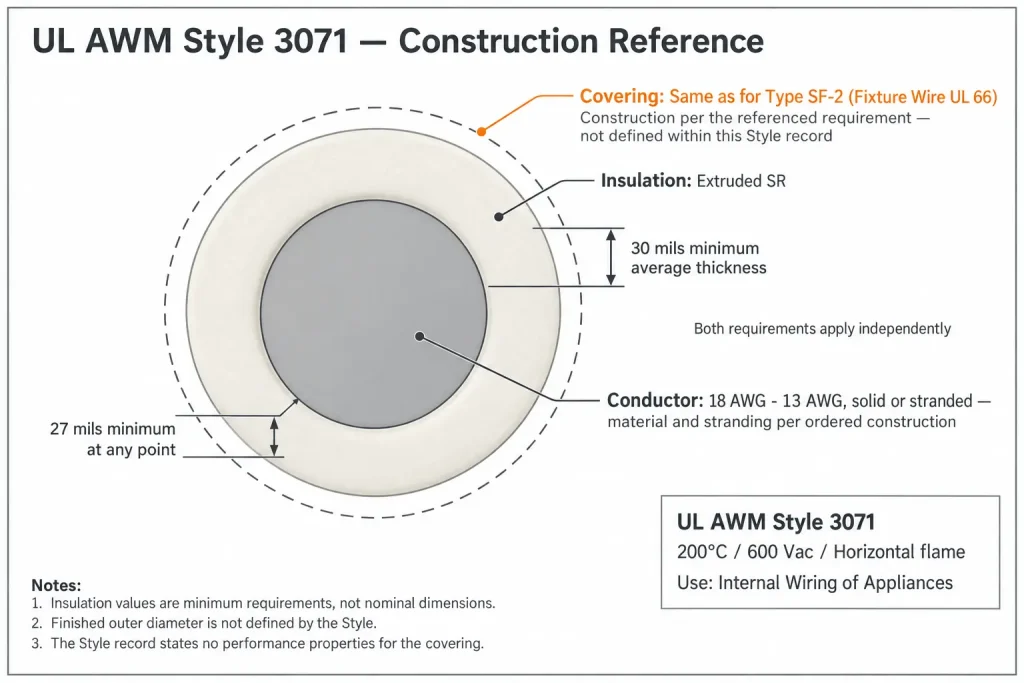
UL AWM Style 3071 is a single conductor with extruded insulation, rated 200°C and 600 Vac, with a Horizontal flame rating. The Style covers 18 AWG to 13 AWG conductors in solid or stranded construction, insulated with extruded SR at 30 mils minimum average thickness and 27 mils minimum thickness at any point. Its covering field is stated as: same as for Type SF-2 (Fixture Wire UL 66). The official Use is Internal Wiring of Appliances.
This page addresses that covering reference specifically. Style 3071 is one of a small number of AWM Styles whose covering requirement is written as a cross-reference to a separate standard rather than as a described construction, and buyers matching a drawing or a component declaration against Style 3071 need that distinction stated plainly rather than resolved by assumption. Everything below stays inside what the Style record establishes; items that belong to the ordered construction are identified as such.
Confirmed UL Style 3071 Specifications
| Parameter | Confirmed Style 3071 value |
|---|---|
| UL AWM Style | 3071 |
| Description | Single Conductor with Extruded Insulation |
| Temperature rating | 200°C |
| Voltage rating | 600 Vac |
| Flame rating | Horizontal flame |
| Conductor range | 18 AWG – 13 AWG |
| Conductor construction | Solid or stranded |
| Insulation | Extruded SR |
| Insulation thickness | 30 mils minimum average / 27 mils minimum at any point |
| Covering | Same as for Type SF-2 (Fixture Wire UL 66) |
| Marking | General |
| Use | Internal Wiring of Appliances |
| RoHS / REACH | Applicable RoHS / REACH documentation can be confirmed according to the ordered construction. |
Four points need clarification before this table is used as a purchasing specification. First, the covering entry is reproduced exactly as the Style states it, and it names a referenced requirement rather than a material. Second, the insulation figures are minimum requirements and do not describe a finished wire diameter. Third, the conductor field states a size range and solid or stranded form only, with no material, plating or strand construction. Fourth, Marking reads General, which is a Style-level entry and not a printed marking string for any given order.
Type SF-2 Covering Reference
The covering requirement for Style 3071 reads: same as for Type SF-2 (Fixture Wire UL 66). This is a cross-reference. It points the covering requirement at the Type SF-2 designation under UL 66 rather than describing a braid, a serve, a coating or a wrap within the Style record itself.
Two things follow from that. The applicable covering construction for any given order is established against the referenced requirement and the qualified manufacturing scope, not read off the Style number; and the Style record assigns the covering no performance attributes at all. It does not state that the covering provides abrasion resistance, mechanical reinforcement or impact protection, it does not state chemical or moisture resistance, it does not state flex-cycle durability or suitability for routing across chassis edges, and it does not raise the temperature or voltage rating of the wire. This page therefore makes none of those claims.
The reference also does not name a material. Glass or fibreglass braid, glass yarn, silicone-coated glass, aramid braid and similar constructions are not written into the Style 3071 record, so none of them is stated here as the covering of this Style. Where a buyer’s drawing controls the covering material, its construction, its thickness, or a mechanical or environmental property it has to satisfy, that requirement belongs in the RFQ and is confirmed in writing against the ordered construction. Where the drawing is silent, the covering is agreed before production rather than assumed.
For procurement documents, the practical form is to carry the reference intact. A drawing note reading “UL AWM Style 3071, covering same as for Type SF-2 (Fixture Wire UL 66)” states the requirement as the Style states it, and leaves the resolution of that reference to the confirmation step where it belongs. A note that substitutes a specific braid description instead has silently added a requirement the Style did not make — which is a common source of mismatch between a drawing and what is actually quoted.
18 AWG to 13 AWG Conductor Range
Style 3071 covers 18 AWG through 13 AWG, in solid or stranded construction. That is the full extent of what the Style fixes about the conductor. It names no conductor material, specifies no plating, and defines no strand count, strand diameter, lay length, conductor diameter or conductor resistance.
No current-carrying value is published here either. Ampacity, current rating and power level are not established by a Style record, and they cannot be inferred from a conductor size: the permissible current in an appliance depends on the installed conditions and the equipment evaluation, not on the AWM Style. For the same reason this page carries no watt or amp ranges tied to particular gauges.
Where a buyer’s drawing controls conductor material or plating, a specific strand construction, a flexibility class, or a conductor diameter or resistance limit, those values should be supplied with the enquiry so the construction can be confirmed. A required size outside 18–13 AWG is outside Style 3071 regardless of how closely the remaining construction matches, and is a separate specification question rather than an extension of this Style.
30 mil SR Insulation
The insulation is extruded SR — silicone rubber — with two independent requirements: 30 mils minimum average thickness, and 27 mils minimum thickness at any point. Both apply. A construction whose average wall reaches 30 mils still fails if any single point falls below 27 mils, and a construction that never drops below 27 mils still fails if the average does not reach 30 mils. These are not the two ends of a tolerance band, and neither value is a nominal or target dimension.
The wall requirement does not produce a finished outer diameter. Finished OD depends on the conductor actually used, on the covering, and on the specific ordered construction, so it is confirmed per order rather than calculated by adding a minimum wall to a generic conductor diameter. Nor does the wall figure establish current capacity, mechanical strength, abrasion resistance, dielectric margin or service life; none of those is stated by the Style record, and a thicker minimum wall in a Style record is not a performance claim.
200°C and 600 Vac Rating
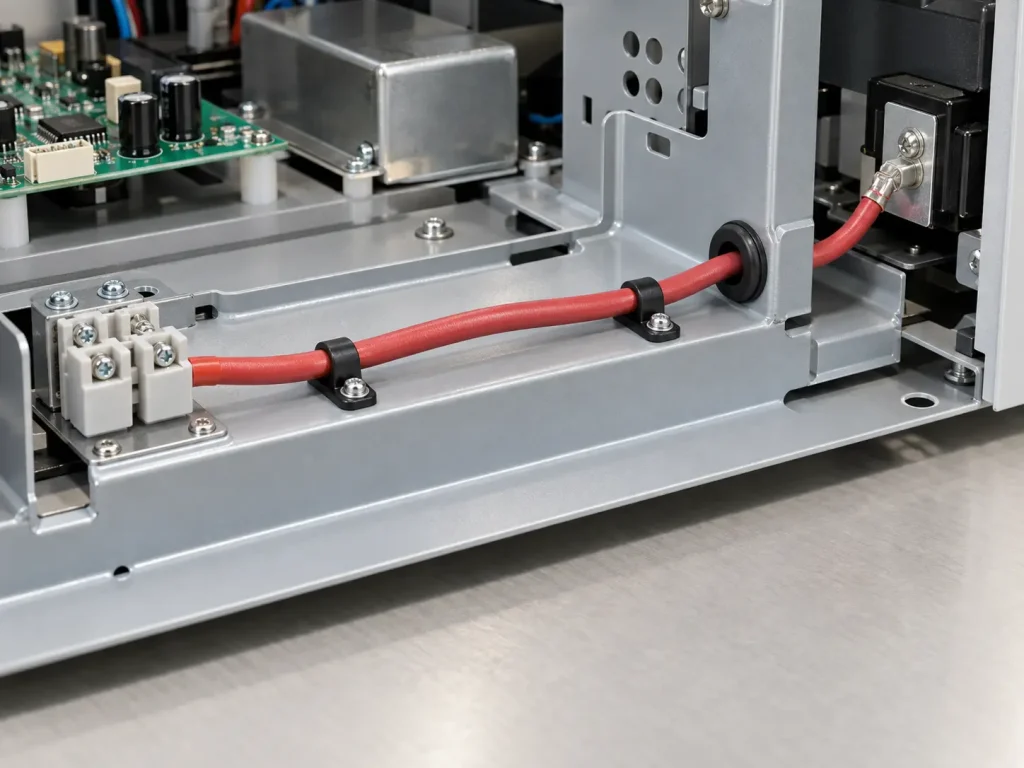
The confirmed ratings are 200°C and 600 Vac, with a Horizontal flame rating. These are stated without duty qualifiers: the Style record does not express them as continuous, continuous-duty or long-term service values, and no service life, thermal aging estimate, thermal cycling count or thermal margin can be derived from them.
The flame rating is Horizontal flame. VW-1, FT1, vertical flame ratings, and self-extinguishing, fireproof or flameproof characterisations are not part of this Style record and are not claimed. No other designation — CE, UKCA, CSA, CPR, VDE, DIN, EN, IEC or a dual UL/CSA marking — is claimed either unless separately supported for the ordered construction.
Equipment-level conditions remain an equipment question. A component Style rating does not by itself establish that the wire is acceptable in a particular hot zone, adjacent to a particular heat source, or in a particular circuit; that determination belongs to the equipment evaluation, not to the Style number.
Internal Wiring of Appliances
The official Use for Style 3071 is Internal Wiring of Appliances. That is the sentence to carry into a drawing note or a component declaration referencing this Style, and it is the boundary this page keeps.
The Use is not broadened here into heating-element leads, motor leads, oven, furnace or kiln wiring, ignition wiring, industrial heater wiring, building wire, field wiring, branch circuits, tray cable, conduit wiring, portable cord, external wiring, automotive, aerospace, solar or EV wiring. None of those is established by the Style record, and a component Style never confers equipment-level compliance in any of them. Nor is a specific end-product category inferred from the 200°C rating: a temperature rating describes the wire, not the machine it is installed in. Where an application sits outside internal appliance wiring, the correct route is a separate technical review.
What Style 3071 Does and Does Not Define
Defined by the Style: the description (single conductor with extruded insulation), 200°C, 600 Vac, Horizontal flame, the 18–13 AWG conductor range, solid or stranded form, extruded SR insulation at 30 mils minimum average and 27 mils minimum at any point, the Type SF-2 (Fixture Wire UL 66) covering reference, Marking as General, and the Use statement.
Not defined by the Style: the covering’s material, construction or performance properties; conductor material and plating; strand count and strand diameter; lay length; conductor diameter and resistance; finished outer diameter and tolerance; ampacity or current rating; power or wattage level; bend radius; flex life; service life; insulation colour; printed marking content; packaging, spool or reel length; order quantity; lead time; stock position; and commercial terms. Each of these is an ordered-construction or commercial item.
Common Procurement Errors
Four errors recur on Style 3071 enquiries. Resolving the Type SF-2 reference into a specific braid construction on the drawing, which adds a requirement the Style did not make. Attributing mechanical or chemical protection to the covering, when the Style record states none. Deriving current or power capability from the 18–13 AWG range, which no Style record supports. And treating 30 mils as a nominal or exact wall, when it is a minimum average with a separate 27 mil point minimum.
How to Specify UL 3071 in an RFQ
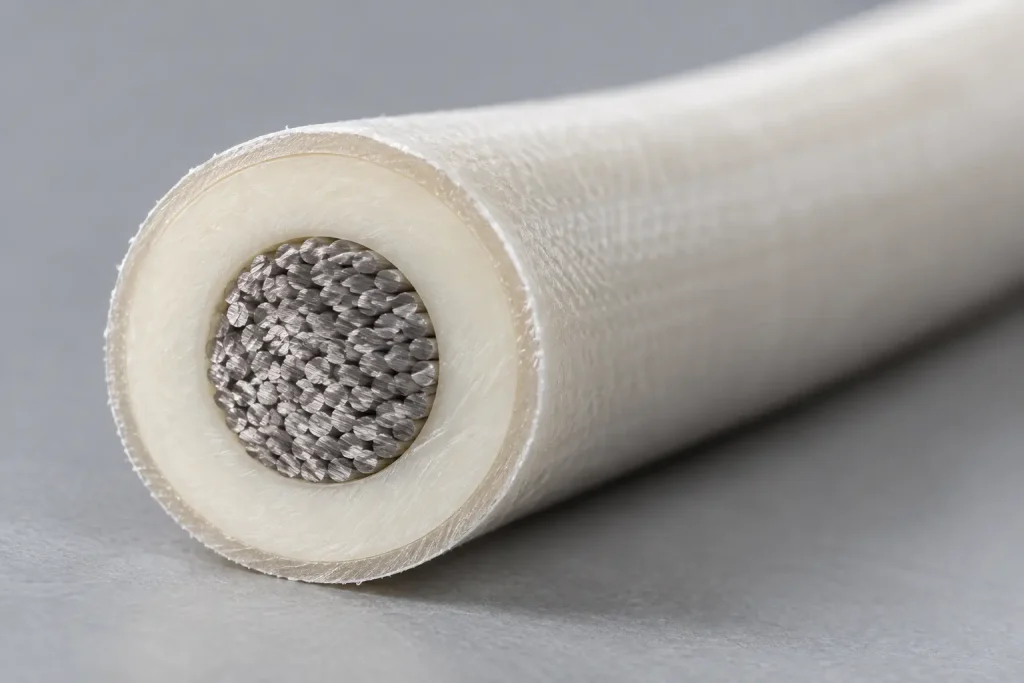
A quotable enquiry states: UL Style 3071; required AWG within 18–13 AWG; solid or stranded construction; conductor material and plating where controlled by drawing; insulation colour; any covering requirement the drawing controls; marking requirements; the drawing or BOM against which the wire is being specified; documentation requirements; quantity; packaging; destination; and Incoterm.
The Style data alone does not define strand count, finished OD, conductor resistance, ampacity, current rating, service life, MOQ, lead time, price or stock availability. Pricing and commercial terms depend on the confirmed conductor size, conductor construction, colour, marking, documentation, packaging, quantity, destination and Incoterm, and final terms are confirmed after RFQ review.
UL Marking and Documentation
Supplied wire is UL-recognized component wire where supplied under a qualified manufacturing scope, with UL marking according to the confirmed ordered construction. The Style record lists Marking as General, and applicable product marking should be confirmed according to the ordered construction.
Applicable RoHS / REACH documentation can be confirmed according to the ordered construction. CE, UKCA, CSA, FT1, VW-1, CPR, VDE, DIN, EN, IEC and dual UL/CSA designations are not claimed here unless separately supported for the ordered construction.
Commercial, origin, compliance and transport documents are identified during quotation and confirmed according to the order.