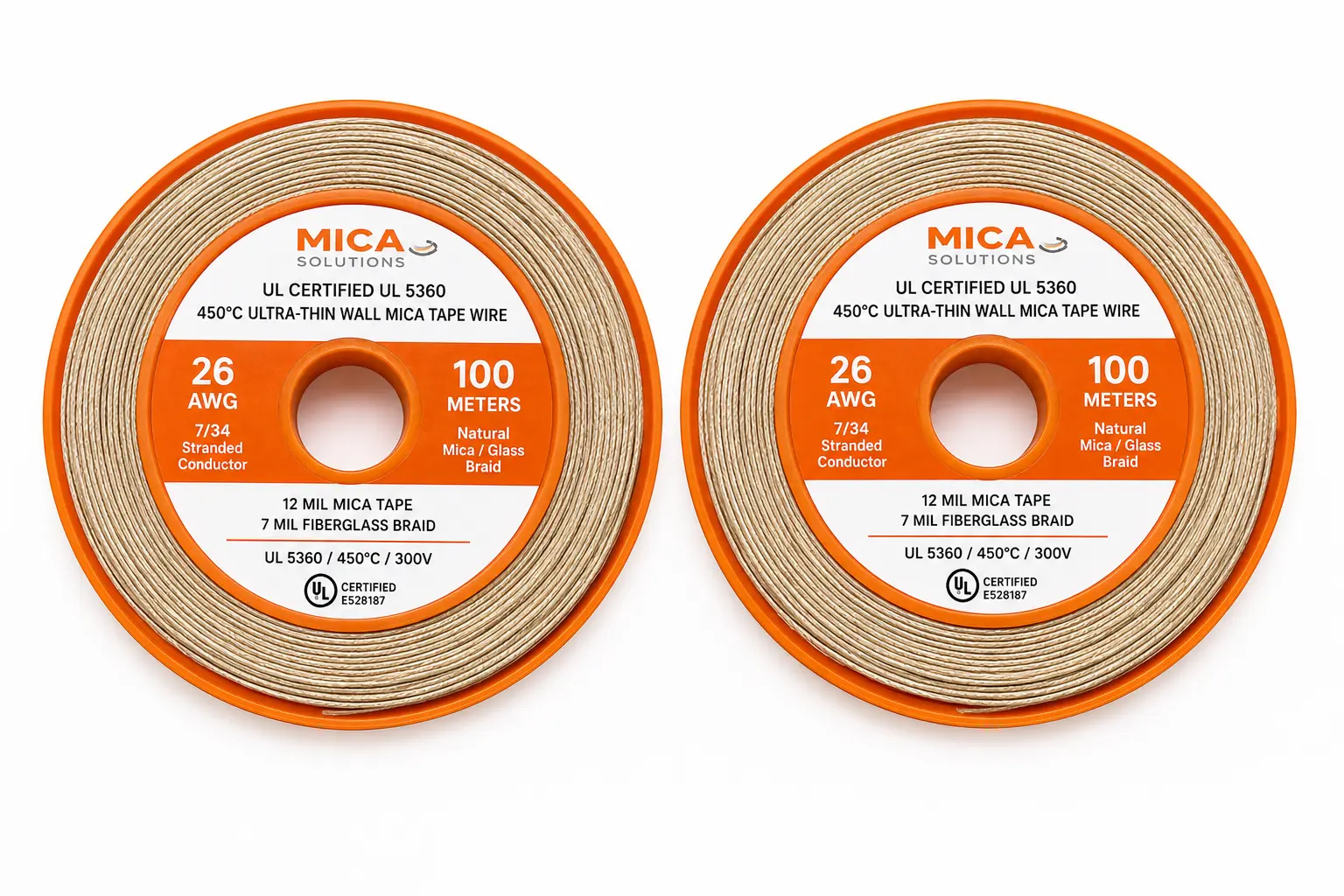
UL 5476 Mica Tape Wire — 450°C / 600V, Binder Layer Option — Latest UL Revision, México
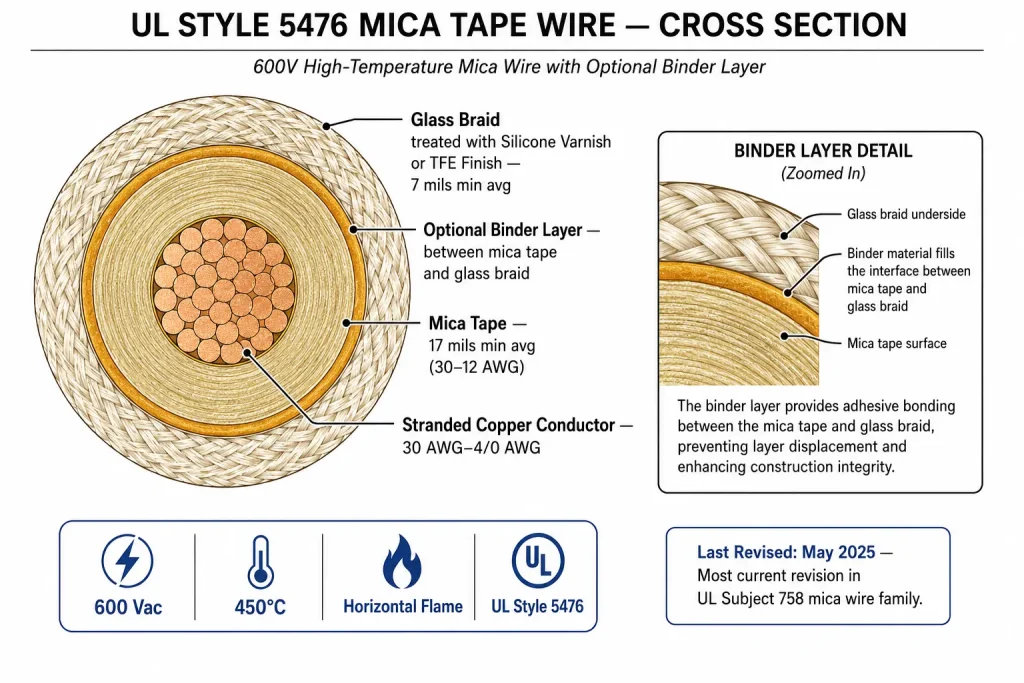
Style 5476 is the most recently revised mica tape wire specification in UL Subject 758 — last updated May 2025 — reflecting current UL insulation system requirements for 450°C / 600V high-temperature internal wiring. Rated 450°C continuous at 600 Vac with mica tape and glass braid insulation across a 30 AWG to 4/0 AWG conductor range, Style 5476 introduces an optional binder layer between the mica tape and glass braid — a construction refinement not available in any other Subject 758 mica wire style — that improves insulation structural integrity during installation handling and thermal cycling conditions.
For Mexican industrial equipment designers specifying wire for new facility projects, petrochemical plant construction contractors sourcing UL-recognized high-temperature wire for new installations, and modern metallurgical facility procurement teams requiring current-revision UL documentation, Style 5476 represents the contemporary baseline specification for 450°C / 600V mica wire — the style that reflects the latest UL requirements rather than legacy constructions that have not been revised in over a decade.
Technical Specifications — UL Style 5476
| Parameter | Value |
|---|---|
| UL Style | 5476 |
| UL Subject | 758, Section 5 |
| Temperature Rating | 450°C |
| Voltage Rating | 600 Vac |
| Flame Rating | Horizontal flame |
| Last Revised | 2025-05-14 (most recent revision in Subject 758 mica wire family) |
| AWG Range | 30 AWG – 4/0 AWG, solid or stranded |
| Conductor | Solid or stranded copper |
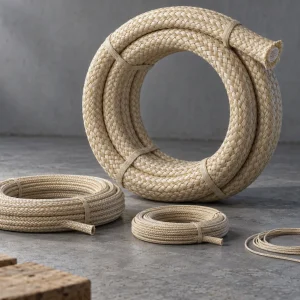
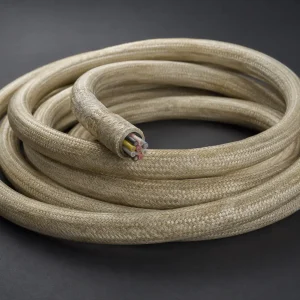
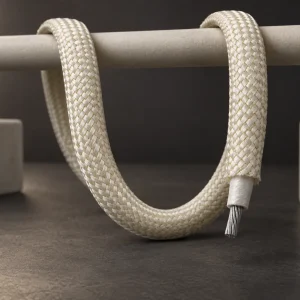
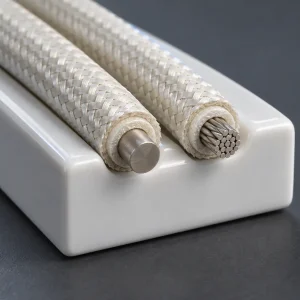
| Insulation System | Mica tape with glass braid |
| Insulation — 30–12 AWG | Mica 17 mils min avg + Glass braid treated with silicone varnish or TFE finish 7 mils min avg |
| Insulation — 11–4 AWG | Mica 21 mils min avg + Glass braid 15 mils min avg |
| Insulation — 3–4/0 AWG | Mica 26 mils min avg + Glass braid 20 mils min avg |
| Optional Binder Layer | May be applied between mica tape and glass braid — see facing page for material detail |
| Optional Assembly | Multi-conductor cabled, max OD 1.500 inches; mica glass binder and/or fiberglass fillers |
| Optional Shield | 36–30 AWG Type “A” Nickel / 27% min nickel-coated copper |
| Typical Use | Internal wiring — not subjected to repeated flexing or mechanical abuse, current-carrying capacity determined by UL (cableado interno de última generación — alta temperatura) |
| Available Colors | Natural mica/glass (standard); custom on request |
| Standard Spool Length | 50 m / 100 m |
| MOQ | Contact for quote — consultar cotización |
Engineering Notes — Binder Layer Innovation and Latest UL Revision Significance
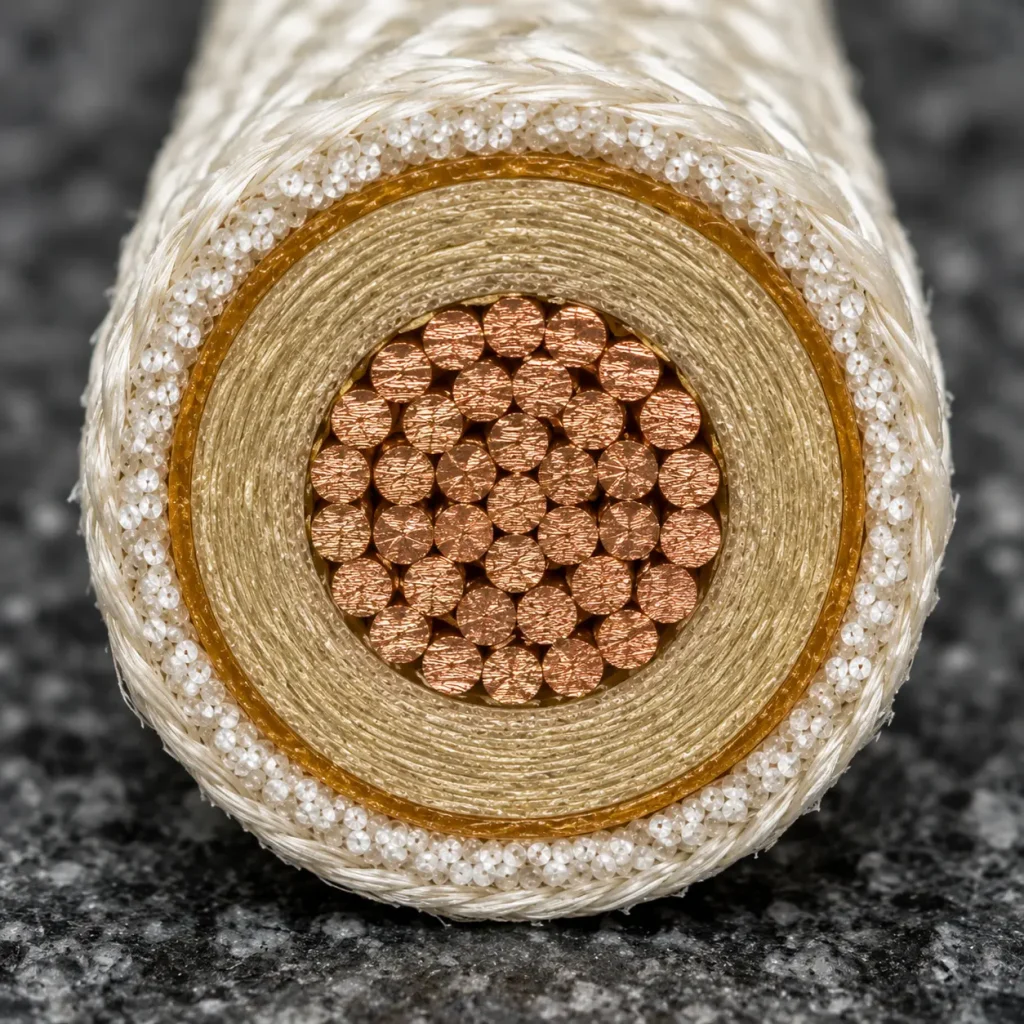
The optional binder layer — a construction refinement unique to Style 5476: The optional binder layer applied between the mica tape wrapping and the glass braid covering is a construction feature exclusive to Style 5476 within the Subject 758 mica wire family. In standard mica tape wire constructions (5107, 5128, 5335, 5359, 5360), the mica tape layers and the glass braid covering are mechanically adjacent but not adhesively bonded — the glass braid serves as a mechanical containment layer over the mica tape but relies on contact pressure rather than adhesive bonding to maintain the insulation layer assembly. The binder layer between mica tape and glass braid in Style 5476 introduces a controlled-adhesion interface that maintains the spatial relationship between mica layers and braid during wire coiling, uncoiling, and routing operations — reducing the risk of mica layer displacement and gap formation at the mica-braid interface that can occur in standard constructions during installation handling. For new equipment designs where wire routing involves multiple bends through complex paths, the binder layer option provides enhanced insulation integrity assurance compared to unbonded constructions.
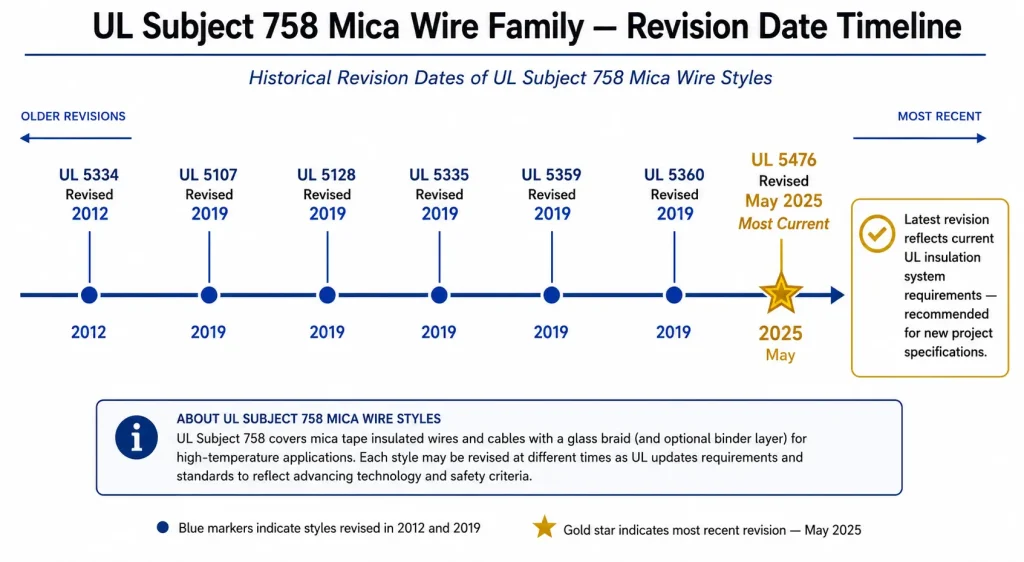
May 2025 revision — what currency means for new projects: Style 5476 was last revised in May 2025 — the most recent revision date among all mica wire styles in Subject 758. For comparison, Style 5107 was last revised in May 2019, Style 5335 in May 2019, and Style 5359 in May 2019. A more recent revision date means the style’s construction requirements reflect the most current UL evaluation standards and insulation system testing protocols. For new industrial facility projects in México where procurement specifications reference “current UL revision” compliance — increasingly common in petrochemical EPC contracts and modern industrial facility design standards — Style 5476 satisfies this requirement without the qualification question that arises when specifying styles with pre-2020 revision dates.
17-mil mica wall at fine gauge — positioning between 5360 and 5335: Style 5476 specifies 17 mils minimum average mica at 30–12 AWG — one mil thicker than Style 5476’s companion style 5334 (17 mils composite mica glass) and five mils thinner than Style 5335 (23 mils). This intermediate wall thickness positions 5476 as a balanced specification: thinner and more compact than the heavier-wall styles 5107 and 5335, but with a more substantial insulation build than the ultra-thin 5360 (12 mils) — providing the combination of compact profile and adequate insulation robustness for the majority of new 450°C / 600V equipment design applications.
Current-carrying capacity UL determination requirement: Like Style 5335 and 5334, Style 5476 requires that current-carrying capacity be determined by UL for each specific application. This is a standard requirement for high-temperature mica wire constructions where the operating thermal environment dramatically alters effective wire ampacity from standard tabulated values. For new facility designs, submit the application for UL current capacity determination with actual thermal modeling data from the equipment design — this is a required step in the compliance process, not optional, and should be planned into the project schedule at the equipment design stage.
New Project Applications — Nuevos Proyectos Industriales en México
Style 5476’s status as the latest-revision 450°C / 600V mica wire makes it the preferred specification for new facility construction and equipment procurement projects across México’s industrial growth sectors:
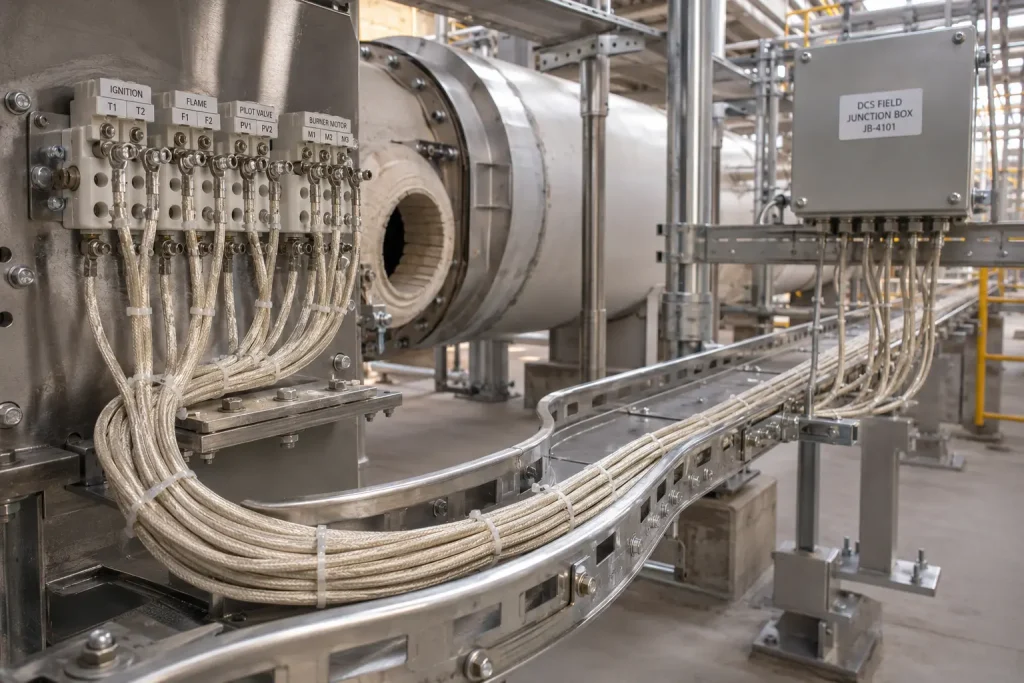
- New petrochemical plant construction in México — high-temperature internal wiring for process heater burner systems, reactor vessel instrumentation penetrations, and fired equipment control circuits in new petrochemical processing facilities under construction across Zacatecas and San Luis Potosí’s industrial development zones, where EPC contractors specify current-revision UL-recognized wire for all high-temperature internal wiring to satisfy project specification requirements and owner engineering standards that reference the latest UL revision cycle.
- Modern electric arc furnace steelmaking installations — internal wiring for electrode regulation systems, furnace transformer monitoring circuits, and auxiliary power distribution in new electric arc furnace steelmaking installations across San Luis Potosí’s growing steel processing corridor, where new facility procurement specifications require the most current UL certification revision for all safety-critical internal wiring in high-temperature furnace environments to satisfy insurance underwriter requirements and lender technical due diligence review.
- New lithium and battery materials processing facilities — internal wiring for high-temperature calcination furnace heating systems, cathode material sintering equipment, and battery precursor processing ovens in new lithium processing and battery materials manufacturing facilities under development across Zacatecas and San Luis Potosí’s lithium resource development corridor, where the combination of 450°C process temperatures and 600V heating circuit voltages in new facility designs drives specification of the latest UL revision mica wire to satisfy green energy project development standards.
- Advanced manufacturing facility high-temperature equipment — internal wiring for heat treatment furnaces, industrial brazing systems, and high-temperature surface treatment equipment in new advanced manufacturing facilities established by automotive and aerospace Tier 1 suppliers across Querétaro’s aerospace manufacturing cluster, where new facility installation specifications from international OEM customers reference current UL certification standards for all high-temperature internal wiring in production-critical equipment installations.
Related UL Styles for Comparison
UL 5476 latest revision buyers commonly cross-reference: UL 5335 (450°C / 600V mica, heavier 23-mil wall alternative with nickel-chromium-iron and stainless shield options), UL 5359 (200–450°C / 600V mica tape, thinner 16-mil wall with multi-conductor assembly as primary feature), UL 5107 (200–450°C / 600V mica tape, covers both 200°C and 450°C builds under single style number), and UL 5360 (200–450°C / 300V mica tape, lower voltage ultra-thin 12-mil wall for precision equipment applications).
Request a Quote — Solicitar Cotización
Submit your AWG, binder layer requirement, shield specification, optional assembly configuration, spool format, and annual volume estimate below. Our engineering team responds with a formal cotización within 24 business hours. Wire samples and UL current-carrying capacity determination support available upon request.