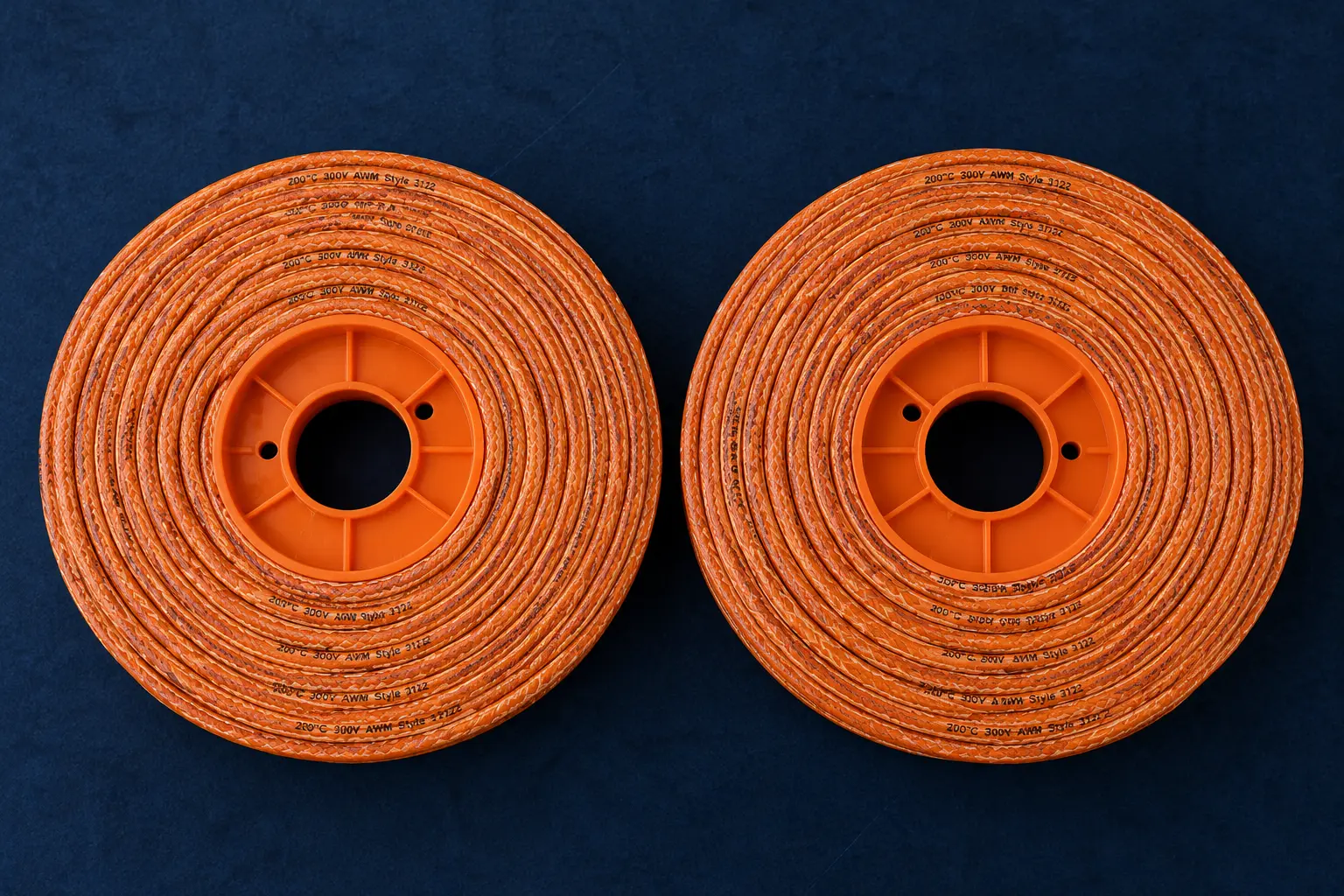
UL 3122 Silicone Fiberglass Wire Turkey — 200°C / 300V Sensor & Instrumentation Lead Supply
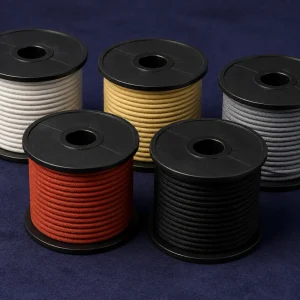
UL Style 3122 occupies a specific and often overlooked position in the UL Subject 758 silicone rubber wire family — it provides the 200°C thermal performance of Style 3135 with the mechanical protection of a fiberglass braid outer covering, at a compact 300V insulation rating suited for instrumentation, sensor, and control signal circuits in high-temperature industrial equipment. For Turkish industrial equipment manufacturers specifying internal wiring for thermocouple extension leads, temperature sensor wiring, and low-voltage control circuits in high-temperature enclosures, Style 3122 provides a construction that neither Style 3135 (no braid, 600V) nor Style 5107 (mica, 450°C, 600V) addresses directly.
CableApex supplies Style 3122 directly to Turkish instrumentation manufacturers, sensor lead assemblers, and industrial heating equipment OEMs in Ankara, Izmir, and Bursa with complete UL documentation, 12-hour quote response, and minimum orders from 100 meters.
Technical Specifications — UL Style 3122
| Parameter | Value |
|---|---|
| UL Style | 3122 |
| UL Subject | 758, Section 3 |
| Temperature Rating | 200°C |
| Voltage Rating | 300 Vac |
| Flame Rating | Horizontal flame |
| AWG Range | 26 AWG – 16 AWG, solid or stranded |
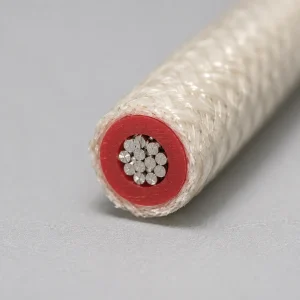
| Conductor | Solid or stranded copper |
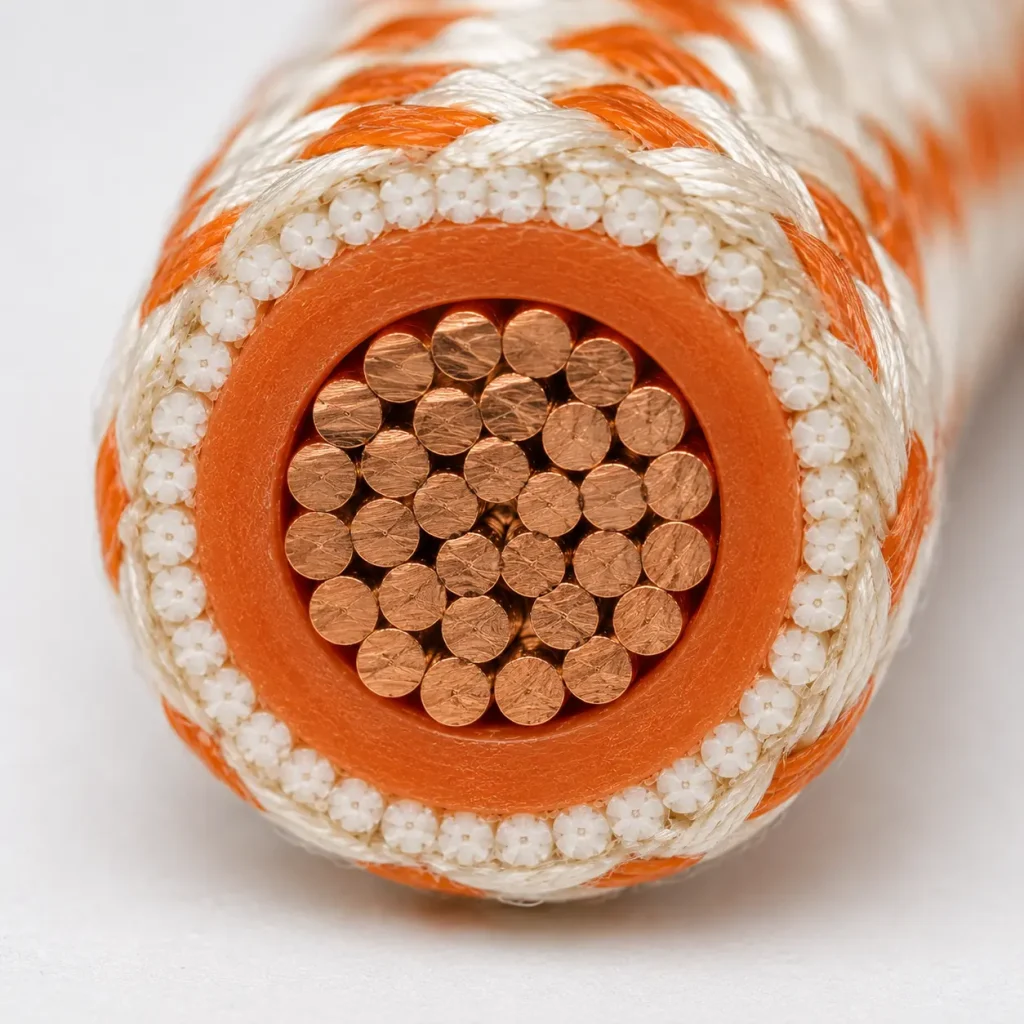
| Insulation Material | Extruded silicone rubber (SR) |
| Insulation — 26–22 AWG | SR 20 mils min avg / 18 mils min at any point |
| Insulation — 21–16 AWG | SR 25 mils min avg / 22 mils min at any point |
| Outer Covering | Fiberglass braid — 7 mils min avg |
| Typical Use | Internal wiring of appliances |
| UL Recognition | UL Recognized Component — file on record |
| MOQ | 100 meters per AWG / color |
| Quote Response | 12 hours |
UL 3122 vs UL 3135 vs UL 3071 — Choosing the Right Silicone Wire
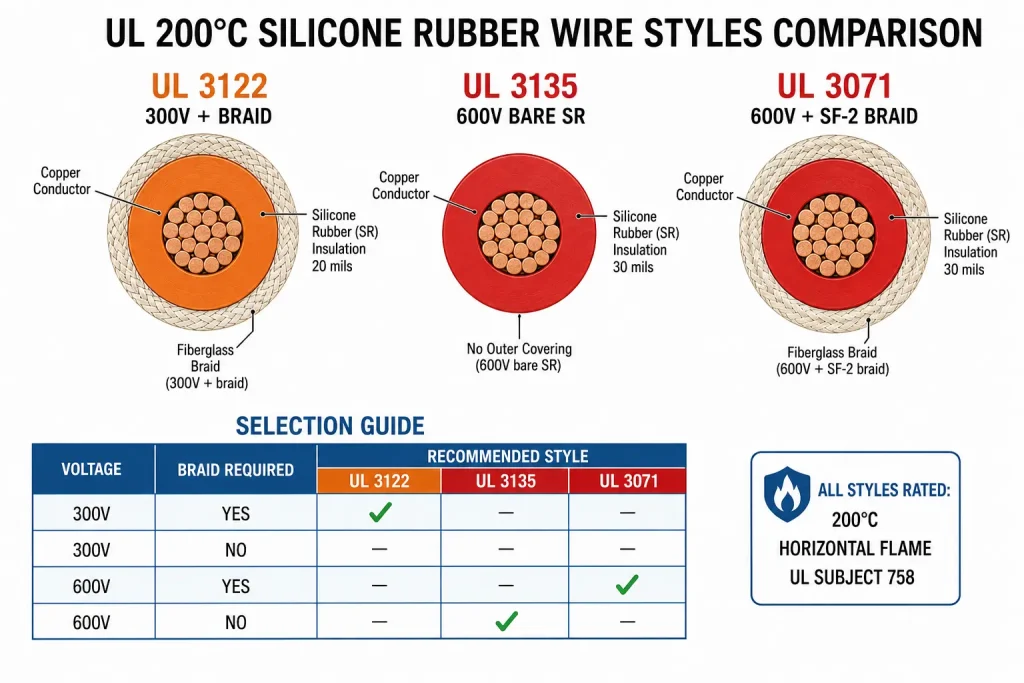
Three UL Subject 758 silicone rubber wire styles cover 200°C applications — and the correct choice depends on voltage rating and mechanical protection requirement:
| Parameter | UL 3122 | UL 3135 | UL 3071 |
|---|---|---|---|
| Temperature | 200°C | 200°C | 200°C |
| Voltage | 300V | 600V | 600V |
| Outer Covering | Fiberglass braid | None — bare SR | Fiberglass braid (SF-2) |
| AWG Range | 26–16 AWG | 26–12 AWG | 18–13 AWG |
| SR Wall (fine gauge) | 20 mils (26–22 AWG) | 30 mils | 30 mils |
| Best For | Thermocouple leads, sensor wiring, low-voltage control circuits with braid protection | General 600V appliance wiring in totally enclosed enclosures | Motor leads, heater element connections needing mechanical protection at 600V |
The key differentiator of Style 3122 is the combination of fiberglass braid mechanical protection and 300V compact insulation rating — making it the correct specification when circuit voltage is 300V or below, the wire routing environment requires mechanical protection from the fiberglass braid, and the thinner insulation wall of the 300V construction provides a more compact wire diameter than the 30-mil wall of Style 3135 at equivalent AWG.
Application Categories for Turkish Instrumentation Buyers
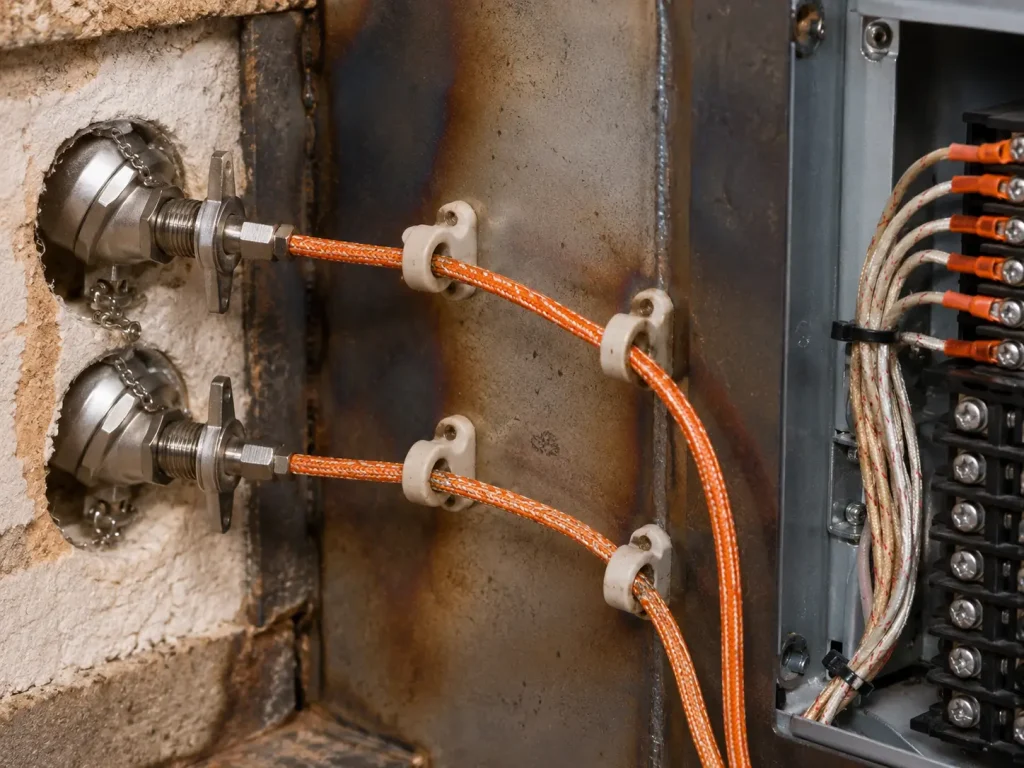
- Thermocouple extension leads in industrial ovens and furnaces — thermocouple junction to terminal block extension wiring inside industrial ovens, heat treatment furnaces, and ceramic kilns manufactured across Turkey’s industrial equipment sector, where the thermocouple signal circuit operates at millivolt signal levels within the 300V insulation rating of Style 3122 and the fiberglass braid outer covering provides abrasion protection for the thermocouple lead routing path through ceramic standoff insulators and refractory material channels in the furnace structure.
- Temperature sensor and RTD lead wiring — resistance temperature detector (RTD) lead wiring and temperature transmitter connection leads in industrial process heating equipment and HVAC systems manufactured by Turkish industrial equipment OEMs in Ankara and Izmir, where the low-voltage sensor signal circuits require 200°C-rated wire with fiberglass braid mechanical protection for installation in equipment enclosures where the sensor lead routing path contacts metal enclosure edges and standoff mounting hardware during assembly and servicing.
- Low-voltage control circuit wiring in high-temperature enclosures — control signal wiring for motorized damper actuators, solenoid valve coil leads, and limit switch connections inside high-temperature industrial equipment enclosures manufactured across Turkey’s industrial heating and process equipment sector, where the control circuit voltage of 24–120V AC is within Style 3122’s 300V rating and the fiberglass braid provides the mechanical protection required for wiring in equipment enclosures accessed repeatedly during maintenance and calibration cycles.
- Heating appliance sensor leads for export compliance — temperature sensor wiring in commercial ovens, industrial dryers, and heating equipment assembled in Bursa and Istanbul for export to North American markets, where UL product certification requires UL Recognized Component wire throughout the internal wiring system and Style 3122 provides the correct UL AWM specification for low-voltage sensor circuit internal wiring in high-temperature appliance enclosures.
Engineering Notes — 300V Rating Adequacy and Braid Selection
300V adequacy for instrumentation circuits: The majority of industrial instrumentation circuits — thermocouple signal leads, RTD connections, 4–20mA transmitter wiring, and 24V DC control circuits — operate well within Style 3122’s 300V insulation rating. Even 120V AC control circuits for solenoid valve coils and small motor actuators in industrial equipment are within the 300V ceiling. The only instrumentation application where 300V is potentially inadequate is 277V AC single-phase control circuits — where peak voltage of 277V × √2 = 391V peak may exceed the 300V AC rating depending on the rating interpretation for the specific application. Confirm with your equipment certification body whether the 300V rating applies to AC RMS or peak voltage for your specific circuit before specifying Style 3122 for 277V AC control circuits.
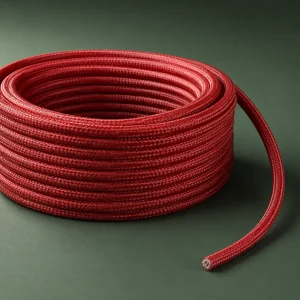
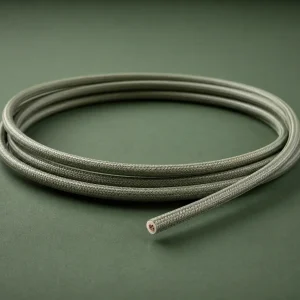
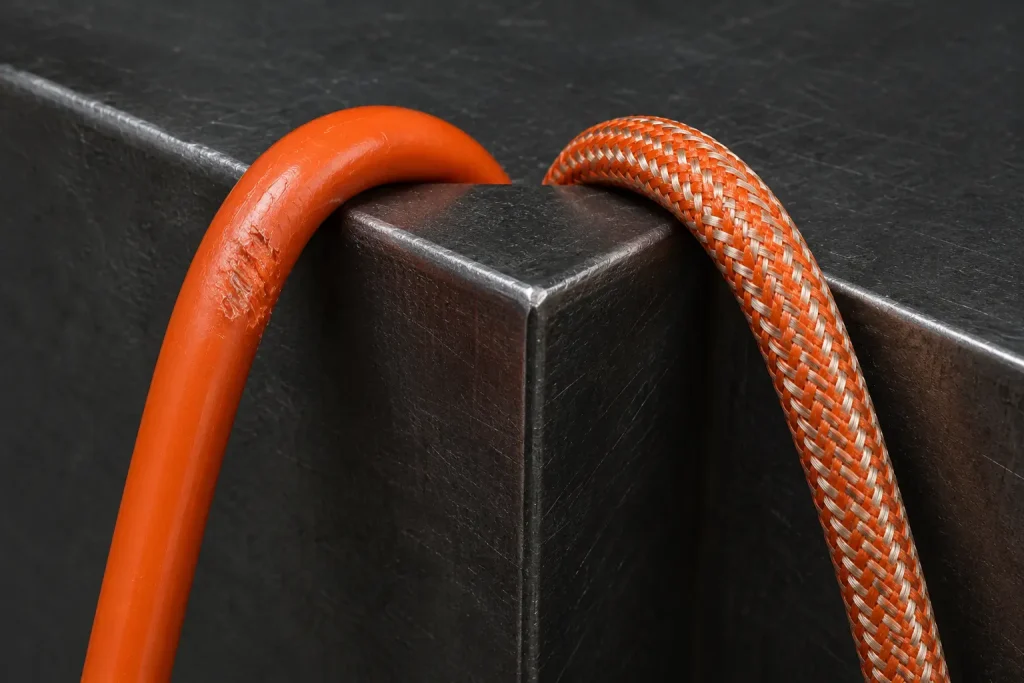
Fiberglass braid vs bare silicone — the installation difference: The fiberglass braid outer covering of Style 3122 serves one primary function: mechanical protection during installation routing through metal enclosure structures, ceramic standoff insulators, and equipment framework members where bare silicone rubber insulation would be abraded and damaged at contact points. Once installed in a static routing position, the braid provides no additional electrical function — the silicone rubber primary insulation provides the dielectric barrier. Specify Style 3122 over Style 3135 when the wire routing path during installation involves contact with metal or ceramic surfaces that would abrade bare silicone rubber; specify Style 3135 when the wire is routed in a smooth, protected channel where bare silicone rubber is not at risk of abrasion damage.
Request a Quote — Turkey Instrumentation Wire Supply
Submit your AWG, color, spool format, and annual volume estimate below. Our team responds with a formal quotation within 12 business hours. Free 10-meter wire samples available for instrumentation qualification testing. CIF Istanbul and FOB Shanghai shipping terms available.