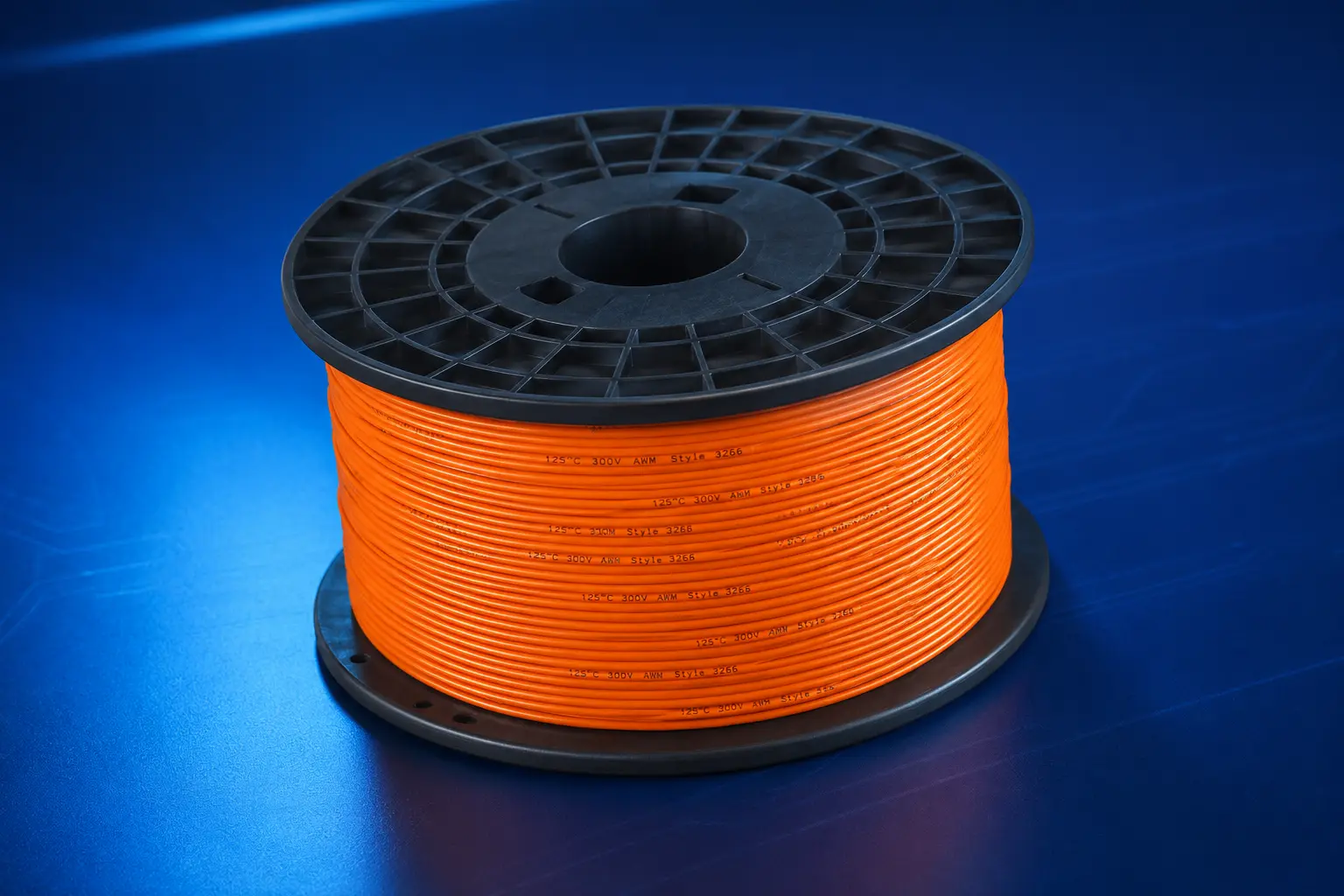
UL 3266 XLPE Wire Turkey EV — 125°C / 300V for Battery Pack BMS & Sensor Wiring
Turkey is rapidly establishing itself as a European EV manufacturing hub. With BYD’s billion-dollar electric vehicle plant under construction in the Manisa Organized Industrial Zone near İzmir — targeting production start by the end of 2026 with an annual capacity of 150,000 vehicles — alongside TOGG’s domestic EV production and the SIRO battery joint venture, a substantial EV component supply chain is developing across western Turkey’s established automotive industrial base. This supply chain creates demand for UL-recognized internal wiring in battery packs, BMS modules, and EV electronics subassemblies.
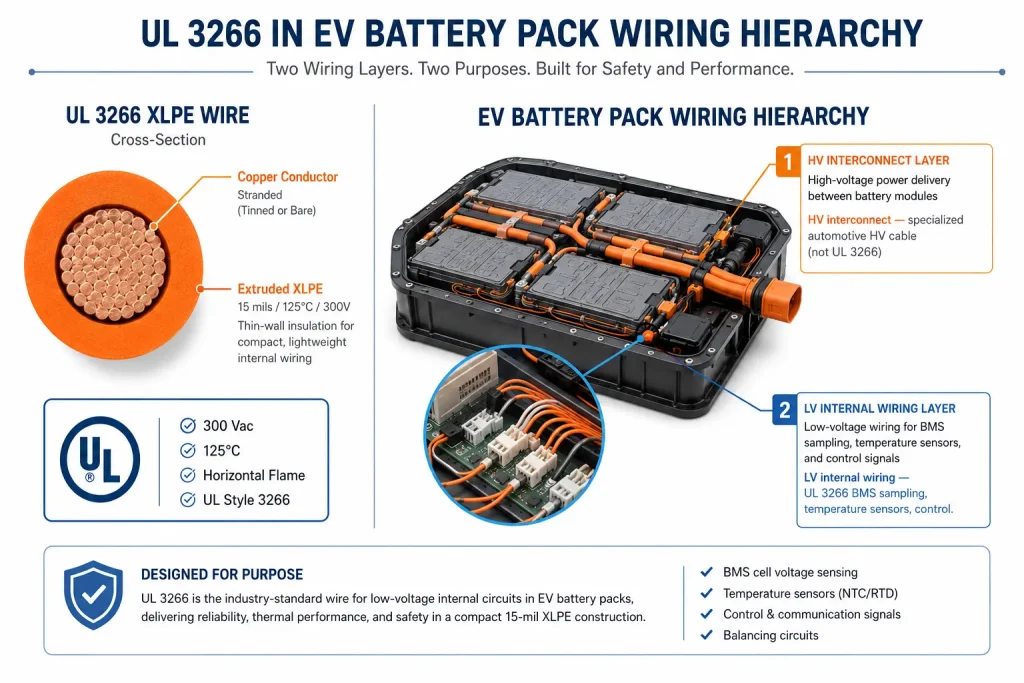
Style 3266 — 125°C / 300V XLPE, compact 15-mil thin-wall construction — is suited for the low-voltage internal wiring inside EV battery pack enclosures: BMS cell sampling leads, temperature sensor wiring, and low-voltage control circuits where thermal performance and space-efficient routing are simultaneously required. CableApex supplies Style 3266 directly to Turkish EV component manufacturers with complete UL documentation, 12-hour quote response, and CIF Istanbul shipping.
Technical Specifications — UL Style 3266
| Parameter | Value |
|---|---|
| UL Style | 3266 |
| UL Subject | 758, Section 3 |
| Temperature Rating | 125°C |
| Voltage Rating | 300 Vac (600 Volts Peak for Electronic Use Only available) |
| Flame Rating | Horizontal flame |
| AWG Range | 32 AWG – 10 AWG, solid or stranded |
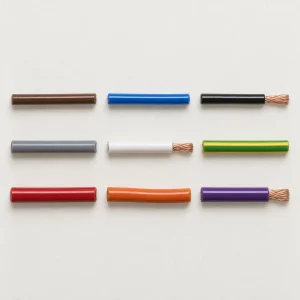
| Conductor | Solid or stranded copper (tinned available) |
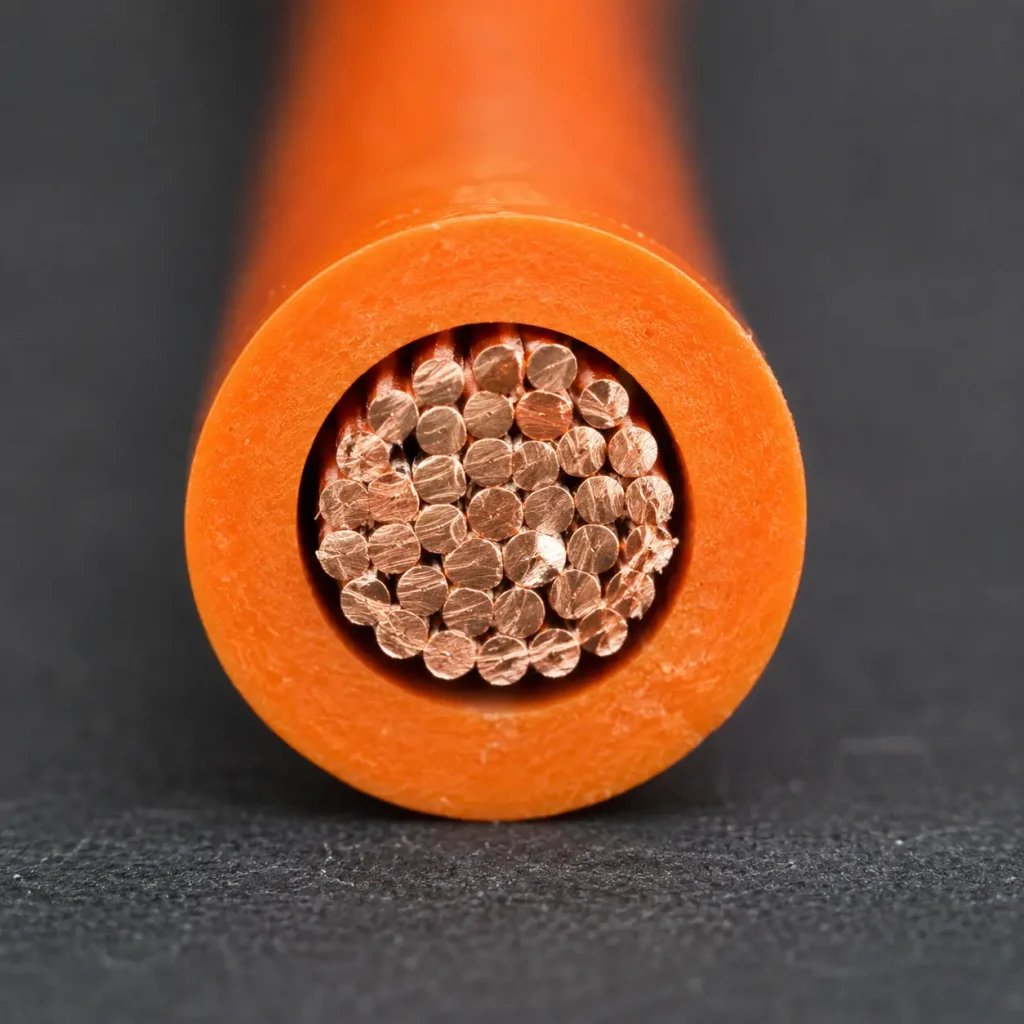
| Insulation Material | Extruded XLPE (crosslinked polyethylene) |
| Insulation Thickness | 15 mils min average / 13 mils min at any point |
| Typical Use | Internal wiring of appliances and electronic equipment |
| UL Recognition | UL Recognized Component — file on record |
| MOQ | 100 meters per AWG / color |
| Shipping | CIF Istanbul / FOB Shanghai |
| Quote Response | 12 hours |
Turkey EV Supply Chain — The Localization Opportunity
Turkey’s EV manufacturing ecosystem is consolidating around western Turkey’s established automotive industrial base. BYD’s Manisa plant, located in a region with deep automotive supply chain infrastructure near İzmir, is expected to anchor a network of local component suppliers — and the customs union between Turkey and the EU allows vehicles produced in Turkey to be exported to the European market without the tariffs applied to China-made EVs, making Turkish EV production strategically valuable for Chinese manufacturers like BYD.
For EV battery pack and component manufacturers establishing operations in this supply chain — whether supplying BYD’s Manisa plant, TOGG’s production, or export-market EV component production — internal wiring specification is a foundational compliance decision. EV components destined for vehicles certified for multiple global markets often specify UL-recognized internal wire for the low-voltage wiring inside battery packs and electronics modules, alongside the high-voltage orange-jacketed cable that connects modules.
Style 3266 addresses the low-voltage internal wiring layer of the EV battery pack — the BMS sampling and sensor wiring that operates at cell-level and module-level voltages well within the 300V rating, where the compact 15-mil XLPE wall enables dense routing inside space-constrained battery pack enclosures and the 125°C rating provides thermal margin for the battery pack thermal environment under fast-charge and high-discharge conditions.
EV Battery Pack Application Categories for Turkish Buyers
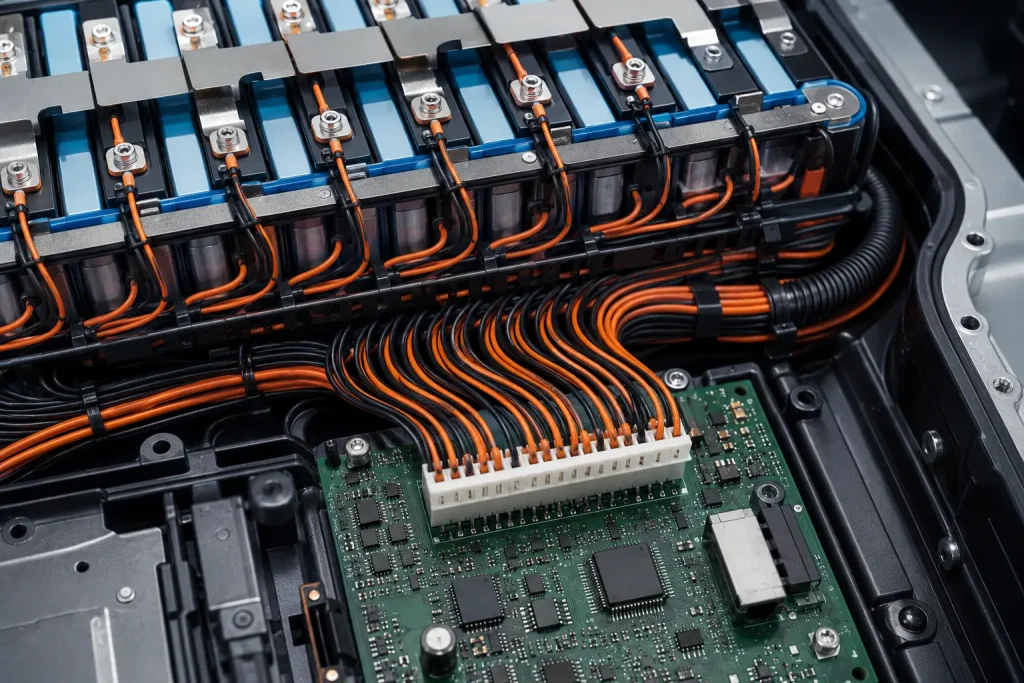
- BMS cell voltage sampling leads — battery management system voltage sensing leads connecting individual cell or module tap points to the BMS monitoring board inside EV battery pack enclosures, where the sampling circuit operates at cell-level and module-level voltages within the 300V rating and the compact 15-mil XLPE wall enables the dense, organized routing of dozens of sampling leads through the battery pack interior to the BMS connector.
- Cell temperature sensor wiring — thermistor and temperature sensor lead wiring distributed throughout the battery pack to monitor cell temperature for thermal management and safety, where the 125°C XLPE rating provides thermal margin for the battery pack environment during fast charging and high-rate discharge and the thin-wall construction routes efficiently through the cell module structure.
- Low-voltage control and signal circuits — contactor control wiring, current sensor signal leads, and auxiliary low-voltage control circuits inside the battery pack and EV power electronics enclosures, where 300V-rated UL-recognized wire satisfies the internal wiring specification for the low-voltage control layer of the EV electrical system.
- EV electronics module internal wiring — internal wiring in onboard chargers, DC-DC converters, and EV power electronics modules assembled by Turkish automotive electronics suppliers, where the 125°C thermal rating handles the internal temperature of power electronics enclosures under load and the compact XLPE construction routes efficiently through high-density electronics module interiors.
Engineering Note — UL 3266 in the EV Wiring Hierarchy
Low-voltage internal wiring, not high-voltage interconnect: It is important to position Style 3266 correctly within the EV wiring hierarchy. The high-voltage interconnect between battery modules and to the inverter — the orange-jacketed high-voltage cable operating at 400V or 800V DC pack voltage — is a specialized high-voltage automotive cable, not a UL 3266 AWM wire. Style 3266 serves the low-voltage internal wiring layer: BMS sampling, sensor wiring, and low-voltage control circuits operating within the 300V rating. Both wiring layers coexist inside the battery pack — the high-voltage power interconnect and the low-voltage monitoring and control wiring — and Style 3266 addresses the latter.
Automotive qualification context: Note that UL AWM recognition under UL Subject 758 addresses electrical safety component recognition. EV component manufacturers should confirm whether their specific application also requires automotive wire qualification standards (such as ISO 6722 or USCAR specifications) in addition to UL AWM recognition, as some automotive OEM specifications require automotive-specific wire qualification alongside or instead of UL AWM recognition. CableApex can discuss the applicable qualification requirements for your specific EV component application during the quotation process.
Request a Quote — Turkey EV Battery Pack Wire Supply
Submit your AWG, color, conductor type, application (BMS sampling, sensor, control circuit), spool format, and annual volume estimate below. Our team responds with a formal quotation within 12 business hours. We can discuss applicable automotive qualification requirements alongside UL AWM recognition. Free 10-meter wire samples available. CIF Istanbul and FOB Shanghai shipping terms available.